Why a Clever Poodle Still Has Accidents
It's incredibly frustrating, isn't it? You bring home a Poodle, a breed renowned for its intelligence and quick wit, expecting potty training to be a breeze, only to find yourself constantly cleaning up unexpected puddles and piles. This guide is here to unravel the mystery behind why even the cleverest Poodles sometimes struggle with house training and equip you with the knowledge and strategies to achieve a reliably house-trained companion.
The Myth of the "Perfect" Poodle and Potty Training
Let's start by dispelling a common misconception: just because Poodles are smart doesn't mean they arrive pre-programmed with perfect potty habits. Their intelligence often means they learn quickly, yes, but it also means they can learn the wrong things just as fast, or become masters of negotiation, or even develop anxiety that manifests in accidents. Many Poodle owners feel a deep sense of embarrassment or failure when their "smart dog" isn't perfectly house-trained, but it's crucial to remember that every dog is an individual, and every household presents its own unique challenges.
Intelligence Versus Instinct
A Poodle's intelligence shines in its ability to learn complex commands, problem-solve, and adapt to routines. However, going to the bathroom is a biological function driven by instinct and physical need, which then gets layered with learned behavior. A smart Poodle might understand "potty outside" perfectly well, but if they're also experiencing fear, excitement, or a subtle physical discomfort, that understanding can go right out the window. It's not about them being dumb; it's about other, more powerful forces at play.
The Impact of Early Experiences
A Poodle's initial weeks and months are incredibly formative. If they came from a less-than-ideal environment, like a puppy mill or a situation where they were never properly introduced to appropriate potty areas, they might have deeply ingrained habits of eliminating indoors. This isn't a reflection of their intelligence, but rather a testament to how powerful early learning can be. For puppies, especially small ones like Toy Poodles, the world indoors can feel vast and safe, making the unfamiliar outdoors seem daunting. The First Month With a Poodle Puppy often sets the stage for future training successes or struggles.
Why "Clever" Can Sometimes Mean "Complicated"
A clever Poodle can sometimes outthink their owner. They might learn that if they hold it long enough indoors, you'll eventually cave and take them out, even if it's not on their regular schedule. Or, if they've had negative experiences outside (cold, scary noises, an unpleasant interaction), their intelligence might lead them to avoid going out and instead find a sneaky spot inside. Their smarts make them incredibly adaptable, which can be a double-edged sword when it comes to breaking unwanted habits.
Medical Reasons for Accidents: Beyond Just "Bad Behavior"
Before you get too frustrated with your Poodle, it's absolutely vital to rule out any underlying medical conditions. A sudden onset of accidents, or a persistent problem despite consistent training, is often a red flag that something physical might be amiss. Never assume it's "just" a behavioral issue without a vet check.
Urinary Tract Infections and Other Organ Issues
Urinary Tract Infections (UTIs) are incredibly common in dogs, especially female Poodles, and can cause frequent, urgent urination, often leading to accidents. Imagine trying to hold it when you have a UTI – it’s almost impossible! Other kidney or bladder issues, including stones, can also cause increased urination or difficulty holding it. These conditions cause discomfort and an uncontrollable urge that even the most intelligent, well-meaning Poodle cannot override.
Endocrine Disorders and Diabetes
Conditions like diabetes or Cushing's disease (hyperadrenocorticism) can lead to increased thirst and, consequently, increased urination. If your Poodle is drinking a lot more water than usual and having more accidents, these are possibilities your vet will want to explore. Sometimes, a Poodle with diabetes might start having accidents because their body is trying to process excess sugar, leading to more frequent urination. Even Hypothyroid Symptoms in a Poodle can sometimes be indirectly linked, as a general feeling of malaise might lead to a less reliable potty schedule.
Age-Related Incontinence and Cognitive Decline
As Poodles age, just like humans, their bladder control can weaken. This isn't a training issue but a natural part of aging. Senior Poodles might also develop Canine Cognitive Dysfunction (CCD), similar to dementia in humans, which can cause confusion about where and when to eliminate. They might simply forget their training or become disoriented. If you're Caring for an Aging Poodle, especially one who is suddenly having accidents, speak to your vet about supportive care and managing age-related changes.
Less Obvious Pain or Discomfort
Sometimes, a Poodle might be in pain that isn't immediately obvious but prevents them from getting to their designated potty spot in time, or from assuming the correct posture to eliminate comfortably. Arthritis, hip dysplasia (especially in larger varieties, though small Poodles can get Legg-Calve-Perthes in Small Poodles), or even a back injury can make the journey outside too painful or slow. A Poodle, being sensitive, might hide their pain, but the urgency of a full bladder might override their stoicism. Reading Pain in a Sensitive Poodle is crucial in these situations.
Behavioral Roots of Poodle Potty Problems
Once medical causes are ruled out, it’s time to delve into the fascinating (and sometimes frustrating) world of Poodle behavior. Their smarts and sensitivity make them prone to certain emotional responses that can manifest as potty accidents.
Separation Anxiety and Stress-Related Urination
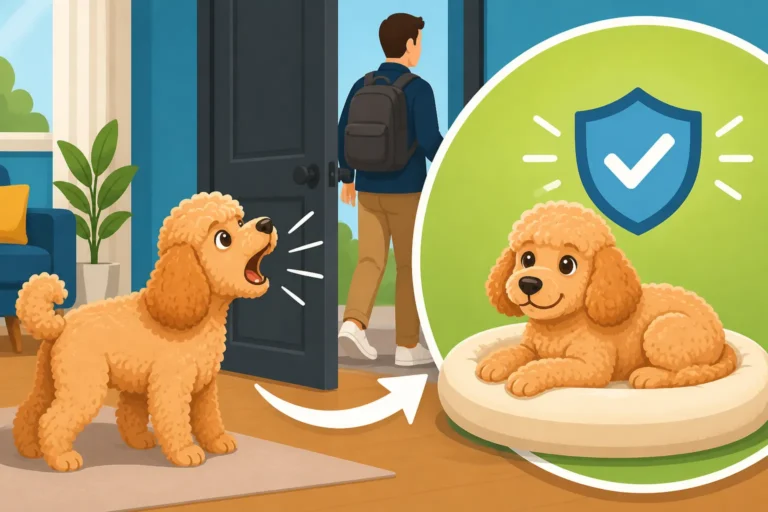
Poodles are often described as "Velcro dogs" due to their strong bond with their human companions. This deep attachment can sometimes lead to separation anxiety, where they become incredibly distressed when left alone. This distress can manifest in various ways, including destructive chewing, excessive barking, and, yes, house-soiling. It's not out of spite, but a panic response. A Poodle experiencing Separation Anxiety in a Velcro Poodle might urinate or defecate indoors as a physiological reaction to extreme stress, completely unrelated to their understanding of where they "should" go.
Submissive or Excitement Urination
Some Poodles, particularly younger or more sensitive individuals, might display submissive urination. This happens when they feel overwhelmed, scared, or are being reprimanded. It's an involuntary response, a way of saying "I mean no harm." Similarly, excitement urination can occur when they greet people, during enthusiastic play, or when they anticipate something exciting like a walk. These are not deliberate acts but a temporary loss of bladder control due to intense emotion. The trick is to manage the situation to prevent the trigger.
Marking Behavior: More Than Just Accidents
If your Poodle is consistently urinating small amounts in multiple spots, particularly on vertical surfaces (like furniture legs or walls), it might be marking behavior rather than simple house-soiling. Both male and female Poodles can mark, and it's often driven by territorial instincts, a response to new scents (like another dog visiting), or a way to communicate their presence. This is often seen even in house-trained dogs, especially if they're intact, though spayed/neutered dogs can also mark.
Fear and Aversion to Outdoor Conditions
Poodles are sensitive souls, and extreme weather or unpleasant outdoor experiences can make them reluctant to eliminate outside. Imagine a small Toy Poodle being asked to go out into a downpour or freezing snow – it might be genuinely uncomfortable for their tiny paws and thin coat. Loud noises, unfamiliar people, or intimidating dogs in the yard can also create an aversion to the outdoor potty spot. If going outside becomes a source of fear or discomfort, a clever Poodle will quickly learn that the inside of the house is much safer and warmer. Getting a Toy Poodle Outside in the Cold can be a real challenge for many owners.
Common Training Gaps and How to Fix Them
Even with the best intentions, subtle inconsistencies or misunderstandings in our training approach can lead to a Poodle having accidents. It's rarely about a lack of effort but sometimes about a lack of precise execution.
Inconsistent Schedules and Missed Opportunities
One of the biggest culprits in potty training woes is inconsistency. Poodles thrive on routine, and if their potty schedule is erratic, they'll struggle to learn when and where they're expected to go. Missed opportunities are another issue; if you don't take your Poodle out often enough, or if you bring them in too quickly before they've had a chance to fully relieve themselves, accidents are inevitable. For puppies, the general rule is to take them out every hour they are awake, after waking up, after eating, and before bed. This schedule needs to be diligently maintained.
Ineffective Communication: The Poodle Outthinking You
Your clever Poodle might understand "potty" in a certain context, but not generalize it. For instance, they might understand "go potty" on the grass in the backyard, but not on a leash in a new park, or on concrete. Or, they might learn that if they look like they need to go, you’ll take them out, even if they don't actually have to. This can become a game for a smart Poodle. Why a Poodle Invents Its Own Shortcuts can be seen here – they find the easiest path to what they want, even if it's not what you intended. The key is to be clear, consistent, and always reward elimination, not just going outside.
Rushing the Process and Expecting Too Much Too Soon
Many owners, especially those with intelligent breeds, make the mistake of assuming their Poodle will "get it" quickly and then slack off on the rigorous training schedule. Potty training is a process that requires patience and reinforcement over several months, not weeks. Even after a Poodle seems reliably house-trained, occasional regressions can happen, especially during adolescence or times of stress. Ending supervised outdoor time too soon, or giving too much freedom indoors before they are truly solid, can set them back. Remember, a fully house-trained dog means no accidents for a significant period (often 3-6 months), not just a few accident-free days.
Punishment and Its Counterproductive Effects
Scolding, yelling, or physically punishing your Poodle for an indoor accident is highly counterproductive and can actually make the problem worse. Poodles are sensitive, and harsh treatment will only teach them to fear you and to hide their accidents. They won't associate the punishment with the act of urinating indoors, but rather with your presence when they go to the bathroom. This often leads to dogs sneaking off to eliminate in hidden corners, behind furniture, or in other rooms, making the problem harder to solve. Instead of punishing the accident, focus on preventing future ones and rewarding correct behavior.
Environmental Factors That Contribute to Accidents
Sometimes, the problem isn't the Poodle's understanding or health, but rather the environment we've created or the changes within it. Our homes and daily lives play a significant role in a Poodle's potty habits.
Changes in Routine or Household Dynamics
Poodles thrive on routine, and any significant change can be unsettling. A new work schedule, a family member moving in or out, a new pet, or even furniture rearrangement can disrupt their sense of security and lead to stress-induced accidents. For a sensitive Poodle, these shifts can feel significant and overwhelming, making them less likely to maintain their usual habits. Maintaining as much consistency as possible during periods of change can help.
Inadequate Access to Outdoor Potty Areas
Are you making it easy for your Poodle to succeed? If the outdoor potty area is difficult to access, uninviting, or far away, your Poodle might opt for convenience indoors. This is especially true for Toy Poodles, who might not want to trek across a large yard in bad weather. For apartment dwellers, taking the elevator down multiple floors can be too long a wait for a small bladder. Consider if the route to the potty spot is clear, safe, and appealing, and if they have consistent access.
Improper Cleaning of Accident Spots
One of the most overlooked aspects of managing accidents is proper cleanup. If your Poodle has an accident indoors, and you don't clean it thoroughly with an enzymatic cleaner, the residual odor will signal to your Poodle (and other dogs) that this spot is an acceptable place to eliminate. Their powerful sense of smell means even traces undetectable to humans are clear invitations to them. Products available on platforms like Amazon can be lifesavers here, designed specifically to neutralize pet odors and stains, breaking the cycle of repeat accidents.
Distractions in the Potty Area
When you take your Poodle out to potty, is it a dedicated "potty break" or a free-for-all play session? If the outdoor area is full of distractions—other dogs, people, squirrels, interesting smells—your Poodle might get too sidetracked to focus on the task at hand. They might sniff around, play, and then come back inside, only to have an accident five minutes later because they didn't actually relieve themselves outdoors. Make potty breaks boring and purposeful.
Strategies for Success: Re-establishing Rock-Solid Potty Habits
If your Poodle is having accidents, it's time to go back to basics, even if they were previously house-trained. Think of it as a reset, building good habits from the ground up with patience and positive reinforcement.
Re-establishing a Strict Potty Schedule
Consistency is king. Create a strict potty schedule and stick to it like glue. This means taking your Poodle out first thing in the morning, every 1-2 hours during the day (more often for puppies or seniors), after every meal and drink, after waking from naps, after play sessions, and right before bed. Use a timer if you need to!
Sample Poodle Potty Schedule
| Time | Activity | Purpose |
|---|---|---|
| 7:00 AM | Wake up, immediately outside | Empty bladder after overnight hold |
| 7:15 AM | Breakfast | Prompt elimination post-meal |
| 7:45 AM | Outside again | Post-meal and post-drink elimination |
| 9:00 AM | Outside | Regular hourly break |
| 10:30 AM | Nap time, then immediately outside upon waking | After waking, bladder needs to be emptied |
| 1:00 PM | Lunch | Mid-day meal for puppies/smaller Poodles |
| 1:30 PM | Outside again | Post-lunch potty |
| 3:00 PM | Playtime, then immediately outside | After excitement and physical activity |
| 5:00 PM | Dinner | Evening meal |
| 5:30 PM | Outside again | Post-dinner potty |
| 7:00 PM | Outside | Before family evening activities |
| 9:00 PM | Last call outside | Final potty before bed |
| Throughout Day | If Poodle signals, immediately outside | Responding to individual needs |
Supervised Freedom and Crate Training
During the retraining phase, your Poodle should either be directly supervised, on a leash attached to you, or safely contained in a crate or pen. This prevents them from sneaking off to have accidents. A crate, when used properly, becomes a safe den where dogs are naturally reluctant to soil. Crate Training a Poodle That Wants Company can be very effective for house-training, as long as the crate isn't too large (just big enough to stand, turn around, and lie down) and they aren't left in it for excessive periods. When your Poodle is out of the crate, it's important that they are actively supervised.
Positive Reinforcement and High-Value Rewards
Every single time your Poodle eliminates in the correct spot outside, throw a party! Use enthusiastic praise, happy tones, and high-value treats. Make it the most exciting thing that happens all day. The instant they finish, offer the reward. This teaches them that going potty outside is incredibly rewarding. Avoid punishing mistakes; simply clean them up thoroughly and increase supervision. Training programs like those offered by BAXTER & Bella often emphasize this positive reinforcement approach, breaking down training into manageable steps that build confidence in both dog and owner.
Choosing the Right Potty Spot
Make the outdoor potty spot appealing and consistent. Take your Poodle to the same general area each time. If you have a Toy Poodle who hates the rain, consider a covered area or investing in a little raincoat. If they're a Standard Poodle who loves to roam, make sure the area is secure and free of overwhelming distractions. You can even use a specific cue word, like "potty" or "go pee," as they are eliminating to help them associate the word with the action. This can be particularly useful for a smart Poodle who learns quickly.
Managing Indoor Access and Environment
Ensure all past accident spots are thoroughly cleaned with enzymatic cleaner. Consider temporarily restricting access to rooms where accidents frequently occur. Puppy pads can be a crutch, but if you must use them, place them consistently in one spot away from food and beds. The goal, however, should be to transition completely to outdoor elimination. For very young puppies, especially Toy Poodles with small bladders, Bladder Size in a Toy Poodle Puppy means more frequent trips are non-negotiable.
When to Call in the Professionals
Sometimes, despite your best efforts, the problem persists, or you feel overwhelmed. This is not a sign of failure but a wise recognition that expert help is needed.
Consulting Your Veterinarian First and Foremost
As we've discussed, medical issues are often disguised as behavioral problems. If you haven't already, your first step should always be a thorough veterinary examination. Your vet can perform urinalysis, blood tests, and other diagnostics to rule out conditions like UTIs, diabetes, kidney issues, or even subtle pain. Be open and honest about the frequency and nature of the accidents. Your vet might even be able to offer insights into medications that could help with age-related incontinence or anxiety.
Seeking a Certified Professional Dog Trainer or Behaviorist
If all medical causes have been ruled out, and you're still struggling, it's time to consult a certified professional dog trainer or veterinary behaviorist. Look for someone who uses positive, force-free training methods, as Poodles are highly sensitive and do not respond well to harsh techniques.
A professional can:
- Observe your Poodle: They can often spot subtle cues or environmental factors you might be missing.
- Tailor a plan: They'll create a customized training plan specific to your Poodle's personality, your household, and the nature of the accidents.
- Address complex behavioral issues: If separation anxiety, marking, or fear is the root cause, a behaviorist has the expertise to help you address these underlying emotional issues effectively. Online training platforms like BAXTER & Bella also provide expert guidance and resources that can be incredibly helpful for owners needing structured support.
- Provide ongoing support: They can guide you through regressions and adjust the plan as needed.
Remember, a clever Poodle having accidents isn't a reflection of their intelligence, but often a symptom of something deeper, be it medical, behavioral, or a gap in our training communication. With patience, persistence, and sometimes professional guidance, you can help your Poodle achieve consistent house-training and enjoy a cleaner, happier home together.
Disclaimer
This article is for general informational purposes only and does not constitute professional advice. Laws, prices and regulations vary by location and change over time. Consult a qualified professional for guidance on your specific situation.