Trading With a Poodle That Guards Its Bowl
Finding out your beloved Poodle, usually so bright and eager to please, is snarling or snapping over their food bowl can be a truly unsettling experience. It chips away at the trust you're building, and frankly, it can be scary. This behavior, known as resource guarding, isn't about aggression for aggression's sake; it's a deep-seated instinct. This guide will help you understand why your Poodle might be guarding their meals, how to manage the situation safely, and provide actionable steps to gently retrain this challenging behavior.
Understanding Resource Guarding in Poodles
Resource guarding is a behavior where a dog protects a valued item—be it food, toys, a bed, or even a person—from perceived threats. While it can manifest differently across breeds, in Poodles, it often comes with a specific nuance due to their intelligence and sensitivity. It’s not necessarily a sign of a "bad" dog; it's a natural, albeit undesirable, instinct.
Why Your Poodle Guards Its Bowl
At its core, resource guarding stems from a dog's inherent drive to protect valuable commodities necessary for survival. In the wild, animals fiercely guard their food to ensure they get enough to eat and survive. Even though your Poodle lives a pampered life, this ancient instinct can still surface. It's not about being malicious; it's about a dog feeling vulnerable about losing something important to them.
Poodles, being incredibly intelligent and often sensitive, can sometimes develop guarding behaviors more subtly or intensely than other breeds. Their sharp minds mean they pick up on patterns quickly. If they've ever felt their food was threatened—perhaps a sibling nudged them away from the bowl as a puppy, or a person reached in and took their food—they learn that they need to defend it. Because Poodles are so tuned into their owners, they might also react strongly to perceived competition or intrusion. Their sensitivity, which makes them such wonderful companions, can also mean they are easily stressed by confrontation, leading to defensive behaviors. You might notice your Poodle is a Poodle Temperament and Sensitivity in other areas, and this can extend to their guarding.
The Signs of Bowl Guarding
Recognizing the early signs of resource guarding is crucial, both for safety and for effective intervention. It's rarely an instant snap; there's usually a ladder of warning signals that escalate as the dog feels more threatened. If you can catch it early, you have a better chance of nipping it in the bud before it becomes a full-blown issue.
Initial signs can be very subtle. Your Poodle might stiffen their body posture as you approach, perhaps pausing mid-chew and freezing. They might lower their head over the bowl, placing their body directly between you and the food. You might see a quick dart of the eyes in your direction, or a slight shift in their ears. As the perceived threat increases, these signs will become more overt. You might hear a low growl, a rumble deep in their chest, or see a quick lift of a lip, exposing a tooth. Some Poodles will gulp their food down quickly, trying to finish before you get too close. In more advanced cases, you'll see a hard stare, a full snarl, or even a quick snap in the air or a lunge. It's vital to respect these warnings. A growl isn't rude; it's your Poodle communicating their discomfort. Ignoring it forces them to escalate, teaching them that their polite warnings aren't effective. Understanding Reading a Poodle's Body Language is key here.
Safety First: Managing Guarding Behavior
When dealing with any form of resource guarding, safety for both you and your Poodle is paramount. Your goal is to manage the environment to prevent guarding incidents while you work on changing your Poodle's emotional response to your presence around their food. Never put yourself in a position where you might be bitten.
Creating a Safe Feeding Environment
The first step is to remove the opportunity for guarding to occur. This means changing how and where your Poodle eats. Choose a quiet, low-traffic area where your Poodle can eat undisturbed, far from children, other pets, or busy doorways. A crate, a separate room, or even a designated corner can work well. The idea is to make sure your Poodle feels completely secure with their food, so they don't feel the need to defend it.
Consider feeding your Poodle smaller, more frequent meals, or even scattering their kibble in a designated area. This prevents them from having a large, highly valued resource in one spot that they feel they need to protect. You can also use puzzle feeders or Kongs, which make eating a mental exercise rather than a quick gulp. This spreads out the "resource" and changes the dynamic. If you have multiple dogs, always feed them separately to avoid any competition or escalation of guarding behaviors. This safe, predictable environment sets the stage for positive training.
What NOT to Do When Your Poodle Guards
It's natural to want to show your dog "who's boss" or prove that you're the one in charge of their food. However, directly confronting a Poodle who is guarding their bowl can be incredibly counterproductive and even dangerous. Reaching into their bowl, taking their food away to "teach them a lesson," or scolding them for growling will only confirm their fear that you are indeed a threat to their valuable resource. This approach often increases their anxiety and makes the guarding worse, potentially leading to a bite. Remember, Why Harsh Handling Breaks a Poodle, and this applies acutely to guarding.
Instead of force, we want to build trust and positive associations. Never punish a growl. A growl is a warning, and if you punish it, your Poodle might learn to skip the warning and go straight to a bite. Your Poodle isn't trying to be "dominant" or defiant; they're genuinely feeling insecure. Approaching them with anger or force will only erode their trust and make them more fearful around their food. This isn't a battle of wills; it's an opportunity to teach them that your presence around their food bowl means good things happen, not bad ones.
Gentle Counter-Conditioning and Desensitization Techniques
The goal of counter-conditioning and desensitization is to change your Poodle's emotional response to your presence around their food. Instead of feeling anxious and defensive, we want them to feel happy and excited because they associate you with even better things. This takes time, patience, and consistency.
The "Trade Up" Game
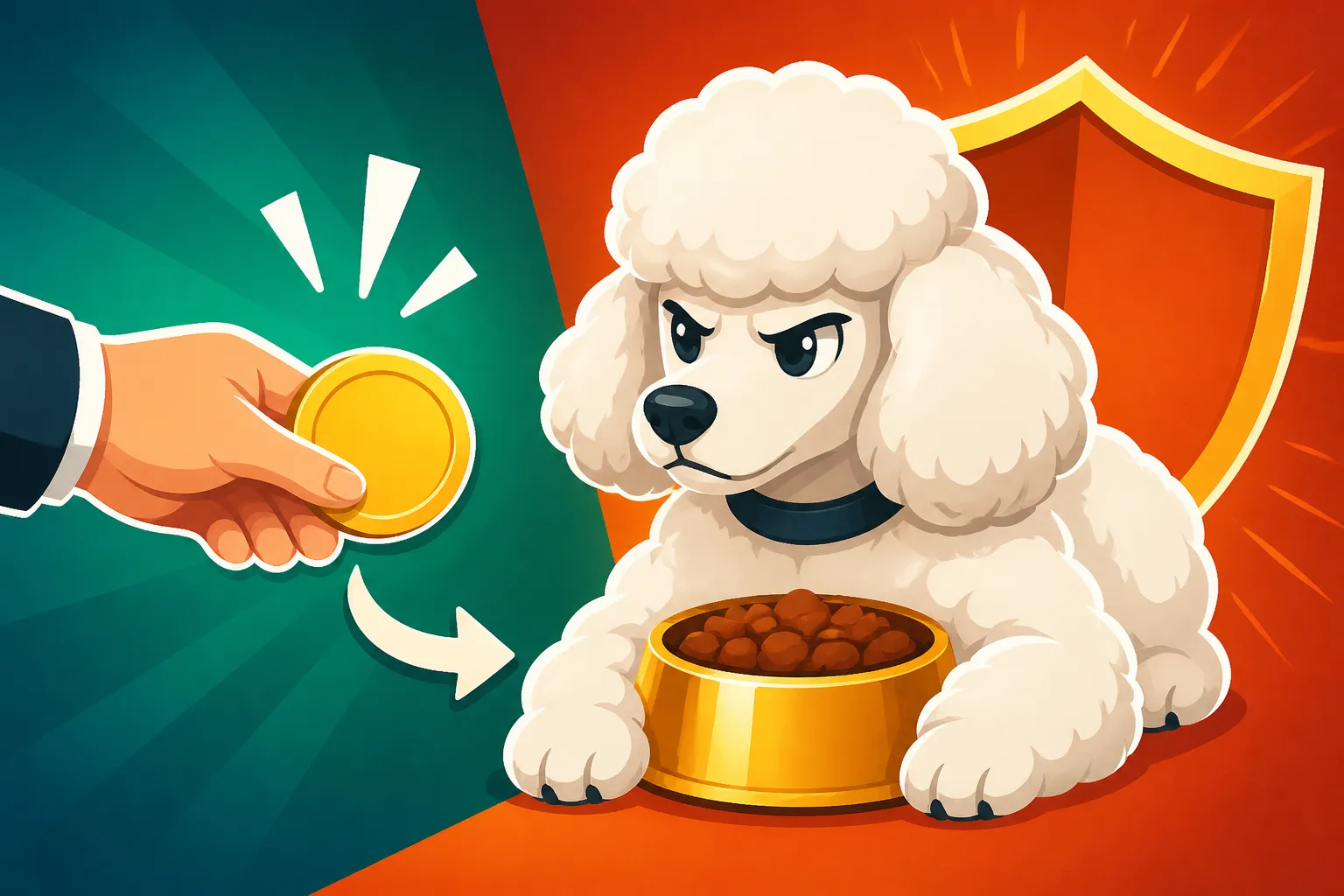
This is one of the most effective and safest methods for addressing bowl guarding. The concept is simple: your Poodle learns that your approach doesn't mean you're taking their food away; it means you're bringing something even better. This builds a positive association. You'll need some truly high-value treats – think cooked chicken, cheese, or hot dogs, cut into small pieces. These should be far more appealing than their regular kibble. You can find excellent high-value training treats on Amazon.
Start when your Poodle is eating their meal. Approach them from a distance where they show no signs of guarding (no stiffening, no growling). As you get closer (but still well outside their "comfort zone"), gently toss a high-value treat past their bowl, a few feet away. Then walk away. Repeat this several times over multiple meals. The idea is that you appear, something amazing drops, and then you leave. They start to think, "Oh, human coming near my bowl means extra yummy treats!" Over time, you can gradually decrease the distance from which you toss the treat, eventually tossing it right next to the bowl, and then even into the bowl. The key is to never take anything away, only add. The process looks something like this:
| Step | Action | Poodle's Reaction to Watch For | Goal |
|---|---|---|---|
| 1 | Approach from a distance (10-15 ft) | No stiffening, no growl | Establish positive association from afar |
| 2 | Toss high-value treat past their bowl | Eagerly eats treat | Human approach = bonus goodie |
| 3 | Walk away calmly | Returns to original bowl | Reinforce non-threatening nature of interaction |
| 4 | Gradually decrease distance | Remains relaxed | Build comfort with proximity |
| 5 | Toss treat into the bowl | Happy, wags tail | Human hands near bowl = even better food |
| 6 | Introduce brief, gentle touches while tossing | Tolerates touch, still eats | Desensitize to physical interaction |
Always move at your Poodle's pace. If they show any signs of tension, you've moved too quickly, and you need to go back to an easier step. Consistency is vital for this to work.
Approaching the Bowl Positively
Beyond the "trade up" game, you want to make any interaction with the food bowl a positive one. This involves desensitizing your Poodle to your presence around their mealtime. Instead of just tossing treats and leaving, you can start to incorporate other positive interactions. For example, walk past their feeding area (at a comfortable distance) and just drop a high-value treat on the floor near them, not directly into their bowl if they're still sensitive about that. Your goal is to change their perception of your approach from "threat" to "bringer of good things."
You can also use a long line or leash, especially if your Poodle has a tendency to dart away with a guarded item. This allows you to maintain control safely without getting too close. As you build trust, you can occasionally drop a few extra pieces of kibble into the bowl while they're eating, without asking for anything in return. This reinforces that your hand near the bowl gives, it doesn't take. You are actively trying to rewire their brain to think, "Human is here, bonus food is coming!"
Hand Feeding and Food Delivery Drills
Hand feeding is a powerful tool to build trust and eliminate guarding, especially with a Poodle who is usually Training the Second Smartest Dog Breed. It establishes you as the provider of all good things. For a while, consider hand feeding your Poodle some or all of their meals. This means they literally have to take food from your hand, creating a strong positive association with your presence and touch around their food. This helps to reframe the resource as coming from you, rather than being something they need to defend from you.
You can also incorporate "food delivery drills." Instead of just putting the bowl down and walking away, practice a structured routine. Have your Poodle sit and wait for their food. As you lower the bowl, drop a high-value treat into it. Stand near the bowl (at a safe distance, of course) while they eat, periodically dropping in another treat or two. This teaches them that your presence during mealtime is a good thing and that waiting patiently results in rewards. This isn't about dominance; it's about showing your Poodle that you are a benevolent provider. Consider online resources like BAXTER & Bella for structured training plans that emphasize positive reinforcement and build strong foundational behaviors. This continuous positive reinforcement helps to diminish any anxieties your Poodle might have about their food bowl. You might find that once these basic manners are in place, fading the rewards becomes easier, as Poodles often respond well to Fading Rewards With a Quick-Learning Poodle as cues become ingrained.
When to Seek Professional Help
While many cases of mild resource guarding can be managed and improved with consistent positive reinforcement at home, some situations warrant the expertise of a professional. Knowing when to call in the cavalry is vital for both your safety and your Poodle's long-term well-being.
Recognizing Escalation and Risk
If your Poodle's guarding behavior involves frequent snarling, snapping, or actually biting, or if the behavior is spreading to other resources (like toys, beds, or even specific people), it's time to seek professional help immediately. These are signs that the behavior is deeply ingrained and potentially dangerous, and attempting to manage it on your own could lead to injury. An experienced professional can assess the severity of the guarding, identify specific triggers, and develop a tailored safety and modification plan.
Similarly, if you feel anxious or fearful around your Poodle during meal times, or if the behavior is not improving despite your consistent efforts, don't hesitate to reach out. Your mental well-being matters, and a professional can provide the guidance and support you need. Resource guarding can be complex, especially with intelligent breeds like Poodles who can be very particular. Early intervention by a qualified expert can prevent the behavior from escalating further and ensure a safer, happier household. This is particularly true if you are concerned about When a Poodle's Growl Needs a Behaviorist.
Finding a Qualified Trainer
Not all dog trainers are equipped to handle serious resource guarding. When looking for help, seek out a certified professional dog trainer (CPDT-KA) or a certified dog behavior consultant (CDBC) who specializes in positive reinforcement and fear-free methods. Avoid any trainer who suggests using dominance theory, alpha rolls, punishment, or force, as these methods will only worsen guarding behavior and damage your relationship with your Poodle. Look for a professional who focuses on understanding the underlying emotions driving the behavior and changing those emotions through counter-conditioning and desensitization.
Ask prospective trainers about their philosophy, experience with resource guarding, and what their approach would look like. A good trainer will observe your Poodle in their environment, ask detailed questions about their history and daily routine, and work with you to implement a safe and effective training plan. They might also recommend consulting with a veterinary behaviorist if there's a possibility of an underlying medical issue contributing to the behavior. Investing in professional guidance will be one of the best decisions you make to help your Poodle overcome this challenging behavior and ensure a harmonious home. Finding a Trainer Who Uses No Force on a Poodle is absolutely essential when addressing guarding.
Disclaimer
This article is for general informational purposes only and does not constitute professional advice. Laws, prices and regulations vary by location and change over time. Consult a qualified professional for guidance on your specific situation.