Cameras and Puzzle Feeders for a Lonely Poodle
There’s a unique kind of heartache that comes with leaving your beloved Poodle alone, isn’t there? You close the door, and immediately your mind conjures images: are they pacing, whining, or worse, tearing up your favorite rug out of sheer boredom or distress? It’s a guilt many Poodle parents know all too well, exacerbated by our breed's famously sensitive and intelligent nature. This guide is here to help you navigate that emotional tightrope, exploring how modern tools like pet cameras and interactive puzzle feeders can not only provide peace of mind for you but also offer vital mental and emotional enrichment for your Poodle, making those alone times a little less lonely.
Understanding Your Poodle's Alone Time Blues
Poodles are not just pretty faces with fancy haircuts; they are highly intelligent, deeply empathetic, and often form incredibly strong bonds with their human companions. This means that being left alone, especially for long stretches, can be genuinely hard for them. It’s not just about missing you; it can escalate into true distress.
The Subtle Signs of Loneliness: Beyond the Destructive Chewing
When we think of a lonely dog, many of us immediately picture torn cushions or chewed-up door frames. While destructive chewing is certainly a symptom of distress or boredom, Poodles, with their nuanced personalities, can display a range of other, sometimes subtler, signs of loneliness or anxiety when left alone. You might not see it firsthand, but the evidence accumulates. Perhaps your neighbor mentions incessant barking or whining that wasn't happening when you were home. Or you return to find your Poodle overly enthusiastic, almost frantic in their greeting, like they've been starved for attention for weeks, even if it's only been a few hours.
Other less obvious signs can include repetitive behaviors like pacing back and forth, staring out a window for extended periods, or an inability to settle. Some Poodles might even self-groom excessively, leading to skin irritation, or lick their paws raw when nobody is around to redirect their anxiety. They might refuse to eat the delicious meal you left for them until you return, indicating a level of stress that overrides their appetite. It’s important to look beyond the obvious destruction and consider the full spectrum of behaviors that might signal your Poodle isn't coping well with solitude. Separation Anxiety in a Velcro Poodle goes into more detail about how deeply Poodles feel these emotions.
Why Poodles Struggle with Being Left Alone: Their Intelligent, Velcro Nature
Poodles were originally bred as working water retrievers, a role that required close collaboration with humans. This historical context helps explain their strong drive for companionship and purpose. They aren't content to simply lie around; their keen minds need stimulation, and their loyal hearts crave connection. This is why Poodles often earn the nickname "Velcro dogs" – they literally stick to you, following you from room to room, just happy to be in your orbit.
When a Poodle is left alone, especially for long periods, their high intelligence can actually work against them. A bored Poodle is a resourceful Poodle, and that resourcefulness often manifests in ways we don't appreciate, like finding forbidden items to chew or inventing their own "entertainment." Moreover, their sensitivity means they are acutely aware of your absence, and this can quickly turn from simple boredom into genuine anxiety or even panic. They thrive on routine and predictability, and sudden changes or extended periods of isolation can be deeply unsettling. A Poodle needs to feel like they have a job, even if that job is just cuddling with you on the sofa, and when that structure is removed, their inner world can become quite chaotic. This is why simply leaving them with a bed and water isn't enough; their mental landscape needs to be addressed. The Poodle That Follows You Everywhere expands on their deep need for connection.
The All-Seeing Eye: How Pet Cameras Bring Peace of Mind
Let's face it, one of the biggest anxieties for us Poodle parents is the unknown. What really happens after we close the door? Is Fifi quietly napping, or is she having a full-blown meltdown? Pet cameras have become a game-changer, offering a window into our Poodle's world when we're not there.
Choosing the Right Camera for Your Home: What to Look For
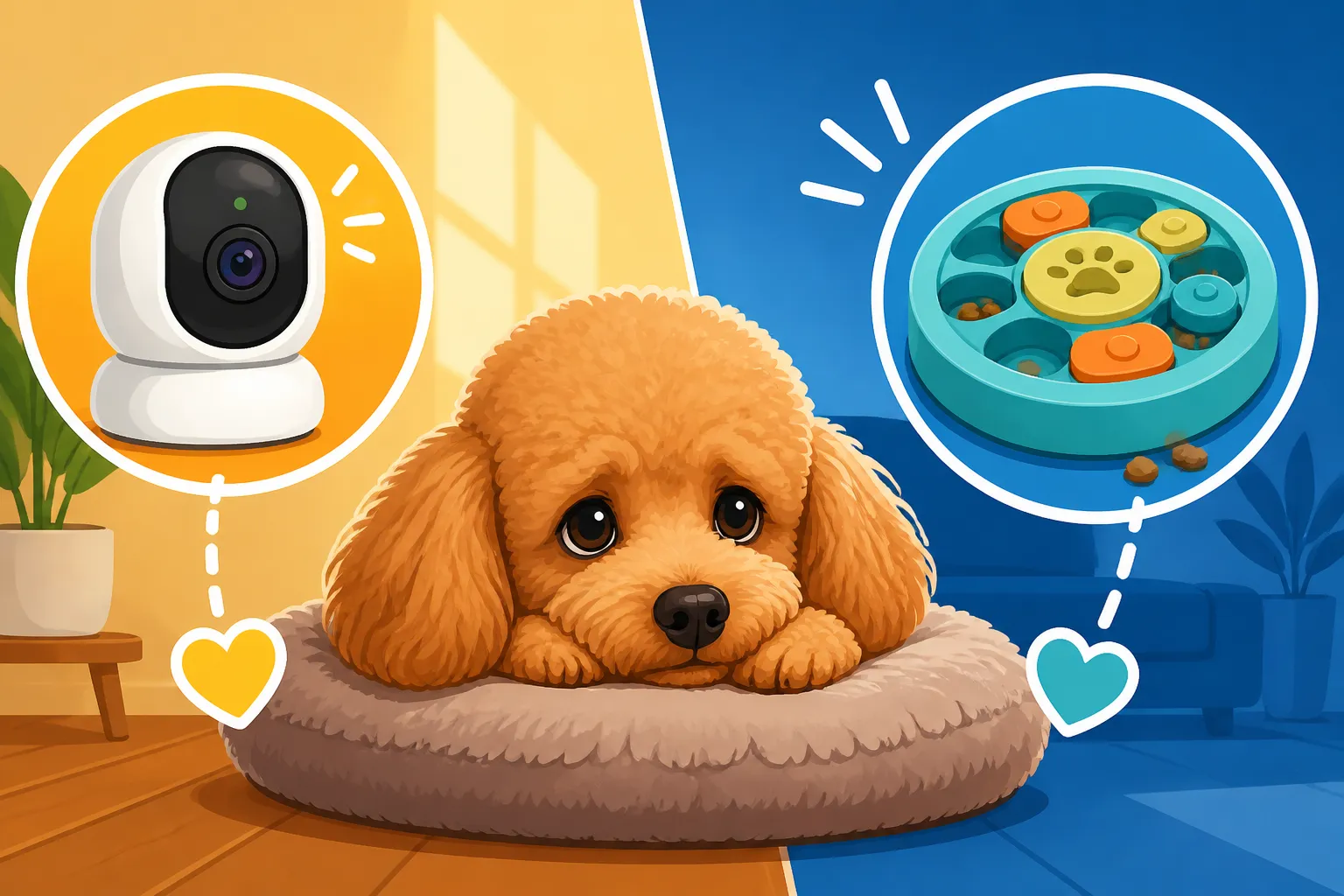
When you're trying to decide on a pet camera, it can feel a bit overwhelming with all the options out there. Think about what you really need to see and hear. Do you just want to check in periodically, or do you need to be able to interact? Most cameras connect to your home Wi-Fi and stream video directly to an app on your smartphone, giving you real-time access. Features to prioritize for Poodle parents often include two-way audio, so you can speak to your Poodle and hear them respond. This can be incredibly comforting for both of you, especially for a sensitive breed like a Poodle who might be soothed by the sound of your voice.
Night vision is another excellent feature, especially if you work late or your Poodle is left alone after dusk. You’ll want clear video quality, motion detection with alerts that tell you when your Poodle is active, and often, the ability to record snippets or continuous video for later review. Some models offer a wide-angle view, which is great for covering larger rooms where a Standard Poodle might roam, while others can pan and tilt, allowing you to follow a curious Toy Poodle around. You can find a huge variety of reliable pet cameras on sites like Amazon, with different price points and feature sets to match your needs and budget.
Observing and Understanding Your Poodle's Behavior
Having a camera isn't just about catching your Poodle in the act of counter-surfing; it's a powerful diagnostic tool. When you start reviewing footage, especially from the first 15-30 minutes after you leave, you might be surprised by what you learn. Does your Poodle immediately start barking, or do they settle down for a bit before the anxiety kicks in? Do they gravitate towards a specific window, or do they pace endlessly? You might discover patterns you were completely unaware of. For example, maybe your Poodle only starts whining when they hear the neighbor's dog, or perhaps their distress peaks exactly an hour after you've gone.
This insight is invaluable because it helps you understand the triggers and severity of your Poodle's loneliness or separation anxiety. Instead of guessing, you have concrete data. This information can then guide your strategy, whether it’s adjusting your departure routine, providing specific enrichment at critical times, or even helping your vet or a professional trainer understand the situation better. You can see if they truly relax or if they are just quietly stressed, which is often harder to detect in person. Hours a Poodle Copes With an Empty House discusses the duration your Poodle can handle and why observation is key.
Interactive Cameras: A Virtual Presence
Beyond just watching, some pet cameras offer interactive features that can truly make a difference for a lonely Poodle. The most common interactive feature is a treat dispenser. Imagine being at work, seeing your Poodle looking a bit anxious, and being able to remotely dispense a tasty treat! This isn't just a distraction; it creates a positive association with your absence. Your Poodle might start to think, "Hmm, mom left, but sometimes a yummy treat pops out of that magic box!"
Other interactive cameras include built-in laser pointers, allowing you to play a quick game with your Poodle from afar. While this might not be suitable for all Poodles (some can become obsessed with lasers), for others, it provides a much-needed burst of mental and physical activity. These interactive features, combined with the two-way audio, create a semblance of connection, reinforcing that even when you're not physically there, you're still present in their world. It's not a substitute for your presence, of course, but it's a wonderful bridge that helps alleviate some of the stress and boredom a clever Poodle might otherwise experience.
Engaging Their Brilliant Minds: Puzzle Feeders as a Solution
Poodles are brainiacs, and like any intelligent creature, they need mental stimulation to truly thrive. Simply giving them a bowl of food twice a day misses a huge opportunity to engage their minds. This is where puzzle feeders come into play – they turn mealtime into a challenging game, a productive "job" that taps into their natural problem-solving abilities.
The Benefits of Mental Stimulation for Poodles
For a Poodle, mental stimulation is as important as physical exercise. Without it, those brilliant brains can become restless, bored, and, as we've discussed, prone to inventing their own, often destructive, forms of entertainment. Puzzle feeders directly address this need by requiring your Poodle to think, nudge, sniff, and manipulate objects to get their food or treats. This process mimics the natural foraging behaviors of canids, turning a simple act of eating into a rewarding intellectual challenge.
The benefits are numerous: it slows down fast eaters, which can be particularly helpful for Standard Poodles prone to gulping their food down, a habit sometimes associated with issues like bloat. It provides a healthy outlet for their energy, reducing the likelihood of boredom-induced behaviors like excessive barking, chewing, or pacing. Furthermore, successfully solving a puzzle gives your Poodle a sense of accomplishment, boosting their confidence and enriching their day. It’s like sending your Poodle to a mini-school session every mealtime, where they get to use their smarts in a constructive way. Keeping a Poodle Mind Occupied delves deeper into why mental exercise is so vital for this breed.
Types of Puzzle Feeders and How to Introduce Them
The world of puzzle feeders is vast and wonderful, offering something for every Poodle's skill level and preference. It’s important to start simple and gradually increase the difficulty. Here are a few common types:
- Snuffle Mats: These are fabric mats with many folds and pockets where you can hide kibble or treats. They are fantastic for beginners, encouraging natural sniffing and foraging.
- Slow Feeder Bowls: While not traditional puzzles, these bowls have ridges or obstacles that make your Poodle eat around them, slowing down mealtime.
- Treat-Dispensing Balls/Kongs: These are hollow toys that you fill with kibble or soft treats. Your Poodle has to roll, nudge, or lick them to get the food out. Start with easily dispensed treats and gradually use more challenging ones.
- Slide or Flip Puzzles: These are typically made of plastic or wood, with compartments that your Poodle has to slide or flip open with their nose or paws. They range from simple one-step puzzles to intricate multi-step designs.
When introducing a new puzzle feeder, do it when you are present and can supervise. Show your Poodle how it works, making it easy at first. Let them succeed quickly to build confidence and positive association. Don't make it so hard that they get frustrated and give up. Many reputable dog training resources, like those offered by BAXTER & Bella, emphasize positive reinforcement and making learning a fun experience, which applies perfectly to introducing puzzle feeders. You want your Poodle to see it as a rewarding game, not a chore.
| Puzzle Feeder Type | Difficulty Level | Interaction Required | Primary Benefit | Good For |
|---|---|---|---|---|
| Snuffle Mat | Easy | Nose, Paws | Foraging, Slow Eating | Beginners, Anxious Eaters |
| Slow Feeder Bowl | Easy | Licking, Nudging | Slow Eating | Gulping Poodles |
| Treat-Dispensing Ball | Easy to Medium | Nudging, Rolling | Physical Engagement, Boredom | Energetic Poodles, Independent Play |
| Lick Mat | Easy | Licking | Calming, Distraction | Stress Reduction, Grooming |
| Slide/Flip Puzzle | Medium to Hard | Paws, Nose, Brain | Mental Stimulation, Problem-Solving | Intelligent Poodles, Reduces Boredom |
Progressing the Challenge: Keeping Your Poodle Engaged
Poodles are quick learners, and what was a challenge yesterday might be a piece of cake today. To keep them truly engaged and prevent boredom, you need to progress the challenge. Once your Poodle masters a particular puzzle, make it slightly harder. For a treat-dispensing ball, try a larger kibble size or a stickier treat like peanut butter (ensure it's xylitol-free!). For a slide puzzle, introduce more steps or more complex movements.
It's also a fantastic idea to rotate puzzle feeders. Just like we get bored playing the same video game every day, your Poodle will tire of the same puzzle. Having a few different types that you can switch out every few days keeps things fresh and exciting. This variety means they’re constantly faced with new problems to solve, which continues to stimulate their intelligent brains. Don't be afraid to experiment with different brands and designs, just ensure they are durable and safe for your Poodle. Remember, the goal is sustained engagement and mental exercise, not just a one-time distraction. This continuous mental workout is crucial for Poodles, who can easily get into mischief when their brains are idle, as explored in What a Poodle Does When Its Brain Is Idle.
Integrating Technology and Enrichment into a Holistic Plan
While pet cameras and puzzle feeders are wonderful tools, they are most effective when integrated into a broader strategy to support your Poodle's well-being. They are aids, not magic bullets, and should complement a holistic approach to managing loneliness or separation anxiety.
Combining Cameras and Puzzles for Optimal Effect
Think of pet cameras and puzzle feeders as a dynamic duo working in tandem. The camera allows you to observe when your Poodle needs engagement most. For instance, if you notice via the camera that your Poodle starts pacing and whining around two hours after you leave, that might be the perfect time to remotely dispense a treat from an interactive camera or to ensure they have access to a freshly prepared, challenging puzzle feeder before you leave. The camera helps you time your interventions and assess their effectiveness.
You can also use the camera to monitor how well your Poodle is interacting with their puzzle feeders. Are they quickly losing interest, or are they diligently working to get every last piece of kibble? This feedback loop helps you adjust the difficulty or type of puzzle to ensure maximum engagement. By using both tools, you gain a clearer picture of your Poodle's emotional state while providing targeted solutions. It’s about being an informed and responsive pet parent, even when you're not physically present.
Beyond Tools: Addressing the Root Causes
It's crucial to remember that while cameras and puzzle feeders offer incredible support, they don't cure severe separation anxiety. If your Poodle exhibits extreme distress, panic attacks, or self-harm when left alone, these tools are best used in conjunction with professional guidance. A certified professional dog trainer or a veterinary behaviorist can help you understand the root causes of your Poodle's anxiety and develop a comprehensive behavior modification plan. This often involves gradual desensitization to your departures, counter-conditioning techniques, and sometimes, medication to help manage anxiety during the retraining process.
These tools are fantastic for managing mild boredom, preventing destructive habits, and providing enrichment for Poodles who simply don't love being alone but aren't in a state of panic. For those with deeper anxieties, they become valuable components of a larger, professionally guided strategy. Understanding the difference between a bored Poodle and a panicking Poodle is key, and Telling Poodle Boredom From Real Panic offers further insights. Don’t hesitate to seek professional help if you suspect your Poodle's struggles go beyond simple loneliness.
Realistic Expectations and Consistency
Poodles are incredibly smart, but even for a genius like them, learning new habits and adjusting emotional responses takes time and consistency. Don't expect instant miracles. Introduce new puzzle feeders gradually, making sure your Poodle enjoys the process. Use the camera to gather data for a few days or weeks before making major changes to your routine based on what you see. Consistency in your approach is paramount. If you only provide a puzzle feeder some days or only use the camera intermittently, your Poodle won't form a clear understanding or expectation.
Building resilience in your Poodle when they're alone is a marathon, not a sprint. Celebrate small victories, like seeing them calmly engaging with a puzzle for a longer period, or a reduction in the initial barking bursts after you've left. Remember that Poodles thrive on routine, so try to be consistent with when and how you use these tools. Every bit of effort you put into managing their alone time contributes to their overall happiness and well-being. Your Poodle's keen mind and sensitive heart will thank you for the thoughtfulness and dedication. What Owning a Poodle Actually Demands provides a broader look at the commitment Poodle ownership requires.
Disclaimer
This article is for general informational purposes only and does not constitute professional advice. Laws, prices and regulations vary by location and change over time. Consult a qualified professional for guidance on your specific situation.