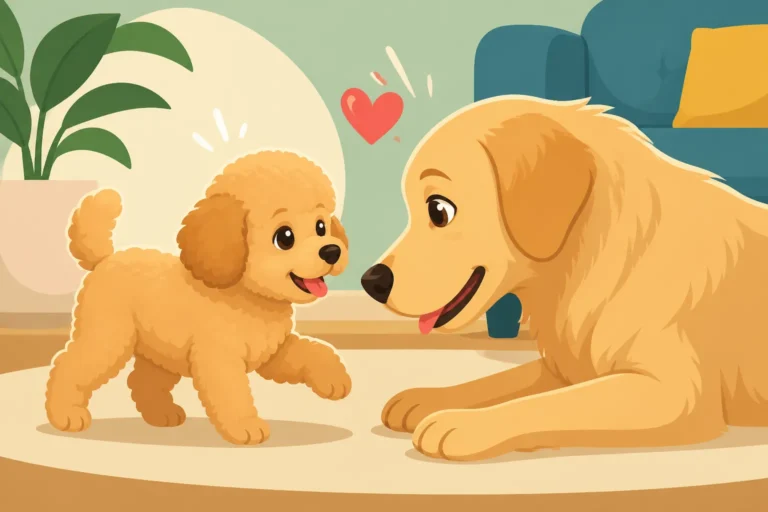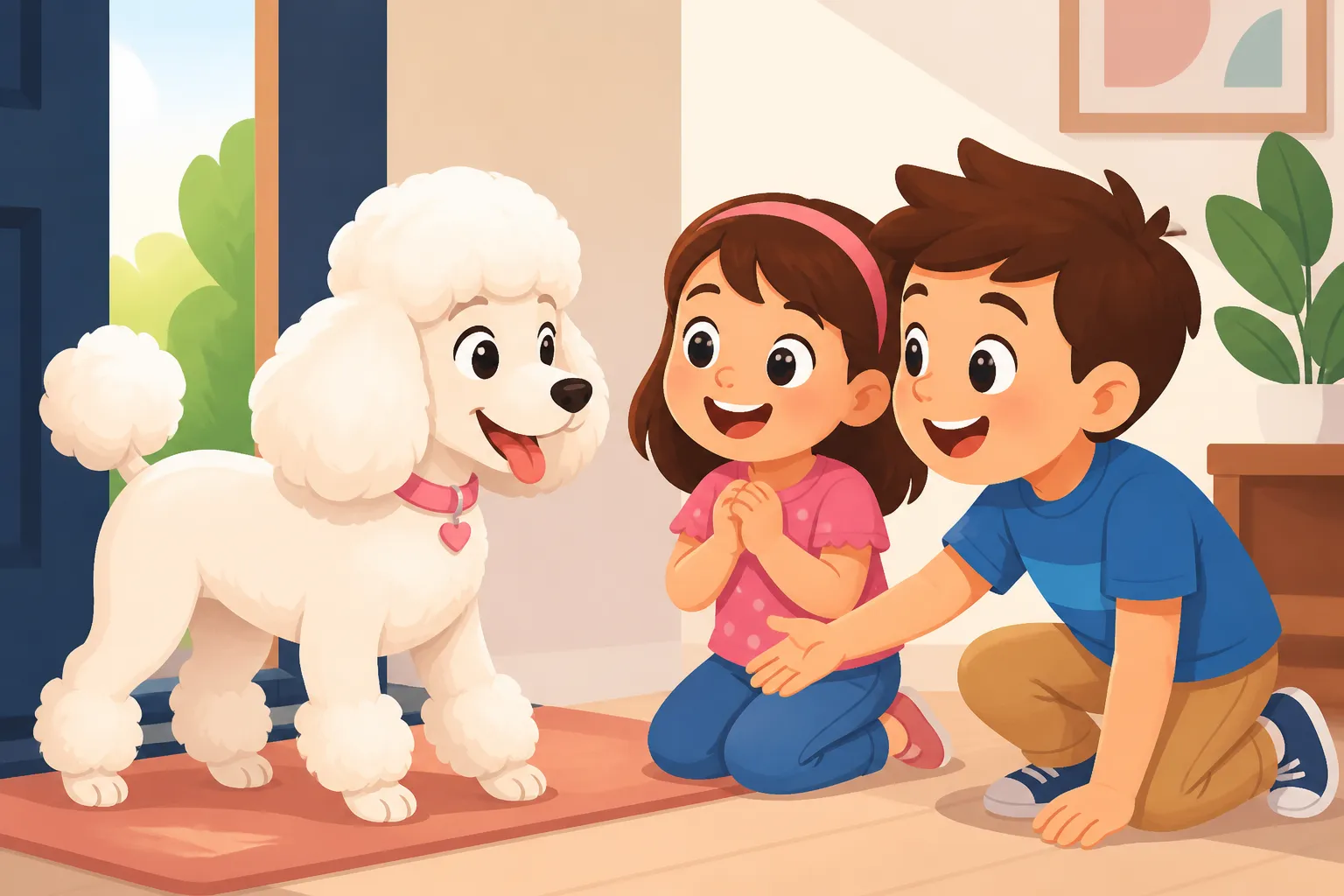
A Poodle Meeting the Children of the House
Bringing a new Poodle into a home with children, or introducing a Poodle to visiting kids, can be a source of real worry for many dog owners. You want everyone to be safe and happy, but sometimes the high energy of children can overwhelm a sensitive Poodle, or a Poodle's playful nips can frighten a small child. This comprehensive guide will walk you through practical steps to ensure a smooth, positive, and safe integration, fostering a loving relationship between your Poodle and the children in their life.
Understanding Poodle Temperament and Children
Poodles are incredibly intelligent and often highly sensitive dogs. While their smarts make them eager to learn, their sensitivity means they can react strongly to sudden movements, loud noises, or unpredictable interactions – all common features of childhood. Recognizing this unique blend of traits is the first step to a successful introduction, ensuring both your Poodle and your children feel secure and respected.
Poodle Sensitivity and Arousal
Poodles are known for their keen senses and often soft temperaments. This means they can be more easily startled or overstimulated than some other breeds. A child's sudden run, a shriek of delight, or even an unexpected hug can be perceived as overwhelming or threatening by a Poodle, especially one not accustomed to such interactions. This isn't about aggression; it's often about feeling insecure or flooded with too much input, which can quickly lead to stress behaviors. When a Poodle becomes over-aroused, they might jump, nip, bark excessively, or try to escape. It's crucial for us, as their guardians, to understand that their reactions often stem from their inherent nature, not necessarily from malice. Creating a calm environment and managing stimulation levels is key.
Think about it from your Poodle's perspective. They live in a world of smells and sounds far more intense than ours. Children bring a whirlwind of novel stimuli: high-pitched voices, fast, erratic movements, toys dropping, and the sheer unpredictability of a small human. Without careful introduction and supervision, this can quickly tip a sensitive Poodle into a state of anxiety or hyper-alertness, making it harder for them to respond calmly. We want to avoid pushing them past their comfort threshold, which can unfortunately lead to unwanted behaviors or even a defensive snap. Understanding Poodle Temperament and Sensitivity is paramount here, as it helps us anticipate and prevent overstimulation.
Reading Poodle Body Language Around Kids
Learning to read your Poodle's body language is arguably the most important skill for ensuring safe interactions with children. Poodles, like all dogs, communicate their feelings constantly through subtle cues long before they resort to a growl or a snap. Look for signs of stress: lip licking, yawning (when not tired), turning their head away, showing the whites of their eyes (often called 'whale eye'), tense body posture, a tucked tail, or ears flattened against their head. These are signals that your Poodle is uncomfortable and needs space; they are not being dramatic, they are giving you a clear warning.
Conversely, look for signs of a happy, relaxed Poodle: a soft gaze, loose body, a tail wagging loosely (not stiff and high), relaxed ears, and an open mouth with a "smiley" expression. Teaching children to recognize these cues too, even at a basic level, empowers everyone to participate in safe interactions. For instance, explaining that if the Poodle turns its head away, it means "I don't want to play right now." If you see signs of stress, it's time to intervene, call your Poodle away, or give them a quiet break. This proactive approach prevents situations from escalating and shows your Poodle you understand their needs. More on this can be found in Reading a Poodle's Body Language.
Age and Size Considerations
The dynamic between a Poodle and children can vary significantly depending on the Poodle's size and the children's age. A tiny Toy Poodle, for example, is far more vulnerable to accidental injury from a clumsy toddler than a robust Standard Poodle. Their delicate bones and small stature mean they can be easily stepped on, squeezed too tightly, or dropped. This vulnerability can, in turn, make them more prone to fear-based reactions if they feel unsafe, as their natural instinct is self-preservation. Even a small child's well-meaning hug could cause pain to a tiny Poodle if it's too tight.
On the other hand, a large Standard Poodle might inadvertently knock over a small child in excitement, even if their intentions are purely playful. A bouncing, enthusiastic Standard Poodle can easily send a toddler sprawling without meaning any harm. For older, more mature children, the Poodle's intelligence can be a wonderful asset, leading to engaging training sessions and games, as they can understand the nuances of interaction. Always consider the physical disparity and developmental stage of both the Poodle and the child. For example, if you have a Whether a Toy Poodle Is Safe With a Toddler, extra vigilance is needed, and physical barriers are often a wise choice. This isn't just about supervising; it's about making conscious decisions about who interacts and how, based on their respective sizes and capabilities.
Preparing Your Home and Family
Preparation is the bedrock of a successful Poodle-child relationship. It’s not enough to simply hope for the best; you need to actively set up your environment, educate your children, and gather the necessary tools to facilitate positive interactions from day one. This proactive approach reduces stress for everyone and sets the stage for a calm, loving household.
Educating Children on Dog Etiquette
This is perhaps the most critical step, and one that often gets overlooked. Children, especially young ones, often don't understand that dogs aren't furry toys they can manipulate at will. They need explicit teaching on how to interact respectfully and safely. Teach them the "Be a Tree" method (stand still, hands at sides, look at feet) if a dog jumps, barks, or approaches too boisterously. Emphasize gentle touches, no pulling ears or tails, no riding the dog, and always asking permission from an adult before petting. Crucially, instill the rule to never disturb a sleeping or eating dog, or a dog in its bed/crate.
Practice these rules with them before the Poodle arrives or before children visit. Use stuffed animals as props to demonstrate gentle petting and quiet voices. Explain that dogs need space and quiet time, just like people do, and that they communicate with their bodies. Programs like those from BAXTER & Bella, for example, often include modules specifically designed for families to learn together, providing a consistent framework for respectful interaction and making the learning process engaging for kids. Consistency from all adults is key to embedding these rules and ensuring they become second nature. More specific guidance for smaller dogs can be found in Teaching Children to Handle a Toy Poodle.
Creating Safe Spaces for Both
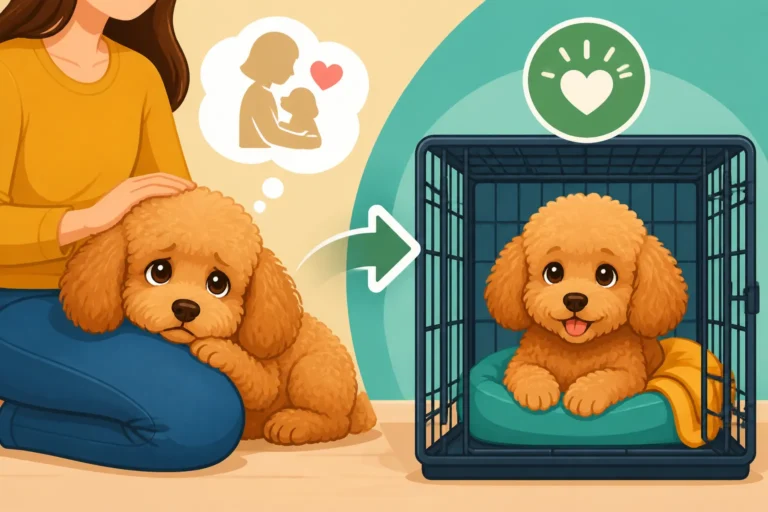
Both your Poodle and your children need designated "safe zones" where they can retreat and be undisturbed. For your Poodle, this might be a comfortable crate, a dog bed in a quiet room, or a secure playpen. Teach children that when the Poodle is in their safe space, they are absolutely not to be bothered, even if a favorite toy is nearby. This prevents overstimulation, ensures your Poodle has crucial downtime away from constant interaction, and builds trust that their boundaries will be respected. The crate, especially, can become a sanctuary where your Poodle feels secure, a quiet den to unwind. Providing a comfortable den can help with Crate Training a Poodle That Wants Company.
Equally important are safe spaces for children. A playpen for a toddler, a specific rug where toys are kept, or even a child's bedroom door that can be closed, can provide a boundary. This setup ensures that if your Poodle becomes too boisterous, or if children need a break from dog interactions, they have a secure area where they won't be approached. These physical boundaries are invaluable tools for managing interactions and preventing accidental mishaps, allowing everyone to feel secure in their own designated territory without constant micromanagement.
Essential Supplies and Gear
Having the right supplies makes managing interactions much easier and safer. High-value treats (think small pieces of cheese, cooked chicken, or commercial soft treats) are essential for rewarding calm behavior from your Poodle around children, helping them build positive associations. A long leash or house line can be incredibly helpful for keeping your Poodle near you during initial introductions without the need for constant physical restraint, allowing you to manage their movement subtly. Gates, either baby gates or taller pet gates, are invaluable for creating those safe zones and allowing visual interaction without direct physical contact, especially during initial stages.
Consider durable, engaging chew toys and puzzle feeders. These can divert a Poodle's attention when children are active, giving them an appropriate outlet for their energy and preventing them from seeking attention in less desirable ways (like jumping or nipping). You can find a wide variety of these items on platforms like Amazon, making it easy to stock up on different types to keep things interesting. You might even look for specific dog-safe furniture covers or elevated dog beds on Amazon to clearly delineate your Poodle's space. Don't forget a sturdy harness and leash for walks, ensuring safety when your Poodle and children are out and about in public.
The First Introductions: Setting the Stage
The initial meetings between your Poodle and children are crucial for setting a positive tone. Rushing these interactions can create fear or anxiety that's hard to undo, so patience, controlled environments, and a focus on positive experiences are vital. These first impressions can significantly impact the long-term relationship.
Controlled, Positive Initial Meetings
Think of initial introductions as brief, highly structured encounters. Begin with your Poodle on a leash or behind a gate, allowing children to observe from a distance, perhaps even from another room at first. Reward your Poodle generously with high-value treats for any calm behavior while children are present, even if they're just sitting quietly in another room or playing independently. The goal is for your Poodle to associate children with consistently good things – delicious treats, calm praise, and a relaxed atmosphere, creating a positive emotional response.
When you're ready for closer interaction, ensure it’s always supervised by a calm, attentive adult. Start with one child at a time, if possible, and keep the encounter very short – just a minute or two. Guide the child to offer a treat gently with an open hand and speak in a soft, calm voice. Avoid direct eye contact from the child, which can be perceived as threatening by some dogs. Let your Poodle approach the child, rather than forcing the interaction. If your Poodle shows signs of discomfort, end the session immediately. The aim is to build positive associations slowly and steadily, at your Poodle's pace, ensuring they never feel overwhelmed. Remember the importance of What a Poodle Puppy Should Meet by Sixteen Weeks for establishing a solid foundation.
Supervised Play and Interaction
Once your Poodle and children are comfortable with brief, controlled greetings, you can gradually introduce supervised play. Always use appropriate toys – never hands or feet – and ensure the play is structured and calm. Games like fetch with a soft toy or rolling a ball are excellent choices, as they provide a safe distance and clear rules. Avoid roughhousing, tug-of-war, or games that encourage nipping, chasing, or jumping, especially with smaller children, as these can quickly escalate and lead to accidental injuries or overstimulation. Teach children how to throw a toy and then disengage, letting the Poodle bring it back to an adult, thereby reinforcing the adult as the primary handler.
Even during play, continue to monitor your Poodle's body language for any subtle signs of stress or over-arousal. Watch for heavy panting, frantic movements, or a stiff body. Keep play sessions short and end them on a positive note, before either party gets too stimulated or tired. This teaches both the Poodle and the children that interactions are fun but have clear boundaries and a calm ending. Consistent supervision means being actively engaged, ready to intervene or redirect at a moment's notice, not just being in the same room.
Managing Excitement and Overwhelm
Poodles can get quite excited, especially when new people or activities are present. Children often bring that excitement to a whole new level, which can be lovely but also needs careful management. It's essential to manage this energy to prevent things from spiraling out of control and becoming unsafe or stressful. If your Poodle starts jumping, barking excessively, getting mouthy, or seems unable to settle, immediately separate them from the children. This can be done calmly by putting them on a leash and walking them to their safe space, or by using a baby gate. Provide them with a durable chew toy or a puzzle feeder in their quiet zone.
Teach your Poodle a "place" command, so they can go to their bed or mat when things get too lively. Reward them for staying there quietly while children are active. Similarly, teach children to dial down their energy around the Poodle. Explain that loud noises, shrieking, and fast, erratic movements can make the Poodle nervous or even fearful. Give children specific alternatives, like using a "whisper voice" or "slow motion" around the dog. Consistent management of excitement from both sides ensures a more harmonious home and teaches everyone self-regulation.
Ongoing Supervision and Training
Successful integration isn't a one-time event; it's an ongoing commitment to diligent supervision, consistent training, and clear boundary setting. This continuous effort builds a foundation of trust and respect that can lead to a beautiful, lasting relationship between your Poodle and the children in your life for years to come.
Consistent Rules and Boundaries
Every single member of the household, including all children and visiting adults, must understand and enforce the same rules for the Poodle. This consistency is absolutely vital for your Poodle to understand expectations, feel secure in their environment, and know what behavior is acceptable. For example, if jumping on guests is not allowed, it shouldn't be allowed with children either. If your Poodle isn't allowed on the sofa, children should be taught not to invite them up or secretly give them cuddles there. Ambiguous rules create confusion and anxiety for your Poodle, potentially leading to unwanted behaviors as they try to figure out what's permitted.
Establish clear rules about feeding times (no bothering the Poodle while they eat), sleeping areas, and designated play zones. Ensure everyone knows the "Poodle is in their crate, leave them alone" rule. When rules are ambiguous or change depending on who's supervising, Poodles can become confused and anxious, potentially leading to unwanted behaviors as they try to test boundaries or seek clarity. A unified approach across the family reinforces positive habits and ensures a predictable, safe environment for your Poodle, which fosters confidence and good manners. This consistency is also key for specific guidance like Teaching Children to Handle a Toy Poodle.
Teaching Poodles Calmness Around Kids
Beyond basic obedience commands, actively train your Poodle to be calm and relaxed in the presence of children. This involves capturing and rewarding calm behavior. If your Poodle is lying quietly on their bed while children are playing nearby, toss them a treat and offer soft praise. If they ignore a child walking past, acknowledge that calm choice. Gradually increase the distractions and activity levels while consistently rewarding their composure and ability to remain settled. The goal is to build a strong association: children present = calm behavior gets rewards.
"Settling" exercises can be particularly beneficial. This involves teaching your Poodle to lie down and relax on command, maintaining a relaxed posture even amidst mild distractions. Regular practice of these skills, especially with children observing or participating quietly by, for example, dropping a treat, helps your Poodle generalize calmness to real-life situations. Short, frequent training sessions with positive reinforcement are far more effective than long, infrequent ones. If you're struggling to achieve consistent calmness, don't hesitate to seek help from a professional positive reinforcement trainer. For instance, Finding a Trainer a Poodle Will Not Shut Down For is a great resource if you need specialized assistance tailored to your Poodle's sensitive nature.
Long-Term Socialization
While early socialization during puppyhood is crucial for a Poodle's development, it's a lifelong process, especially for adult Poodles who need to maintain their comfort with various stimuli. Continue exposing your Poodle to a variety of children of different ages, temperaments, and energy levels, always under strict supervision and in positive, controlled settings. This helps them learn that children are not a monolithic threat but individuals, and that most interactions will be benign or pleasant. It prevents them from developing specific fears or anxieties about one type of child or behavior.
Consider enrolling your Poodle in dog-friendly community classes or events where well-behaved children might be present, ensuring these are positive, controlled experiences. Even casual encounters at a park, kept at a respectful distance, can contribute to positive exposure and reinforce good habits. The key is quality over quantity – one positive, well-managed interaction is worth more than several stressful or overwhelming ones. Always prioritize your Poodle's comfort and be prepared to advocate for their space and needs.
Addressing Common Challenges
Even with the best preparation and ongoing efforts, challenges can arise when Poodles and children share a home. It's important to recognize common issues and have strategies in place to address them proactively and effectively, always prioritizing the safety and well-being of both your Poodle and your children. Understanding these behaviors, rather than punishing them, is key to resolution.
Resource Guarding Concerns
Resource guarding, where a Poodle aggressively protects food, toys, sleeping spots, or even their human family members, can be a serious and dangerous concern when children are involved. If your Poodle growls, stiffens, or snaps when a child approaches their food bowl, a favorite toy, or even when they are receiving attention, it's a clear and urgent warning sign that must be addressed immediately by a qualified professional. Never punish a growl, as this teaches the dog to suppress the warning and go straight to a bite, making the situation far more dangerous.
Instead, work on positive association and management. Teach children never, under any circumstances, to approach a Poodle while they are eating, chewing a bone, or playing with a high-value toy. When your Poodle is eating, create a physical barrier (like a gate or a separate room) between them and the children. With toys, practice "trading" – offering an even better, higher-value treat for a relinquished toy. If you suspect resource guarding, consulting a certified professional dog trainer or veterinary behaviorist is absolutely essential for safety. Understanding Why a Poodle Guards the Sofa can shed more light on specific guarding behaviors and prevention strategies.
Fear-Based Reactions and Growling
A Poodle who growls, backs away, or snaps at a child is often acting out of fear, anxiety, or profound discomfort, not malice or aggression. They are communicating, in the only way they know how, that they feel threatened or overwhelmed and desperately need space. As mentioned before, never punish a growl; it's your Poodle's final plea to say "please stop" before things escalate to a bite. Punishing it only suppresses the warning, making future bites seem "out of the blue." Instead, immediately remove your Poodle from the situation or remove the child.
Identify the specific triggers: Is it sudden movements? Loud noises? Being approached while sleeping or resting? Being cornered? Once triggers are identified, you can actively work to desensitize your Poodle through gradual, positive exposure, always keeping them below their fear threshold. This might involve having children simply walk past at a distance while your Poodle receives treats, slowly decreasing the distance over many sessions. Again, professional guidance from a force-free trainer or behaviorist is highly recommended for fear-based behaviors, as these can be complex and require expert handling. For more insights into such reactions, you might find Fearful and Reactive Poodles helpful.
Over-Excitement and Jumping
A Poodle who jumps on children, even playfully, can inadvertently cause injuries, scratch sensitive skin, or simply scare smaller kids, turning a positive interaction into a negative one. This behavior is often rooted in over-excitement, a desire for attention, and a lack of understanding of appropriate greetings. Management is the first step: keep your Poodle on a leash when children are present, or use gates to create barriers, especially during highly stimulating times like arrivals. When your Poodle approaches calmly, with all four paws on the floor, immediately reward them with praise and treats. If they jump, turn your back, cross your arms, and ignore them completely until all four paws are on the floor.
Crucially, teach your Poodle an alternative, desired behavior for greetings, such as "sit" or "four on the floor." Practice this extensively with adults first, ensuring reliability, and then gradually introduce children into the training sessions as quiet participants. The children can then be taught to reward the Poodle for calm greetings. Remember that consistency across all family members, including children, is paramount. Everyone needs to participate in teaching your Poodle that calm greetings are what get attention and rewards, and jumping gets nothing. If jumping is a persistent problem, consider enrolling in a basic obedience class to help reinforce calm greetings.
Building a Lasting Bond
The goal is more than just coexistence; it's about fostering a deep, respectful, and loving bond between your Poodle and the children in their life. This enriches everyone's lives, creating cherished memories, fostering empathy, and providing a source of joy and comfort that can last for years.
Shared Activities and Training
One of the best ways to build a strong, positive bond between your Poodle and children is through shared, positive activities. Once your Poodle is comfortable and well-behaved around children, involve the children in supervised training sessions. Simple commands like "sit," "stay," "down," or "fetch" can be taught by older children under adult guidance, using gentle cues and treats. This teaches children responsibility, patience, and how to communicate effectively with the dog, while helping the Poodle see them as a source of fun and positive reinforcement, rather than just unpredictable playmates.
Engage in gentle, structured play sessions together, such as rolling a ball in the yard, hide-and-seek with treats (for the Poodle to find), or even just quiet time together on the floor, reading a book while the Poodle rests nearby (always supervised, of course). Shared experiences, no matter how small, build rapport and strengthen the emotional connection. Poodles, being highly intelligent, thrive on mental stimulation, and children can be wonderful partners in Trick Training a Poodle or even just simple scent games that engage their minds. Many families find online training programs helpful, such as those from BAXTER & Bella, which can guide you through incorporating children into positive reinforcement sessions, ensuring safety and fun.
Respecting Each Other's Space
A strong, healthy bond is built on mutual respect, and that absolutely includes respecting boundaries and personal space. Teach children to understand when your Poodle needs quiet time, is in their safe zone, or is just not in the mood for interaction – and to respect that decision. This empowers the Poodle to feel secure and know that they have autonomy over their body and space. Likewise, your Poodle should learn to respect the children's space, not jumping on them when they're playing with their own toys, demanding attention incessantly, or trying to steal food. This creates a harmonious environment where both feel safe, valued, and in control of their own interactions.
Reinforce the Poodle's safe space (crate, dog bed) and the children's safe space (play area, bedroom) as sacred, undisturbed zones. This isn't about constant separation, but about teaching healthy boundaries and clear communication. When both Poodle and children know they can retreat to an undisturbed zone, it significantly reduces stress and fosters a sense of security, making their time together more enjoyable and meaningful because it's built on trust rather than forced interaction. This mutual respect prevents conflicts and strengthens their relationship.
The Benefits of a Poodle-Child Relationship
When properly managed, the bond between a Poodle and children can be incredibly rewarding and truly transformative for everyone involved. Poodles offer unconditional love, unwavering companionship, and a non-judgmental, listening ear, which can be profoundly beneficial for a child's emotional development. They teach empathy, patience, responsibility, and the pure, simple joys of nurturing another living being. Children, in turn, provide playful energy, new perspectives, and unique forms of affection that often deeply enrich a Poodle's life.
The memories created through shared walks, quiet cuddles on the floor, and even simple training moments will be invaluable, shaping both the child's and the Poodle's lives. A Poodle's renowned loyalty and affectionate nature can provide a sense of comfort and stability for children as they grow, offering a constant, loving presence in their often-changing world. The effort and patience invested in creating this harmonious, respectful relationship will pay dividends in joy, companionship, and profound life lessons for years to come, truly making your Poodle a cherished member of the family and a child's best friend.
| Poodle Body Language | What it Means (Child Context) | Action to Take (Adult) |
|---|---|---|
| Lip licking, yawning (not tired) | "I'm a little stressed/uncomfortable." | Increase distance, give Poodle space, offer a safe retreat. |
| Whale eye (whites of eyes showing) | "I'm scared/very uncomfortable; this is a warning." | Immediately separate Poodle and child, remove trigger, evaluate situation. |
| Growling, snapping | "STOP! I feel threatened and need space NOW!" | Immediately separate Poodle and child, seek professional help, do NOT punish the growl. |
| Crouching, tail tucked | "I'm fearful and want to escape/hide." | Give Poodle space, do not force interaction, provide a safe place to retreat. |
| Loose body, soft gaze, relaxed ears | "I'm happy, comfortable, and willing to interact gently." | Supervise gentle interaction, praise Poodle for calm behavior. |
| Jumping, excited barking | "I'm over-excited and want attention!" | Turn away, ignore until calm (all four paws on floor), then reward. Redirect with appropriate toy. |
| Turning head/body away | "Please don't approach me/I need space." | Respect the Poodle's boundary, give space, do not force interaction. |
Disclaimer
This article is for general informational purposes only and does not constitute professional advice. Laws, prices and regulations vary by location and change over time. Consult a qualified professional for guidance on your specific situation.