Why Poodles Read People So Well
If you've ever felt like your Poodle knows exactly what you're thinking, or can anticipate your next move before you even make it, you're not alone. Many Poodle owners experience that uncanny sense of being "read" by their clever canines, leaving them wondering just how their furry companion is so perceptive. This guide dives deep into the fascinating reasons why Poodles seem to understand us on such a profound level, exploring their intelligence, empathy, and unique communication styles.
The Poodle's Exceptional Cognitive Abilities
It’s no secret that Poodles are often lauded for their intelligence, consistently ranking among the smartest dog breeds. But their intelligence isn't just about learning commands quickly; it's about a sophisticated cognitive capacity that allows them to observe, interpret, and adapt to their human environment. This high level of brainpower is a cornerstone of their ability to "read" people.
Pattern Recognition and Observational Learning
Poodles are master observers. From the moment they wake up, they are taking in every detail of your routine. They notice the subtle shifts in your morning habits – the way you pour your coffee, the sound of your car keys, the specific shoes you put on. Over time, these seemingly insignificant details form a complex pattern in their minds. For instance, if putting on your running shoes always precedes a long walk, your Poodle quickly connects those dots. They learn to associate your actions with specific outcomes, and this predictive ability often translates into them seeming to know your intentions. It's not telepathy; it's just really, really good data analysis!
Think about it: have you ever gone for a second cup of coffee, and your Poodle suddenly gets excited, thinking it’s time for their morning walk? They’ve picked up on the pattern of you moving towards the kitchen, a precursor to many activities, and they’re simply anticipating. This skill is honed daily through countless interactions. They build a mental library of your habits, which allows them to predict and respond, sometimes even before you consciously decide your next step. This keen observational skill is part of what makes The Poodle's Place in Dog Intelligence so well-deserved.
Understanding Cause and Effect
Beyond simple pattern recognition, Poodles demonstrate a strong grasp of cause and effect. If you pick up the leash (cause), you go for a walk (effect). If you open the treat jar (cause), a tasty reward follows (effect). This understanding extends to human emotional states as well. If you sit down looking sad and sigh (cause), your Poodle might approach gently and offer comfort (effect). They learn that certain human behaviors cause certain reactions from them or lead to specific events they either desire or want to avoid.
This is why consistency in your training and daily interactions is so important. A Poodle quickly learns what actions on their part lead to positive reinforcement or, conversely, what might lead to a gentle "no" or a redirection. Their intelligence allows them to process these complex chains of events and make informed decisions about their own behavior. If you always use a specific tone for praise, they'll learn to associate that tone with approval, even if the words vary slightly. This cognitive flexibility helps them navigate the nuanced world of human communication.
The Poodle's Empathetic and Sensitive Nature
While intelligence provides the framework, it's the Poodle's deep sensitivity and empathetic nature that truly allows them to connect with us on an emotional level. They don't just observe actions; they perceive feelings.
Reading Non-Verbal Cues
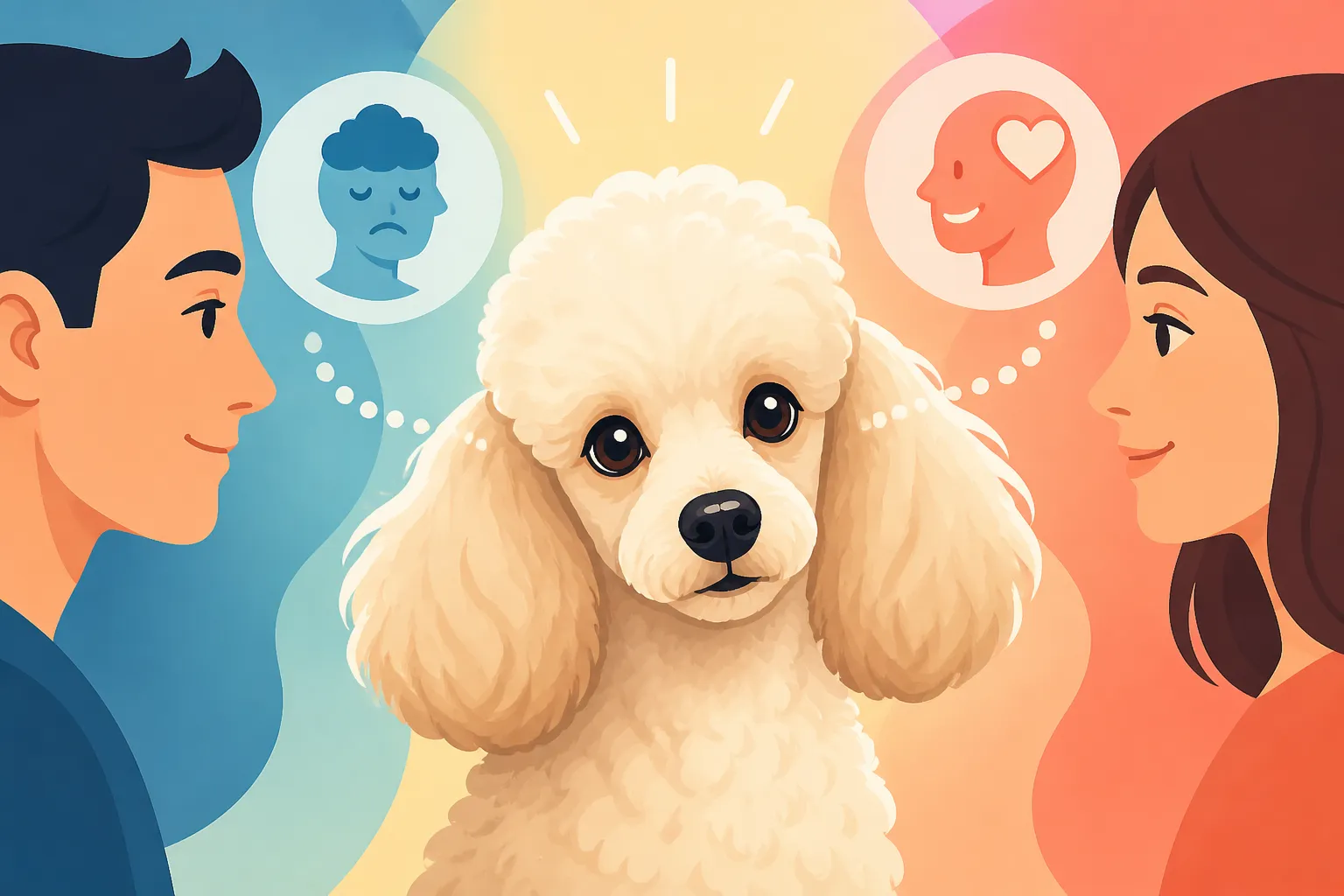
Humans communicate so much without saying a single word. Our body language, facial expressions, and even our posture tell a story. Poodles, with their heightened sensitivity, are incredibly adept at picking up on these non-verbal cues. A slight slump of your shoulders, the way your eyebrows furrow, the tension in your jaw – these are all signals your Poodle registers. They can differentiate between a relaxed, happy owner and one who is feeling stressed or unwell. This ability to "read" the room, and especially their primary human, is central to their perceptive nature.
Consider a moment when you might be feeling overwhelmed or upset. You might not verbalize your feelings, but your Poodle might respond by nudging your hand, leaning into you, or simply lying quietly by your feet. They've likely detected a change in your energy, your breathing, or even the subtle scent changes associated with stress. It’s an unspoken dialogue that forms a powerful bond, allowing them to comfort you in ways that seem almost magical. This deep connection is a hallmark of The Poodle Character and something many owners cherish.
Tonal and Vocal Inflections
Beyond body language, Poodles are incredibly attuned to the nuances of human speech. It’s not just the words you use, but how you say them. The pitch of your voice, the rhythm of your speech, and the emotional tone all convey meaning to your Poodle. They can discern a happy, playful tone from a stern or sad one, even if the words themselves are unfamiliar. This auditory sensitivity allows them to gauge your mood and react accordingly.
For example, a sudden sharp tone might cause a Poodle to stop what they’re doing and look to you for guidance, whereas a light, sing-song voice might prompt them to grab a toy for a game. They learn that certain vocal patterns indicate praise, while others signify disapproval or concern. This is why positive reinforcement training works so well with Poodles; they thrive on clear, consistent communication, both verbal and non-verbal. Many effective training tools and treats, found on platforms like Chewy, are designed to enhance this two-way communication.
The Drive for Connection and Being a "Velcro Dog"
Poodles, regardless of their size – Standard, Miniature, or Toy – share a common thread: an intense desire for companionship and connection with their human families. This innate drive fuels their constant observation and understanding of our needs and moods.
Historically Bred for Partnership
Poodles were originally bred as working waterfowl retrievers, a role that required close cooperation with human hunters. They weren't just independent hunters; they worked with people, taking cues and signals to retrieve game. This historical purpose ingrained a strong desire for partnership and a deep connection to their human handlers. While modern Poodles may not be retrieving ducks daily, that ancestral drive for cooperation and attention to human signals remains a powerful part of their genetic makeup.
This inherent need to be involved and to please their people makes them incredibly attentive. They want to know what you're doing, what you need, and how they can be a part of it. This isn't just about getting a treat; it's about being a valued member of the "pack." It's why many Poodle owners affectionately refer to their dogs as "velcro dogs" – they often stick by your side, moving from room to room with you, always keeping an eye on your activities. This constant proximity gives them ample opportunity to observe and learn.
The Feedback Loop of Attention and Affection
Poodles learn very quickly that paying attention to their humans often leads to positive rewards – not just treats, but praise, petting, and quality time. When they respond to your unspoken cues, and you in turn offer affection or attention, it reinforces their behavior. This creates a powerful feedback loop: they observe you, they respond, you reward them (even with a loving glance or a soft word), and they learn to observe you even more closely.
Consider a Poodle who learns that if they bring you a specific toy when you're sitting on the couch, it often leads to a game of fetch. They are actively trying to initiate interaction based on their understanding of what you might enjoy or what will get your attention. This intelligent initiative is a huge part of why Poodles often seem to anticipate our desires. They're not just passive observers; they're active participants in the human-canine relationship, constantly seeking ways to engage and connect. This is especially true for those Poodles who are highly bonded, often leading to The Poodle That Follows You Everywhere.
Comparing Human Communication Signals and Poodle Interpretation
To better understand how Poodles "read" us, it's helpful to break down the different ways we communicate and how their sensitive nature allows them to interpret these signals.
| Human Communication Signal | Poodle Interpretation |
|---|---|
| Verbal Cues | Specific words (sit, stay, walk), tone, pitch, volume, rhythm. |
| Body Language | Posture (slumped, upright), gestures (pointing, waving), facial expressions (frowns, smiles), eye contact. |
| Emotional State | Stress (fidgeting, sighing), sadness (low energy, quiet), happiness (upbeat, smiling), anger (tense muscles, loud voice). |
| Routine & Patterns | Consistent actions (picking up keys, putting on shoes), specific times of day (mealtime, bedtime). |
| Scent | Hormonal changes associated with stress or illness, general human scent that indicates presence or absence. |
This table illustrates the complexity of what a Poodle is processing. They are not just hearing "sit"; they are hearing "sit" in a particular tone, while observing your posture, and perhaps sensing a shift in your emotional state. It's a holistic interpretation of their environment.
Cultivating and Reinforcing Poodle Perceptiveness
While Poodles are naturally gifted at reading people, their environment and training play a significant role in how well these abilities develop and are utilized.
The Role of Early Socialization and Environment
A Poodle puppy’s early experiences are crucial in shaping their ability to understand the world around them, including their human companions. Puppies exposed to a variety of people, sounds, and situations in a positive way learn to be confident and observant rather than fearful. A well-socialized Poodle is more likely to engage with and learn from their human family. If a Poodle is raised in an environment where human communication is clear, consistent, and positive, they will thrive in their ability to interpret cues.
Conversely, a Poodle from a neglectful or chaotic background might struggle initially to trust and interpret human signals, often due to a lack of consistent feedback or even trauma. However, with patience, positive reinforcement, and a stable environment, these Poodles can also learn to connect and utilize their innate perceptive abilities. Providing a safe space and consistent care, perhaps with quality food and comfort items from a trusted source like Chewy, can make a huge difference in their ability to open up and learn.
Positive Reinforcement and Clear Communication
The way we interact with our Poodles directly impacts their ability to "read" us. Using positive reinforcement methods – rewarding desired behaviors and responses – encourages them to pay closer attention to our cues. When a Poodle correctly interprets your subtle signal and receives praise or a treat, they are much more likely to repeat that attentive behavior. This builds trust and strengthens their desire to understand you.
Clear, consistent communication is key. If your tone, body language, and verbal cues are all aligned, your Poodle has an easier time understanding what you want or how you are feeling. Inconsistent signals can confuse even the smartest Poodle. For instance, if you laugh when your Poodle does something naughty, but then scold them for it later, they receive mixed messages. Being mindful of our own communication helps our Poodles excel in their role as our perceptive companions. This is a big part of why Training the Second Smartest Dog Breed is so effective with Poodles.
Beyond the Obvious: Poodles Sensing Our Health and Well-being
It's not just about emotional states; many Poodle owners report their dogs sensing changes in their physical health, sometimes even before a diagnosis. This isn't just an old wives' tale; there's scientific backing to the idea that dogs can detect subtle physiological changes in humans.
Detecting Illness and Stress Markers
Dogs have an incredibly powerful sense of smell, far superior to our own. They can detect volatile organic compounds (VOCs) that our bodies release in various states, including illness or heightened stress. For a Poodle, a slight shift in your personal scent profile, undetectable to humans, might signal a change in your health. This could be anything from a blood sugar drop to the early stages of an infection or even changes associated with certain medical conditions.
Many stories abound of Poodles acting differently – becoming more clingy, nudging more, or refusing to leave a person's side – just before their owner receives a medical diagnosis. While not a substitute for professional medical advice, this sensitivity highlights their profound connection and observational abilities. They don't understand the why of the scent change, but they recognize it as a deviation from your norm, and their response often indicates concern or a desire to stay close. This protective instinct is linked to their deep bond and is particularly noticeable when Reading Pain in a Sensitive Poodle.
Anticipating Needs, Not Just Actions
Sometimes, it feels like a Poodle doesn't just read your actions, but your actual needs. You might be feeling a headache coming on, and your Poodle gently rests their head on your lap without any verbal cue. Or you might be thinking about getting up for a glass of water, and they suddenly look at the kitchen door with anticipation. This goes beyond simple pattern recognition and delves into their ability to infer intent from subtle, almost imperceptible shifts in your demeanor.
This incredible perceptiveness is a testament to the complex and nuanced relationship we share with our Poodles. They are more than just pets; they are deeply integrated members of our families who possess a unique ability to tune into the human experience. Their intelligence, empathy, and drive for connection combine to create a companion who truly seems to understand us, enriching our lives in countless ways. Whether you're looking for toys to engage their brilliant minds or specialized diets to support their sensitive systems, reputable platforms like Chewy offer a wide array of products catering to a Poodle's unique needs.
Disclaimer
This article is for general informational purposes only and does not constitute professional advice. Laws, prices and regulations vary by location and change over time. Consult a qualified professional for guidance on your specific situation.