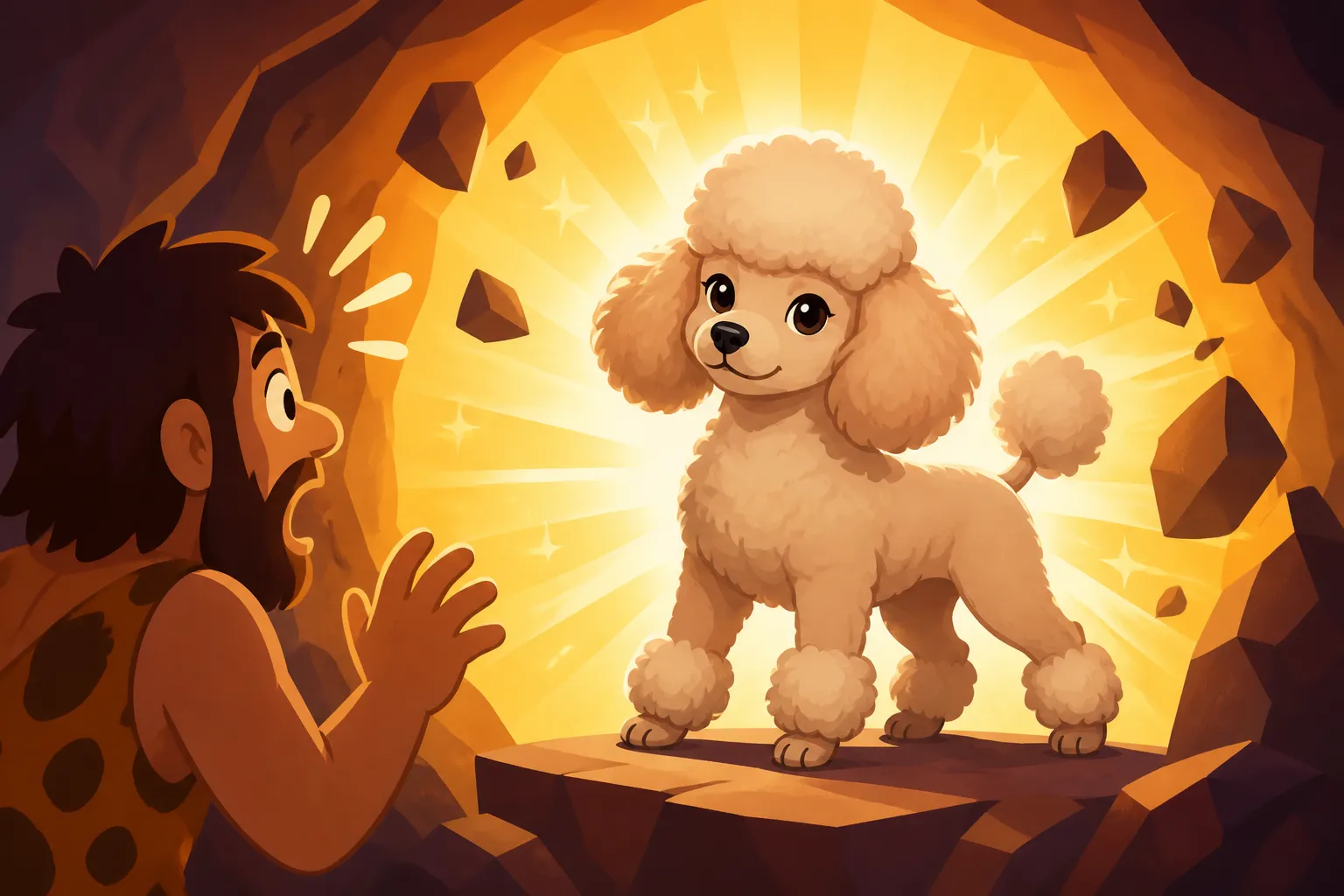
When the Toy Poodle Appeared
One of the most common questions I get from fellow Poodle lovers and those new to the breed is about the varying sizes, especially our tiny Toy Poodles. It's easy to assume they've always been around, but their journey is a fascinating one, deeply intertwined with human society's changing desires. This guide will take you through the incredible history of how our beloved Toy Poodles came to be, from their noble origins to their modern-day charm.
The Poodle's Ancient Roots and Diversification
Before we can truly appreciate the Toy Poodle, we have to journey back to where it all began: the grand, purposeful Standard Poodle. Imagine a dog plunging into icy waters, retrieving ducks for hunters, its intelligent eyes scanning the horizon. This wasn't just a pet; it was a partner, bred for a specific, demanding job.
From Water Retriever to Companion
The Poodle, originally known as a "Puddelhund" in German (meaning "to splash dog"), was a robust, athletic water retriever. Its distinctive curly coat wasn't a fashion statement but a practical marvel, providing insulation and protection in cold water, while shaved areas reduced drag. This original Standard Poodle was far from the dainty image many now associate with the breed; it was a powerful, intelligent working dog. Their quick wit and eagerness to please, essential for a retrieving dog that needed to work closely with its handler, also made them highly trainable and adaptable. This intelligence is a hallmark of The Poodle as a Breed across all sizes, and it's what allowed them to transition from swamps to palaces.
As society evolved, so did the roles of dogs. While still valued for their working prowess, Poodles' charming personalities and sharp minds made them increasingly popular as companions. They excelled at learning tricks, were highly attuned to their owners, and possessed a natural elegance that caught the eye of nobility and entertainers alike. This growing demand for a versatile companion dog laid the groundwork for the breed's eventual diversification in size.
The Shift Towards Smaller Sizes
As people moved from vast country estates into more confined urban settings, or simply desired a canine companion that fit comfortably on a lap or within smaller homes, the idea of a scaled-down Poodle began to take hold. Imagine a busy European city street in the 17th or 18th century; a large Standard Poodle might be a bit much for a small carriage or a crowded salon. There was a burgeoning trend for companion dogs that were both beautiful and manageable in these new, increasingly sophisticated environments.
This wasn't a sudden, radical shift, but a gradual process driven by selective breeding. Breeders began to identify and breed smaller-than-average Standards, hoping to consistently produce offspring that retained all the beloved Poodle traits—intelligence, elegance, trainability—but in a more compact package. This early desire for smaller Poodles marked the first significant step away from their original working role towards their destiny as beloved companion animals, paving the way for the Miniature and, eventually, the Toy. It's a testament to the breed's fundamental appeal that people wanted to keep all its best qualities, just in a different scale.
The Emergence of the Miniature Poodle
The journey to the Toy Poodle wasn't a single leap; it was a progression, with the Miniature Poodle acting as a crucial intermediate step. This size offered a perfect balance for many, proving that a Poodle could be both refined and practical for a wider range of owners.
The First Step Down in Size
The Miniature Poodle was developed through careful, selective breeding of smaller Standards. This wasn't about creating an entirely new breed, but rather refining the existing one to a more compact stature. The goal was to maintain the Standard Poodle's impeccable proportions, intelligence, and characteristic coat, simply in a smaller frame. Imagine a breeder meticulously selecting the smallest, healthiest individuals from a Standard litter and breeding them together, generation after generation, slowly reducing the overall size while rigorously preserving the breed's core traits. This process took time and dedication, ensuring that the Miniature Poodle was not merely a runty version of its larger counterpart but a robust, well-proportioned dog in its own right. This step was critical in understanding Why the Poodle Was Bred Down in Size.
These dogs quickly found their niche. They were small enough to be house pets without being overly delicate, yet still possessed enough stamina and presence to be engaged in activities beyond simple lap-warming. They were elegant, smart, and a joy to train, making them ideal for the burgeoning middle and upper classes who sought a sophisticated companion.
Miniatures as Fashion and Function
Once established, Miniature Poodles quickly rose in popularity, especially in Europe. They graced the laps of royalty and aristocracy, appearing in numerous portraits and historical accounts as symbols of refinement and good taste. Their manageable size made them perfect for urban living, and they could easily accompany their owners on travels or to social gatherings, fitting comfortably into carriages and drawing-rooms.
Beyond their fashionable status, Miniature Poodles also continued to demonstrate their working heritage. Some were still employed in hunting smaller game, particularly for retrieving waterfowl from smaller ponds or marshes where a Standard might be too large. Their agility and keen intelligence also made them stars in circuses and performing acts. These performances showcased their incredible trainability and charm, further cementing their place in the public eye. They proved that a smaller Poodle was every bit as capable and captivating as its larger ancestors, and their success spurred the desire for an even more diminutive version, setting the stage for the true emergence of the Toy Poodle.
The Birth of the Toy Poodle
The desire for smaller Poodles didn't stop at the Miniature. As centuries turned and new societal dynamics emerged, there was a persistent drive to create an even tinier version, culminating in the delightful Toy Poodle we know today.
The Drive for Even Smaller Canines
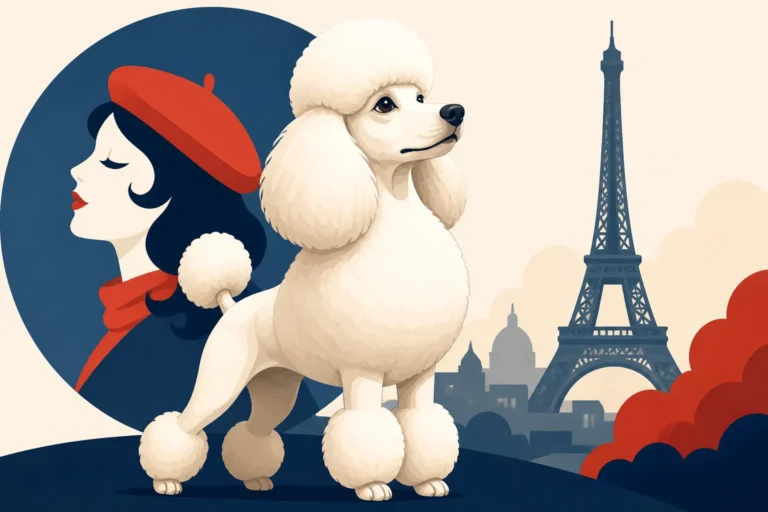
The push for an even smaller Poodle, the Toy Poodle, gained significant momentum in the 18th century, particularly within the French aristocracy. Picture the opulent courts of Europe, where elaborate fashions and lavish lifestyles reigned supreme. In these circles, small, decorative dogs became highly prized status symbols, often carried in sleeves or nestled in laps. They were living accessories, a testament to their owner's wealth and refinement. The daintier, the more exclusive. This cultural trend created a powerful incentive for breeders to produce dogs of increasingly miniature size.
Furthermore, life in bustling cities meant smaller living spaces. Even Miniatures, while compact, might still be considered a bit much for a tiny Parisian apartment. The appeal of a dog that required minimal space, could be easily transported, and adapted perfectly to an indoor, pampered existence was undeniable. This was a direct response to a changing world, where dogs were shifting further from working animals to cherished companions and symbols of luxury. This intense demand for tiny, charming canines fueled the dedicated efforts that would eventually give us the Toy Poodle.
Selective Breeding for Diminutive Size
Creating the Toy Poodle involved taking the smallest Miniature Poodles and carefully breeding them down further. This was an arduous and often delicate process. Breeders faced the challenge of reducing size without compromising the dog's health, structure, or essential Poodle characteristics. It wasn't as simple as picking the smallest puppy; it required a deep understanding of genetics and a keen eye for sound breeding stock. The goal was always to produce a "Poodle in miniature," not a fragile or disproportionate animal.
This involved generations of careful selection, often with smaller litter sizes and potentially more health concerns to manage initially. Early breeders had to navigate issues like delicate bones or susceptibility to certain conditions, which is why reputable breeders today put so much emphasis on health testing. They painstakingly worked to ensure that the elegance, intelligence, and distinctive Poodle conformation were preserved, even as the dogs became progressively smaller. The success of this selective breeding is why a Toy Poodle still embodies all the Poodle essence, just in a package small enough to fit comfortably on your lap, and why they maintain that delightful bounce and lively personality.
Early Documented Appearances and Recognition
While pinning down an exact "birthdate" for the Toy Poodle is tricky, historical records and artistic depictions suggest they became distinct and recognized in the late 18th and early 19th centuries. They were definitely present and popular in France and other European courts during this time, often appearing in paintings alongside their aristocratic owners. By the mid-19th century, the different Poodle sizes were becoming more formally categorized.
For instance, the American Kennel Club (AKC) began recognizing the three distinct Poodle varieties – Standard, Miniature, and Toy – in the late 1800s. The Toy Poodle was officially defined as being 10 inches or under at the shoulder. This formal recognition solidified their place as a distinct and beloved size within the Poodle breed. It showed that they were no longer just exceptionally small Poodles, but a recognized variety with their own specific standards. The process of their formal acceptance highlighted their growing popularity and the dedicated breeding efforts that brought them into being.
The Toy Poodle's Rise to Popularity
From humble origins as water dogs, the Poodle, in its Toy form, achieved immense popularity, becoming a symbol of elegance and a cherished companion across various strata of society.
Royal Courts and Urban Living
The Toy Poodle found its true calling in the royal courts and burgeoning urban centers of Europe. During the Rococo period in France, for example, these tiny dogs were the darlings of the salons. Marie Antoinette herself was known to favor small dogs, and Poodles, with their intelligence and delicate features, fit perfectly into the aesthetics of the era. They were prized for their ability to fit into a lady's sleeve or a gentleman's waistcoat pocket, accompanying their owners to social events and becoming central figures in aristocratic life. Their quiet demeanor (when well-trained) and compact size made them ideal companions for indoor living, which was becoming more common for the wealthy.
As cities grew, so did the demand for dogs that could thrive in smaller spaces. The Toy Poodle, with its minimal exercise requirements compared to a Standard and its adaptability to apartment life, became the ultimate city dog. They offered all the charm and intelligence of a Poodle without the spatial demands of their larger cousins. This made them accessible and appealing to a broader demographic, not just the nobility, who sought a sophisticated yet manageable pet. You could find everything you needed for them from places like Chewy, catering to their specific needs for small dog food or compact bedding.
From Lapdog to Show Ring Star
While initially cherished primarily as lapdogs, the Toy Poodle's innate elegance and intelligence soon propelled them into the competitive world of dog shows. Breeders worked diligently to ensure that even in their tiny form, Toy Poodles adhered to the strict breed standard, possessing the correct proportions, gait, and Poodle temperament. Their exquisite appearance, often enhanced by elaborate grooming styles, made them stand out in the show ring, drawing admirers and winning numerous accolades.
This transition from mere companion to show dog significantly boosted their reputation and cemented their status as a legitimate and highly esteemed variety of the Poodle breed. Winning in the show ring required not only physical perfection but also the characteristic Poodle confidence and poise. This exposure helped highlight the Toy Poodle's many virtues, further solidifying their place in the hearts of dog enthusiasts and ensuring their enduring popularity across the globe.
Impact on the Poodle Breed Overall
The success and widespread appeal of the Toy Poodle had a profound impact on the Poodle breed as a whole. It challenged the perception that Poodles were solely working dogs, showcasing their versatility as companions and show animals. The popularity of the Toy Poodle, alongside the Miniature, introduced the breed to a much wider audience, many of whom might have found a Standard Poodle too large or too active for their lifestyle. This diversification meant that Poodles could cater to almost any household, from a grand country estate to a city apartment.
However, this popularity also brought challenges. The intense demand for small dogs sometimes led to unscrupulous breeding practices aimed at producing tiny puppies quickly, often at the expense of health or temperament. This is why understanding the history of their development is so important; it underscores the value of responsible breeders who prioritize the well-being and genetic health of their lines. The legacy of the Toy Poodle demonstrates both the incredible adaptability of the Poodle and the critical need for ethical breeding to maintain the health and integrity of these wonderful dogs.
The Modern Toy Poodle and Health Considerations
Today, the Toy Poodle stands as a testament to centuries of careful breeding and adaptation. However, their small size does bring with it a unique set of considerations that modern owners and breeders must be aware of to ensure these little dogs live long, healthy lives.
Maintaining Health in Small Breeds
The very process of breeding down to such a small size, while creating a delightful companion, also introduced certain predispositions. Toy Poodles, like many very small breeds, can be more prone to certain health issues that their larger Poodle cousins might not face as commonly. For example, their delicate bones mean conditions like Luxating Patella in Toy and Miniature Poodles, where the kneecap slips out of place, can be a concern. Owners often need to be mindful of avoiding rough play or high jumps to protect these small joints.
Another important consideration is their respiratory system. Conditions like Collapsing Trachea in a Toy Poodle, which can cause a distinctive "honking" cough, are more prevalent in tiny dogs. Owners must use harnesses instead of collars to prevent pressure on the windpipe. Beyond structural issues, managing their metabolism is key; Hypoglycemia in a Toy Poodle Puppy, or low blood sugar, can be a serious risk, especially in very young puppies or if meals are skipped. This necessitates a careful feeding schedule, often more frequent small meals throughout the day, and keeping emergency glucose gel on hand. Understanding these specific vulnerabilities is part of being a responsible Toy Poodle owner.
Here's a quick look at some key differences in health considerations by Poodle size:
| Poodle Size | Common Health Considerations (General) | Specific Considerations for Small Size |
|---|---|---|
| Standard | Addison's Disease, Bloat, Sebaceous Adenitis, Hip Dysplasia | Deep chest for bloat, larger joint stress |
| Miniature | Progressive Retinal Atrophy, Epilepsy, Patellar Luxation | Patellar luxation, dental issues |
| Toy | Patellar Luxation, Collapsing Trachea, Hypoglycemia, Dental Disease | Fragile bones, very small size-specific metabolic needs |
The Role of Responsible Breeding Today
Given the unique health challenges associated with miniaturization, responsible breeding is more critical than ever for Toy Poodles. Ethical breeders dedicate themselves to producing healthy puppies with sound temperaments and proper conformation, not just chasing extreme smallness. This means extensive health testing of parent dogs for conditions common in Toy Poodles, such as patellar luxation, eye diseases, and even heart conditions. They might perform Genetic Panels for the Three Poodle Sizes to screen for inherited issues. A reputable breeder will be transparent about their testing protocols and willing to discuss the health history of their breeding lines.
They also focus on proper nutrition and socialization from a young age, understanding that a strong start is vital for these delicate puppies. They will advise new owners on appropriate Feeding a Toy Poodle Puppy schedules, how to recognize signs of distress, and the importance of veterinary check-ups. Finding a breeder who prioritizes health and longevity over simply selling a tiny puppy is paramount to ensuring you bring home a happy, well-adjusted, and healthy Toy Poodle. Resources like Chewy can provide excellent information on selecting quality food and supplements recommended by reputable breeders.
The Enduring Appeal of the Tiny Poodle
Despite the specific care considerations, the Toy Poodle's popularity has never truly waned. Their charm, intelligence, and affectionate nature make them incredibly appealing companions. They are highly adaptable, equally content snuggling on a couch as they are learning new tricks or going for a brisk walk around the block. While Daily Exercise for a Toy Poodle is important, it doesn't typically involve hours of strenuous activity, making them suitable for many lifestyles. They bond deeply with their families, often described as "Velcro dogs," and their expressive eyes and playful antics bring immense joy.
The history of the Toy Poodle is a beautiful narrative of human desire, selective breeding, and the incredible adaptability of the canine species. From the splash-loving water dogs of Germany to the pampered pets of French royalty and the cherished companions of modern homes, Toy Poodles have carved out a unique and enduring place in our hearts. Their story reminds us that while their size may be small, their spirit, intelligence, and capacity for love are immeasurable. For those who choose to share their lives with a Toy Poodle, the rewards are as vast as their history.
Disclaimer
This article is for general informational purposes only and does not constitute professional advice. Laws, prices and regulations vary by location and change over time. Consult a qualified professional for guidance on your specific situation.