Whether a Retrieving Poodle Earns Off-Leash
Many Poodle owners dream of the day their clever companion can run freely, playing fetch in an open field, and returning with joy the moment they're called. But that dream often clashes with the real-world anxiety of losing your dog or facing an unresponsive Poodle who's decided chasing a squirrel is far more interesting than your shouts. This guide is all about whether a Poodle's natural retrieving drive truly translates into reliable off-leash behavior, and more importantly, how you can cultivate that trust and safety for those precious moments of freedom.
Understanding the Poodle's Natural Retrieving Instinct
Poodles, regardless of their size, possess a remarkable intelligence and a strong desire to please, often coupled with a surprising athletic ability. But one trait that truly sets them apart, and is often misunderstood in today's pet Poodle, is their innate retrieving instinct.
The Historical Role of Poodles as Water Retrievers
It's easy to forget, looking at a meticulously groomed show Poodle or a pampered lapdog, that their origins are far from fancy. The name "Poodle" itself comes from the German word "Pudel," which means "to splash in the water." These dogs were originally bred as water retrievers, tasked with fetching shot birds from cold, icy waters. This wasn't a casual stroll in the park; it required immense bravery, stamina, and a deep connection to their handler. Their distinctive dense, curly coat, which we spend so much time grooming today, was historically clipped in specific ways – leaving hair on joints and vital organs – to protect them from the cold while allowing for efficient swimming. That drive to plunge into water, to seek out and bring back, is hardwired into their DNA. When you see your Poodle light up at the sight of a ball or eagerly grab a toy, you're witnessing generations of selective breeding at play, all pointing back to their original working purpose. The instinct to retrieve is not just a cute quirk; it's a profound part of The Poodle as a Breed and their historical identity.
Their history also means they often form incredibly strong bonds with their human companions, viewing cooperation as a natural part of their existence. This bond is a huge asset in training, especially when it comes to developing reliable off-leash skills. They’re not just chasing a ball for the fun of it; there’s often an underlying pleasure in working with you, retrieving for you. This inherent desire to please, combined with their sharp minds, makes them highly trainable, but it also means that their environment and your consistency play a massive role in shaping their behavior.
Instinct Versus Training: Why Instinct Alone Isn't Enough
While a Poodle's retrieving instinct is a powerful tool in your training arsenal, it's crucial to understand that instinct alone does not equate to reliable off-leash behavior. Just because your Poodle loves to fetch in the backyard doesn't mean they'll ignore a rabbit in the park and return immediately when called. Instinct is a drive; training is the control and direction of that drive. Think of it like a sports car: it has a powerful engine (instinct), but without a skilled driver and a solid steering wheel (training), it’s just a fast object going nowhere predictable, and potentially dangerously.
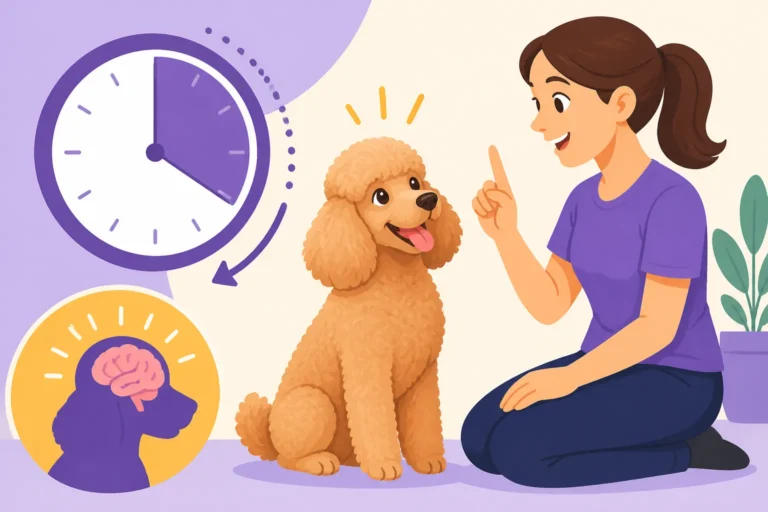
Many Poodle owners make the mistake of assuming that because their dog is "smart" or "loves to retrieve," off-leash freedom will come naturally. This is a common pitfall. A Poodle's intelligence, in fact, can sometimes make them more challenging if not properly channeled. They can get bored easily if not stimulated, and a bored Poodle will find their own entertainment, which might not align with your wishes for them to stay close. Why a Bright Poodle Gets Bored is a real thing, and it means you need to be constantly engaged in their mental and physical well-being. A Poodle’s natural inclination to retrieve can be harnessed for recall, but it needs consistent reinforcement and proofing in increasingly distracting environments. Without this structured training, the instinct to chase or explore will often override the instinct to return to you, especially when something more novel or exciting presents itself.
Building a Foundation for Off-Leash Reliability
Before you even think about letting your Poodle off-leash, especially in an unfenced area, you need to build a rock-solid foundation of basic obedience. This isn't just about manners; it's about safety, trust, and ensuring your Poodle understands and responds to your commands no matter what distractions are present.
Mastering the Recall: The Absolute Non-Negotiable
The single most important command for any dog intended to be off-leash is a bulletproof recall. A Poodle's retrieving instinct can certainly help here, but it must be meticulously trained. Your recall command needs to be the most exciting, rewarding thing your Poodle can experience, consistently. Start in a quiet, distraction-free environment, like your living room or a securely fenced yard. Use a happy, enthusiastic tone and a high-value treat or a favorite retrieve toy. Say your Poodle's name, then your recall cue (e.g., "Come!" or "Here!"), and immediately reward them the moment they turn towards you or take a step. Make it a party! Poodle Recall Training is not just about getting them back; it's about making them want to come back.
As they become reliable in easy settings, gradually introduce mild distractions. Have a friend gently toss a toy away from them while you call them, or practice when another family member is in the yard. The key is to set them up for success, ensuring they succeed more often than they fail, especially in the early stages. Never call your Poodle for something unpleasant, like going to the vet or ending a fun play session, unless you immediately follow it with a massive, irresistible reward that negates the negative association. This preserves the positive power of your recall cue. Many Poodle owners find that starting with an online training program, like BAXTER & Bella, provides excellent step-by-step guidance for building this critical foundation. They break down the process into manageable steps, which is perfect for a Poodle's intelligent but sometimes overly enthusiastic nature.
Proofing the Recall in Various Environments
Once your Poodle is consistently recalling in low-distraction environments, it's time to "proof" the behavior in various settings. This is where the rubber meets the road. Go to different parks, open fields, or even busy urban areas (while still on a long line, of course). The goal is to teach your Poodle that "come" means "come," regardless of what exciting smells, sights, or sounds are around. This process takes time, patience, and consistency. Always start by using a long line, perhaps 30 to 50 feet, which you can find readily available on Amazon. This allows you to practice off-leash scenarios with a safety net, giving your Poodle the freedom to explore while ensuring you still have control if they ignore your call. Long Line Work With a Poodle is an invaluable step in this process.
Vary your location, the time of day, and the types of distractions. Practice when other dogs are playing, when children are laughing, or when birds are fluttering about. Each new environment presents a new challenge, and you'll often find your Poodle acts as if they've never heard the word "come" before. Don't get discouraged! Simply go back a step, reduce the distractions, and build up again. Remember, every successful recall in a distracting environment strengthens the behavior. If your Poodle gets it wrong, don't punish them; simply reel them in with the long line, redirect their attention, and try again in a slightly less distracting setting. The goal is to always make coming back to you the most rewarding choice, even when a flock of pigeons takes flight.
Integrating Retrieval Drive into Off-Leash Training
A Poodle's natural inclination to retrieve can be your secret weapon in off-leash training, turning recall into an exciting game rather than a chore. By understanding and leveraging this inherent drive, you can build a more engaged, reliable off-leash companion.
Using the Retrieve as a Reward and Engagement Tool
Since Poodles were literally bred to retrieve, this is a fantastic built-in motivator. Instead of just rewarding a recall with a treat, try using a retrieve toy as the ultimate prize. When you call your Poodle, have their favorite ball or frisbee ready to toss the moment they arrive. This turns the recall into a precursor for a fun game of fetch, which is incredibly powerful for a Poodle. They'll quickly associate coming back to you with the absolute joy of Teaching a Poodle to Fetch and Deliver. This also reinforces the idea that you are the source of all good things, including their favorite activity.
You can also use the retrieve drive to maintain engagement during off-leash walks. Instead of just letting your Poodle wander aimlessly, occasionally throw a ball a short distance, let them retrieve it, and then call them back for another throw. This keeps their focus on you and ensures they're checking in regularly. It's a fantastic way to satisfy their natural drive while reinforcing good off-leash habits. This kind of active engagement is vital because a Poodle's smart mind needs a job, and if you don't provide one, they'll find their own. Using their retrieving instinct constructively makes them a partner in the adventure, not just a dog along for the ride.
Managing Distractions During Off-Leash Retrieve Practice
Even with a strong retrieve drive, distractions are inevitable. A squirrel darting up a tree or another dog running past can quickly become more appealing than your call or a thrown toy. The key here is gradual exposure and managing the environment. Start practicing off-leash retrieves in areas where you know distractions are minimal. Perhaps a large, empty baseball field or a quiet park during off-peak hours. As your Poodle becomes more proficient, slowly introduce more challenging scenarios.
One effective strategy is to use two toys. Throw one toy, and as your Poodle retrieves it, call them back. When they return, immediately present the second, equally exciting toy, maybe even a new one you just got from Amazon, and throw it in a different direction. This keeps their focus on you and prevents them from getting "stuck" on a single item or distraction. It teaches them that returning to you always leads to more fun. If your Poodle becomes distracted and doesn't return with the toy, simply walk over, calmly clip them back on the long line, and continue to work in a less distracting environment. Never chase your Poodle; that just turns it into a game for them, and you'll lose every time. Instead, make coming to you their best option. Remember that Why Poodles Retrieve So Naturally means this drive is strong, but it still needs to be controlled.
Assessing Readiness for Off-Leash Privileges
Deciding when your Poodle is truly ready for unsupervised off-leash freedom is a huge responsibility. It's not a decision to be taken lightly, and it demands honesty about your Poodle's training and temperament, as well as an understanding of the environment.
Recognizing a Truly Reliable Poodle
A truly reliable off-leash Poodle isn't just one that sometimes comes when called. They are a dog that consistently, enthusiastically, and immediately responds to your recall cue in a wide variety of environments, even when faced with significant distractions. Here are some signs your Poodle might be ready:
- Consistent Recall: They come running every single time you call them, without hesitation, even when engaged in play or sniffing something interesting.
- Voluntary Check-Ins: Your Poodle regularly looks back at you, even if not called, to ensure you're still there and to get an idea of where they should be. This demonstrates attentiveness and a desire to stay connected.
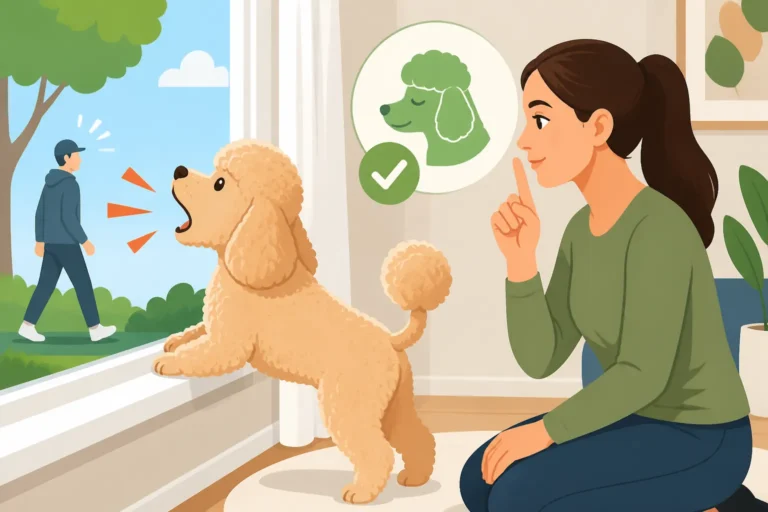
- Disengagement from Distractions: When a squirrel runs by or another dog appears, your Poodle shows a fleeting interest but can be easily redirected back to you with a verbal cue or a whistle. They don't bolt after every exciting thing.
- Known Boundaries: They understand and respect invisible boundaries, not venturing too far ahead or out of sight, especially in open areas.
- Strong Bond: You have an undeniable connection and rapport. Your Poodle genuinely enjoys being with you and working with you, seeing you as the most valuable resource in their world. Reading Pain in a Sensitive Poodle or joy means you have a deep understanding of your Poodle, which is crucial for off-leash work.
If your Poodle exhibits all of these traits reliably, in multiple public spaces, then you're likely building the foundation for successful off-leash adventures. However, always exercise caution and start with short periods of off-leash freedom in safe, contained areas before expanding.
Common Pitfalls and When to Re-evaluate
It's easy to get overconfident or to miss subtle cues that your Poodle isn't quite ready. Here are some common pitfalls and situations where you should absolutely re-evaluate or delay off-leash privileges:
- Inconsistent Recall: If your Poodle ignores you even 10% of the time, that's 10% too often when their safety is on the line. One missed recall near a road or an aggressive dog could have devastating consequences. Go back to basics, use the long line, and rebuild that reliability.
- Prey Drive Overrides: Poodles, with their retrieving background, can have a strong prey drive. If your Poodle consistently bolts after small animals and you struggle to get their attention, off-leash is not an option. You might need to work with a professional trainer to manage this drive or accept that certain environments will always require a leash.
- Fear or Reactivity: If your Poodle is fearful or reactive towards other dogs, people, or noises, off-leash situations can be highly stressful and dangerous for both your dog and others. A reactive Poodle needs controlled environments and careful management, not unrestricted freedom. Fearful and Reactive Poodles often do better with structured activities.
- Lack of Check-Ins: If your Poodle seems to forget you exist the moment they're off-leash, constantly sniffing the ground or running far ahead without looking back, they are not ready. This indicates a lack of engagement and attention to their handler, which is critical for safety.
- New Environments: Always assume your Poodle needs to be on a leash in a brand new environment until you've had time to assess the area and their reaction to it. What works in one park might not work in another.
Remember, off-leash privileges are earned, not given. It's a continuous process of training, observation, and building a stronger bond with your Poodle. Consider taking classes with a reputable trainer, perhaps one recommended by BAXTER & Bella or through local dog clubs, to gain an objective assessment of your Poodle's readiness. Your Poodle's retrieving instinct is a wonderful foundation, but it's your consistent, patient training that ultimately leads to safe, happy off-leash adventures.
Comparison of On-Leash vs. Off-Leash Preparedness
| Aspect | On-Leash Preparedness | Off-Leash Preparedness |
|---|---|---|
| Recall Reliability | Responds well in quiet, low-distraction environments. | Comes every time, immediately, enthusiastically, even with high distractions. |
| Distraction Handling | Notices distractions but can be redirected with a gentle tug or verbal cue. | Actively disengages from distractions when called, prioritizing handler's cue. |
| Engagement with Handler | Pays attention, walks nicely on leash, makes eye contact. | Regularly checks in voluntarily, seeks handler's gaze, treats, or play. |
| Understanding Boundaries | Stays close on a short leash, respects property lines. | Understands invisible boundaries, stays within reasonable range, doesn't wander too far. |
| General Obedience | Knows basic commands (sit, stay, down) reliably indoors. | Commands are rock-solid, even in novel or busy outdoor settings. |
| Prey Drive Control | May show interest in small animals but is easily controlled on leash. | Ignores or can be called off prey animals without hesitation. |
| Social Skills | Tolerates or politely greets other dogs/people on leash. | Interacts appropriately off-leash, doesn't rush or harass other dogs/people. |
| Tools Used | Standard leash, collar or harness. | Long line, treats, high-value toys, training whistle. |
Disclaimer
This article is for general informational purposes only and does not constitute professional advice. Laws, prices and regulations vary by location and change over time. Consult a qualified professional for guidance on your specific situation.