Why Poodles Retrieve So Naturally
It’s a common scenario: you toss a ball for your dog, and they sprint after it with boundless energy, only to sniff it, maybe give it a playful nudge, and then look at you as if you’re the one who should go fetch. It can be a real head-scratcher when your furry friend just doesn't seem to "get" the game of fetch. But then you meet a Poodle, and suddenly, the game makes sense. This guide dives deep into why Poodles, regardless of their size, possess such a remarkable and natural ability to retrieve, tracing it back to their origins and showing you how to foster this innate talent.
The Historical Roots of the Poodle's Retrieval Instinct
To truly understand why Poodles are such natural retrievers, we have to travel back in time, far before they became the sophisticated show dogs we often envision today. Their history is deeply intertwined with water, hunting, and a very practical purpose that shaped their instincts over centuries. It wasn't about looking fancy; it was about getting the job done.
"Pudel" and the Water Dog Lineage
The very name "Poodle" gives us our first big clue. It comes from the German word "Pudel" or "Pudeln," which means "to splash in the water." This isn't just a quirky linguistic detail; it's a direct reference to their original job. Poodles were bred as exceptional waterfowl retrievers, meaning their primary task was to plunge into icy lakes and rivers to bring back shot ducks and other birds for hunters. This demanding work required a dog that was not only an excellent swimmer but also possessed an unwavering drive to find, grasp, and deliver game back to hand.
Imagine a scene from centuries ago: a hunter stands by a marshy bank, a Poodle eagerly watching by their side. A bird falls into the cold water, and with a command, the Poodle splashes in, navigating reeds and currents, focused entirely on bringing that bird back. This isn't just a learned behavior; it's deeply ingrained, a part of their genetic makeup. When your Poodle puppy instinctively chases a rolling toy and brings it back, even if it's just a soft tennis ball, you're seeing generations of this working history play out. This powerful drive is why the Poodle is often referred to as a "water dog." If you’re curious about their ancient role, check out The Water Dog Behind the Poodle.
How the Poodle Clip Was a Working Design
Another fascinating aspect of the Poodle's history that ties directly into their retrieving abilities is their iconic haircut. Yes, those elaborate "pompoms" and shaved sections that seem purely aesthetic today actually had a very practical, utilitarian purpose in their working past. The traditional Poodle clip, like the Continental or the English Saddle, wasn't designed for the show ring initially; it was for efficiency and protection in the field.
Hunters would shave down areas like the hindquarters and legs to reduce drag and weight, allowing the Poodle to swim more easily and freely through the water. However, vital joints like the hips, shoulders, and hocks, along with the chest, were left with longer hair or "puffs" to provide insulation and protection against the frigid water. This prevented hypothermia and injury, allowing the Poodle to stay in the water longer and retrieve more effectively. So, when you see a Poodle sporting a fancy cut, remember it’s a living testament to their working heritage, a historical uniform for a dedicated water retriever. It's a prime example of Why a Working Poodle Was Clipped at All.
The Poodle's Innate Drive and Intelligence for Retrieval
Beyond their historical role, the Poodle's inherent characteristics—their particular blend of prey drive and sharp intellect—make them exceptional at retrieving. It's not just about wanting to chase something; it's about the sophisticated cognitive processes involved in understanding the task and executing it flawlessly.
Understanding the "Prey Drive" in Poodles
When we talk about "prey drive" in the context of retrieval, it's important to clarify that this isn't about aggression or a desire to harm. Instead, it's a sequence of natural predatory behaviors – search, stalk, chase, grab, and often, carry – that have been selectively bred and refined in Poodles. For a Poodle, a thrown ball isn't just a toy; it can trigger this deeply embedded sequence, transforming them into a focused hunter whose ultimate goal is to "capture" the item and bring it back to their "den" – which is often you, their beloved owner.
This drive is precisely what makes Poodles so enthusiastic about games of fetch. They don't just idly bat at a toy; they'll often stalk it, pounce on it, and then eagerly carry it back. This innate desire to "collect" and deliver is a hallmark of the breed's retrieving instinct. It's a foundational element of The Poodle's Retrieving Instinct and something that many other breeds might need specific training to develop. With Poodles, it's often just waiting to be tapped into.
The Poodle's Problem-Solving Mindset
Poodles consistently rank among the most intelligent dog breeds, often second only to Border Collies in terms of working and obedience intelligence. This high level of cognitive ability plays a crucial role in their natural retrieval skills. It's one thing to chase a ball, but it's another to understand the nuances of a retrieve: where to find the item, how to navigate obstacles, and perhaps most importantly, to bring it back to a specific person. Poodles excel at processing these multiple steps.
Their problem-solving mindset means they can quickly learn and adapt to different retrieval scenarios. If a toy lands in a tricky spot, a Poodle isn't likely to give up; they'll often strategize how to get it out. They remember patterns, respond well to cues, and can differentiate between various objects. This intellectual capacity makes them trainable far beyond simple fetch, allowing them to participate in complex scent work or retrieve specific items on command. This mental agility is a key component of Poodle Intelligence and Coren's Ranking. If you've ever seen your Poodle try to figure out how to get a treat out of a puzzle toy, you've witnessed this problem-solving ability firsthand. Their active minds benefit greatly from engaging activities; otherwise, What a Poodle Does When Its Brain Is Idle might manifest in less desirable ways.
Cultivating and Enhancing Retrieval Skills in Your Poodle
While Poodles possess a natural inclination for retrieval, even the most talented athlete benefits from good coaching. Nurturing this innate ability can strengthen your bond, provide mental and physical exercise, and refine their skills to an impressive degree.
Starting Early: Puppyhood Retrieval Games
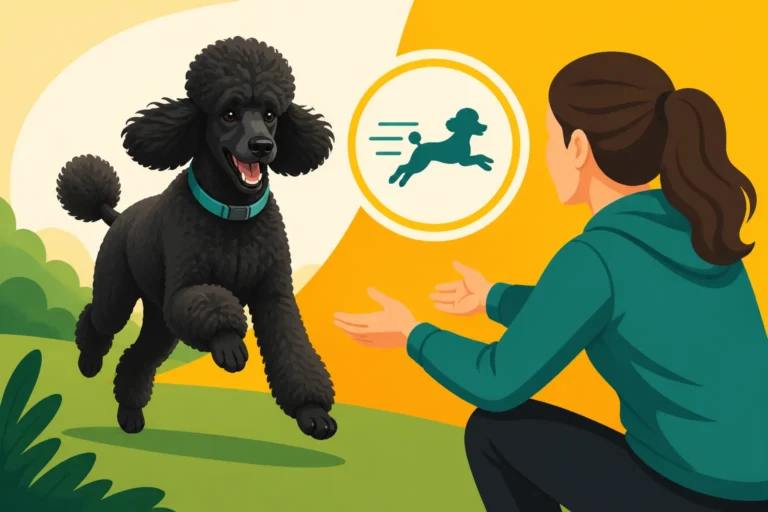
The best time to start fostering retrieval skills is during puppyhood. Even tiny Toy Poodle puppies can begin to develop this drive with gentle, positive experiences. Start with soft, easy-to-carry toys in a quiet, confined space. Roll the toy a short distance, encourage your puppy to chase it, and when they pick it up, praise them enthusiastically. Don't worry if they don't bring it all the way back at first; the goal is to make the act of picking up the toy and moving towards you a fun and rewarding experience.
Keep sessions short and positive, ending before your puppy loses interest. Use high-value treats and happy vocalizations to reinforce successful retrieves. Gradually increase the distance and introduce different types of toys. Remember, consistency and positive reinforcement are key. For excellent guidance on building this foundation, many owners find structured programs helpful, such as the online courses offered by BAXTER & Bella, which can walk you through early puppy training steps, including foundational retrieve work. This early exposure helps them understand the game and truly cements Teaching a Poodle to Fetch and Deliver as a joyful interaction, rather than a chore.
Progression to Advanced Retrieval and Water Work
Once your Poodle has mastered basic fetch on land, you can gradually introduce more challenging retrieval scenarios. This might include throwing toys into tall grass for a scent retrieve, where they have to use their nose to find the hidden item, or introducing multiple retrieves where they bring back several items in sequence. Many Poodles absolutely adore water, given their history, and this is a fantastic avenue to explore their retrieving potential.
Start in shallow, calm water with floating toys, such as those found readily on Amazon by searching for "dog training dummies" or "floating dog toys." Ensure the experience is always positive and safe, never forcing your Poodle into the water if they're hesitant. Their natural affinity for water usually means they'll take to it like, well, a duck to water! Gradually move to deeper water or introduce more challenging currents as their confidence grows. This is where their instincts truly shine, and exploring Water Work and the Poodle can be an incredibly rewarding experience for both of you. They often need little encouragement once they understand the game and are confident in the water. For more specific aquatic training tips, you might want to look into Introducing a Poodle to Water.
Overcoming Common Retrieval Hurdles
Even with a strong natural drive, Poodles, like all dogs, can develop quirks or challenges with retrieval. One common hurdle is the "keep-away" game, where they retrieve the item but then run off with it, refusing to bring it to hand. Another is dropping the item just out of reach, making you chase them. These aren't signs of defiance but often stem from a lack of clear communication or incomplete training.
To address these, focus on teaching a reliable "drop" or "give" cue, rewarding generously when they release the item directly into your hand. You can use a longer leash or a Long Line Work With a Poodle in an open area to maintain control and guide them back to you if they try to bolt. Make coming back to you the most rewarding part of the entire sequence. BAXTER & Bella also offers modules that delve into refining these specific behaviors, helping owners fine-tune the delivery aspect of the retrieve. Consistency is crucial; every time your Poodle retrieves, aim for a clean delivery and reward, so they understand the full expectation of the game.
Beyond Fetch: Practical Applications of Poodle Retrieval
The Poodle's retrieval talents aren't just for fun games in the park. Their intelligence and drive can be harnessed for practical, everyday tasks and even competitive sports, providing invaluable enrichment and a deeper connection between dog and owner.
Everyday Help and Service Work
A Poodle's natural retrieving ability can be incredibly useful around the house, making them more than just a companion, but a genuine helper. Imagine dropping your keys, and your Poodle promptly picking them up and bringing them to you. Or perhaps fetching the remote, retrieving a specific toy from a basket, or even bringing in the morning paper. These aren't just parlor tricks; they're valuable skills that can make life easier, especially for individuals with mobility challenges.
Training for these "utility retrieves" involves breaking down the task into small, manageable steps and using positive reinforcement. Their keen ability to learn commands quickly means they can often be taught to retrieve specific named objects. This type of mental engagement is fantastic for a Poodle's active mind, providing them with a "job" that many Poodles truly thrive on. Their gentle mouths, bred for carrying delicate game birds, make them perfect for handling household items without damage. It’s no wonder Poodles excel as assistance dogs, with their retrieval skills contributing to their effectiveness in roles like Therapy Dog Work for a Poodle.
Dog Sports and Poodle Hunt Tests
For Poodles who truly love to retrieve, there's a whole world of competitive dog sports waiting to be explored. Poodles, particularly Standards and Miniatures, excel in events like Poodle Hunt Tests, where they demonstrate their innate waterfowl retrieving abilities in a simulated hunting environment. These tests evaluate their marking ability (remembering where the "bird" fell), retrieving to hand, steadiness, and natural instincts. It’s a fantastic way to honor their heritage and engage their full set of skills.
Beyond hunt tests, Poodles can also participate in competitive obedience (where retrieves are a common exercise), rally obedience, and even dock diving, which capitalizes on their love of water and jumping prowess. Equipping your Poodle for these activities is easy, with various specialized training dummies, bumpers, and other gear readily available on platforms like Amazon. Engaging in these sports provides intense physical and mental stimulation, burning off energy and channeling their retrieval drive into structured, rewarding activities. Many dedicated Poodle owners find immense joy in seeing their dogs perform these tasks, showcasing their breed's incredible talent, as highlighted in Poodle Hunt Tests and Field Work.
Poodle Sizes and Retrieval Focus
While retrieval is a hallmark of the Poodle breed, the specific application and intensity can sometimes vary subtly across the three sizes. It's less about ability and more about opportunity and physical practicality.
| Poodle Size | Typical Retrieval Drive | Common Retrieval Activities | Considerations |
|---|---|---|---|
| Standard Poodle | Very High, strong instinct | Waterfowl retrieval, scent work, long-distance fetch, competitive hunt tests. | Ideal size and stamina for heavy-duty retrieves, can carry larger items. |
| Miniature Poodle | High, enthusiastic | Fetch, scent games, agility retrieves, light water work, household utility retrieves. | Excellent all-around retriever, good for various environments, agile. |
| Toy Poodle | Moderate to High | Indoor fetch, short-distance outdoor retrieves, finding specific small items, puzzle toys. | Physical limitations for large or heavy items, may prefer softer, smaller toys. |
As you can see, all Poodles possess the drive, but the practicalities of a Toy Poodle's size mean they're not going to be hauling full-sized ducks out of a freezing lake. However, their enthusiasm for retrieving a favored squeaky toy from across the living room is just as intense.
Disclaimer
This article is for general informational purposes only and does not constitute professional advice. Laws, prices and regulations vary by location and change over time. Consult a qualified professional for guidance on your specific situation.