Long Line Work With a Poodle
That dream of your Poodle frolicking freely in an open field, ears flying in the wind, only to come galloping back the moment you call their name? For many Poodle owners, it feels like a distant fantasy, often overshadowed by the fear of them taking off after a squirrel or simply deciding to explore beyond your reach. The good news is, you don't have to give up on that dream. Long line work is the incredibly effective, safe, and often overlooked bridge that connects controlled walks to reliable off-leash adventures, building that trust and recall without the heart-stopping panic.
Why Long Lines Are an Indispensable Tool for Poodle Owners
Poodles are brilliant, athletic dogs, and they thrive on mental and physical exercise. But their intelligence also comes with a strong sense of curiosity and, at times, an independent streak. This combination means that simply hoping they'll come back when you call isn't enough; you need a strategy, and a long line is that strategy.
The Poodle's Intelligence and Independent Streak
Let's be real: Poodles are often lauded as one of the smartest dog breeds, and for good reason! They learn commands with astonishing speed, sometimes in just a few repetitions. However, this sharp intellect can sometimes be a double-edged sword. A Poodle might learn "come" perfectly in your living room or a quiet backyard, but the moment a rabbit darts across the park or a new smell captures their attention, that perfect recall can vanish. They're not being stubborn or disobedient intentionally; their highly engaged brains are simply processing a million exciting stimuli, and sometimes, the thrill of the chase or the joy of discovery overrides their impulse to obey. You might even find that Why a Poodle Invents Its Own Shortcuts during training if they think they've found a more efficient way to get a reward. This is exactly where a long line becomes a vital piece of equipment, allowing you to gently remind them of their training even when their adventurous spirit takes over.
Bridging the Gap Between Leash and Freedom
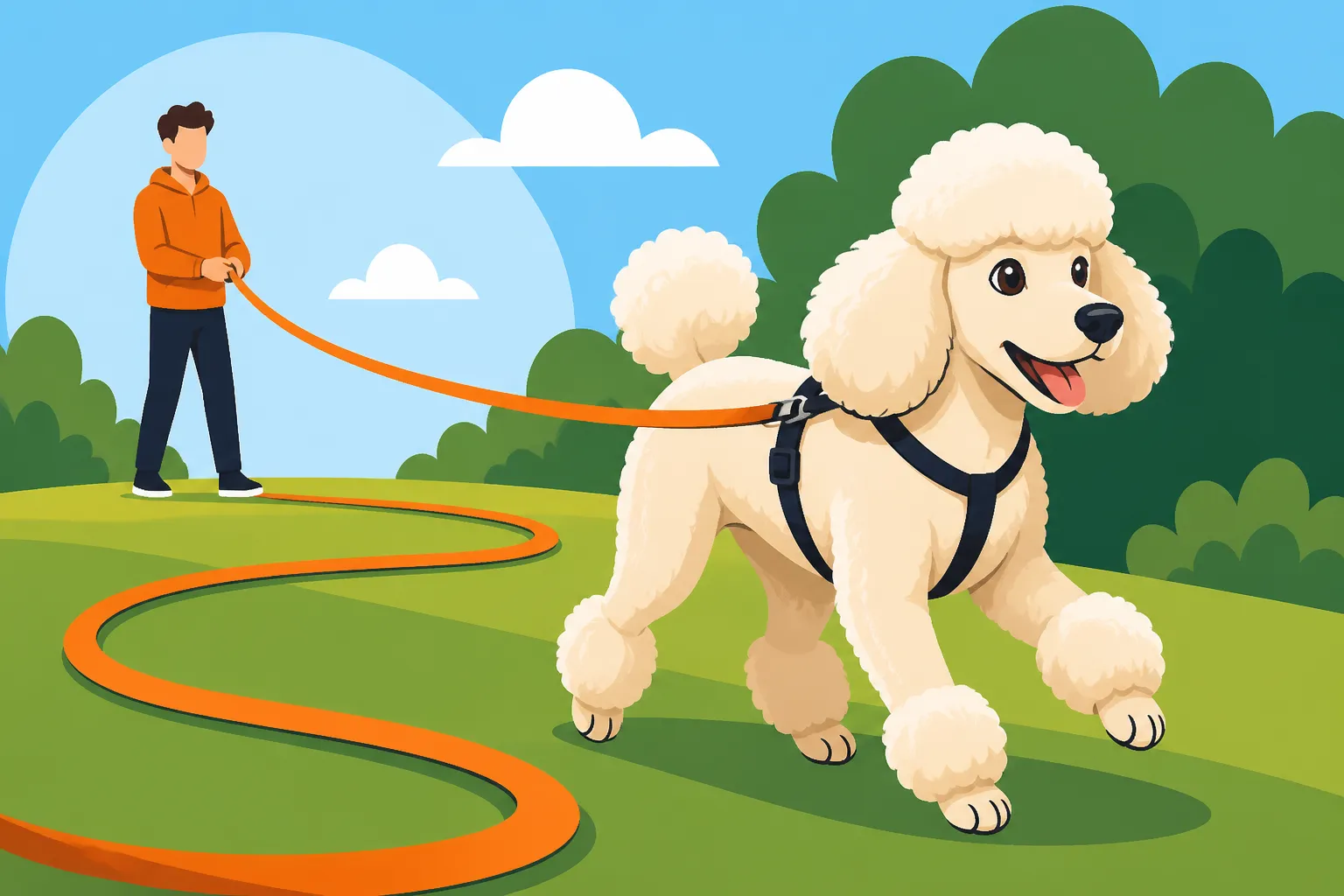
The transition from a standard 6-foot leash to full off-leash freedom is a huge leap, and for many Poodles, it's too much too fast. A long line allows you to gradually extend that boundary, giving your Poodle the sensation of being off-leash while still maintaining a crucial safety net. Imagine your Poodle bounding through a field, exploring new scents, and stretching their legs, all while you hold the other end of a 30-foot line. They get to satisfy their natural urge to run and investigate, which is essential for their physical and mental well-being, especially for active Standard Poodles who need substantial Daily Exercise for a Standard Poodle or even energetic Toy Poodles needing their own Daily Exercise for a Toy Poodle. This controlled freedom builds their confidence, teaches them how to navigate larger spaces, and most importantly, allows you to practice and reinforce that vital recall command in increasingly distracting environments. It's about giving them freedom with responsibility, teaching them that staying connected to you, even at a distance, is always rewarding.
Safety First: Mitigating Risks in Open Spaces
Open spaces, while wonderful for exercise, come with their own set of inherent risks. Cars, bicycles, other dogs, wildlife, or even just getting disoriented in an unfamiliar area are all valid concerns that keep many Poodle owners from ever letting their dogs off leash. A long line eliminates many of these worries. If your Poodle gets a scent and bolts towards a busy road, you have the line to stop them. If another dog approaches aggressively, you can pull your Poodle back to safety. It provides peace of mind, allowing you to relax and enjoy your time outdoors with your Poodle, rather than constantly scanning for potential hazards. This safety aspect is particularly crucial for Poodles who might have an exceptionally high prey drive or those who tend to be Why a Poodle Ignores You in an Open Field when something truly captivating catches their eye.
Selecting the Right Long Line and Getting Prepared
Choosing the right long line isn't just about picking the longest one you see. There are various factors to consider to ensure it's safe, effective, and comfortable for both you and your Poodle.
Length, Material, and Hardware Considerations
Long lines come in a variety of lengths, typically ranging from 15 to 50 feet. For initial training in smaller, less distracting areas, a 15 or 20-foot line might be perfect. As your Poodle's recall improves and you move to larger, more open spaces, you might graduate to a 30 or even 50-foot line. The material is also key. Nylon lines are common and affordable, but they can absorb water and mud, making them heavy, prone to tangling, and a bit rough on the hands. For Poodles, whose coats can be magnets for debris, a Biothane long line is often a fantastic investment. Biothane is a coated webbing that is waterproof, odor-proof, incredibly durable, and easy to clean – just wipe it down! It slides through grass and mud without soaking it up, making it much more pleasant to handle. You can find a wide range of both nylon and Biothane options, often with different hardware, on platforms like Amazon.
When it comes to hardware, look for lightweight but sturdy clasps. For Toy Poodles, a heavy brass snap clip can actually be quite cumbersome and uncomfortable. Ensure the clip swivels smoothly to prevent tangles. A good quality long line should also have a comfortable loop handle for you, but be mindful not to wrap it around your wrist, as a sudden tug could cause injury.
Essential Safety Gear for Long Line Work
Beyond the long line itself, a few other pieces of gear are non-negotiable for safe and effective training.
- A Well-Fitting Harness: This is paramount. Never attach a long line to your Poodle's collar. A sudden, sharp pull on a collar, especially on a long line where momentum can build, could cause severe neck injury, tracheal damage (particularly for smaller Poodles prone to conditions like Collapsing Trachea in a Toy Poodle), or even slip off if they back out of it. A harness distributes any pressure across their chest and shoulders, protecting their delicate neck and throat. Make sure it fits snugly but doesn't chafe.
- High-Value Treats: Your Poodle needs a powerful incentive to choose coming back to you over whatever captivating distraction they've found. Think small, soft, incredibly delicious treats – cut-up cheese, cooked chicken, or specialized training treats are usually winners. For a Toy Poodle, Treats Small Enough for a Toy Poodle are crucial for quick consumption and avoiding overfeeding.
- A Treat Pouch: Keeping treats readily accessible is vital for immediate rewards. A treat pouch that clips to your waist means you're not fumbling in pockets when your Poodle actually performs the desired behavior.
- Weather-Appropriate Attire: You'll be spending time outdoors, potentially in various weather conditions. Dress comfortably, and be prepared for muddy lines if you're not using Biothane.
Here's a quick comparison of common long line materials:
| Feature | Nylon/Cotton Webbing | Biothane (Coated Webbing) |
|---|---|---|
| Material Feel | Soft, flexible | Smooth, slightly stiffer |
| Waterproof | No (absorbs water) | Yes |
| Odor-Proof | No (can retain odors) | Yes |
| Cleaning | Machine washable, air dry; can hold dirt | Wipes clean easily with damp cloth |
| Tangle Tendency | Moderate to High | Low (less friction) |
| Weight | Moderate (heavy when wet) | Light to Moderate |
| Durability | Good | Excellent |
| Cost | Lower | Higher |
Starting Your Poodle's Long Line Training Journey
Once you have your gear, it's time to put it to use! Remember, the key to success with Poodles is consistency, positive reinforcement, and making training a fun, rewarding experience.
The "Come" Command Foundation
Before you even think about letting the long line drag, ensure your Poodle has a solid understanding of the "come" command in a low-distraction environment, like your backyard or a quiet room. Start simple: call their name, say "come," and as they turn towards you, enthusiastically praise them and reward them with a high-value treat as they reach you. Make coming to you the absolute best thing that can happen. This is the foundation upon which all long line work is built. Online training programs, such as those offered by BAXTER & Bella, can provide structured recall exercises that are excellent for building this foundation before taking it to a long line.
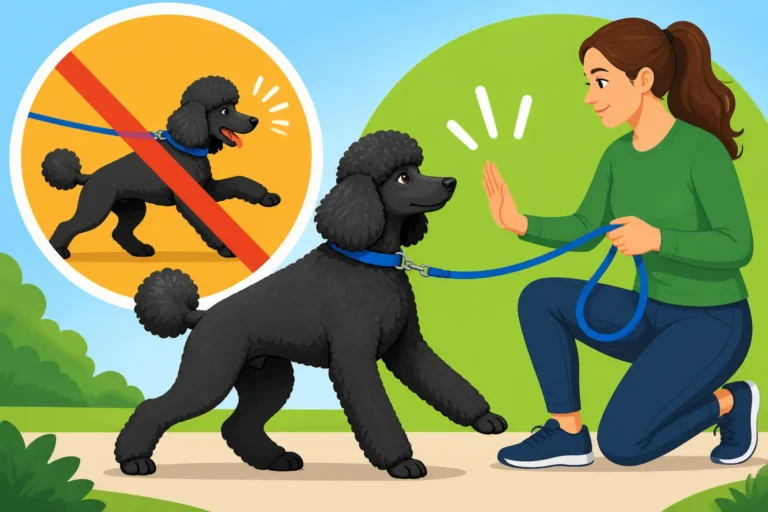
When introducing the long line, attach it to their harness and let them drag it around in a safe, enclosed space (like your yard) first. Don't pick it up or use it yet, just let them get used to the feel of it. Then, start your recall practice. Let them wander a bit, then cheerfully call "come!" If they hesitate, gently pick up the line and reel them in while continuing to use your encouraging voice. The moment they start moving towards you, release the tension on the line and praise profusely. Reward generously when they reach you. This teaches them that "come" is not a punishment, but a signal for good things. Building Reliable Recall in a Standard Poodle requires patience and repetition, and the long line is your best friend here.
Handling the Line Safely and Effectively
This is critical. Never, ever wrap the long line around your hand, arm, or any body part. If your Poodle suddenly bolts, you could suffer serious rope burns or dislocations. Instead, hold the end of the line loosely, or let it trail on the ground. When you need to gather it or apply pressure, pull it in loops or hold it with an open palm. If you need to stop your Poodle quickly, step on the line with your foot, rather than yanking with your hand. This technique allows you to absorb the force safely.
Practice dropping and picking up the line smoothly. You want to be able to retrieve the line quickly if your Poodle heads towards danger, but also allow them freedom to explore without constant tugging. Focus on observing your Poodle's body language. Are they sniffing something intriguing? Are they starting to look distracted by a distant jogger? Anticipate potential challenges so you can intervene with a gentle recall cue before they're fully engaged in something else.
Gradual Introduction to Distractions
The beauty of the long line is its versatility. Start your training in low-distraction environments like an empty tennis court (if allowed), a quiet field, or a large, fenced yard. Once your Poodle's recall is consistently excellent in these settings, gradually introduce more distractions.
- Stage 1: Low Distraction: Empty park, large backyard. Focus solely on recall, rewarding every successful return.
- Stage 2: Moderate Distraction: A park with a few distant people, sounds, or other dogs on leash. Challenge your Poodle's focus, but keep the environment manageable.
- Stage 3: Higher Distraction: A busier park with more activity, wildlife scents, or other dogs playing. This is where your long line really earns its keep, allowing you to practice recall amidst tempting scenarios.
Remember to keep training sessions positive and relatively short, especially when introducing new distractions. Poodles are intelligent, but even they can get overwhelmed. The goal is to set them up for success, not to test their limits to failure.
Troubleshooting Common Poodle Long Line Challenges
Even with the best intentions, you might encounter a few bumps along the road. Poodles are smart, and they'll definitely test the boundaries!
The Poodle Who Ignores Recall
This is perhaps the most common frustration. You call, and your Poodle pretends they didn't hear you, or maybe they glance back for a second before continuing their fascinating investigation. This isn't usually spite; it's often a sign that the distraction is currently more rewarding than coming back to you, or that your recall cue isn't strong enough.
- Make Yourself More Exciting: Are you being boring? Your voice should be cheerful, excited, and inviting. Drop to a squat, clap your hands, or even run a few steps away from them to encourage them to chase you.
- Higher Value Rewards: If they're blowing you off for a squirrel, a dry biscuit isn't going to cut it. Bring out the good stuff – a piece of hot dog, roast chicken, or whatever their absolute favorite is. Make their return an event! Don't be afraid of Fading Rewards With a Quick-Learning Poodle later, but initially, make it rain treats.
- Don't Nag: Constantly repeating "come, come, come" only teaches your Poodle that they don't have to respond the first time. Say it once, maybe twice, then gently reel them in with the long line. The moment they start moving towards you, praise them lavishly.
- Change of Scenery: If a particular park always leads to recall failures, try a different, less stimulating location for a while. Rebuild their confidence and yours before returning.
Line Tangling and Tripping Hazards
A 30- or 50-foot line can become a tangled mess surprisingly quickly, especially with an enthusiastic Poodle who likes to zoom in circles. It can also be a tripping hazard for you and others.
- Biothane is Your Friend: As mentioned, Biothane lines are less prone to tangling and much easier to manage than nylon. They glide over grass and through bushes more smoothly.
- Practice Line Management: Learn to gather and release the line efficiently. You don't need to hold the entire length at all times. Let it drag behind your Poodle, but keep a general awareness of where it is and gather slack as needed when they come closer.
- Open Spaces: Start in very open areas with minimal obstacles (trees, benches, picnic tables) to reduce the chances of getting tangled.
- Awareness: Always be aware of your surroundings – other people, dogs, and especially children who might not see the line. Politely alert others if you're working with a long line.
The Poodle Who Chews the Line
Some Poodles, especially puppies or those with an oral fixation, might decide the long line is a fantastic new chew toy.
- Engagement is Key: If your Poodle is chewing the line, they're likely bored or not engaged enough in the training exercise. Increase the excitement, move more, call them more frequently, and offer more rewards. A Poodle's mind needs to be occupied; otherwise, they'll find their own entertainment. What a Poodle Does When Its Brain Is Idle can sometimes manifest as destructive chewing.
- Bitter Spray: For persistent chewers, a bitter apple spray applied to the line can deter them.
- Material Choice: A thicker Biothane line might be less appealing to chew than a thin nylon one.
- Interrupt and Redirect: The moment you see them go for the line, interrupt with a sharp "leave it!" or a clap, then immediately redirect their attention to a game, a recall, or a proper chew toy.
Long line training is an ongoing process, a dance between control and freedom. It's about building communication and trust, and truly understanding your Poodle's motivations. With patience, consistency, and the right approach, that dream of off-leash adventures with your Poodle can absolutely become a reality. Keep these tips in mind, and you'll be well on your way to enjoying the boundless joy your Poodle brings, safely and happily. You might even find that some Nose Work as Exercise for a Poodle on the long line adds another dimension to their outdoor adventures!
Disclaimer
This article is for general informational purposes only and does not constitute professional advice. Laws, prices and regulations vary by location and change over time. Consult a qualified professional for guidance on your specific situation.