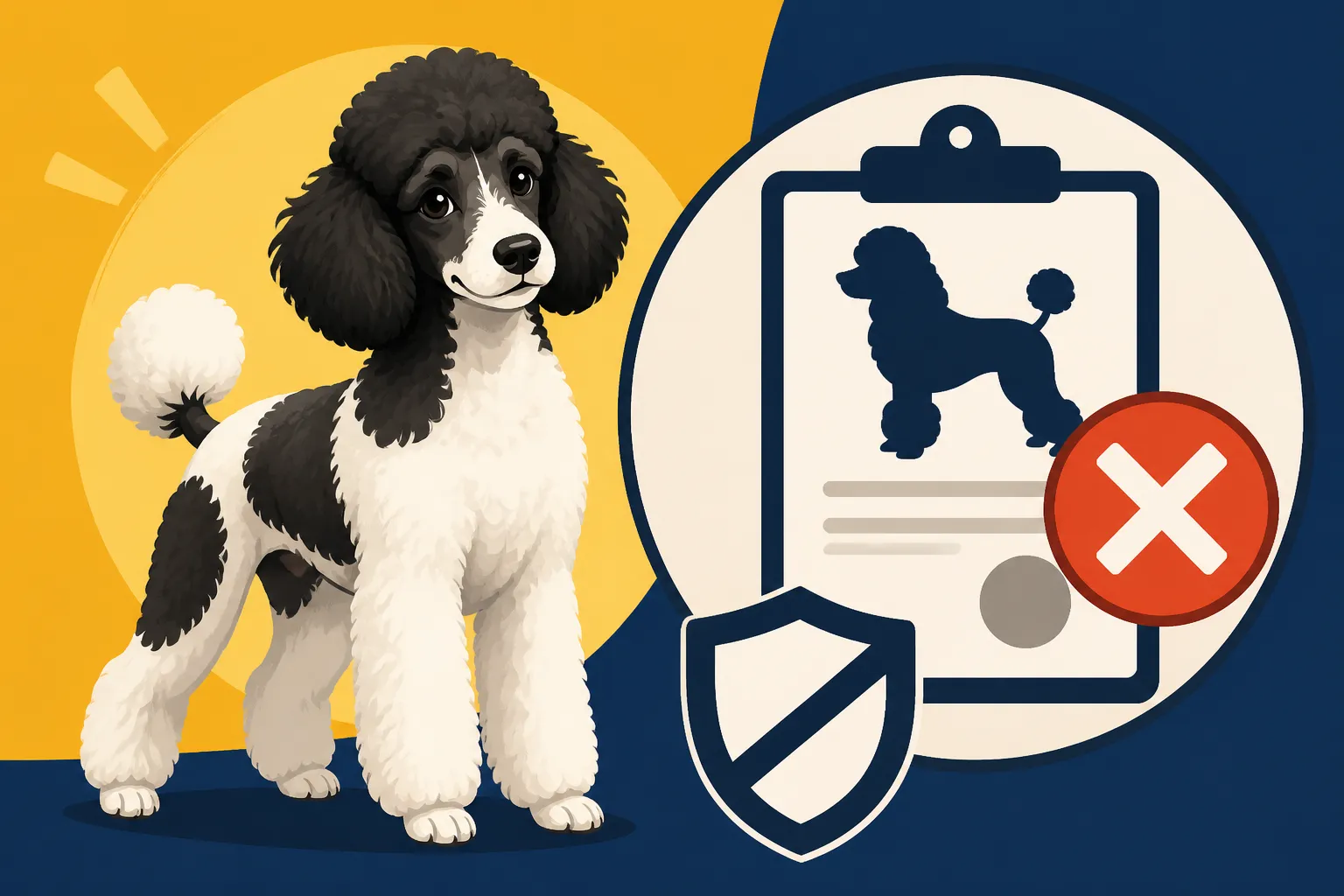
Why a Parti Poodle Gets Limited Registration
It’s a moment of pure joy when you bring home your new Poodle puppy. You’ve likely fallen head over heels for their intelligence, playful spirit, and that undeniably stunning coat. But then, as you look over their registration papers, you spot a phrase that gives you pause: "Limited Registration." For many Poodle parents, especially those new to the world of purebred dogs, this can be confusing, even disheartening, leading to questions about their dog's pedigree or value. This comprehensive guide will unravel the mystery of limited registration for parti Poodles, explaining exactly what it means, why it’s common for this particular color pattern, and how it impacts your life with your cherished companion.
Understanding AKC Limited Versus Full Registration
When you acquire a purebred Poodle, their lineage can often be traced back through official kennel club registries, such as the American Kennel Club (AKC) in the United States. This registration isn't just a fancy certificate; it’s a record of your dog’s ancestry, proving they are indeed a purebred Poodle. However, not all registrations are created equal, and understanding the distinction between "Limited Registration" and "Full Registration" is crucial.
What "Limited Registration" Actually Entails
Limited Registration is exactly what it sounds like: it places limitations on what can be done with the dog's progeny. Specifically, a dog with Limited Registration is eligible for all AKC events except for conformation (breed shows), and any puppies produced by that dog cannot be registered with the AKC. This is a critical point for owners to grasp, as it's the primary reason a breeder would choose to issue Limited Registration.
Now, let's be super clear here: Limited Registration absolutely does not mean your Poodle isn't a purebred. It doesn't mean they are less healthy, less intelligent, or somehow "faulty." Your parti Poodle is 100% a Poodle through and through. They can still participate in a vast array of exciting AKC events like obedience trials, agility competitions, rally, tracking, lure coursing, scent work, and even therapy dog programs. These events are fantastic ways to bond with your Poodle, channel their incredible intelligence, and show off their natural talents. The only thing they can't do is enter the conformation ring, where dogs are judged against the specific physical standards of their breed, or contribute registered offspring to the breed pool.
This distinction is often a tool used by responsible breeders to protect their breeding programs and the integrity of the breed standard. They want to ensure that only dogs meeting certain criteria are used for breeding, thereby maintaining health, temperament, and adherence to the breed standard.
The Privileges of "Full Registration"
In contrast, "Full Registration" grants the owner the ability to register any puppies produced by that dog. A Poodle with Full Registration can also compete in conformation shows, where judges evaluate them based on how closely they conform to the official breed standard. This type of registration is typically reserved for Poodles that a breeder believes embody the ideal characteristics of the breed in terms of health, temperament, and physical structure, making them suitable candidates for continuing the breed line.
Full Registration is a powerful tool in a breeder's hands, signaling that they view this particular Poodle as potential breeding stock. For a prospective Poodle owner, understanding whether a puppy comes with limited or full registration is important, especially if you ever harbored dreams of showing your dog in the conformation ring or becoming a breeder yourself. Most pet Poodles, regardless of color, are sold with limited registration to encourage responsible pet ownership and prevent indiscriminate breeding.
The Historical Reason Behind Parti Poodle Limited Registration
This is where the story gets a bit more nuanced, especially for our beautifully patterned parti Poodles. The reason they often come with limited registration is deeply rooted in the history and evolution of the breed standard.
The Poodle Breed Standard's Stance on Color
For decades, the official Poodle breed standards in most major kennel clubs, including the AKC, have primarily emphasized solid colors. When you read The Poodle the Standard Describes, you'll find language that speaks to elegance, square proportion, and a dense, curly coat, but traditionally, regarding color, the emphasis has been on "even and solid" coloration. This means a Poodle should ideally be one uniform color – black, white, apricot, brown, silver, cream, or red – without patches or secondary colors.
Parti Poodles, characterized by their striking patterns of white with patches of another solid color (like black and white, brown and white, or red and white), have a long and storied history within the breed. They were present in early Poodle lines, often depicted in historical artwork and records. However, as the breed evolved and conformation showing became more prominent, the preference shifted towards solid colors. Parti Poodles, despite their historical presence and undeniable beauty, were gradually deemed "non-standard" by the influential figures who shaped the breed.
The Push for "Solid" and Its Impact
The move towards exclusively solid colors wasn't about health or temperament; it was purely aesthetic and driven by show ring preferences. Breeders, aiming to produce Poodles that would excel in conformation and uphold the prevailing standard, began to selectively breed for solid coats. Over time, the parti pattern became considered a "fault" in the show ring. This isn't to say it made the dog any less of a Poodle, but it meant they couldn't compete for championship titles in conformation.
To manage this, breeders who produced parti-colored puppies (which can happen even when breeding two solid-colored Poodles, as the parti gene is recessive and can be carried silently for generations) would typically register them with Limited Registration. This ensured that while these lovely dogs could still be registered as purebred Poodles and cherished as family pets, they wouldn't inadvertently contribute "non-standard" colors to the conformation-focused gene pool through breeding. It was a mechanism to control the traits seen as desirable within the competitive show world, while still acknowledging the dogs as purebred. The decision to register a parti Poodle with Limited Registration reflects the breeder's adherence to these established, albeit sometimes debated, breed standards.
Practical Implications for Owners of Parti Poodles
So, you have a gorgeous parti Poodle with limited registration. What does this mean for your day-to-day life and your dreams for your furry family member? Let's break down the practical realities.
Showing and Performance Opportunities
The most significant implication of limited registration for a parti Poodle is that they cannot compete in AKC conformation shows. These are the "beauty pageants" of the dog world, where Poodles are judged on their physical appearance, gait, and presentation against the breed standard. Since the breed standard traditionally favors solid colors, parti Poodles are effectively excluded from this particular avenue of competition. Many people find that Parti Poodles and the Show Ring is a topic fraught with strong opinions and historical context.
However, and this is a huge however, this restriction is far from a limitation on your Poodle's overall potential or your enjoyment of dog sports. Parti Poodles are Poodles, and Poodles are incredibly intelligent, athletic, and eager-to-please dogs. This means your parti Poodle can still excel in a vast array of performance events. Think about it:
- Agility: Navigating obstacle courses with speed and precision.
- Obedience: Mastering complex commands and routines.
- Rally: A fun, fast-paced form of obedience.
- Scent Work: Using their keen nose to find hidden scents.
- Tracking: Following a human scent trail.
- Dock Diving: Leaping into water to retrieve a toy.
- Therapy Work: Providing comfort and joy in hospitals and nursing homes.
These activities are not only fantastic for channeling your Poodle's energy and intellect but also incredible bonding experiences for you and your dog. Many owners find these performance sports far more engaging and personally rewarding than the conformation ring anyway. Your parti Poodle, with its stunning coat and clever mind, can shine brightly in any of these areas. Remember that even the specific grooming styles, like those mentioned in Which Poodle Clips the Ring Allows, are only a factor in conformation.
Breeding Responsibilities and Choices
This is the core purpose of limited registration: to prevent the registration of offspring. If your parti Poodle has limited registration, any puppies they might produce would not be eligible for AKC registration. For most pet owners, this isn't an issue, as responsible pet ownership almost always includes spaying or neutering your dog. This prevents accidental litters, reduces the risk of certain health issues (like mammary tumors in females or prostate problems in males), and contributes to a healthier pet population.
Even if your Poodle had full registration, responsible breeding is a monumental commitment. It involves extensive health testing, understanding genetics (you might want to explore Genetic Panels for the Three Poodle Sizes), significant financial investment, and a deep knowledge of breed standards and welfare. A reputable breeder will always provide detailed Health Clauses in a Poodle Breeder Contract to ensure the well-being of their puppies. The fact that a parti Poodle has limited registration simply takes the question of breeding off the table, allowing you to focus entirely on their role as a beloved companion.
Your Poodle's Health and Well-being
Perhaps the most reassuring aspect of limited registration for a parti Poodle is that it has absolutely zero bearing on their health or temperament. A parti Poodle is a Poodle, and like all Poodles, they are generally a robust and healthy breed. Their color pattern does not predispose them to any unique health problems.
What truly matters for your Poodle's health and well-being is the quality of their breeding and the care you provide. A responsible breeder, regardless of whether they breed solid or parti Poodles, will prioritize health testing their breeding stock for common Poodle ailments such as hip dysplasia, eye conditions like PRA, and autoimmune diseases like Addison's disease. You can learn more about this in What a Poodle Breeder Must Test For.
Once your Poodle is home, their health depends on consistent veterinary care, a high-quality diet (brands like Ollie offer fresh food options, while Chewy provides a wide range of premium kibbles and treats), regular exercise, and mental stimulation. Pet insurance, such as Healthy Paws, is also an excellent investment to help cover unexpected veterinary costs, ensuring your Poodle gets the best care throughout their life, regardless of their coat color or registration status. Your parti Poodle will thrive just as much as any solid-colored Poodle, and you'll enjoy a long, happy life together. Taking proper care of your Poodle, even as they age, is always the priority, as detailed in articles like Caring for an Aging Poodle.
Navigating the World of Poodle Registration and Breeding Choices
Understanding why parti Poodles often receive limited registration helps clarify the value and role of your dog. It’s not about inferiority, but rather a reflection of historical breed preferences and a tool used by breeders.
Finding a Reputable Breeder
The most important decision you'll make when adding a Poodle to your family isn't about their color or registration type, but about the breeder you choose. A truly reputable breeder prioritizes the health, temperament, and welfare of their dogs above all else. They will be transparent about their breeding practices, health testing results, and the reasoning behind their registration decisions. Don't be swayed by trends or perceived "rarity" in color; focus on ethical practices.
When researching breeders, ask detailed questions about health clearances for the parents, temperament of the parents, and their philosophy on breeding. Be wary of breeders who offer puppies significantly cheaper than the breed average, as this often indicates a lack of proper health testing or care, as discussed in Why a Cheap Poodle Usually Means No Testing. A well-bred Standard Poodle, for example, comes with a significant investment because of all the care and testing involved, as elaborated in What You Pay for a Well-Bred Standard Poodle. Be suspicious if a breeder is reluctant to share information about the sire or dam, which might be a sign they are hiding something, a point explored in What a Poodle Breeder Hiding the Sire Is Hiding. Whether your Poodle is solid or parti, their health and temperament come from responsible breeding, not their color.
Advocating for Inclusivity in Breed Standards
The discussion around parti Poodles and their registration status is a dynamic one within the Poodle community. There's an ongoing conversation, particularly within the AKC, about the inclusivity of breed standards and whether historical preferences should continue to dictate modern practices. Some argue that parti Poodles, having been part of the breed's history, deserve full recognition in all aspects of competition.
While kennel club standards evolve slowly, your role as an owner of a parti Poodle can be one of appreciation and advocacy. By excelling with your parti Poodle in performance events, celebrating their unique beauty, and demonstrating their exceptional temperament, you contribute to a broader understanding and acceptance of all Poodle colors. Remember that the love and companionship your parti Poodle offers are boundless, far exceeding any limitations imposed by a piece of paper. The very existence of different Poodle colors, like those explored in Solid Poodle Colors the AKC Recognizes, adds to the richness of the breed. Ultimately, whether your Poodle has limited registration or full, it's the bond you share that truly matters.
Disclaimer
This article is intended for informational purposes only and does not constitute veterinary advice. Always consult with a qualified veterinarian for any health concerns or before making any decisions about your pet's health or treatment.