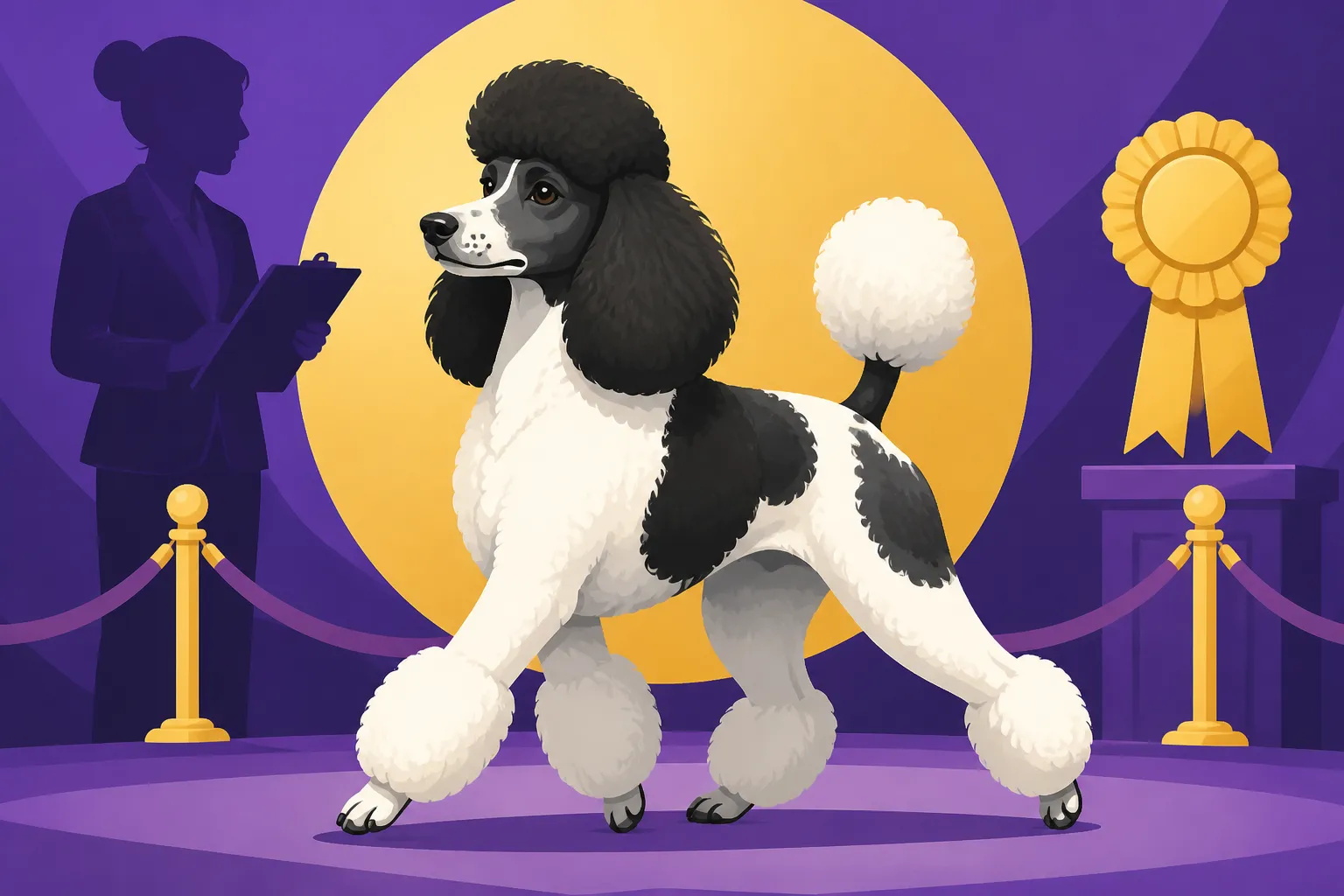
Parti Poodles and the Show Ring
One of the most disheartening things for a new Poodle owner, or even an experienced one who's just fallen in love with a stunning multi-colored Poodle, is the confusion and often outright misinformation about whether their beautiful dog can participate in the venerable world of dog shows. It's a question fraught with nuance and specific regulations that can feel like a labyrinth, especially when you simply want to celebrate your Poodle's heritage and beauty. This guide aims to clear up the mystery surrounding Parti Poodles and their place in the show ring, helping you understand the rules, the history, and the many avenues where your parti-colored companion can shine.
The Poodle Breed Standard and Color Regulations
Understanding the show ring journey for any Poodle starts with a deep dive into the breed standard, which is essentially the blueprint for the ideal Poodle. Every major kennel club worldwide has its own version, though they often share many commonalities. These standards dictate everything from ear set and tail carriage to coat texture and, crucially for our discussion, acceptable colors. This is where the story of the Parti Poodle in the show ring truly begins to unfold.
What the Standard Says About Poodle Colors
For many years, and still prominently in some major organizations like the American Kennel Club (AKC), the Poodle breed standard specifies that a Poodle must be a "solid color." This means that the coat should be of one uniform color, such as black, white, brown, blue, gray, silver, cream, apricot, or red. There's no room for splotches, patches, or secondary colors breaking up that uniform hue. It's a strict interpretation that has shaped the breeding and showing landscape for generations.
This focus on solid colors isn't arbitrary; it reflects historical preferences and the aesthetics valued by breeders and judges who established these standards. For instance, a beautifully groomed black Poodle should be entirely black, from the tip of its nose to the end of its tail, without any white markings, especially if those white markings are not on the chest. Any deviation from this solid color, no matter how striking or genetically fascinating, has traditionally been seen as a fault in the conformation ring. You can explore the various acceptable shades in Solid Poodle Colors the AKC Recognizes.
Why Parti Colors Deviate From Conformation Ideals
Parti Poodles, by their very nature, feature a base color with clearly defined patches of white. The term "parti" itself means "particolored," explicitly indicating two or more colors. While undeniably stunning, these distinct markings are the very reason they often fall outside the traditional conformation ring's criteria. It's not about being less of a Poodle; it's about not conforming to a very specific, historically established aesthetic.
Think of it like a beautiful painting: the standard dictates a monochromatic masterpiece, while a parti Poodle is a vibrant, intricate canvas of multiple hues. Both are art, but one simply doesn't fit the specified frame for that particular exhibition. This can be frustrating for owners who see the elegance and intelligence of their parti Poodle and wonder why such a seemingly superficial trait would preclude them from a certain type of competition.
What is a Parti Poodle, Exactly?
Before we delve deeper into show ring specifics, let's make sure we're all on the same page about what a Parti Poodle actually is. These dogs are purebred Poodles, no question about it, but their striking coat patterns often lead to misunderstandings among those unfamiliar with Poodle genetics and history. They are not mixed breeds or "doodles" – they are 100% Poodle, through and through.
The Genetics Behind Parti Poodle Markings
Parti Poodles get their distinctive spotted or patched coats from a specific set of genes. Essentially, a Parti Poodle carries a recessive gene that allows for white markings to appear on a colored coat. Without getting too deep into the complexities of canine genetics, imagine it as a switch that turns off color production in certain areas of the dog's skin and hair follicles. This is what creates those beautiful, often symmetrical, patches of color against a white background.
These genetics have been present in the Poodle breed for centuries, and historical artwork often depicts Poodles with parti markings. They were not "invented" recently but were simply not favored by the show ring standards that gained prominence in the late 19th and 20th centuries. Breeders dedicated to parti lines work carefully to ensure health, temperament, and correct Poodle structure, just like breeders of solid-colored Poodles. It's a fascinating aspect of Poodle diversity that showcases the breadth of the breed's genetic potential.
Common Misconceptions About Parti Poodles
The most persistent misconception is that Parti Poodles are not "purebred" Poodles. This is absolutely false. A Parti Poodle, when bred responsibly by a reputable breeder, has a full Poodle pedigree stretching back generations. Their lineage is just as authentic as that of a solid black or white Poodle. The only difference is the expression of their coat color genes.
Another common myth is that parti Poodles are somehow less healthy or have different temperaments. Again, this is untrue. Health and temperament are tied to responsible breeding practices, genetic screening, and socialization, not coat color. A well-bred Parti Poodle should possess the same intelligence, athleticism, and loving nature that defines the Poodle breed. They require the same dedicated care, excellent nutrition, and mental stimulation as any other Poodle. If you're looking for quality Poodle care products, places like Chewy offer a wide range of options suitable for all Poodle varieties.
AKC Conformation and the Parti Poodle
When most people think of "dog shows," they often picture the prestigious conformation events hosted by organizations like the American Kennel Club (AKC). This is where dogs are judged against their breed standard, and champions are crowned based on how closely they embody the physical and temperamental ideals of their breed. For Parti Poodles, this particular arena presents a unique set of challenges and limitations.
Why AKC Conformation Excludes Parti Poodles
The AKC Poodle breed standard, as mentioned, calls for solid-colored Poodles. This means that a Parti Poodle, with its distinct patches of color, is considered a disqualifying fault in the conformation show ring. It's a clear-cut rule: if your Poodle isn't a solid color, it cannot compete for championship points in AKC conformation events. This can be a tough pill to swallow for owners who are passionate about their parti-colored companions.
This exclusion is a point of contention for many parti Poodle enthusiasts, who argue that color is a superficial trait that doesn't affect a dog's health, temperament, or overall Poodle structure. They correctly point out that historically, parti colors were common. However, the standard as it exists today prioritizes uniformity in color. This doesn't mean the AKC doesn't recognize Parti Poodles at all; they can still be registered, and their owners can participate in a wide array of other AKC-sanctioned events, just not conformation.
The Role of Limited Registration
For Poodles that do not meet certain criteria for breeding or conformation showing, the AKC offers "Limited Registration." When a Parti Poodle is registered with the AKC, it will typically be given a limited registration. This type of registration means the dog is recorded in the AKC registry, can participate in all performance events (like agility, obedience, rally, etc.), but any offspring produced by that dog cannot be registered with the AKC, and the dog itself cannot compete in conformation shows.
Limited registration serves to help maintain the integrity of the breed standard by preventing the registration of puppies from dogs that don't meet conformation color criteria. It's a way for the AKC to acknowledge the dog as a purebred Poodle while adhering to its specific rules for what constitutes a "showable" or "breedable" Poodle within its established framework. This is crucial for understanding why a reputable breeder of parti Poodles will almost always place their puppies on limited registration, even if they are otherwise perfectly healthy and excellent examples of the breed.
Other Registries and Their Approach to Parti Poodles
While the AKC is a dominant force in the United States, it's not the only game in town. There are other kennel clubs and registries, both within the US and internationally, that take a different, often more inclusive, approach to Parti Poodles. Understanding these alternatives can open up new avenues for competition and recognition for your beautiful dog.
United Kennel Club (UKC) and Parti Poodles
The United Kennel Club (UKC) is one of the oldest and largest all-breed registries in the world, and it has a notably different stance on Poodle colors compared to the AKC. The UKC Poodle standard does indeed recognize and allow parti colors in their conformation ring. For owners of Parti Poodles who dream of earning conformation titles, the UKC offers a welcoming environment where their dogs can compete on an equal footing with solid-colored Poodles.
This difference is significant. A Parti Poodle competing in a UKC conformation show is judged on its overall structure, movement, and adherence to the breed standard in every aspect except the restriction on multiple colors. This means that a UKC Champion Parti Poodle is a real title, reflecting genuine quality and adherence to the breed's functional design. Many parti Poodle breeders and owners gravitate towards the UKC for this very reason, appreciating its broader acceptance of Poodle diversity.
International Kennel Clubs and Global Standards
Beyond the US, the approach to parti colors varies. Some international kennel clubs align more closely with the AKC's solid-color-only rule, while others are more accepting. It's essential for anyone interested in showing their Parti Poodle abroad to research the specific rules of the kennel club in the country where they intend to compete. For example, some European countries may have registries that accept parti colors, sometimes under a separate classification or variety.
The global landscape of dog shows reflects diverse historical perspectives and cultural preferences regarding breed appearance. This can be a source of both confusion and hope for parti Poodle owners. What's considered a disqualification in one country might be perfectly acceptable in another. This highlights the subjective nature of breed standards and how they can evolve or differ across regions, even for the same breed.
The Path for Parti Poodles Beyond the Conformation Ring
Just because a Parti Poodle might not be eligible for AKC conformation doesn't mean they can't be stars! In fact, the world of dog sports and performance events is wide open to them, offering countless opportunities to showcase their intelligence, athleticism, and incredible bond with their handlers. This is where Poodles, regardless of color, truly shine.
Performance and Companion Events
Poodles are renowned for their intelligence and eagerness to please, making them exceptional candidates for a vast array of performance and companion events. These include:
- Obedience: Testing a dog's ability to perform specific commands accurately and precisely.
- Rally: A more relaxed form of obedience where dogs and handlers navigate a course with signs indicating different exercises.
- Agility: Dogs navigate an obstacle course, demonstrating speed and coordination.
- Scent Work/Nose Work: Dogs use their incredible sense of smell to locate hidden target odors.
- Tracking: Dogs follow a scent trail laid by a person.
- Dock Diving: Dogs jump for distance or height into a body of water.
- Therapy Dog Work: Poodles' calm and friendly nature makes them excellent therapy animals.
- Canine Good Citizen (CGC): A certification program that demonstrates a dog's good manners and obedience.
In all of these events, color is irrelevant. What matters is the dog's training, temperament, and ability to work alongside its human partner. A Parti Poodle with the right drive and aptitude can earn numerous titles in these arenas, proving their worth far beyond the superficiality of coat color. This is a huge area for Poodles to thrive, as detailed in Dog Sports a Poodle Excels At and Training a Poodle That Outthinks You.
Why Poodles Excel in Performance Sports
Poodles were originally bred as water retrievers, a working heritage that imbues them with high intelligence, trainability, and athletic prowess. This innate drive makes them natural fits for performance sports. They love having a "job" to do, and channeling their energy and intellect into activities like agility or obedience keeps them mentally stimulated and physically fit. Whether it's a Standard, Miniature, or Toy Poodle, they are all capable of exceptional feats.
A Parti Poodle's striking appearance can even be an advantage in these sports, drawing positive attention and helping them stand out from the crowd. Spectators and judges often appreciate the unique beauty of these dogs as they perform. For everyday training and play, you'll find an abundance of enrichment toys and training aids on sites like Chewy that can help tap into your Poodle's clever mind. Remember, a mentally stimulated Poodle is a happy Poodle, regardless of their color pattern.
| Feature | AKC Conformation (Solid Poodle) | AKC Conformation (Parti Poodle) | UKC Conformation (Parti Poodle) | Performance/Companion Events (All Poodles) |
|---|---|---|---|---|
| Color Standard | Solid color only | Disqualifying fault | Parti colors acceptable | Not a factor |
| Eligibility | Eligible for championship points | Not eligible for championship points | Eligible for championship points | Eligible for titles |
| Registration | Full Registration typically | Limited Registration typically | Full Registration typically (UKC) | Open to Full or Limited Registration |
| Judging Focus | Adherence to physical breed standard | N/A | Adherence to physical breed standard (incl. parti) | Skill, training, teamwork |
| Titles Earned | Conformation Champion (CH) | N/A | Conformation Champion (CH) | Agility, Obedience, Rally, Scent Work titles |
| Breeding Rights | Offspring eligible for AKC registration | Offspring not eligible for AKC registration | Offspring eligible for UKC registration | Breeding rights determined by registration type |
The Historical Context of Poodle Colors
To fully grasp the current situation with Parti Poodles in the show ring, it helps to understand a bit of history. Breed standards, and the preferences they enshrine, are not static; they evolve, often reflecting the tastes and priorities of breeders and kennel clubs at particular points in time. The Poodle's journey from a working water dog to a prized companion and show dog has been long and varied.
Early Poodles and Color Diversity
If you look back at old paintings, engravings, and historical records, you'll find plenty of evidence that Poodles came in a wide array of colors, including parti. These multi-colored Poodles were common and highly valued, especially in their original role as duck retrievers, where their coat pattern made no difference to their working ability. The elaborate Poodle clips, often seen in show rings today, also have a historical basis in practical working needs, as explored in Why the Poodle Clip Was a Working Design.
The shift towards solid colors as the sole acceptable standard in many kennel clubs began later, coinciding with the rise of formal dog shows in the 19th and early 20th centuries. During this era, many breeds underwent refinement, with specific physical traits being emphasized and codified into breed standards. For Poodles, the trend leaned heavily towards the elegant, uniform appearance of solid colors.
The Impact of Show Ring Preferences
Once solid colors became the established ideal for the conformation ring, breeding programs naturally focused on producing dogs that met this standard. Poodles with parti markings, while still genetically present, were often sidelined from show lines. This long-standing preference in major organizations like the AKC has ingrained the idea that "true" Poodles are solid-colored, despite historical evidence and the continued existence of vibrant parti lines.
This historical trajectory explains why even today, many people are surprised to learn that Parti Poodles are purebred. It also illustrates how powerful show ring aesthetics can be in shaping a breed's perception and development. The good news is that there's a growing appreciation for the diversity within the Poodle breed, with more people recognizing the beauty and legitimacy of parti colors, even if the traditional conformation ring hasn't fully caught up. For Poodle enthusiasts, ensuring the health and temperament of the breed, regardless of color, is a paramount concern, as discussed in What a Poodle Breeder Must Test For.
Finding a Reputable Parti Poodle Breeder
If you're captivated by the charm of a Parti Poodle and want to welcome one into your home, finding a reputable breeder is absolutely paramount. Just like with any Poodle, ethical breeding practices are the foundation for a healthy, well-adjusted companion. Don't let the color debate overshadow the critical importance of responsible breeding.
What to Look for in a Breeder
A reputable Parti Poodle breeder will be transparent about their dogs' pedigrees, health testing, and breeding goals. They will:
- Perform Health Testing: They should conduct all recommended health screenings for Poodles, including those specific to their size (e.g., hip scoring for Standards, patella checks for Toys/Miniatures, eye exams, and genetic testing for conditions like PRA and Von Willebrand Disease). They'll be happy to provide verifiable results from organizations like the Orthopedic Foundation for Animals (OFA) or Canine Health Information Center (CHIC). You can read more about this in Genetic Panels for the Three Poodle Sizes.
- Prioritize Temperament: A good breeder focuses on producing Poodles with sound, stable temperaments, regardless of color. They will socialize their puppies extensively from a young age.
- Show Their Dogs (in appropriate venues): While their dogs may not be in AKC conformation, they should be active in UKC conformation or various performance sports, demonstrating their dogs' quality and adherence to functional breed standards.
- Be Knowledgeable About Parti Genetics: They should understand the genetics behind parti coats and be able to explain them clearly.
- Offer a Health Guarantee and Support: A responsible breeder stands behind their puppies and is a lifelong resource for new owners.
- Insist on Limited Registration: For AKC-registered Parti Poodles, expect them to require limited registration to uphold the AKC's conformation standard.
- Allow Visits: They should welcome potential buyers to visit their facility (or conduct thorough virtual tours) and meet the parent dogs and puppies.
Be wary of anyone who charges exorbitant prices for "rare" parti colors without providing robust health clearances and verifiable pedigrees. A "cheap" Poodle often comes with hidden costs in vet bills later, a topic explored in Why a Cheap Poodle Usually Means No Testing.
The Benefits of a Well-Bred Parti Poodle
A well-bred Parti Poodle is every bit as wonderful a companion as any solid-colored Poodle. They share the same incredible intelligence, trainability, and affectionate nature that makes the breed so beloved. They thrive on human interaction and mental engagement. Their unique coats are simply an aesthetic variation, not an indicator of lesser quality or health.
Embracing a Parti Poodle means you get to enjoy all the classic Poodle traits – their lively spirit, their sharp mind, their elegance – with the added bonus of a stunning, one-of-a-kind coat pattern. Whether your goal is to compete in agility, excel in obedience, or simply have a loving family member, a responsibly bred Parti Poodle can exceed all expectations. They are ready to conquer the world, one performance title at a time, or simply steal your heart from the comfort of your sofa.
Disclaimer
This article is for general informational purposes only and does not constitute professional advice. Laws, prices and regulations vary by location and change over time. Consult a qualified professional for guidance on your specific situation.