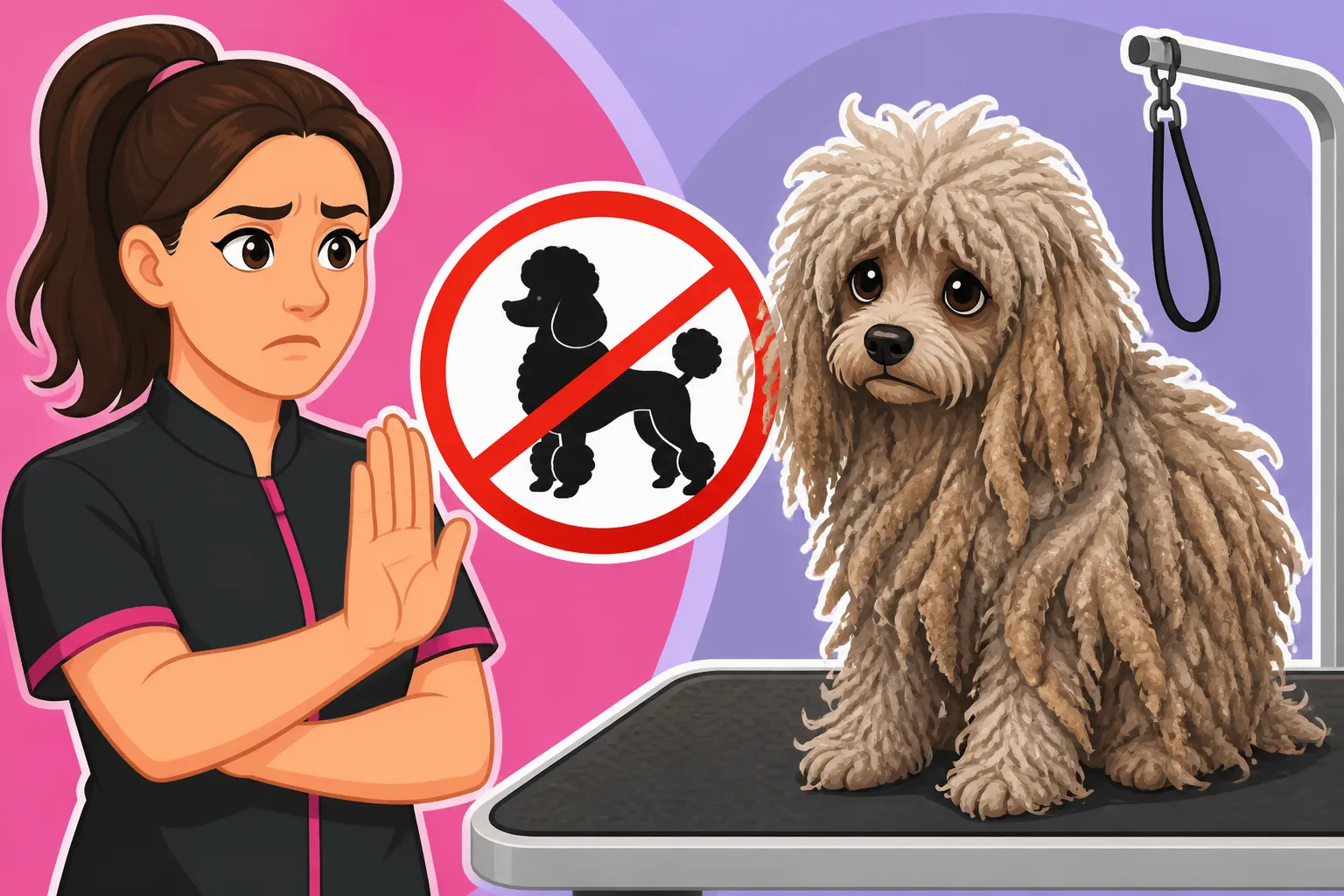
Why Groomers Refuse Severely Matted Poodles
It’s a truly heartbreaking situation: you arrive at the groomer with your beloved Poodle, perhaps feeling a little guilty about how long it's been, only to be told that your dog’s coat is so severely matted they can’t even work on it. This isn't just about a bad hair day; it’s a serious issue that groomers face regularly, and their refusal to work on a severely matted Poodle comes from a place of deep concern for your dog's welfare, not a lack of willingness to help. This guide will walk you through precisely why severe matting is such a critical problem and what you can do about it.
The Unique, Challenging Nature of the Poodle Coat
Understanding why Poodle coats mat so easily is the first step toward preventing the problem. Unlike many breeds that "shed" their fur by releasing dead hairs, Poodles have a continuous growing coat of hair, much like human hair.
Poodle Hair Versus Typical Dog Fur
Most dogs have a double coat consisting of a soft undercoat and a coarser topcoat. When they shed, they release the undercoat, which can often be brushed out with relative ease. Poodles, however, possess a single layer of dense, curly hair that simply keeps growing and growing. This beautiful, non-shedding quality is a major draw for many owners, especially those with allergies, as it traps dander and loose hair rather than releasing it into the environment. However, this same characteristic is what makes their coat a magnet for matting. Loose hair gets tangled within the growing curls, forming knots that, if left unattended, quickly turn into dense, felt-like mats. If you're curious about the specifics, you can dive deeper into why a Poodle has hair rather than fur.
This hair type is fantastic for keeping them warm and protecting their skin, but without diligent care, it very quickly becomes a tangled mess. Imagine not brushing your own long, curly hair for weeks or months; it would become a solid mass, painful to move, and impossible to comb through. For a Poodle, whose entire body is covered in this type of hair, the problem is exponentially worse.
The Dreaded Poodle Coat Change
As if managing a Poodle's continuously growing hair isn't enough, there's a specific period in a Poodle's life where matting becomes an even more formidable enemy: adolescence. Around 8 to 18 months of age, Poodles undergo what's known as "coat change." During this time, their soft, puppy fluff is gradually replaced by the coarser, denser adult coat. The puppy hair starts to shed out, but because the adult coat is simultaneously growing in and trapping it, the coat becomes incredibly prone to matting.
This phase can be utterly overwhelming for new Poodle owners. A dog that was relatively easy to brush a few weeks prior can suddenly develop mats literally overnight. It requires an increase in brushing frequency, sometimes daily or even twice daily, to prevent the coat from becoming unmanageable. Many owners, unaware of this phenomenon, find themselves in a losing battle, and this critical period is often when severe matting first develops, leading to their first difficult conversation with a groomer. Understanding the nuances of Coat Change in an Adolescent Poodle can help owners prepare for this challenging stage.
The Significant Risks Severe Matting Poses During Grooming
When a Poodle's coat is severely matted, it's not just a cosmetic issue; it's a serious health and safety concern for the dog. Groomers aren't being difficult when they refuse service; they are prioritizing your dog's well-being above all else.
Skin Damage, Irritation, and Hidden Ailments
Mats pull on the skin constantly, causing significant discomfort and pain. When mats are severe, they can restrict blood flow and create a breeding ground for bacteria and parasites. The skin underneath a tight mat often becomes inflamed, red, and irritated. In some cases, a mat can act like a tourniquet, cutting off circulation and even causing skin necrosis. When a groomer attempts to remove these mats, even by carefully shaving them off, they are working blind. The skin underneath might be paper-thin, infected, or covered in sores.
Clipper burn and accidental cuts are significant risks. Clippers need to glide smoothly over the skin. When mats are tight against the skin, there's no space for the clipper blade to safely pass. Even the most experienced groomer can accidentally nick or cut the dog, which can lead to infection and further complications. Furthermore, parasites like fleas and ticks can hide deep within mats, making them hard to detect until the coat is removed. Skin infections under a matted Poodle coat are a very real and painful consequence of neglect.
Pain, Stress, and Behavioral Trauma for the Dog
Imagine having your hair painfully pulled every time someone touches it. That's what a severely matted Poodle experiences. The grooming process itself, which involves handling, clipping, and bathing, becomes incredibly painful and stressful. The sensation of clippers trying to get under tight mats can be terrifying and agonizing. For a sensitive breed like a Poodle, this can be a profoundly traumatic experience, leading to fear, aggression, or a lifelong aversion to grooming.
Groomers often adhere to the "humanity over vanity" principle, meaning that they prioritize the dog's comfort and safety over achieving a particular aesthetic look. Forcing a dog through a painful dematting process is not only cruel but can also break the dog's trust in humans and create significant behavioral challenges for future grooming sessions. A groomer's refusal often comes from knowing the distress it would cause the dog.
Potential for Serious Health Complications
Beyond immediate skin trauma, severe matting can contribute to or hide other serious health concerns. Restricted movement from mats can lead to muscle atrophy or lameness. Mats around the ears can lead to chronic ear infections, while those around the eyes can cause irritation and infection. Mats around the anus or genitals can trap urine and feces, leading to severe skin infections, urinary tract infections, and hygiene issues.
In extreme cases, a dog might even require veterinary sedation to have the mats safely removed. This adds cost, risk, and stress, as any anesthesia carries inherent dangers. Owners might think a quick shave is simple, but when the coat is severely matted, it's often a delicate, time-consuming procedure best done by a professional, and sometimes a veterinarian, who can provide immediate medical attention if skin issues or injuries are found beneath the mats. Veterinary intervention can be costly, and while a good pet insurance plan from providers like Healthy Paws might cover medical emergencies, they typically won't cover conditions arising from neglect, like severe matting.
The Groomer's Ethical and Professional Stance
Groomers are passionate about animal welfare and their profession. Refusing a severely matted Poodle isn't a casual decision; it's a professional and ethical one, guided by best practices and sometimes even legal obligations.
"Humanity Over Vanity": A Core Principle
This mantra is at the heart of most reputable grooming salons. It means that the dog's comfort, health, and safety always take precedence over the owner's desired haircut or the groomer's ability to create a fancy style. When a Poodle arrives with severe, pelted matting, the only humane option is often a complete shave-down using a very short blade, working carefully underneath the mats.
Attempting to "brush out" severe matting is excruciatingly painful for the dog, incredibly time-consuming, and almost always results in extensive skin irritation, bruising, and trauma. A groomer who agrees to demat a severely matted dog is often doing a disservice to the animal, prioritizing the owner's aesthetic preference over the dog's suffering. They understand that a short, clean shave is the quickest, least painful, and safest way to resolve the problem and allow the skin to heal, even if it's not the look the owner initially wanted.
Legal Liability and Professional Responsibility
Groomers are held responsible for the well-being of the dogs in their care. If a dog is injured during a grooming session due to severe matting, the groomer can face legal liability. This includes clipper burns, cuts, skin infections that worsen, or even complications from the stress of the process. Most professional grooming establishments have policies in place to protect both the animal and their business from such risks.
They also have a professional reputation to uphold. A salon known for causing pain or injury to dogs will quickly lose trust within the community. Reputable groomers invest in ongoing education and adhere to industry standards that emphasize humane handling and safe practices. This includes knowing when to say "no" to a service that would compromise a dog's welfare. For a groomer, maintaining their integrity means ensuring every dog leaves their salon healthier and happier than when they arrived, or at least no worse for wear.
The Time, Equipment, and Physical Toll on Groomers
Removing severe matting is an arduous task. It's not just "more brushing"; it requires specialized, sharp blades, immense patience, and significant physical effort. Mats can be so dense that they dull clipper blades almost instantly, turning a relatively quick shave into a lengthy, stop-and-start process as blades need to be changed or sharpened frequently. These blades are not cheap, and replacing clippers and blades for a Poodle's dense coat is an ongoing expense for groomers.
Furthermore, it's physically demanding on the groomer. They are working with a stressed, potentially painful dog, trying to maneuver clippers through thick, hard mats, often for hours. This can lead to hand strain, back pain, and mental exhaustion. Some groomers might reluctantly agree to take on a moderately matted dog with an additional "dematting fee" or surcharge for severely matted Poodles, acknowledging the extra time and wear on their equipment. However, when matting reaches a certain severity, the effort required versus the potential harm to the dog simply isn't worth it.
Preventing Matting and Steps to Take When It Happens
The good news is that severe matting is almost entirely preventable with consistent, proactive care. If you find your Poodle already matted, there are humane and effective ways to address it.
The Cornerstone of Prevention: Consistent At-Home Grooming
The single most important thing you can do to prevent matting is regular, thorough at-home brushing. For most Poodles, this means brushing 3-4 times a week, and daily during the dreaded coat change phase. It's not enough to just skim the top of the coat; you must brush all the way down to the skin using the "line brushing" technique.
Line brushing involves parting the hair and brushing in small sections, layer by layer, starting from the bottom of a leg or flank and working your way up. This ensures that you're getting through all the hair and not just flattening the top layer over hidden tangles. A good quality slicker brush and a metal greyhound comb are indispensable tools. After brushing with the slicker, always follow up with the comb to ensure there are no tangles left. If the comb glides smoothly from root to tip, you're good. If it snags, keep brushing! You can find a comprehensive guide on Line Brushing a Poodle Explained. Products from online pet supply stores like Chewy can help you stock up on these essential grooming tools a Poodle owner must buy.
The Importance of Regular Professional Grooming Appointments
Even with diligent at-home care, professional grooming is essential for Poodles. Most Poodles need to be professionally groomed every 4-6 weeks to keep their coat in optimal condition. This includes bathing, drying, clipping, and nail trims. The groomer has specialized equipment, expertise, and a keen eye for finding hidden mats that you might miss.
Discuss your Poodle's lifestyle with your groomer. If your dog loves to swim, play in the mud, or spends a lot of time outdoors, they might need more frequent visits or a shorter clip. Don't extend the time between grooms hoping to save money; it often leads to matting, which then incurs higher fees or a mandatory shave-down. Understand How Many Grooms a Poodle Needs a Year and budget accordingly; it's a significant part of what grooming adds to a Poodle's lifetime cost.
| Matting Level | Description | Recommended Action |
|---|---|---|
| Mild Tangles | Small, easily brushed-out knots, usually found on ears, armpits, or behind legs. Skin is not pulled. | Can be managed at home with a slicker brush and comb. Use a detangling spray. Increase brushing frequency temporarily. Ensure you are Brushing a Poodle to the Skin. |
| Moderate Matting | Larger, more numerous knots that require effort to brush out. Skin may be slightly pulled. Dog may show discomfort. | Attempt at-home dematting with extreme care, using detangling spray and a wide-toothed comb, working slowly from the ends of the hair. If painful, stop immediately. Contact your groomer for an earlier appointment and expect a Surcharges Groomers Add for a Matted Poodle for the extra work. A shorter clip may be recommended. |
| Severe Matting | Mats are tight against the skin, forming a solid "pelt" that covers large areas of the body. Skin is tightly pulled, red, or irritated. Movement may be restricted. Pain is evident. | Do NOT attempt to brush out. This will cause immense pain and skin damage. Contact a professional groomer or veterinarian immediately. A complete shave-down (clip beneath the mats) is the only humane option. This is where groomers may refuse if they deem it too risky, or refer you to a vet. Be prepared for What a Shave Down Does to a Poodle and the associated costs. |
What to Do If Your Poodle is Severely Matted
If your Poodle has reached the point of severe matting, please resist the urge to grab scissors or clippers and try to fix it yourself. This is incredibly dangerous; it's easy to cut your dog's delicate skin, which is often hidden and pulled taut by the mats. Many emergency vet visits are due to owners attempting to cut out mats at home.
Instead, contact your professional groomer immediately. Be honest about the condition of the coat. They may require a consultation first or ask you to bring your Poodle in for an assessment. Be prepared for their recommendation to be a complete shave-down. While it might not be the aesthetic you envisioned, it’s the kindest and safest solution for your Poodle. The coat will grow back, and you can start fresh with a diligent grooming routine. Some owners, after a shave-down, decide to learn how to clip a Poodle at home to better manage the coat between professional visits, which can be an excellent way to maintain control and bond with your Poodle.
For daily maintenance and good coat health from the inside out, consider the quality of your Poodle's diet. Brands like Ollie offer fresh, human-grade dog food that can contribute to overall health, including skin and coat vitality, though proper grooming remains paramount for preventing mats.
Disclaimer
The information provided in this guide is for general informational purposes only and does not constitute veterinary advice. Always consult with a qualified veterinarian or professional groomer for any health or grooming concerns specific to your Poodle.