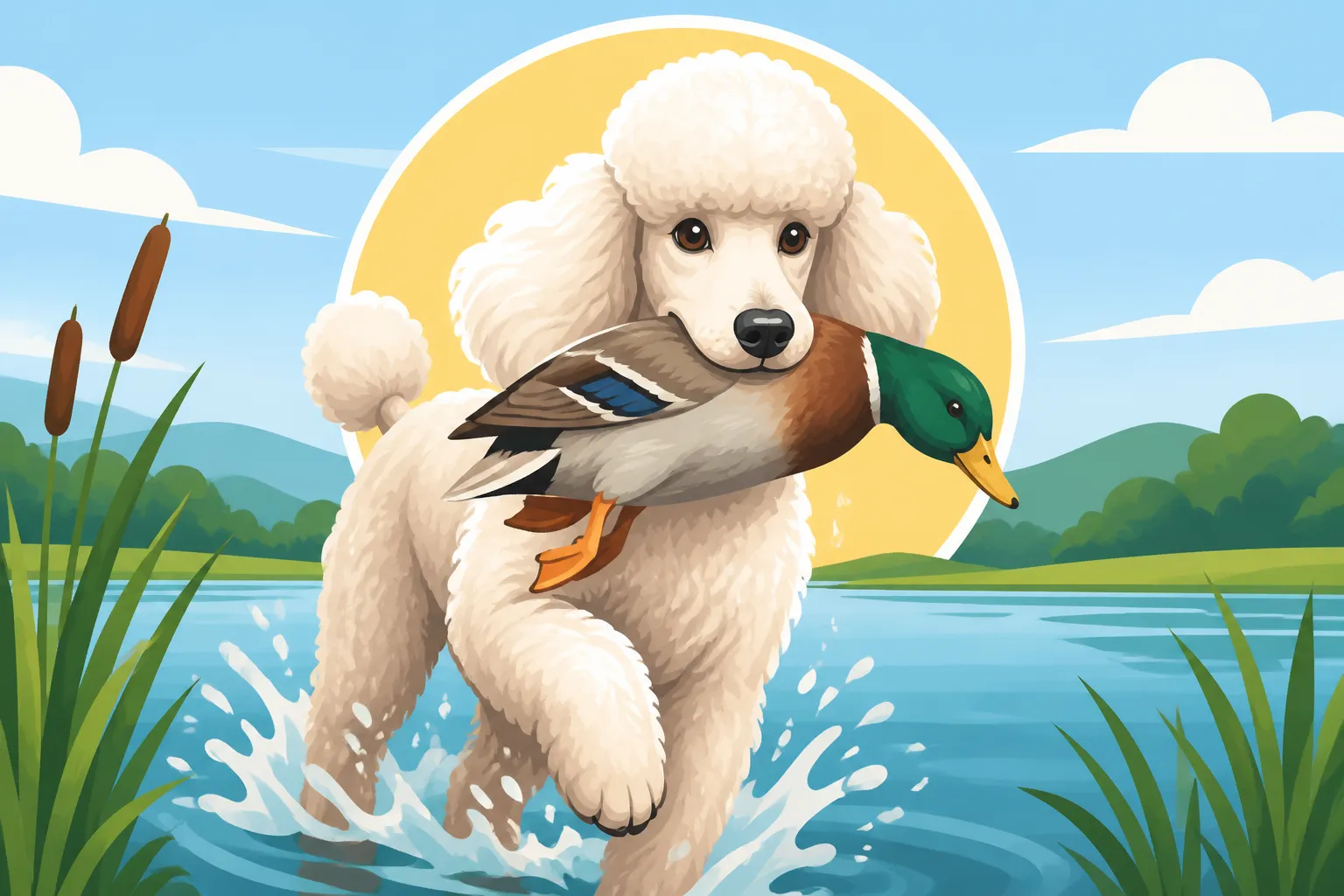
The Poodle as a Duck Retriever
It's easy to look at a Poodle, especially one meticulously groomed in a fancy clip for the show ring, and see only elegance and poise. Many people truly believe the Poodle is nothing more than a pampered ornament, perhaps a clever lap dog, completely detached from any kind of robust outdoor work. But that perception couldn't be further from the truth of their ancestry, and it does a disservice to one of the most capable and historically significant retrieving breeds out there. This guide aims to peel back those layers of stereotype and reveal the Poodle's original, deeply ingrained heritage as a formidable duck retriever, showcasing how their unique traits were perfectly engineered for the hunt.
Shattering the Stereotype: The Poodle's True Origins
The image of a Poodle often conjures up fluffy white dogs with intricate topknots and shaved bodies, prancing delicately around a show ring. This modern portrayal, while beautiful, has unfortunately overshadowed the breed's rugged, working-class roots. Before they became salon stars and sought-after companions, Poodles were, first and foremost, water dogs, specifically bred and developed to retrieve waterfowl for hunters. It’s a job that demanded intelligence, athleticism, and a coat uniquely suited to cold, wet conditions.
The confusion about their origins often stems from their current popularity in urban settings and their "fancy" appearance. However, going back several centuries, you'd find these dogs alongside hunters in marshes and lakes, performing a vital role. They weren't just decorative; they were essential tools in the hunt, prized for their ability to plunge into icy waters and bring back game with a gentle grip. Understanding this history helps us appreciate the depth of the Poodle's character and capabilities beyond what meets the eye.
The "Pudel" in the Name: What it Means for Water Work
The very name "Poodle" offers a direct clue to their true calling. It comes from the German word "Pudel," which means "to splash" or "puddle." This isn't just a coincidence; it's a descriptor that perfectly encapsulates their primary function as water retrievers. Imagine hunters in centuries past, watching their dogs eagerly leap into the water, churning through the marsh to fetch downed ducks. The splashing was a hallmark of their work, and the name stuck.
This etymological connection isn't just a historical footnote; it highlights how deeply ingrained water work is in the Poodle's DNA. They weren't accidentally good at it; they were purpose-bred for it. Their love for water, their strong swimming abilities, and their desire to retrieve are all direct results of this heritage. When you see a Poodle enthusiastically splashing in a pond today, you're witnessing a direct link to their ancestors who were doing the exact same thing, but with a much more serious purpose. It's a connection that many owners overlook, but it's a key part of Why the Poodle's Name Means to Splash.
From Germany to France: A Working Dog's Journey
While many associate Poodles with France, where they are revered as the national dog, their true origins are widely believed to be in Germany. There, they were developed as rough-and-tumble water retrievers, valued for their stamina and hardiness. They were dogs of the working class, assisting hunters across various terrains and water conditions. Their migration to France saw them gain popularity, particularly among the nobility, who appreciated their intelligence and striking appearance.
Over time, their roles expanded from purely working dogs to include companions and even performers in circuses, thanks to their exceptional intelligence and eagerness to please. The French refined the breed, particularly the larger Standard Poodle, but the underlying purpose remained. The smaller varieties, the Miniature and Toy Poodles, were developed later, primarily for companionship, but even they retain much of the original Poodle drive and personality. The journey from German marshlands to French palaces didn't erase their fundamental nature, but rather added layers to their fascinating story. If you're curious about this debate, reading Whether the Poodle Is German or French might shed more light.
Built for the Water: Poodle Physical Traits for Retrieval
Beyond their historical context, the Poodle's physical conformation itself is a testament to their design as a water retriever. Every aspect, from their unique coat to their agile build, contributes to their effectiveness in the field. These aren't accidental traits; they are the result of centuries of selective breeding for a specific, demanding job. When you look closely, you can see the duck dog in every Poodle, regardless of their current haircut.
Their athletic physique and keen senses were vital for navigating challenging environments. A Poodle needed to be able to jump into freezing water, swim tirelessly, locate a downed bird, and bring it back without damage. This required not only strength and endurance but also an innate understanding of the task at hand. These physical attributes are often hidden under a thick, often stylised coat, but they are undeniably present and powerful.
The Non-Shedding Coat: Insulation and Buoyancy
One of the most distinctive features of the Poodle is their dense, curly, non-shedding coat. While often admired for its hypoallergenic qualities and aesthetic appeal, this coat was originally a marvel of natural engineering for a water dog. Unlike many breeds with a double coat that sheds, the Poodle's single layer of hair is incredibly water-resistant. It acts like a natural wetsuit, repelling water and providing excellent insulation against cold temperatures. This meant a Poodle could spend hours in icy lakes and rivers without succumbing to hypothermia.
Furthermore, the coat's density provides a degree of buoyancy, helping the dog stay afloat and expend less energy while swimming. This was crucial for long retrieves or for working in choppy water. The texture also makes it easy for the dog to shake off excess water once on land, drying relatively quickly compared to a breed with a fine, absorbent coat. This unique hair type is a primary reason why Why a Poodle Has Hair Rather Than Fur is such an interesting topic, and it underscores the functional brilliance behind what many now consider merely a grooming challenge.
Webbed Feet and Athletic Build: Power in the Water
Take a moment to examine a Poodle's paws, and you might notice something special: their feet are slightly webbed. This isn't just a quirk; it's another inherited trait that makes them exceptional swimmers. These webbed toes act like small paddles, increasing the surface area of their paws and allowing them to propel themselves through water with surprising power and efficiency. Coupled with strong hindquarters and a deep chest, Poodles are built for endurance swimming, capable of covering considerable distances in pursuit of game.
Their overall athletic build, often obscured by fluffy grooming, reveals a dog of substantial strength and agility. A Standard Poodle, in particular, possesses a powerful, muscular body that allows for sustained effort, whether crashing through undergrowth or diving into a marsh. This combination of webbed feet, robust musculature, and deep lung capacity makes them perfectly suited for the physical demands of retrieving ducks in challenging environments. It's a far cry from the delicate image often portrayed, showcasing a dog truly designed for rigorous outdoor activity.
The Soft Mouth: Delivering the Retrieve Intact
A critical skill for any good retriever is the "soft mouth." This refers to the ability to carry retrieved game gently, without biting down too hard or damaging it. For a duck hunter, a dog that delivers a mangled bird is worse than useless. Poodles were specifically bred to possess this soft mouth, ensuring that the retrieved waterfowl remained in prime condition for the hunter. This trait speaks volumes about their intelligence and biddability, as it requires control and a learned delicacy.
Developing a soft mouth isn't just about physical ability; it's also about temperament and training. A Poodle's natural intelligence and eagerness to please make them highly receptive to such specific training, allowing them to understand the importance of careful handling. This gentleness extends beyond game birds; it's why Poodles are often excellent with children and fragile objects, demonstrating their inherent control and thoughtful nature. Understanding What a Poodle Retrieved for a Hunter emphasizes just how crucial this specific trait was in their original working role.
Instinct and Intellect: The Poodle's Mental Edge
Beyond their physical attributes, a Poodle's keen intellect and strong natural instincts are paramount to their effectiveness as a retriever. A dog can be physically capable, but without the brainpower and the drive to perform the task, it won't be a successful hunter. Poodles possess a unique combination of intelligence, problem-solving skills, and an undeniable desire to work alongside their human companions, making them truly exceptional in the field.
This mental acuity is often highlighted in their quick learning abilities and their capacity to understand complex commands. For a retriever, this means not just fetching, but often marking where a bird falls, remembering multiple falls, and navigating obstacles to get there. Their biddability, combined with their sharp minds, allows them to excel in situations that might overwhelm less intelligent breeds.
Natural Drive: The Urge to Retrieve
The retrieving instinct is deeply embedded in the Poodle. It's not just about picking something up; it's about the entire sequence: marking the fall, running to the object, picking it up, and returning it to hand. This drive is often palpable even in pet Poodles who have never seen a duck in their lives. They might be obsessive about fetching a tennis ball, bringing toys to their owners, or even collecting household items. This inherent "want" to bring things back is a direct link to their ancestry.
This strong prey drive, when properly channeled, is what made them such formidable hunting partners. It ensures that, even in challenging conditions, a Poodle would remain focused on the task, driven by an instinct to fulfill their role. This isn't just a learned behavior; it's a deep-seated desire that can be observed in Poodles of all sizes. Recognizing and nurturing The Poodle's Retrieving Instinct is key to understanding and enriching the life of any Poodle.
Trainability and Problem-Solving in the Field
Poodles consistently rank among the most intelligent dog breeds, often second only to the Border Collie in many intelligence surveys. This high intelligence translates directly into exceptional trainability, a quality invaluable for a working dog. A retriever needs to learn a vast array of commands, understand hand signals, and adapt to unpredictable hunting situations. A Poodle's quick mind allows them to grasp new concepts rapidly, often in just a few repetitions. You can learn more about this by exploring Poodle Intelligence and Coren's Ranking.
In the chaotic environment of a duck hunt, problem-solving is crucial. A retrieved bird might fall into dense reeds, drift with the current, or land behind an obstacle. A Poodle won't give up easily; their intelligence allows them to figure out the best path, remember where the bird landed even if momentarily out of sight, and navigate complex terrain. Their innate desire to please their handler, coupled with their intellectual prowess, makes them highly adaptable and resourceful problem-solvers in the field.
The Poodle Clip: Fashion or Function?
For many, the Poodle's iconic "Continental clip" with its shaved body, bracelets, and pompoms is the ultimate symbol of canine fashion and ostentation. It’s often seen as impractical, even silly, further reinforcing the idea of a pampered pet. However, this distinctive haircut, in its original form, was anything but frivolous. It was a purely functional design, meticulously crafted to aid the Poodle in its demanding role as a water retriever.
Understanding the historical context of the clip completely transforms one's perception of it. It wasn't about looking pretty in a show ring; it was about efficiency, protection, and performance in icy waters. Every shaved area and every tuft of hair had a specific, practical purpose, making the Poodle's working life easier and safer.
Protecting Vital Organs: A Strategic Shave
The shaved sections of the Poodle's coat, particularly on the torso and hindquarters, were not for aesthetic reasons. In fact, they served a vital purpose: to reduce drag and minimize the amount of water the dog carried while swimming. A heavily coated dog coming out of icy water would carry a tremendous amount of weight, making it harder to move and increasing the risk of hypothermia as the water evaporated. By shaving areas not critical for warmth, the Poodle could be more hydrodynamic in the water and dry faster on land.
However, certain areas were left longer to protect crucial parts of the body from the cold. The chest, loin, and joints were often left covered by longer hair, providing insulation to vital organs and reducing the risk of conditions like arthritis. This strategic balance of shaved and long hair was a clever solution to allow the Poodle to perform effectively in cold water without compromising its health. If you're interested in the specifics, Why a Working Poodle Was Clipped at All delves into this in detail.
Pompoms and Joints: Where Form Met Function
Those fluffy "pompoms" or "rosettes" on a Poodle's hips and tail base, and the "bracelets" around their ankles, were also functional. These tufts of hair were deliberately left to provide additional warmth and protection to the joints (hips, knees, and ankles) as the dog repeatedly plunged into and out of cold water. These joints are particularly susceptible to the cold and could stiffen or become painful, hindering the dog's performance.
The pompoms acted like natural leg warmers and joint protectors, keeping these vulnerable areas insulated. The distinctive tail pompom also served as a marker, allowing hunters to keep track of their dog in tall reeds or low light conditions as it swam back with the retrieve. So, what appears today as a decorative flourish was once a crucial piece of protective gear, making the Poodle clip an incredible example of Which Parts of a Poodle the Clip Protected. This pragmatic design truly showcases the ingenuity behind the breed's development.
Modern Poodles in the Field: Carrying on the Legacy
While many Poodles today live lives of pampered companionship, the breed's original working instincts are far from lost. Dedicated owners and breeders recognize and cherish this heritage, actively engaging their Poodles in activities that allow them to express their natural abilities. From competitive hunt tests to simply enjoying a splash in the lake, modern Poodles continue to honor their duck-retrieving ancestors.
It’s a wonderful sight to see a Poodle, perhaps one you might expect to see on a grooming table, confidently plunge into water, displaying the very traits they were bred for. This continuation of their legacy is not just for sport; it also helps maintain the breed's inherent health, intelligence, and temperament, ensuring that future generations of Poodles remain true to their heritage.
Hunt Tests and Water Trials: Proving Their Worth
For Poodle owners keen to explore their dog's working heritage, various dog sports offer excellent avenues. Hunt tests and water trials, often sanctioned by kennel clubs, are specifically designed to simulate real-world hunting scenarios. These events allow Poodles to demonstrate their natural retrieving instincts, trainability, and water prowess in a competitive, yet safe, environment. Dogs are judged on their ability to mark falls, retrieve dummies or birds, enter and exit water cleanly, and deliver game to hand.
Participating in these events not only provides an enriching experience for the Poodle but also educates the public about the breed's true capabilities. It's a powerful way to show that a Poodle is far more than just a pretty face; they are intelligent, driven athletes. Success in these trials proudly carries on the tradition of the working Poodle, solidifying their place among the elite retrieving breeds. If you're curious about these activities, you might enjoy learning about Poodle Hunt Tests and Field Work.
Pet Poodles and Their Inner Retriever: Channeling Instinct
Even if your Poodle never sets paw in a competitive hunt test, their inner retriever is still very much alive. Many pet Poodles exhibit a strong desire to fetch, carry items, and play in water. Owners can tap into these natural instincts to provide mental and physical enrichment, making for a happier, more fulfilled dog. A game of fetch in the park, a dip in a safe swimming area, or even just carrying a toy around the house can be incredibly satisfying for a Poodle.
Providing outlets for these inherent behaviors is crucial for a breed as intelligent and active as the Poodle. Boredom can lead to destructive behaviors, so channeling their energy and instincts into positive activities benefits both dog and owner. Engaging with their natural drive helps them feel useful and connected to their ancestral purpose, proving that Whether a Pet Poodle Can Still Hunt is a question with a nuanced answer – perhaps not literally, but certainly in spirit.
| Poodle Trait | Original Function as a Duck Retriever | Modern Benefit for Pet Poodles |
|---|---|---|
| Dense, Curly Coat | Water-resistant insulation, buoyancy, quick drying | Low shedding, hypoallergenic, requires regular grooming |
| Webbed Feet | Powerful swimming propulsion, agility in water | Strong swimmers, enjoy water activities, good stamina |
| Athletic Build | Endurance for swimming, crashing cover, carrying game | Energetic, agile, excels in dog sports (agility, obedience) |
| Soft Mouth | Delivering game undamaged to hand | Gentle with toys and family members, good with children |
| High Intelligence | Quick learning, problem-solving in complex hunting scenarios | Highly trainable, quick to learn commands, excels in trick training |
| Retrieving Drive | Instinct to find and bring back downed fowl | Loves fetch, enjoys carrying items, can be trained for tasks |
Training Your Poodle for Water Work (or Just Fun)
Whether you aspire to competitive hunt tests or simply want your Poodle to enjoy a good splash, proper training and introduction to water are key. A Poodle's innate abilities make them predisposed to excel, but guidance and positive experiences are essential to build their confidence and skills. Remember, even a dog bred for water work needs to learn the ropes safely and enjoyably.
The journey of training is also a fantastic bonding experience. Poodles thrive on working with their people, and channeling their energy into productive, fun activities can strengthen your relationship immensely. Using quality gear and positive reinforcement will set you up for success, ensuring your Poodle develops into a confident and capable water dog.
Early Introduction to Water and Birds
Starting early with positive introductions to water is crucial. For a puppy, this might mean wading in a shallow, calm puddle or a kiddie pool on a warm day, making it a fun, low-pressure experience. Avoid throwing them in or forcing them; let curiosity lead the way. Use toys that float, like the durable options you might find on Chewy, and lots of praise. As they grow more confident, gradually introduce them to larger, safer bodies of water like quiet lakes or ponds.
Introducing them to retrieving dummies or actual frozen birds (if you intend to pursue hunting) should also be done gradually and positively. Start on land, building their desire to retrieve before adding the complexity of water. Make it a game, not a chore. The goal is to build a strong, positive association with both water and the act of retrieving, fostering their natural desire without creating fear or anxiety. Understanding Introducing a Poodle to Water is an excellent starting point for this process.
Essential Commands for Retrieval Practice
For any form of retrieving, whether for sport or fun, a few core commands are indispensable. "Sit," "Stay," and "Come" are foundational. A reliable "Come" is vital, especially around water where safety can be a concern. You'll also want to teach "Fetch" or "Retrieve," clearly indicating what you want them to pick up. Equally important is "Drop It" or "Give," teaching them to release the object gently into your hand, reinforcing that desirable soft mouth.
Consistency, patience, and positive reinforcement are your best tools. Keep training sessions short, fun, and engaging, especially in the early stages. Poodles are smart and eager to please, so they often pick up these commands quickly. Practice in various environments, gradually increasing distractions, so your Poodle performs reliably under different conditions. Once these basics are solid, you can explore more advanced concepts like "Mark" (watching where the bird falls) and "Over/Back" for directional retrieves. Many training aids, from long lines to specialized dummies, are available from pet retailers like Chewy to assist with this.
Equipment and Safety for Water Adventures
Safety should always be paramount when engaging your Poodle in water activities. A well-fitting dog life vest is highly recommended, especially for Poodles new to swimming or for activities in deeper, faster-moving water. The vest provides buoyancy, helps conserve energy, and often has a handle for easy retrieval of your dog. Ensure any collars or harnesses are secure and don't pose a snagging risk.
Consider the water quality and temperature. Avoid stagnant water or areas with strong currents or known toxins. Always supervise your Poodle closely, and be mindful of their stamina. Just like us, dogs can get tired. After water activities, a thorough rinse can help remove chlorine, salt, or lake debris from their coat, and then a good towel or high-velocity dryer will help prevent matting and skin issues. Regular grooming is crucial for a Poodle active in water, so keeping a good slicker brush and comb on hand, perhaps from Chewy, is a smart move. Remember, Swimming With a Poodle Bred to Retrieve can be a joyous activity, but always with safety in mind.
Disclaimer
This article is for general informational purposes only and does not constitute professional advice. Laws, prices and regulations vary by location and change over time. Consult a qualified professional for guidance on your specific situation.