What a Poodle Retrieved for a Hunter
It's easy to look at a Poodle today, with their often meticulously groomed coats and reputation for being pampered show dogs, and completely miss the rugged, capable working dog hidden beneath all that fluff. Many people are surprised to learn that the Poodle, in all its varieties, began not as a lap warmer or a beauty pageant contestant, but as a robust and highly skilled water retriever for hunters. This guide will take you back in time to explore the Poodle's true origins, detailing exactly what they were trained to retrieve and why they excelled at such a demanding job.
The Poodle's Original Purpose: A Hunter's Companion
For centuries, before the elegant Poodle became a fixture in salons and show rings, this breed was an indispensable partner to hunters across Europe. Their very name, "Pudel" in German, directly translates to "to splash" or "puddle," a clear indicator of their profound connection to water. These dogs weren't just dabbling in puddles; they were plunging into icy lakes, navigating dense marshlands, and enduring harsh weather to bring game back to their human companions.
From Water Dog to Modern Poodle
The Poodle's journey began primarily in Germany, where they were developed to assist hunters with retrieving waterfowl. Imagine a vast, misty European landscape, dotted with reeds and rushes, where game birds settled on the water. A hunter would need a dog that was not only fearless in cold water but also possessed the intelligence and stamina to locate downed birds, often in difficult terrain. The original Poodles, likely ancestors of today's Standard Poodle, were bred specifically for these challenging conditions. They weren't bred for their looks, but for their ability to perform a vital job. Their evolution into the modern Poodle we know today saw their sizes diversified, but the core instincts of a water retriever remained strong within each variety. To understand more about this, you can read about The Water Dog Behind the Poodle.
Their role wasn't just to fetch, either. These dogs were expected to work in close partnership with their hunter, following complex commands, using their keen sense of smell, and operating in environments that would test the mettle of any animal. This historical context completely reframes the Poodle's character, revealing a tough, resilient, and highly intelligent animal perfectly adapted for its original calling.
More Than Just Ducks: The Range of Game
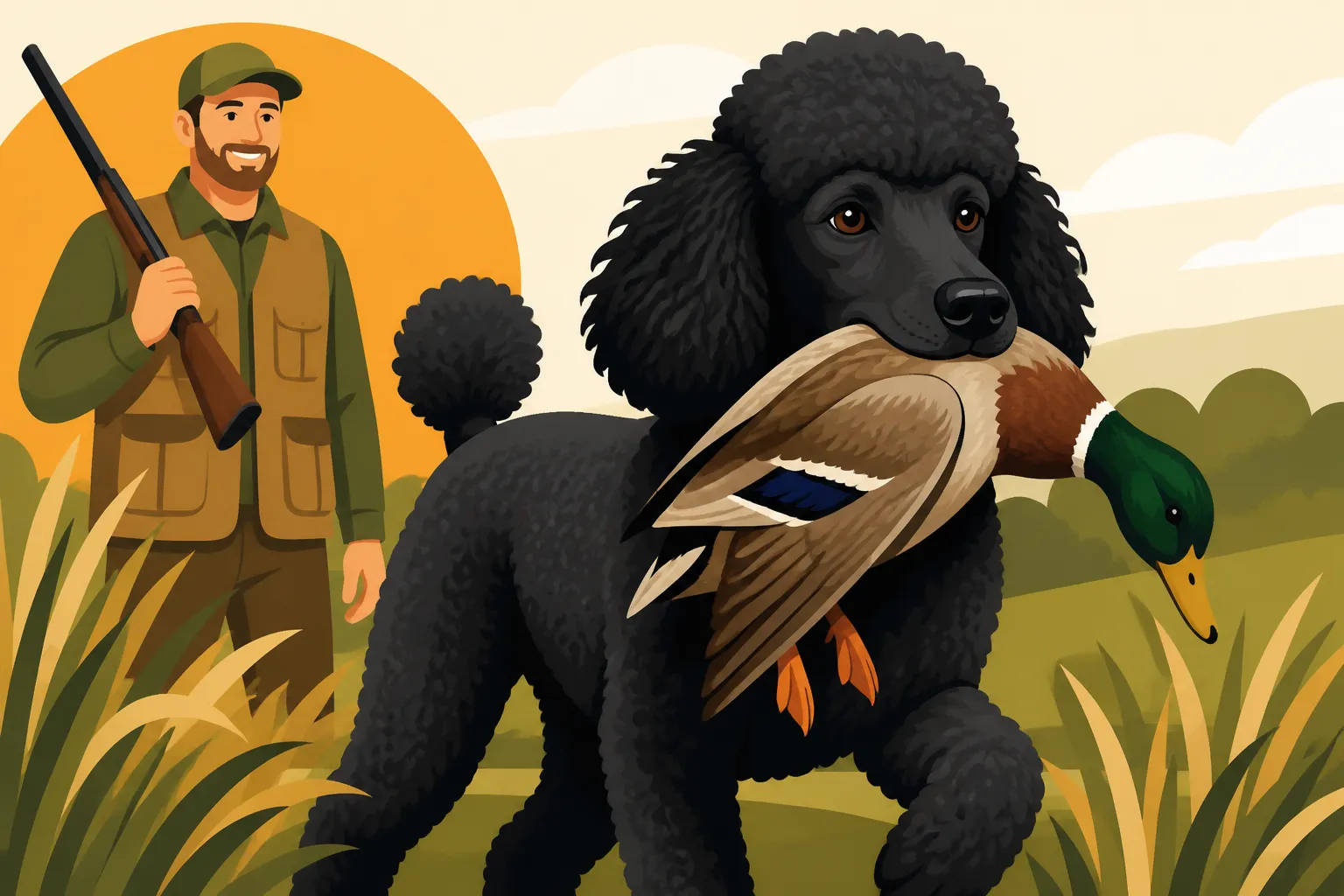
While ducks are often the first thing that comes to mind when one thinks of waterfowl retrieving, the Poodle's responsibilities extended to a variety of game birds. They were adept at retrieving anything from mallards and teals to larger geese that might fall into water bodies or dense cover. Hunters relied on them to recover game from marshes, rivers, and ponds, ensuring that no valuable bird was lost.
Crucially, Poodles were prized for their "soft mouths." This isn't just a poetic term; it means they could retrieve game without crushing or damaging it. A retrieved bird that was mangled would be of little use to the hunter. A Poodle's gentle grip, combined with their enthusiasm for the task, made them ideal for bringing back whole, edible game. This soft-mouth trait is still highly valued in retrieving breeds today, a testament to its practical importance in hunting.
Traits That Made Poodles Exceptional Retrievers
The Poodle's unique combination of physical attributes and mental acuity made them truly stand out as hunting dogs. Every aspect of their original breeding was geared towards efficiency and success in the field, particularly around water.
The Iconic Coat: Function Over Fashion
Perhaps the most defining feature of the Poodle, its dense, curly coat, was originally far from a fashion statement. This unique coat served as a highly effective, natural wetsuit. Unlike many breeds that have a double coat that sheds, the Poodle's single layer of hair is tightly curled and constantly growing, trapping air close to the body. This provides excellent insulation against the frigid temperatures of European lakes and rivers, allowing the dog to remain warm even after repeated plunges into icy water.
Furthermore, this coat, when properly managed, repels water, making it quick-drying and preventing the dog from becoming waterlogged and hypothermic. The traditional Poodle clip, which often looks so outlandish in the show ring today, actually originated as a practical working clip. Hunters would shave down certain areas like the hindquarters and stomach to reduce drag in the water and allow for greater freedom of movement, while leaving "pompoms" or cuffs of hair over joints and vital organs to protect them from the cold. This practical approach is detailed in Why a Working Poodle Was Clipped at All and further explored in Which Parts of a Poodle the Clip Protected. The idea that a Poodle's coat is purely for show is a modern misconception; its origins are firmly rooted in function.
Intelligence and Trainability for Complex Tasks
Poodles are consistently ranked among the most intelligent dog breeds, and this mental prowess was absolutely critical for their role as retrievers. Hunters needed dogs that could not only understand commands but also interpret situations, remember where multiple birds had fallen (known as "marking"), and navigate challenging environments independently. The Poodle's keen intellect allowed them to learn quickly, retain a vast repertoire of commands, and adapt to changing conditions in the field.
Their eagerness to please, combined with their intelligence, meant they were highly trainable. They could be taught to sit patiently, remain silent until sent, and then burst into action with precision. This ability to absorb and apply training made them incredibly valuable. They weren't just brute force; they were thinking partners. In Coren's ranking, Poodles sit very high, and you can delve deeper into this in Poodle Intelligence and Coren's Ranking. This inherent intelligence and desire to work continues to make them exceptional in dog sports and as service animals today.
Stamina and Drive in Challenging Conditions
Beyond their intelligence and specialized coat, Poodles possessed immense physical stamina and an unwavering drive to retrieve. Hunting can be an all-day affair, often involving long periods of waiting followed by bursts of intense activity. A Poodle needed the endurance to stay active and focused for hours, even in inclement weather. Their well-muscled bodies were built for powerful swimming, propelling them through strong currents and thick vegetation.
This drive meant they would push through discomfort, cold, and fatigue to complete their task. They are natural athletes with a high energy level, especially the Standard Poodle, which required substantial daily exercise to stay fit for its demanding job. This active nature means even modern pet Poodles need regular physical and mental stimulation. You can learn more about suitable exercise for an active Poodle in Daily Exercise for a Standard Poodle. Without this combination of physical prowess and mental fortitude, they simply wouldn't have been effective working dogs.
How the Poodle's Role Shaped the Breed
The demands of retrieving game from water deeply influenced the physical and temperamental characteristics that define the Poodle breed to this day. These weren't incidental traits; they were carefully selected and honed over generations to create the ultimate water dog.
Physical Adaptations for Water Work
Look closely at a Poodle, and you'll see the blueprint of a water retriever. Their long, strong muzzles are perfectly suited for carrying game without impediment. Their well-proportioned, athletic bodies exhibit a balance of power and agility. While not explicitly "webbed," a Poodle's feet are compact, well-padded, and somewhat cat-like, providing excellent propulsion and grip in wet conditions. The deep chest, characteristic of the Standard Poodle, is not merely aesthetic; it indicates substantial lung capacity, essential for extended swimming and enduring cold water.
The way they carry themselves, with an upright, elegant posture, belies their ruggedness. This physical structure, designed for endurance and efficient movement, is a direct legacy of their working past. Even the smaller varieties, though bred down for companionship, still retain these fundamental structural advantages.
Temperamental Traits for a Reliable Partner
Beyond their physical form, the Poodle's temperament was also shaped by their working role. They needed to be keen, observant, and possessing a sharp sense of smell to locate downed birds, even those hidden in dense cover. While often perceived as sensitive, this trait can also translate into an acute awareness of their handler's moods and commands, making them highly responsive. You can read more about this in Poodle Temperament and Sensitivity.
They developed a profound loyalty to their human partners, essential for working closely and reliably in challenging conditions. The waiting game in hunting requires patience and a calm disposition, yet when "sent" to retrieve, they needed an explosive burst of energy and unwavering focus. This combination of calm composure and enthusiastic drive made them ideal. Their intelligence also fostered a need for mental engagement, as an idle Poodle mind is prone to inventing its own entertainment, which might not always align with your preferences! This desire to be occupied is explored in What a Poodle Does When Its Brain Is Idle.
The Legacy in Modern Poodles
Even if your Poodle has never set a paw in a duck blind, you'll still see glimpses of their retrieving heritage. Their innate love for water is often striking; many Poodles will eagerly jump into any available body of water, from a backyard kiddie pool to the ocean. Their strong retrieving instinct is evident in their passion for games of fetch, often bringing toys back with an almost ceremonial pride. A good quality retrieving dummy or durable chew toy from Chewy can provide hours of engaging fun for a Poodle, tapping into this deep-seated desire to carry and bring things back.
This strong drive also translates into their overall need for engagement. A Poodle isn't just content with a walk around the block; they thrive on activities that challenge their minds and bodies, whether it's obedience, agility, or simply learning new tricks. Their ancestors needed to problem-solve and work diligently, and modern Poodles still crave that sense of purpose. For a deeper dive into this instinct, consider reading The Poodle's Retrieving Instinct.
What Happened to the Hunting Poodle?
So, if Poodles were such exceptional retrievers, why aren't they more commonly seen in duck blinds today? The answer lies in a combination of shifting preferences, breed specialization, and the evolution of dog sports and companionship.
Shifting Preferences and Specialization
As hunting practices evolved and breeds became more specialized, other retriever breeds, like Labrador Retrievers and Golden Retrievers, gained prominence. These breeds were often developed with a singular focus on upland game or waterfowl retrieving, and their popularity soared. The Poodle, meanwhile, began to gain traction in other arenas, particularly in dog shows and as highly intelligent companion animals. Their striking appearance, combined with their trainability, made them darlings of the show ring. This shift in focus led many to forget their original, rugged purpose.
The general public's perception of the Poodle began to transform from a tough working dog to a more refined, even delicate, pet. This perception, while largely inaccurate regarding their underlying capabilities, often overshadowed their historical role as a hunter's companion.
Niche Revival and Modern Hunt Tests
Despite their diminished presence in mainstream hunting circles, the Poodle's retrieving instincts are far from gone. A dedicated community of Poodle enthusiasts recognizes and actively nurtures these innate abilities. Poodles can still be found participating in and excelling at various dog sports, including hunt tests and field trials. These events are designed to simulate hunting scenarios, allowing Poodles to demonstrate their marking, retrieving, and water work skills.
For those interested in seeing Poodles in action in their ancestral element, searching for videos or local clubs that host Poodle hunt tests can be incredibly insightful. These events showcase the breed's impressive athleticism, intelligence, and unwavering drive, proving that the heart of the water dog still beats strong within the breed. You can learn more about this modern application of their skills in Poodles in Modern Waterfowl Hunting. This niche revival helps to keep the flame of the working Poodle alive, reminding us all of the versatile and capable dogs they truly are.
Here's a quick comparison of Poodle traits and their benefits for retrieving:
| Poodle Trait | Benefit for Retrieving | How it Helps Hunters |
|---|---|---|
| Curly, Dense Coat | Excellent insulation against cold water; repels moisture. | Prevents hypothermia, allows prolonged work in harsh conditions. |
| High Intelligence | Quick learning, problem-solving, strong memory for marks. | Follows complex commands, finds downed birds in challenging cover, remembers multiple falls. |
| Eagerness to Please | Highly trainable and responsive to handler. | Builds strong partnership, ensures reliable performance, consistent retrieval. |
| Strong Swimming Ability | Powerful propulsion, comfortable in water. | Reaches game far from shore, navigates currents, covers large water bodies. |
| Soft Mouth | Retrieves game without damage. | Ensures game is brought back in prime condition for consumption. |
| Stamina & Drive | Sustained energy for long hunts, unwavering focus. | Works for extended periods, pushes through fatigue and discomfort to complete tasks. |
| Keen Sense of Smell | Locates hidden or fallen game. | Finds birds in dense cover or when visual marking is difficult. |
Disclaimer
This article is for general informational purposes only and does not constitute professional advice. Laws, prices and regulations vary by location and change over time. Consult a qualified professional for guidance on your specific situation.