Why the Poodle Was Bred Down in Size
Many Poodle owners adore their elegant companions, often surprised to learn that their petite Toy or stately Standard shares the same ancestral roots. But how did we get from a robust waterfowl retriever to the charming lapdogs and adaptable mid-sized companions we know today? This guide dives deep into the fascinating historical, social, and practical reasons why the Poodle was meticulously bred down in size, shaping the diverse and beloved breed family we cherish.
From Working Dog to Elegant Companion: The Poodle's Origin Story
It’s easy to look at a Poodle, especially one with a fancy show clip, and imagine them lounging on velvet cushions, a pampered aristocrat. And while they certainly have a regal air, their origins are far more rugged and practical. Understanding where the Poodle came from is key to grasping why breeders eventually sought to create smaller versions. Their journey from the murky waters of Europe to the glittering salons of royalty is quite a tale!
The Standard Poodle's Ancestry as a Water Retriever
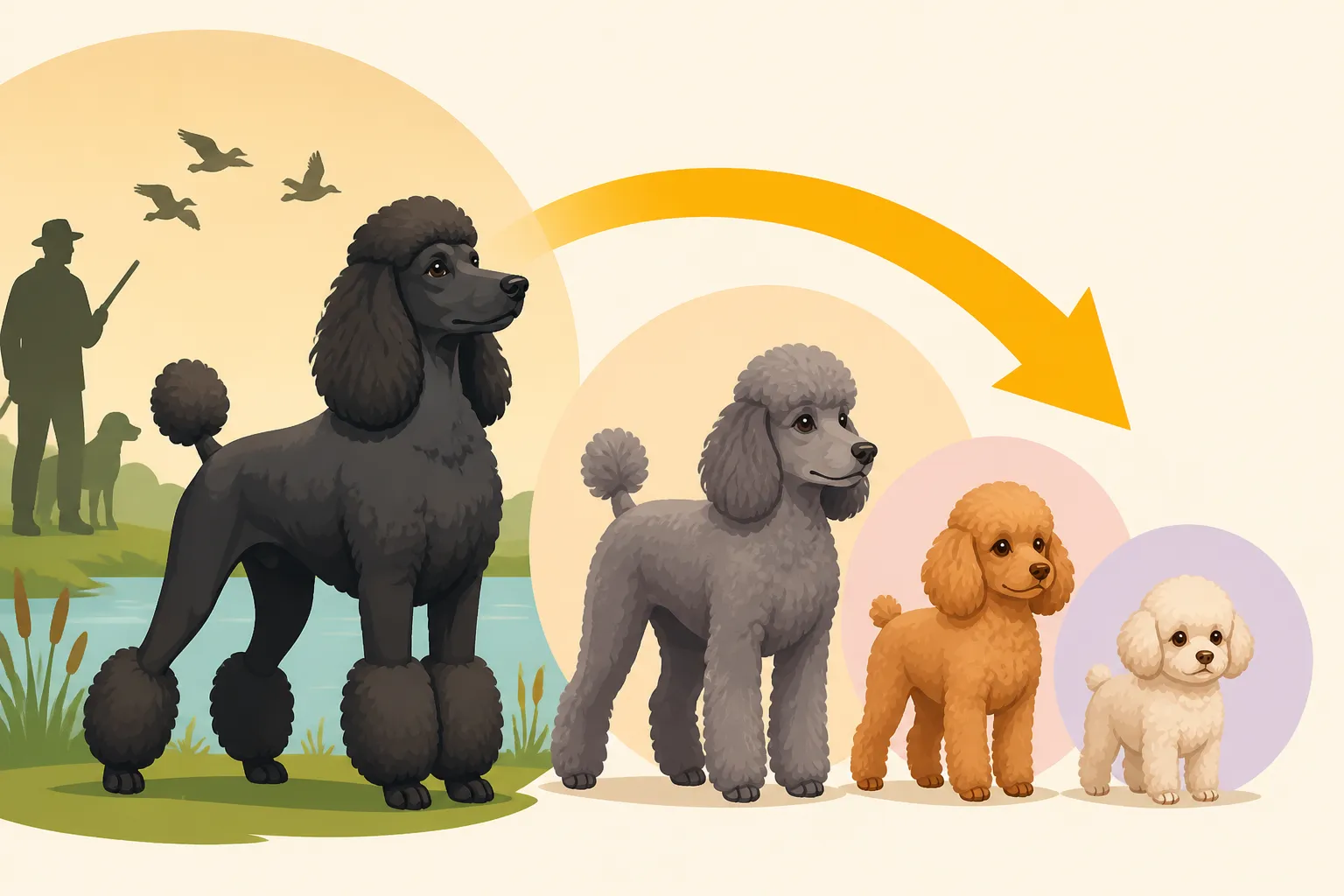
The original Poodle, the Standard Poodle we still see today, was not just a pretty face; it was a serious working dog. The very name "Poodle" is derived from the German word "Pudel," meaning "to splash in water." This is a huge clue to their purpose. These dogs were bred primarily in Germany, and later refined in France, to be expert waterfowl retrievers. Imagine hunters in the wetlands, needing a dog with intelligence, stamina, and a waterproof coat to plunge into icy water and bring back downed birds. That was the Standard Poodle's job.
Their dense, curly coat, which often conjures images of high-maintenance grooming today, was actually a protective shield against the elements. It kept them warm in cold water and prevented them from getting tangled in reeds and underbrush. Their keen intelligence, which makes them such a joy to train for modern dog sports, was essential for understanding complex commands and navigating challenging terrains. They were robust, athletic, and utterly devoted to their task. If you've ever seen a Standard Poodle in full stride, especially near water, you can still catch a glimpse of that powerful, driven athlete. You can learn more about The Water Dog Behind the Poodle.
Why Size Mattered in the Wetlands
For their original purpose, size was a distinct advantage. A larger, stronger dog could cover more ground, swim against stronger currents, and retrieve larger game birds without struggling. They had the lung capacity and muscular build to endure long hours of work in demanding conditions. A dog with powerful jaws could carry a pheasant or a duck back to its handler with ease.
Consider the practicalities of hunting in marshes and lakes. A smaller dog would tire quickly, struggle to navigate deep or fast-moving water, and might not have the strength to hold onto a retrieved bird over a distance. So, the Standard Poodle's substantial size wasn't an accident; it was a deliberate feature optimized for its role as an efficient, effective hunting partner. Their confident demeanor and strong prey drive were also assets, ensuring they wouldn't back down from a challenge in the field.
A Changing World Demands a Changing Dog: Urbanization and the Pet Market
As centuries passed, European society began to evolve significantly. The rural, agricultural landscapes that were once prevalent started giving way to growing towns and bustling cities. This shift in human living environments had a profound impact on the types of dogs people sought and could comfortably keep. The practical needs for a large working dog began to wane for many, while the desire for companionship grew.
Smaller Homes and the Desire for Manageable Pets
The rise of urbanization meant that more and more people lived in smaller dwellings – apartments, townhouses, and homes with limited yard space. A large, energetic Standard Poodle, while magnificent, requires considerable room to move, both indoors and out. Its exercise needs are substantial, and keeping such a dog in a confined city space could lead to frustration for both the dog and its owner. Imagine trying to give a working-bred Standard Poodle enough mental and physical stimulation within a small city apartment; it would be a constant challenge.
This new reality created a demand for dogs that were more easily managed within these compact living situations. People still wanted the intelligence, charm, and elegant appearance of the Poodle, but in a package that fit their urban lifestyles. They needed a dog that could thrive with shorter walks in city parks rather than long days in the field, and one that wouldn't feel cramped in a modest living room. This desire for practicality, combined with the Poodle's existing desirable traits, paved the way for selective breeding to achieve a reduction in size.
The Rise of Companion Animal Culture
Beyond the physical constraints of space, there was also a cultural shift. Dogs were increasingly seen less as utilitarian working animals and more as beloved members of the family, cherished companions, and even status symbols. The nobility and upper classes, in particular, desired sophisticated pets that could accompany them to social events, sit gracefully on laps, and be adorned with elaborate accessories. A dog's primary role transitioned from retrieving ducks to being a loyal, affectionate presence at home and a fashionable accessory in public.
The Poodle, with its exceptional intelligence and striking appearance, was already well-suited to this new role, needing only a size adjustment. Smaller dogs were simply easier to transport, whether in carriages or, later, in automobiles. They were less intimidating in social settings and could be dressed in finery without appearing cumbersome. This emphasis on companionship and aesthetics rather than pure working utility became a powerful driving force behind the systematic downsizing of the Poodle breed. It marked a clear departure from the breed's origins, moving from wetlands to parlors.
The Intentional Creation of Smaller Poodle Varieties
Once the demand for smaller Poodles became clear, breeders set about the task of intentionally downsizing the breed. This wasn't a random process; it involved careful selection and a deep understanding of genetics, even in an era before modern genetic testing. They sought to retain the Poodle's intelligence, coat, and dignified temperament while gradually reducing its physical stature. This deliberate breeding process led to the creation of the Miniature and then the Toy Poodle, each filling a specific niche in the evolving human-canine relationship.
Breeding for the Miniature Poodle
The Miniature Poodle was the first step in this downsizing journey, emerging primarily in the 17th and 18th centuries. The goal was to create a Poodle that was still robust and active but significantly smaller than its Standard ancestor. These dogs were bred from smaller Standards, with breeders carefully selecting individuals who were naturally on the smaller side of the litter, or perhaps those who matured to a more compact size. The Miniature Poodle typically stands between 10 and 15 inches tall at the shoulder.
They quickly found their purpose not just as companions for the burgeoning middle class, but also as performers in traveling circuses and entertainers. Their intelligence and agility, inherited from their Standard ancestors, made them perfect for learning tricks and performing complex routines. They were also used in less glamorous roles, such as truffle hunting, where their smaller size allowed them to navigate dense undergrowth with ease, and their keen nose made them invaluable. This intermediary size offered a fantastic balance: still hardy and active, but far more manageable for urban living and varied applications. They maintained the elegance of the Poodle but in a more compact, adaptable form.
The Development of the Tiny Toy Poodle
The desire for even smaller, more delicate companion dogs continued, especially among royalty and the very wealthy. This led to the development of the Toy Poodle, which became popular in the 18th century. To achieve this significant reduction in size, breeders again selected the smallest individuals from Miniature Poodle litters, often focusing on those with specific traits that emphasized delicacy and compactness. The Toy Poodle is defined as standing under 10 inches tall at the shoulder.
These tiny Poodles were prized as lapdogs, fashionable accessories, and confidantes for the aristocracy. They were perfect for carrying in sleeves or small baskets, fitting easily into the opulent but often crowded social settings of the time. Their diminutive size also made them ideal for warming laps in chilly castles or estates, a practice that gave rise to the term "lap dog." While sometimes seen as purely ornamental, the Toy Poodle still possessed the sharp mind and engaging personality of its larger relatives. This extreme downsizing, however, did come with its own set of considerations, which breeders and owners alike needed to address. For more on the smallest Poodles, you might read Toy Poodle Puppy Prices From a Reputable Breeder.
Adaptations and Considerations for Each Poodle Size
The process of breeding dogs down in size is not without its challenges and consequences. While the Poodle's essential characteristics—intelligence, coat type, and general temperament—were largely retained, the dramatic reduction in scale did bring about certain health predispositions and subtle shifts in behavioral tendencies. Understanding these adaptations is crucial for anyone considering a Poodle of any size today.
Health Implications of Downsizing the Breed
When you shrink a breed, you often concentrate certain genetic traits, and sometimes this can inadvertently lead to a higher prevalence of specific health issues. For Toy and Miniature Poodles, their smaller stature means they are more prone to certain conditions that are less common in Standards. For example, Luxating Patella in Toy and Miniature Poodles is a significant concern, where the kneecap can slip out of place. This is less common in the more robust Standard Poodle. Toy Poodles also face a higher risk of Collapsing Trachea in a Toy Poodle, a condition where their windpipe can weaken and flatten, leading to a distinctive "honking" cough.
Dental health is another major consideration. Smaller dogs, including Toy and Miniature Poodles, often have mouths that are too small for all their teeth to grow properly, leading to overcrowding. This can trap food particles and bacteria, making them highly susceptible to Why Small Poodles Lose Teeth Early and gum disease. Owners must be vigilant with dental care, including regular brushing and professional cleanings. On the other hand, while Standard Poodles generally boast robust health, they contend with their own size-related predispositions, such as Bloat and the Deep Standard Poodle Chest and Addison's Disease in Standard Poodles, which are rare in the smaller varieties.
It's a delicate balance, and responsible breeders across all sizes work tirelessly to screen for these conditions through health testing, aiming to produce the healthiest puppies possible. When looking for dog food or treats at a store like Chewy, always consider the size-specific options, especially for smaller Poodles who might need smaller kibble or softer chews to protect their teeth and jaws.
Temperament Shifts Across the Varieties
While all Poodles share core traits like intelligence, eagerness to please, and sensitivity, there can be subtle temperament differences that have emerged partly due to their size and the roles they were historically bred for. Standard Poodles, closer to their working ancestors, often retain a calm dignity and a strong sense of purpose. They are athletic and enjoy extensive outdoor activities, often making excellent therapy or service dogs. They tend to be steady and confident, less prone to nervousness. You can delve into The Poodle Character to get a broader understanding.
Miniature Poodles often embody a spirited and playful nature. They are energetic and highly intelligent, making them stars in obedience and agility. They strike a wonderful balance, being robust enough for active families but small enough to adapt to various living situations. They might be a bit more alert and prone to barking than their larger counterparts, often seeing themselves as guardians of the home, despite their size.
Toy Poodles, while still intelligent and trainable, can sometimes be perceived as more delicate or "yappy." This isn't necessarily an inherent flaw in their character but can be a byproduct of their size. Being small can make them more vulnerable, leading to a tendency to be more vocal or wary of larger dogs and unfamiliar situations. However, when well-socialized and confidently handled, Toy Poodles are charming, affectionate, and incredibly devoted companions. They thrive on close human interaction and can be surprisingly feisty and brave for their size. It's often said that Toy Poodles have no idea how small they actually are! You might find it interesting to learn Whether Toy Poodles Are as Smart as Standards.
Embracing the Poodle Spectrum: What Each Size Offers Today
Today, the Poodle breed offers a magnificent spectrum of sizes, each with its own unique charm and suitability for different lifestyles. The intentional breeding down in size created a versatile and adaptable companion that continues to be one of the most beloved breeds globally. Far from being a niche choice, Poodles, in all their sizes, continue to excel in diverse roles.
The Enduring Appeal of Each Poodle Variety
The Standard Poodle continues to be celebrated for its regal bearing, athletic prowess, and deep intelligence. They are often sought by active individuals or families who desire a substantial dog for outdoor adventures, dog sports, or even as protective family guardians. Their imposing presence combined with their gentle nature makes them incredibly versatile. They prove that you don't have to sacrifice elegance for utility.
Miniature Poodles remain a popular choice for those who want a Poodle that's robust enough for a good hike or a game of fetch, but still compact enough to curl up on the sofa without taking up the whole cushion. They are often described as the "Goldilocks" Poodle – not too big, not too small, but just right for a wide variety of homes and individuals, including those in urban environments. Their energetic yet manageable nature makes them highly adaptable.
Toy Poodles, with their undeniable cuteness and portability, are the ultimate lapdogs and companions for those who prioritize a close bond and a smaller, more easily transportable pet. They are ideal for apartment dwellers, seniors, or anyone who wants a devoted shadow. They prove that even the smallest package can hold an enormous personality and an intelligent mind. When shopping for their tiny necessities, sites like Chewy offer a wide array of small-sized accessories, from harnesses to miniature chew toys designed specifically for their needs.
The Ongoing Responsibility of Ethical Breeding
The history of downsizing the Poodle breed underscores the critical importance of ethical and responsible breeding practices. While the initial motivations were practical and societal, the challenges that arose, particularly concerning health, highlight the need for careful stewardship of the breed. Reputable breeders today prioritize health, temperament, and adherence to the breed standard, irrespective of size. They understand that breeding is not just about producing puppies, but about ensuring the long-term health and vitality of the entire Poodle lineage.
This means conducting extensive health screenings for genetic conditions relevant to each size, such as hip and elbow dysplasia in Standards, or luxating patellas and tracheal issues in Toys. It also involves selecting breeding pairs with sound temperaments to ensure that the Poodle's renowned intelligence and gentle nature are preserved. Choosing a well-bred Poodle, whether Standard, Miniature, or Toy, is paramount to welcoming a healthy, happy companion into your home. It’s an investment not just in a pet, but in the future of this magnificent and versatile breed. If you're looking for a Poodle, learning What a Poodle Breeder Must Test For is a crucial step.
| Poodle Size | Typical Height (at shoulder) | Primary Historical Role | Modern Appeal | Common Health Considerations |
|---|---|---|---|---|
| Standard | 15 inches and up | Waterfowl Retriever | Active companion, sports dog, family guardian | Bloat, Addison's, hip dysplasia |
| Miniature | 10-15 inches | Companion, circus performer, truffle hunter | Versatile family pet, agility, obedience | Luxating patella, dental issues, eye conditions |
| Toy | Under 10 inches | Lapdog, aristocratic companion | Apartment living, devoted companion, low-impact activities | Luxating patella, tracheal collapse, dental issues, hypoglycemia (puppies) |
When you're equipping your Poodle at any size, a place like Chewy can be a great resource for finding everything from specific food for giant breeds to tiny harnesses and durable toys perfectly suited for a Toy Poodle's mouth. No matter the size, providing the right care, nutrition, and mental stimulation is key to a long and happy life with your Poodle.
Disclaimer
This article is for general informational purposes only and does not constitute professional advice. Laws, prices and regulations vary by location and change over time. Consult a qualified professional for guidance on your specific situation.