Whether the Three Poodle Sizes Are One Breed
It's quite common for people to wonder about the different sizes of Poodles. You see the elegant Standard Poodle, the lively Miniature, and the dainty Toy, and it's easy to assume they might be entirely separate breeds, especially given their distinct appearances and typical roles in different families. However, this guide is here to clear up that confusion and explain why, despite their obvious size differences, these beloved dogs are indeed considered one single breed, merely divided into varieties.
The Poodle's Shared Heritage and Purpose
To truly understand why the different Poodle sizes are considered a single breed, we have to look back at their roots. It's a history steeped in water, work, and an innate intelligence that transcends size. This shared foundation is the bedrock of their unity.
Tracing the Poodle's Origins as a Water Retriever
Long before they graced dog show rings or sat on the laps of royalty, Poodles were robust, hardworking water retrievers. The word "Poodle" itself comes from the German word "Pudel," which means "to splash in water." This tells you everything you need to know about their original job! They were bred to plunge into icy European waters to fetch downed ducks and other waterfowl for hunters. The original Poodles were undoubtedly much closer in size to what we now call Standard Poodles, possessing the stamina and physical prowess needed for such demanding work.
Their distinctive coat, often admired for its elegant curl and non-shedding qualities, wasn't just for looks. It was a practical design for a working dog. The dense, curly coat provided insulation against cold water, protecting them from the elements. Hunters would clip certain areas, like the hindquarters, to allow for more efficient swimming, but leave crucial joints and the chest protected from the cold. This historical purpose, shared by all Poodles regardless of current size, is a fundamental unifier. They all carry that instinct, even if a Toy Poodle's "retrieving" is limited to a squeaky toy across the living room floor. You can delve deeper into this fascinating history in The Water Dog Behind the Poodle.
The Unifying Poodle Character and Intelligence
Perhaps one of the most compelling arguments for Poodles being a single breed lies in their consistent temperament and extraordinary intelligence. Whether you're interacting with a Standard, Miniature, or Toy, you'll encounter that unmistakable Poodle spark. They are renowned for their quick wit, problem-solving skills, and a deeply sensitive nature. This isn't a trait that magically appears in one size and disappears in another; it's intrinsic to the Poodle DNA.
Poodles consistently rank among the most intelligent dog breeds, often placing second only to the Border Collie in various intelligence studies. This high intelligence means they learn new commands rapidly, sometimes in as few as five repetitions, and they possess an uncanny ability to read human emotions. This shared mental acuity makes them incredibly trainable, adaptable, and a joy to engage with, often thriving on mental challenges and interactive play. You can learn more about their incredible minds in Training the Second Smartest Dog Breed. It means that whether you're teaching a huge Standard complex agility sequences or a tiny Toy intricate tricks, you're working with the same fundamental intelligence and desire to please. This unifying characteristic forms a core part of their breed identity.
How the Poodle Sizes Came to Be
If Poodles all started as water retrievers, how did we end up with such a significant range in size? The answer lies in human intervention and specific needs that arose over centuries, leading to the careful development of the Miniature and Toy varieties.
The Development of Miniature and Toy Poodles
As the centuries progressed, the roles dogs played in human society began to diversify. While the Standard Poodle continued its work as a retriever, there emerged a demand for smaller, more manageable companions. In parts of Europe, particularly France and Germany, people started selectively breeding smaller Poodles. These smaller dogs were perfect for city dwellers who might not have had the space for a large Standard, yet still desired the Poodle's intelligence and elegant appearance.
Beyond companionship, smaller Poodles found practical niches. Miniatures were often employed as truffle hunters, their keen noses and smaller stature allowing them to navigate dense undergrowth more easily than their larger counterparts. Toys, the smallest variety, quickly became lapdogs and pampered pets for nobility and royalty. This deliberate process of "breeding down" was carefully managed to retain all the essential Poodle characteristics – the coat, the temperament, the conformation – but simply in a more compact package. This history of deliberate size reduction is explored further in Why the Poodle Was Bred Down in Size. It wasn't about creating a new type of dog, but a smaller version of an existing, beloved breed.
Official Recognition and Size Divisions
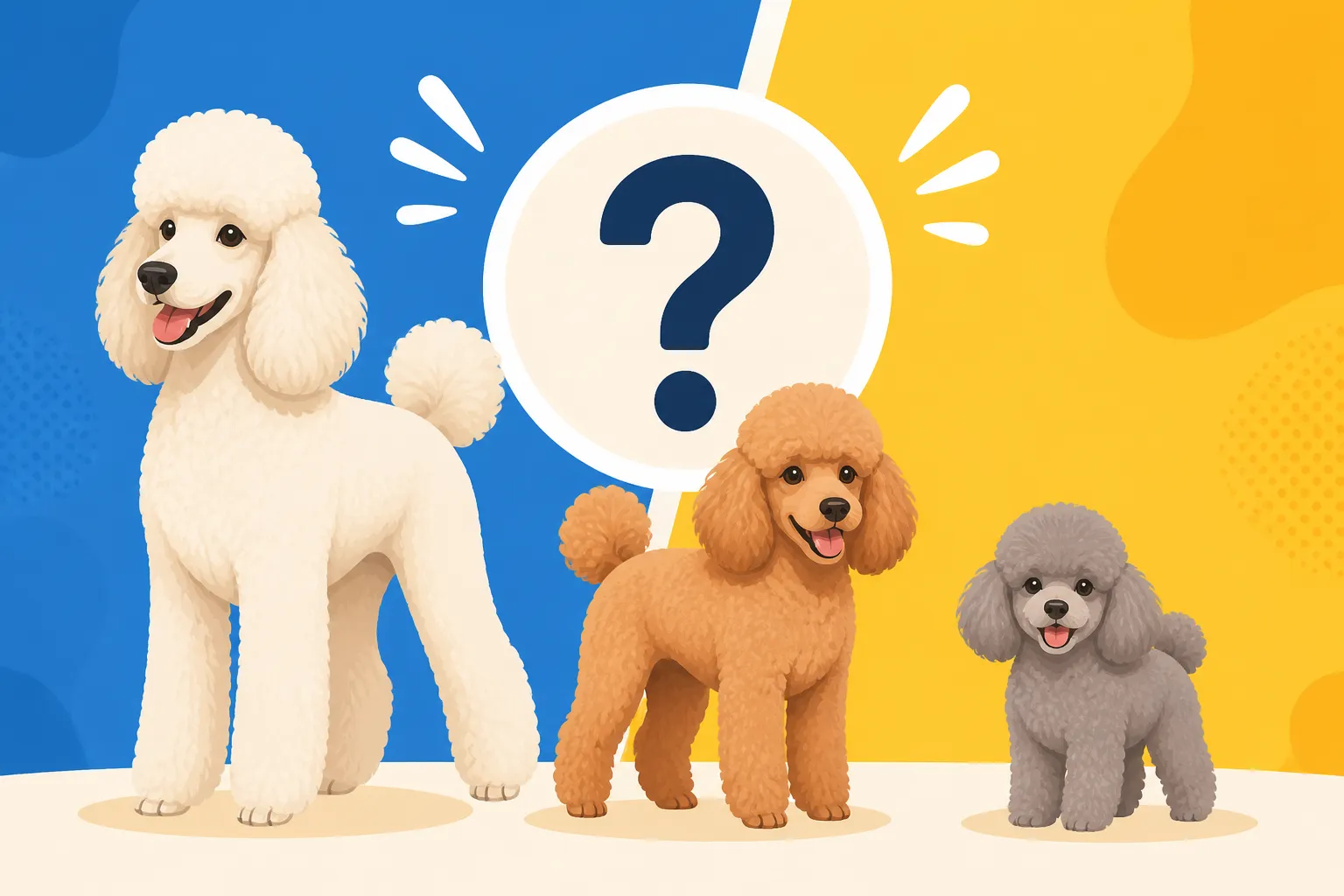
Today, major kennel clubs worldwide, including the American Kennel Club (AKC), recognize Poodles in three distinct size varieties, not as separate breeds. These varieties are defined purely by height.
Here's a breakdown of how the AKC delineates the sizes:
- Standard Poodle: Any Poodle 15 inches or over at the highest point of the shoulders.
- Miniature Poodle: Any Poodle 10 inches or over, but under 15 inches at the highest point of the shoulders.
- Toy Poodle: Any Poodle under 10 inches at the highest point of the shoulders.
These height cut-offs are strictly adhered to in the show ring and by reputable breeders. What's crucial to understand is that beyond this measurement, the breed standard for all three varieties is identical in terms of conformation, coat texture, temperament, and movement. This formal recognition as varieties of a single breed reinforces their shared identity. If they were truly separate breeds, their standards would differ significantly beyond just size. For more on these distinctions, check out Height Limits That Divide the Three Poodles.
Shared Breed Standard, Distinctive Sizes
The very essence of why Standard, Miniature, and Toy Poodles are considered one breed lies in their adherence to a single, overarching breed standard. This standard describes the ideal Poodle, a blueprint that guides breeders and judges, regardless of the tape measure's final reading.
The Poodle's Unifying Physical Ideal
When you look at a Poodle, whether it's a giant Standard or a tiny Toy, there are certain physical traits that scream "Poodle." The breed standard, meticulously written by breed clubs, describes these traits in detail. It dictates everything from the shape of their eyes (dark, oval, and expressive) to the length of their muzzle (long and refined), the texture of their coat (dense, harsh, and curly), and the way they carry their tail (high and gay). A Poodle's gait, a springy, light-footed movement, is also a hallmark of the breed, present in all sizes.
The emphasis is always on balance, elegance, and athleticism. A Toy Poodle, despite its diminutive size, is expected to possess the same proud carriage, square build, and graceful proportions as a Standard. They aren't meant to be "miniaturized" versions with disproportionately large heads or short legs; they are scaled-down replicas of the same ideal. The standard dictates the ear set, the length of ear leather, and even the dark eye and black nose pigment (or liver for browns/apricots/reds). This unifying physical ideal is what makes a Poodle a Poodle, irrespective of its variety. Reading The Poodle the Standard Describes can offer even more detail on this fascinating unity.
Grooming and Coat Maintenance Across Varieties
Another undeniable link between the Poodle varieties is their coat and the intensive grooming it demands. All Poodles possess the same unique, non-shedding, continually growing coat. This means that whether you own a massive Standard or a pocket-sized Toy, you are signing up for a significant commitment to coat care.
Regular, thorough brushing to the skin is non-negotiable for all Poodles to prevent painful matting. The same tools and techniques apply: a slicker brush, a greyhound comb, and often a high-velocity dryer to ensure the coat is straight and free of tangles after bathing. While the sheer volume of hair might differ, the type of hair and its care requirements are identical. A Miniature Poodle needs the same consistency in brushing as a Standard, just perhaps for a shorter duration. Many Poodle owners get their grooming supplies from retailers like Chewy, which offers a wide selection of brushes, combs, and shampoos suitable for all Poodle sizes.
Professional grooming visits are also essential for all Poodle varieties, typically every 4-8 weeks, to keep their coats in pristine condition. From the classic Continental clip seen on show Standards to a simple pet clip on a Toy, the underlying need for regular trimming, bathing, and drying is universal. There's no "easy" Poodle coat; they all require dedication. This shared grooming demand is a significant part of Poodle ownership, uniting the varieties under one fluffy, curly umbrella. You can explore this further in How Often a Poodle Must Be Brushed.
Health and Lifespan: Similarities and Differences
While the Poodle varieties share a common genetic lineage and breed standard, their differing sizes, and the breeding practices over generations, have led to some interesting variations in their health predispositions. However, it's important to view these as size-specific tendencies within the same breed, rather than indicators of separate breeds.
Common Health Concerns Across All Poodles
Despite their size differences, all Poodle varieties share susceptibility to certain health conditions, highlighting their genetic commonalities. For instance, dental disease is a prevalent issue across the board, though it can be particularly aggressive in smaller Poodles due to their compact jaws. Regular dental care, including brushing at home and professional cleanings, is critical for all. Poodle Dental Disease by Size delves into this.
Allergies and skin sensitivities are also common, often manifesting as itchy skin, ear infections, or digestive upset. Whether it's environmental allergens or food sensitivities, the Poodle's immune system can sometimes be a bit overreactive. This shared vulnerability points to a common genetic background. Furthermore, many Poodles, regardless of size, can be prone to certain eye conditions like Progressive Retinal Atrophy (PRA), which is why reputable breeders for all sizes should be diligently testing their breeding stock. The importance of What a Poodle Breeder Must Test For cannot be overstated, as responsible breeding helps mitigate these shared risks across the entire Poodle population.
Size-Specific Health Predispositions
Where we see the most significant health divergence is in conditions that are directly linked to size or the specific genetic bottlenecks created during the breeding-down process. This is where the term Why Poodle Health Splits by Size becomes particularly relevant.
Standard Poodles, with their deep chests, are notably susceptible to Gastric Dilatation-Volvulus (GDV), commonly known as bloat. This life-threatening condition requires immediate veterinary attention and is far less common in Miniature or Toy Poodles. Addison's Disease, an autoimmune disorder affecting the adrenal glands, also shows a higher incidence in Standard Poodles. You can read more about it in Addison's Disease in Standard Poodles and Bloat and the Deep Standard Poodle Chest.
On the other end of the spectrum, Toy Poodles, due to their small size and delicate bone structure, are more prone to conditions like Luxating Patella (slipping kneecaps) and Collapsing Trachea, which causes a distinctive "honking" cough. Toy Poodle Kneecaps and Windpipes explores these issues. Toy Poodle puppies, in particular, can be susceptible to hypoglycemia (low blood sugar), especially if not fed regularly. Understanding Blood Sugar Crashes in a Toy Poodle is crucial for any Toy Poodle owner. These size-specific health concerns illustrate how the process of selecting for size can inadvertently concentrate certain genetic predispositions, but they don't fundamentally alter the breed's core identity.
Living with the Poodle Varieties
Ultimately, choosing a Poodle variety comes down to understanding your lifestyle and what you can offer a dog. While their sizes vary wildly, the fundamental "Poodle-ness" of each one means similar needs in terms of engagement, affection, and care.
Exercise and Mental Stimulation Needs
While a Standard Poodle will likely require more vigorous physical exercise than a Toy, the crucial point for all Poodles is the need for mental stimulation. Their high intelligence means they get bored easily, and a bored Poodle, regardless of its size, can become a destructive or mischievous Poodle. A Standard Poodle might need a long hike or a run at the dog park, while a Toy Poodle might be satisfied with brisk walks around the neighborhood and indoor play.
However, both need daily mental challenges. Puzzle toys, training sessions, scent work, and interactive games are vital for keeping their minds occupied. Many Poodle owners find a wide array of engaging toys and brain games on sites like Chewy, which can be delivered right to their door. These tools can help fulfill the Poodle's innate desire to learn and work. Ignoring their mental needs, whether for a Standard or a Toy, can lead to frustration and behavioral issues, underscoring that while the volume of activity might change, the quality of engagement is consistent across all varieties. Understanding Daily Work for a Poodle's Body and Mind is essential for any Poodle owner.
The Poodle as a Companion in Any Size
No matter their size, Poodles are renowned for being incredibly adaptable, affectionate, and devoted companions. They thrive on human interaction and generally bond deeply with their families, often shadowing their owners from room to room. This strong desire for companionship is a defining trait that unites all Poodle varieties.
Choosing between a Standard, Miniature, or Toy often comes down to practical considerations such as your living situation, energy levels, and personal preferences. A Standard Poodle might be perfect for an active family with a large yard, while a Toy Poodle could be an ideal apartment dweller or a constant lap companion for someone with a quieter lifestyle. The Miniature Poodle often offers a wonderful middle ground, being robust enough for active play but still manageable in smaller homes. What doesn't change is the Poodle's inherent charm, intelligence, and capacity for love. When you bring a Poodle into your home, you're not just getting a dog of a certain size; you're gaining a clever, sensitive, and elegant family member, regardless of whether they fit in your lap or take up half the sofa.
| Poodle Variety | AKC Height Range (Shoulders) | Typical Weight Range | Typical Lifespan | Common Health Tendencies (Examples) |
|---|---|---|---|---|
| Toy Poodle | Under 10 inches | 4-6 pounds | 12-15 years | Luxating Patella, Collapsing Trachea, Hypoglycemia (puppies), Dental Disease |
| Miniature Poodle | 10 to under 15 inches | 10-15 pounds | 12-15 years | Luxating Patella, Idiopathic Epilepsy, PRA, Dental Disease |
| Standard Poodle | 15 inches and over | 40-70 pounds | 10-14 years | Bloat (GDV), Addison's Disease, Hip Dysplasia, Sebaceous Adenitis |
Disclaimer
This article is for general informational purposes only and does not constitute professional advice. Laws, prices and regulations vary by location and change over time. Consult a qualified professional for guidance on your specific situation.