Why Poodles Are Called Non-Shedding
It's a common refrain: Poodles don't shed. And if you've recently brought home one of these magnificent dogs, you might be scratching your head, wondering why you're still finding little wisps of hair around your home, or worse, discovering mats forming in their otherwise glorious coat. The truth is, "non-shedding" is a bit of a misnomer, leading to frustration and confusion for many new poodle owners. This guide will dive deep into the unique characteristics of the poodle coat, clarify what "non-shedding" truly implies, and provide you with the knowledge to manage your poodle's beautiful hair effectively.
The Unique Poodle Coat: Hair, Not Fur
The fundamental reason poodles are often labeled "non-shedding" comes down to a crucial biological difference in their coat structure. Unlike many other dog breeds that have fur, poodles possess hair, much like humans do. This distinction might seem subtle, but it has profound implications for how their coats behave and how we, as owners, need to care for them.
Understanding the Hair Growth Cycle
To truly grasp why poodles are different, we need to talk about hair growth cycles. Most dog breeds, especially those with double coats like German Shepherds or Huskies, have a growth cycle that includes a distinct shedding phase. During this phase, often seasonal, their old fur detaches in large quantities to make way for a new coat, leading to those infamous "fur tumbleweeds" that roll across your floors. Their hair follicles essentially take a break, pushing out the old hair rapidly.
Poodles, on the other hand, have a continuous growth cycle. Their hair follicles are always in an active growth phase, similar to human head hair. This means that individual hairs grow for a much longer period before eventually detaching. There isn't a synchronized "shedding season" where vast amounts of hair are released all at once. This continuous growth is the bedrock of the poodle's unique coat maintenance needs.
This continuous growth pattern is why you'll hear about poodles needing regular haircuts. If their hair simply kept growing indefinitely without ever being trimmed, it would become impossibly long and unmanageable. It’s also the reason why a poodle’s coat texture is often described as feeling more like wool than typical dog fur. This dense, curly texture is designed to trap anything that detaches, rather than letting it fall freely.
Why Continuous Growth Means Less Shedding
So, if their hair grows continuously, does it ever fall out? Yes, it absolutely does. No hair stays attached forever. Individual hairs on a poodle do eventually reach the end of their life cycle, detach from the follicle, and are shed. However, because of the poodle's incredibly dense and curly coat, these shed hairs don't fall to the floor or get caught on your furniture in the same way they would with a smooth-coated or double-coated breed.
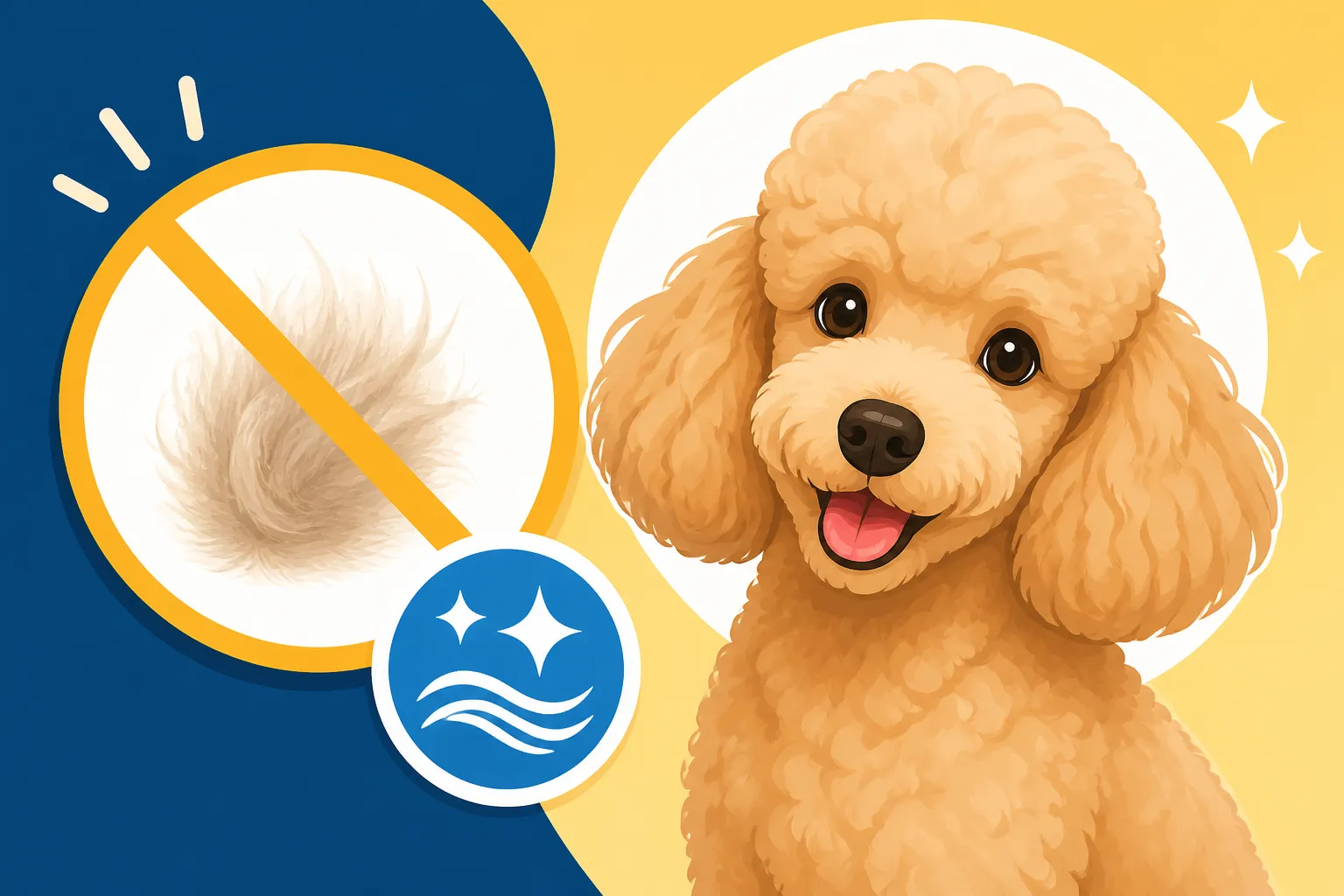
Instead, the shed hairs get tangled and trapped within the surrounding healthy, growing curls. Think of it like a sticky spiderweb catching debris; the poodle's coat acts as a natural net. This is why you don't typically see large clumps of poodle hair floating around your house. The hair is still shedding, but it's being contained by the very structure of the coat itself. This is the "non-shedding" characteristic everyone talks about – not that the hair never detaches, but that it doesn't release into your environment. You can learn more about this by reading The Poodle Coat and Why It Never Stops Growing.
This trapped hair, while beneficial for keeping your home cleaner, is also the primary reason why poodles are prone to matting. If these detached hairs aren't regularly brushed out, they intertwine with the live hair, forming dense, painful knots that pull on the skin. It’s a trade-off: less visible shedding, but a much higher grooming responsibility to prevent painful mats.
What "Non-Shedding" Really Means in Practice
The phrase "non-shedding" can set up new poodle owners for a shock when they find stray hairs or, worse, discover mats forming. It's crucial to distinguish between the common perception and the practical reality of living with a poodle's coat.
The Illusion of "No Shedding"
Let's be clear: every living creature with hair or fur sheds. Humans shed hair, cats shed fur, and dogs shed hair or fur. Poodles are no exception. The illusion of "no shedding" comes from the fact that their shed hair doesn't end up on your clothes, carpets, or furniture in the same visible, often overwhelming, way that it does with many other breeds. You won't find yourself needing to vacuum daily to remove vast quantities of dog hair, nor will you typically have to lint-roll your entire outfit after a cuddle session.
However, you will still find hair. A stray curl might detach and land on your floor, or you might pull a few hairs from your brush after grooming. The key difference is the volume and distribution of the shed hair. Instead of shedding hair all over your home, a poodle's shedding is concentrated during brushing sessions. If you are diligent with grooming, most of the detached hair will come out on your brush, keeping it off your floors and furniture.
The frustration often stems from unmet expectations. People hear "non-shedding" and imagine a hair-free existence, which simply isn't realistic. It's more accurate to say that poodles are "low-shedding" or that they "contain their shed hair." Understanding this distinction from the outset can save a lot of confusion and help you prepare for the realities of poodle ownership. This is also why understanding Why Poodle Owners Still Find Hair is so important for setting proper expectations.
The Role of Brushing and Grooming
This is where the rubber meets the road. Because a poodle's shed hair gets trapped in its dense, curly coat, regular, thorough brushing isn't just about aesthetics; it's vital for their comfort and health. Without consistent brushing, those trapped hairs quickly combine with new growth and dead skin cells to form mats. Mats are not just unsightly; they can be incredibly painful, pulling on the skin, restricting movement, and creating a breeding ground for skin infections.
Brushing a poodle is an active removal process for the hair that has shed but hasn't fallen out of the coat. It's how you manage their continuous growth cycle and prevent painful problems. If you neglect brushing, you're not just letting the hair stay in; you're letting it felt together, creating a solid mass that can only be removed by shaving. This is why many professional groomers will refuse to demat a severely matted poodle and will instead recommend a complete shave-down for the dog's comfort and safety.
The frequency of brushing depends on the length of your poodle's coat and their activity level. A poodle in a very short kennel clip might get away with brushing every few days, but a poodle with a longer, show-quality coat might need daily, hour-long brushing sessions. For most pet poodles in a medium clip, 2-3 thorough brushings per week are usually sufficient to prevent mats. Proper technique, such as line brushing, is also essential to ensure you're reaching down to the skin, where mats often begin. You can find more detailed guidance in articles like How Often a Poodle Must Be Brushed.
The Benefits Beyond Less Hair on Your Sofa
While the term "non-shedding" might require a nuanced understanding, the practical benefits of the poodle's unique coat are genuinely significant and extend far beyond just keeping your sofa clean. These advantages contribute to a healthier home environment and often mean poodles are a more suitable choice for certain households.
A Boon for Allergy Sufferers
Perhaps the most celebrated benefit of the poodle's coat is its reputation for being "hypoallergenic." While no dog breed is truly 100% hypoallergenic (as allergies are typically triggered by dander, saliva, and urine proteins, not just hair), poodles produce and disperse significantly less dander than many other breeds. Dander consists of microscopic flakes of dead skin that dogs constantly shed, and it's these particles that carry the allergenic proteins.
Because a poodle's shed hair is largely trapped within its dense, curly coat rather than being released into the air or falling onto surfaces, the dander it produces is also contained. Regular brushing and grooming then remove this trapped hair and dander, preventing it from accumulating and spreading throughout the home. This drastically reduces the amount of airborne allergens, making poodles a much more comfortable choice for individuals with mild to moderate dog allergies. It's why they are often recommended as "allergy-friendly" dogs. For more insights, check out Whether a Poodle Suits an Allergy Sufferer.
This benefit is why many people who previously thought they could never own a dog have found joy and companionship with a poodle. It's not a magic bullet, and individuals with severe allergies might still react, but for a great many, the poodle's coat provides a pathway to pet ownership that other breeds simply cannot. This factor alone makes the grooming commitment worth it for countless families.
Cleanliness and Maintenance Advantages
Beyond allergies, the contained shedding of a poodle's coat simply means a cleaner house. Owners of heavy-shedding breeds often lament finding dog hair embedded in carpets, woven into upholstery, and sticking to every piece of clothing. With a poodle, this daily battle is largely averted. You'll spend less time vacuuming up visible dog hair and less time lint-rolling your clothes before heading out the door.
This translates into a lower overall burden for household chores related to pet hair. Imagine not having to meticulously clean your car after every trip with your dog, or not finding fur in your morning coffee. While you'll invest time in grooming your poodle, that time directly reduces the time you'd otherwise spend cleaning up after shedding. It’s a shift of effort, not an elimination of it. The dense coat also means that dirt and debris are often trapped in the curls rather than immediately falling off, leading to fewer trails of mud or leaves through your house, provided you brush them after outdoor adventures.
Furthermore, the poodle's coat, when properly maintained, can also be quite odor-resistant compared to some breeds. Their hair, being similar to human hair, tends to absorb fewer environmental odors if kept clean. Regular bathing and thorough drying, which are integral to poodle grooming, contribute to a fresh-smelling companion. This combination of reduced dander, less visible shedding, and a cleaner scent makes living with a poodle a remarkably tidy experience for a dog owner.
Managing the Poodle Coat: A Daily Commitment
Embracing a poodle means embracing a consistent grooming routine. Their "non-shedding" coat is a double-edged sword: it keeps your home cleaner, but it demands significant dedication from you to prevent painful matting and maintain their health and comfort.
Essential Grooming Tools and Techniques
Effective at-home grooming for a poodle starts with the right tools. You absolutely need a high-quality slicker brush and a sturdy metal greyhound comb. These aren't optional; they are your primary defense against mats. A good detangling spray is also invaluable, especially for longer coats or stubborn knots. You can find these essential tools, and even specific shampoos and conditioners designed for curly coats, from retailers like Chewy. Having these on hand means you’re always prepared to tackle tangles as they arise.
The technique is as important as the tools. "Line brushing" is the golden standard for poodles. This involves systematically brushing small sections of hair, starting from the bottom layer and working your way up, ensuring your brush reaches all the way down to the skin. Simply skimming the top layer of the coat will leave mats forming underneath, unseen until they become a severe problem. A good way to check your work is to follow up with a metal comb; if the comb can glide smoothly from the skin to the ends of the hair, you've done a thorough job. If it snags, you need to go back and brush that section again. Understanding How to Line Brush a Poodle Properly is a game-changer for new owners.
Regularity is key. Even if your poodle has a shorter pet clip, aim for at least two to three thorough line-brushing sessions per week. If their coat is longer, daily brushing will likely be necessary. These sessions are also a wonderful opportunity for bonding with your poodle, making the routine a positive experience for both of you. Getting a poodle puppy used to being handled and brushed from a young age is crucial for setting them up for a lifetime of comfortable grooming.
The Importance of Professional Grooming
While daily home care is vital, it doesn't replace the need for professional grooming. Poodles require regular clipping to maintain their coat at a manageable length and style. Most pet poodles visit a professional groomer every 4-8 weeks, depending on how quickly their hair grows and the desired length of their clip. A professional groomer not only trims the coat but also provides a thorough bath, drying, ear cleaning, and nail trimming – all crucial aspects of poodle care. You might want to consider Professional Grooming Costs by Poodle Size when budgeting for your poodle.
Choosing a professional groomer who understands the poodle coat and uses gentle, positive reinforcement methods is incredibly important, especially given the poodle's sensitive nature. They can help maintain intricate clips, like the classic Continental or even a simpler Lamb cut, that are difficult for owners to achieve at home. They also have access to high-velocity dryers, which are essential for completely drying a poodle's dense coat to prevent skin issues and further matting. Many owners struggle to get their poodle thoroughly dry at home, which can lead to a damp, smelly coat and potential skin problems. For more on this, check out Bathing and Drying a Poodle.
Professional groomers also serve as an extra set of eyes on your poodle's overall health. They often notice skin irritations, lumps, or changes in coat condition that might indicate underlying health issues, like sebaceous adenitis, before you do. Establishing a good relationship with a reputable groomer is a partnership in your poodle's well-being. It’s an investment that pays dividends in comfort and health for your furry friend.
Common Misconceptions and Realities
Despite the clear benefits of the poodle coat, several misconceptions persist, particularly concerning poodle mixes and the impact of coat changes. It's important to separate fact from fiction to have realistic expectations for your poodle or poodle-cross.
Poodle Mixes and Their Coats
The popularity of "doodle" breeds (like Goldendoodles, Labradoodles, Bernedoodles, etc.) has exploded, largely driven by the desire for a "non-shedding" dog. This is one of the biggest misconceptions in the dog world. When you cross a poodle with another breed, the coat genetics become a roll of the dice. There's no guarantee that the offspring will inherit the poodle's desired non-shedding, allergy-friendly coat.
Many doodle owners find, often to their dismay, that their mixed-breed dog sheds significantly, sometimes even more than a single-coated poodle. Some doodle coats are a blend, creating a wavy "fleece" coat that sheds moderately but still requires diligent grooming to prevent matting. Others might inherit a more traditional double coat from the non-poodle parent, leading to heavy shedding. There's a wide spectrum, and predicting the exact coat type of a doodle puppy is incredibly difficult. This unpredictability is a major point of discussion in articles like Whether Doodle Coats Are Predictable.
Therefore, if your primary reason for considering a poodle mix is the "non-shedding" aspect for allergy reasons, it's far safer to choose a purebred poodle from a reputable breeder. With a purebred poodle, you have a much higher certainty of the coat type and its maintenance requirements. While adorable, the appeal of a "doodle" for allergy sufferers can often lead to disappointment if their coat proves to be more shedding than anticipated.
Seasonal Changes and Coat Health
Unlike breeds with fur that undergo dramatic seasonal "blows" where they shed their undercoat in spring and fall, poodles do not experience seasonal shedding in the same way. However, this doesn't mean their coat remains entirely static throughout the year. There can be subtle changes in coat density or texture influenced by factors like climate, nutrition, hormones, and age.
One significant period of coat change occurs when a poodle puppy matures into an adult. The soft, wispy puppy coat gradually transitions into the denser, curlier adult coat. This transition, often referred to as "coat change," can be a challenging time for grooming. The puppy coat often mats more easily, and the emerging adult coat can exacerbate this tendency. During this period, which can last several months to over a year, daily brushing is often essential to prevent mats from forming. It's a prime example of When a Poodle Puppy Coat Changes being a critical time for extra grooming effort.
Overall coat health is also influenced by diet and general well-being. A poodle on a high-quality diet with adequate fatty acids will generally have a healthier, more manageable coat. Conversely, a poor diet, stress, or underlying health conditions can affect coat quality, making it dry, brittle, or more prone to tangling, even if it doesn't result in traditional "shedding." Paying attention to these factors, along with regular grooming, ensures your poodle's coat remains healthy and beautiful year-round. You can often find reputable food brands on Chewy that cater to specific dietary needs for coat health.
| Coat Type | Shedding Level | Matting Risk | Grooming Needs | Allergy Friendliness |
|---|---|---|---|---|
| Poodle Hair | Low (trapped) | High | Daily/Weekly Brushing, 4-8 wk Professional Clips | High |
| Double Coat Fur | High (seasonal blow) | Low (if groomed) | Occasional Brushing, Seasonal Deshedding | Low |
| Single Coat Fur | Moderate | Low | Occasional Brushing | Moderate |
| Poodle Mix (Doodle) | Variable (low to high) | Variable (moderate to high) | Variable (daily to occasional) | Variable (low to high) |
Disclaimer
This article is for general informational purposes only and does not constitute professional advice. Laws, prices and regulations vary by location and change over time. Consult a qualified professional for guidance on your specific situation.