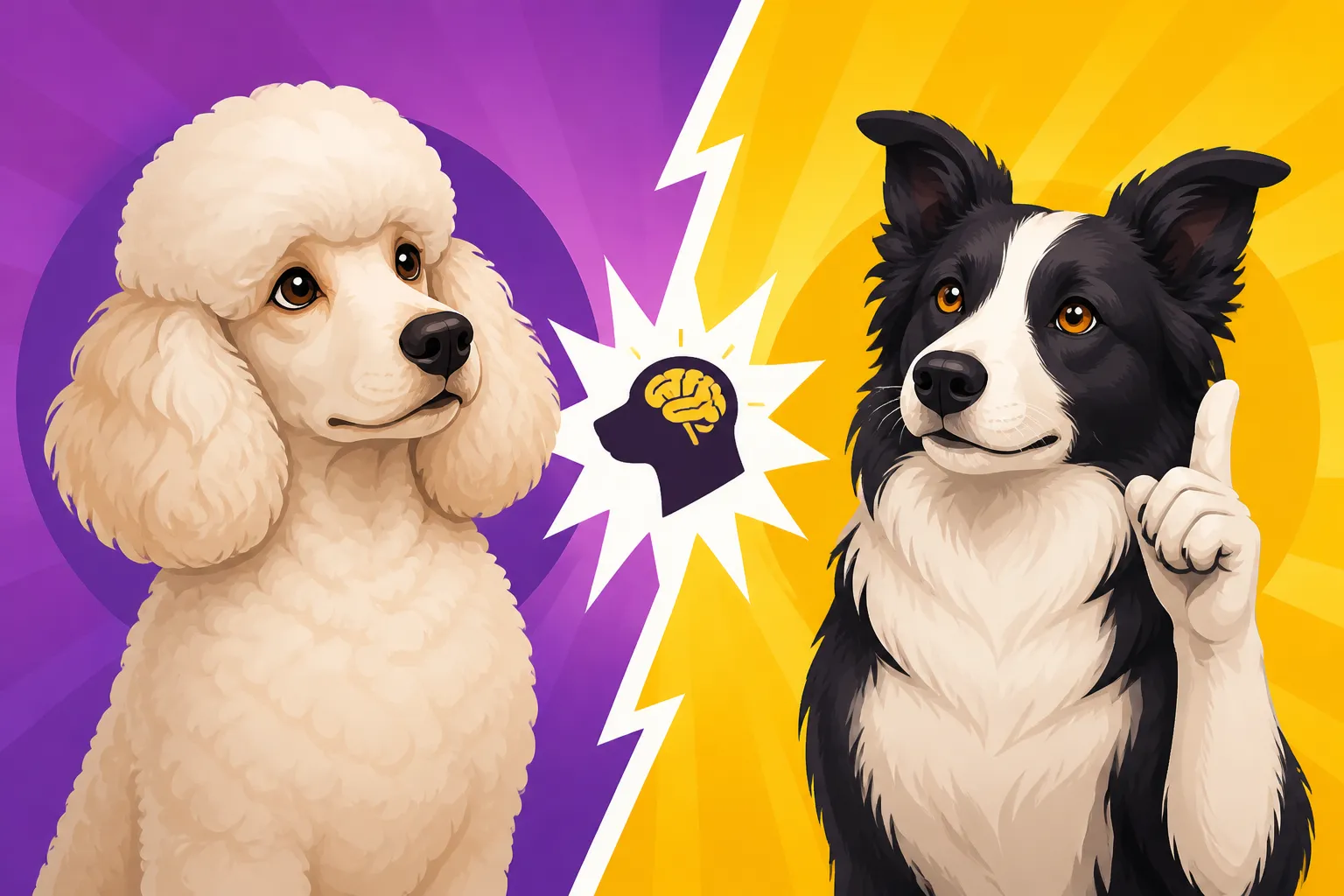
Which Breed Beats the Poodle for Intelligence
It's a common question among dog lovers, often tinged with a little competitive spirit: "My Poodle is so smart, is there any dog out there that could possibly be even smarter?" As Poodle enthusiasts, we know our curly-coated companions are incredibly bright, often outsmarting us with their clever antics and quick learning. But the world of canine intelligence is a fascinating place, and while Poodles consistently rank at the top, there's indeed one breed that often nudges ahead in certain metrics. This guide will delve into what makes Poodles so intelligent, how canine intelligence is typically measured, and which breed often takes the top spot, exploring the unique qualities that set them apart.
Understanding Canine Intelligence: More Than Just Tricks
When we talk about a dog's intelligence, it's easy to just think about how quickly they learn commands or perform impressive tricks. However, canine intelligence is a complex spectrum, encompassing several different facets. It's not just about rote memorization, but also about problem-solving, adaptability, social understanding, and even their ability to understand our emotions. A truly intelligent dog isn't just a walking encyclopedia of cues; they're a partner who can assess situations, make decisions, and communicate effectively with their human family.
The typical way most people gauge "intelligence" in dogs stems from a framework developed by researchers like Dr. Stanley Coren, who focused primarily on what he termed "working intelligence" or "obedience intelligence." This measures a dog's ability to learn and retain commands and their willingness to obey those commands consistently. But let's be honest, we all know there's more to a dog's smarts than just sitting on command, right? There's the dog who figures out how to open the fridge, the one who knows exactly how to get extra treats from Grandma, or the Poodle who somehow manages to sneak onto the sofa without you noticing. That’s another kind of intelligence entirely.
The Poodle's Stellar Position in the Intelligence Rankings
Poodles, regardless of their size – be it Standard, Miniature, or Toy – consistently rank among the most intelligent dog breeds in the world. Dr. Stanley Coren's influential work, which surveyed hundreds of obedience judges, placed the Poodle firmly in the second spot. This means that, on average, a Poodle can understand a new command in fewer than five repetitions and will obey a known command 95% of the time or more. That's an astonishing level of comprehension and consistency, and it certainly speaks volumes about their mental capabilities. You might be interested to read about Why the Poodle Sits Second in Coren's List.
What Poodle Intelligence Looks Like in Daily Life
Living with a Poodle, you experience their intelligence firsthand. It's not just about their ability to master "sit," "stay," and "come" in record time. It's the way they seem to anticipate your next move, often picking up on routines before you even formally train them. They are incredibly observant, soaking in information about their environment and the people around them. Many Poodle owners can tell stories of their dogs learning complex sequences of events, like the specific steps that lead to a walk, a meal, or a car ride. They'll often learn subtle body language cues that most dogs miss, truly reading their humans. Why Poodles Read People So Well is a topic that resonates with so many of us.
This high level of intelligence means Poodles thrive on mental stimulation. If you don't give their clever brains a job, they'll often find one themselves, and it might not always align with your household rules! This is why interactive toys, puzzle feeders, and engaging training sessions are so crucial. Products from places like Chewy offer a fantastic array of enrichment items that can help keep a Poodle's active mind occupied and out of mischief. A bored Poodle is often a mischievous Poodle, using their smarts to open cabinets, investigate countertops, or even stage elaborate escape attempts from the yard. For more on this, check out What a Poodle Does When Its Brain Is Idle.
The Historical Context of Poodle Smarts
The Poodle's intelligence is deeply rooted in their history as working dogs. Originally bred in Germany as water retrievers, their keen intellect and trainability were essential for successfully fetching waterfowl from often frigid waters. They needed to understand complex instructions, navigate challenging terrain, and make independent decisions in the field. Later, their striking appearance and intelligent nature made them popular circus performers, further honing their abilities to learn intricate tricks and routines. This long history of working closely with humans and adapting to various tasks has ingrained a remarkable level of problem-solving and eagerness to please into the breed. Training a Poodle feels less like teaching a dog and more like collaborating with a very bright student, which is why they are often called Training the Second Smartest Dog Breed.
The Breed That (Allegedly) Tops the Charts: The Border Collie
While Poodles hold an esteemed position, there is one breed that consistently, almost universally, takes the number one spot in working and obedience intelligence rankings: the Border Collie. According to Dr. Coren's research, Border Collies typically learn a new command in fewer than five repetitions and obey at least 95% of the time, often exhibiting even higher consistency and an uncanny ability to understand complex, multi-step instructions.
What Makes the Border Collie Number One?
The Border Collie's intelligence is primarily driven by its intense herding instinct. Bred to work livestock, often independently and far from the shepherd, they developed an unparalleled ability to observe, strategize, and execute complex tasks. They are masters of cause and effect, understanding that moving their body in a certain way will influence the movement of sheep, or in a household context, the movement of a toy or even a family member.
Here are some key traits that contribute to the Border Collie's top ranking:
- Intense Focus: Border Collies possess an almost laser-like focus on their work. When given a task, they commit wholeheartedly, filtering out distractions with remarkable ease. This intense concentration allows them to absorb and apply information rapidly.
- Problem-Solving: Their herding duties often require them to solve dynamic problems on the fly. They need to figure out how to gather scattered sheep, navigate obstacles, and bring them back to the shepherd, all while anticipating the sheep's movements. This translates into exceptional problem-solving skills in other areas, too.
- Drive to Work: Border Collies have an insatiable desire to work and please their handlers. They thrive on having a "job" to do, and this innate drive makes them incredibly receptive to training. For them, learning is the reward.
- Physical and Mental Stamina: They have the physical endurance to work all day and the mental fortitude to stay engaged and sharp throughout demanding tasks.
This combination of traits allows them to excel not just in herding, but also in dog sports like agility, obedience, flyball, and even search and rescue, where complex problem-solving and quick decision-making are paramount.
Comparing Poodle and Border Collie Intelligence
While the Border Collie often comes out on top in standardized tests of working intelligence, it's important to remember that these are just one measure of a dog's overall smarts. Both breeds are incredibly intelligent, but their particular flavors of intelligence might manifest differently.
Here's a quick comparison:
| Trait / Breed | Poodle | Border Collie |
|---|---|---|
| Working/Obedience | Exceptional; second only to Border Collie in Coren's ranking. Excels at learning cues. | Unparalleled; consistently ranked #1. Learns cues incredibly fast, high obedience. |
| Problem-Solving | Highly capable, especially in human-centric situations. Can be quite cunning. | Outstanding, especially in tasks requiring strategy and independent thought. |
| Adaptability | Very adaptable; thrives in various environments and roles (companion, performer, service). | Highly adaptable to work, but can struggle if not given enough mental/physical outlet. |
| Emotional Intelligence | Excellent; highly attuned to human emotions and needs. Very empathetic. | Good, but often more focused on task execution than emotional nuances. |
| Motivation | Eager to please, thrives on positive reinforcement and human interaction. | Intense drive to work; often self-motivated by the "job" itself. |
| Independence | Capable of independent thought but generally seeks handler input. | Highly independent in task execution, can make decisions without constant human direction. |
This table highlights that while both are brilliant, the Border Collie's intelligence is often more task-oriented and independent, whereas the Poodle's intellect is highly tuned into human interaction and social dynamics. For example, a Border Collie might figure out a complex puzzle feeder in seconds, while a Poodle might figure out how to convince you to open it for them with a charming gaze! For more insights into how these intelligent breeds learn, consider exploring Clicker Timing With a Fast-Learning Poodle.
The Nuances of Measuring Canine Intelligence
It's crucial to understand that no single test can fully encapsulate the vast spectrum of canine intelligence. Coren's rankings, while widely cited, focus heavily on a specific type of intelligence. Other researchers and trainers recognize different forms of intelligence:
- Adaptive Intelligence: This is a dog's ability to solve problems on their own, learn from experience, and adapt to new situations. This includes everything from figuring out how to get a toy from under the sofa to learning how to navigate a new walking route.
- Instinctive Intelligence: This refers to the innate abilities a dog has based on its breed purpose, such as a retriever's drive to fetch, a terrier's instinct to dig, or a Border Collie's urge to herd.
- Spatial Intelligence: How well a dog understands and navigates its environment, remembering locations and routes.
- Social/Emotional Intelligence: A dog's ability to understand human emotions, respond appropriately to social cues, and form strong bonds. Poodles, with their empathetic and sensitive nature, often excel in this area. If you've ever had a Poodle console you when you're upset, you know exactly what I mean! This is one area where Poodles truly shine.
When we consider these broader definitions, both the Poodle and the Border Collie emerge as exceptionally intelligent dogs. The Border Collie may have the edge in pure "working intelligence" for specific tasks, but the Poodle's incredible social intelligence, adaptability, and emotional awareness make them equally, if not more, suited to a wide array of roles, especially as cherished family companions or service animals.
Ultimately, the "smartest" dog for you depends on what you value most in a canine companion. If you're looking for a dog to excel in high-level competitive obedience or herding trials, a Border Collie might be your top pick. However, if you're seeking a highly trainable, sensitive, and profoundly connected companion who thrives on interaction and can learn a diverse range of skills, a Poodle is an unbeatable choice. You'll spend countless hours engaging their clever mind, whether it's through advanced obedience, Trick Training a Poodle, or challenging Scent Games That Stretch a Poodle's Mind. Both breeds demand consistent mental engagement, and owners of either will find themselves reaching for durable toys and stimulating treats from Chewy to keep their brainiac dogs happy.
Disclaimer
This article is for general informational purposes only and does not constitute professional advice. Laws, prices and regulations vary by location and change over time. Consult a qualified professional for guidance on your specific situation.