The Ten Solid Poodle Colors
It can be incredibly confusing when you're first diving into the world of Poodles and trying to understand their kaleidoscope of colors. You might hear the term "solid" and picture a perfectly uniform, unvarying shade from nose to tail, but the reality is a little more nuanced and, frankly, quite fascinating. This guide is here to unravel the beautiful complexities of the ten solid Poodle colors, helping you understand what makes each one unique, what to expect as your Poodle grows, and how these genetic marvels maintain their stunning coats.
Decoding "Solid" in Poodle Colors
When we talk about a Poodle being a "solid" color, we're not necessarily talking about a dog whose coat is a single, unblinking, perfectly even shade across every single hair, every single day of its life. That would be almost impossible for many colors! Instead, "solid" refers to a Poodle whose coat is genetically one primary color, without patches, markings, or distinct secondary colors interrupting the main hue. It’s about the underlying genetic blueprint rather than a static visual snapshot.
Why Solid Means No Patches But Not Always One Shade
The fundamental rule for a solid Poodle is the absence of distinct patches or areas of a different color. This means no "parti" markings (large, irregular patches of white on a colored background) and no "phantom" markings (specific, clearly defined markings of a secondary color, usually cream or apricot, on a base of black, brown, silver, or blue, typically seen on the muzzle, chest, and legs). A solid Poodle's coat, while appearing one overarching color, can, and often does, exhibit variations in shade, especially as the dog matures.
Think of it like this: a truly solid Poodle could still have lighter hair on its belly or inside its ears compared to its back, or the sun could lighten its coat. The key is that these variations are subtle and blend into the overall single color, rather than being distinct, patterned markings. It's about the genetic lack of patterning, not a promise of absolute color uniformity under all conditions. This distinction is particularly important when you're looking at breeding or show standards, but for the average pet owner, it simply means appreciating the natural beauty and slight shifts in your Poodle's magnificent coat.
The Importance of Pigment and Points
Beyond the coat itself, a Poodle's "points" – that's their nose, eye rims, lips, and paw pads – play a crucial role in defining their color and overall appearance. For a solid Poodle, the pigment of these points should ideally match or complement the coat color. This isn't just an aesthetic detail; it's an indicator of the dog's genetic color makeup.
For instance, black Poodles, true blues, and silvers will have solid black points. Their eye rims, lips, nose, and paw pads will all be a deep, inky black. A Poodle with a beautiful brown coat, however, will have liver-colored (brown) points. This consistency in pigment is what breeders look for to ensure true-to-type coloring. Apricot Poodles often have black points, though a very dark liver can sometimes be seen. Cream Poodles, on the other hand, usually have lighter points, which can range from a dark liver to a self-colored brown or even sometimes a very dark gray or black. It's a subtle but telling detail, and understanding these "points" helps you appreciate the full spectrum of Poodle coloration. When assessing a puppy, experienced breeders pay close attention to the development of these pigments, as they offer clues about the adult coat color.
The Classic Solid Poodle Colors
Among the ten recognized solid Poodle colors, some have been around longer and are perhaps more widely known. These are the foundation of Poodle coloring, each with its own charm and characteristics.
Black, White, and Apricot – The Long-Standing Favorites
These three colors often come to mind first when picturing a Poodle, and for good reason – they've graced the breed for generations, each with its own distinct appeal.
Black: The Epitome of Elegance
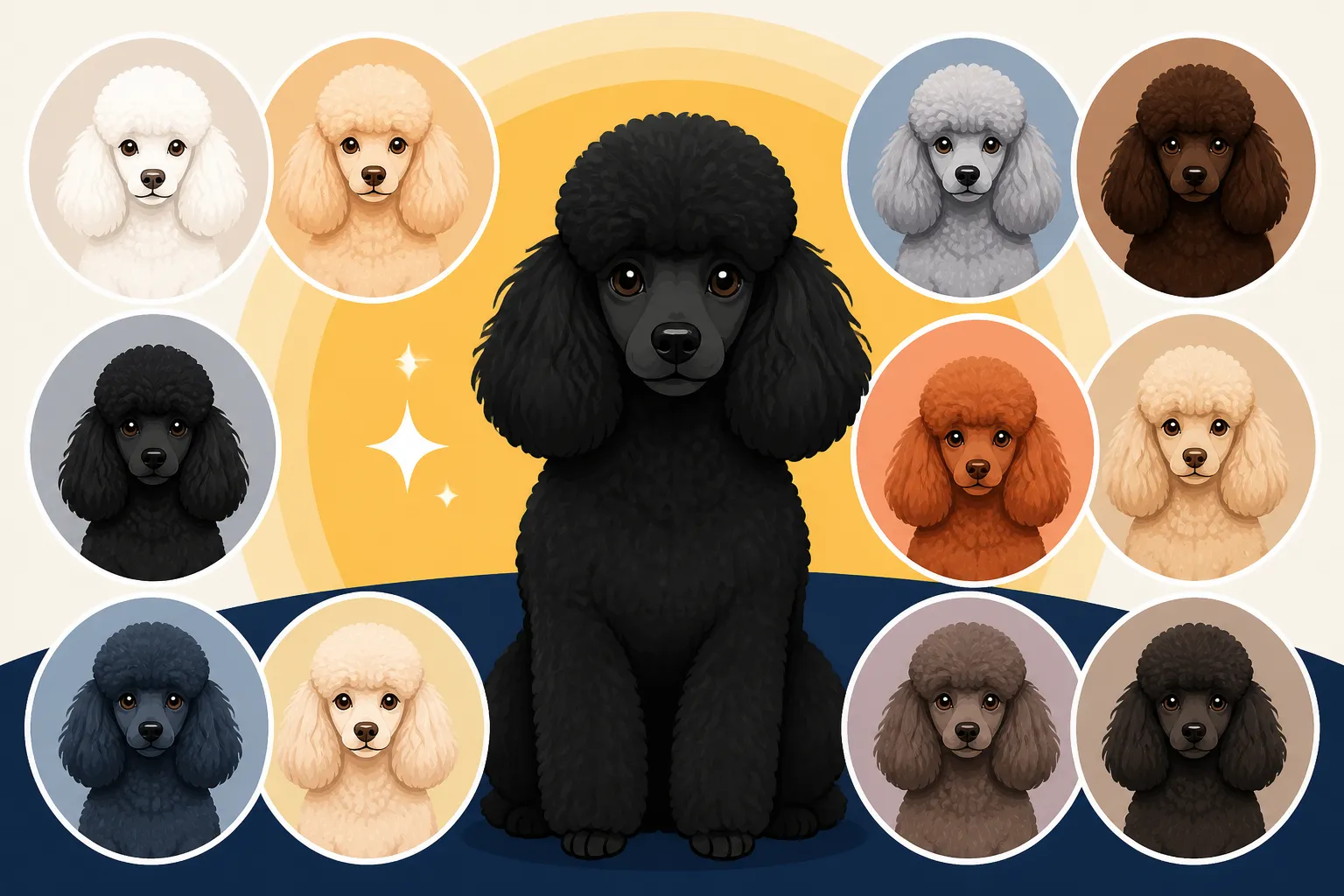
A true black Poodle is a striking sight. The coat should be a deep, dense, inky black, without any reddish or brownish tinge. When sunlight hits a healthy, well-maintained black coat, it should gleam with a rich, dark luster. Genetically, black is one of the dominant Poodle colors. However, even with dominant genetics, maintaining that true, deep black can sometimes be a challenge. Exposure to the sun can cause the coat to "rust" or develop reddish highlights over time, especially if the dog spends a lot of time outdoors. Regular conditioning and good quality shampoos can help, but it's a natural process that many black Poodle owners become familiar with. You might find specialty shampoos at retailers like Chewy designed to enhance black coats and minimize fading. The pigment of a black Poodle's points – nose, eye rims, and paw pads – will always be jet black, perfectly complementing their dark eyes. Solid Poodle Colors the AKC Recognizes often list black as the quintessential Poodle shade.
White: The Picture of Purity
White Poodles are undeniably glamorous, conjuring images of fluffy clouds and regal bearing. A true white Poodle should have a clean, brilliant white coat, free from any yellowing or cream tint. This purity is what makes them so captivating. However, the downside to such a pristine coat is, of course, keeping it clean! White Poodles tend to show every speck of dirt, every grass stain, and every tear or saliva stain. This means diligent grooming, including regular bathing with whitening shampoos (again, Chewy offers a wide selection), and careful attention to areas prone to staining, such as around the eyes and mouth. Why a Poodle's Tear Stains Turn Red is a common concern for owners of white Poodles, and understanding the causes and preventative measures is key to maintaining that pristine look. Despite the extra effort, a well-cared-for white Poodle is a breathtaking testament to the breed's beauty.
Apricot: The Warm, Sunny Hue
Apricot Poodles bring a delightful warmth to the color palette. This color is characterized by shades ranging from a pale, light orange to a deeper, richer apricot. It's a warm, sunny hue that often gives these Poodles a cheerful and inviting appearance. Like many Poodle colors, apricot can "clear" or lighten over time. A puppy born a vibrant, deep apricot might mature into a lighter shade, sometimes even approaching a dark cream. This clearing is a natural part of the Poodle's genetic makeup, particularly those carrying the fading gene. Owners should be aware that the intensity of the apricot might not remain constant throughout the dog's life. Grooming for apricot Poodles often involves products that help enhance and maintain their rich, warm tones, preventing them from becoming too faded or washed out. The points on an apricot Poodle are typically black, providing a lovely contrast to their lighter coat.
Brown and Cream – Earthy and Elegant
These colors offer softer, more understated elegance, appealing to those who appreciate natural, muted tones.
Brown: Rich and Earthy
Brown Poodles are stunning, showcasing a range of rich, chocolatey tones. A true brown should be a deep, uniform shade, free from any reddish or greyish undertones. Imagine the color of a dark cocoa powder or rich coffee bean – that's the ideal brown. The genetics for brown cause the black pigment to be diluted, resulting in this warm, earthy color. Like black Poodles, brown coats can also be affected by sun exposure, sometimes developing a reddish or "rusty" cast, especially on older dogs or those spending a lot of time outdoors. This is often referred to as "rusting out." A key characteristic of a brown Poodle is that their points – nose, eye rims, lips, and paw pads – will be liver-colored, matching their beautiful coat. This liver pigment is a hallmark of a genetically true brown Poodle.
Cream: Soft and Subtle
Cream Poodles occupy the lighter end of the spectrum, often described as an off-white or very pale apricot. They offer a softer alternative to the brilliant white, with a subtle warmth to their coat. The color can range from a very pale, almost bleached blonde to a light buff. Cream is essentially a diluted apricot, often carrying the fading gene that causes lighter shades. One of the distinguishing features of cream Poodles, compared to true white Poodles, is that their points can vary more. While black points are possible, many cream Poodles will have self-colored points, meaning their nose, eye rims, and paw pads will be a lighter brown or liver color, sometimes even a dusky gray. This lighter pigment gives them a softer facial expression, perfectly matching their gentle coat color. How a Poodle Puppy's Color Fades is particularly relevant for cream and apricot Poodles, as their initial puppy coat may be slightly darker or lighter than their adult hue.
The "Dilute" or Fading Solid Poodle Colors
Many of the Poodle's most unique and admired colors aren't static from birth. They undergo a fascinating process of "clearing" or fading over time, revealing a shade often quite different from their puppy coat. These are our dilute colors, each with its own timeline and beauty.
Silver and Blue – The Gray Scale Beauties
These two colors are often mistaken for each other, but they have distinct genetic origins and appear quite differently when fully cleared.
Silver: Born Black, Clears to Silver
Silver Poodles are, in my opinion, one of the most magical transformations in the Poodle world. They are born black. Yes, you read that right! A silver Poodle puppy will have a solid black coat at birth. However, within a few weeks to several months, the clearing process begins. You'll notice lighter roots appearing, often first around the muzzle and eyes, then gradually spreading over the entire body. This clearing can take anywhere from a year to two or even three years to fully complete, eventually revealing a stunning silver coat. The shades of silver can vary from a very light, almost platinum silver to a darker, steel gray. A true silver Poodle will have black points, maintaining that stark contrast against their lighter coat. It's truly a marvel to watch a black puppy slowly transition into such a sophisticated shade.
Blue: A Diluted, Smoky Black
Blue Poodles are often confused with silver, but they are genetically distinct. Like silvers, blue Poodles are born black, but their clearing process is different. Instead of clearing to a bright silver, they clear to a dark, smoky, charcoal grey with a distinct blueish cast. Think of a rich slate or denim color. This clearing is a result of a dilution gene acting on black pigment. The blue color is typically much darker than silver and can be quite difficult to distinguish from a true black Poodle at birth. The clearing process for blue can also take a long time, often two to three years, and sometimes even longer, resulting in a mature coat that is a deep, smoky blue-black, often looking almost black indoors. Blue Poodles, like their black counterparts, will always have black points. You can sometimes tell the difference in a young puppy by looking closely at the roots of the hair around the eyes – if they have a slightly lighter or smoky hue, it might be a blue in the making.
Red and Cafe Au Lait – Newer or Unique Shades
These are often less common but equally captivating colors, bringing rich warmth or delicate subtlety to the Poodle palette.
Red: The Fiery Newcomer
Red Poodles have gained significant popularity in recent decades, celebrated for their vibrant, fiery coats. Genetically, red is an intense extension of apricot, but breeders have worked to produce Poodles with a much deeper, richer, and more saturated red pigment. Think of a rusty sunset or a deep mahogany. However, like apricot, red Poodles are also prone to "clearing" or fading. A stunning, deep red puppy might mature into a beautiful apricot as an adult, or the intensity of the red might lessen over time. Maintaining a truly deep, non-fading red coat is a challenge and a highly sought-after trait among enthusiasts. Some owners of red Poodles use specialized color-enhancing shampoos and conditioners to try and preserve the vibrancy of the coat, which you can often find readily available on platforms like Chewy. Red Poodles will typically have black points, which provides a striking contrast to their vivid coats. Whether Red Poodles Cost More Than Apricot is a common question, and often the intensity of the red can influence demand.
Cafe Au Lait: The Milky Coffee Hue
Cafe Au Lait is another beautiful example of a dilute Poodle color. These Poodles are born brown and then clear to a lovely, milky coffee shade. Imagine the color of coffee with a generous splash of cream – that's "cafe au lait." The clearing process for a brown Poodle to cafe au lait can be quite slow, often taking up to two years or more to fully develop into its final, lighter hue. It's a soft, warm brown that is distinctly different from cream (which comes from apricot genetics) and often has a unique, almost rosy undertone. Like all brown-based Poodles, a cafe au lait Poodle will have liver-colored points (nose, eye rims, lips, and paw pads), which beautifully complements their gentle coat color. This subtle elegance makes them a quiet favorite among Poodle connoisseurs.
What to Expect: Color Changes and Genetics
The Poodle coat is one of its most defining features, and its color is often a dynamic, evolving aspect rather than a fixed state. Understanding the genetics behind these changes can help you appreciate your Poodle even more.
The Poodle Clearing Process
The concept of "clearing" is perhaps one of the most interesting and sometimes surprising aspects of Poodle coat colors. As discussed, many Poodle colors—especially silver, blue, apricot, red, and cafe au lait—are not static. They are born one shade and lighten or change significantly as the dog matures. This phenomenon is largely due to specific genes that affect pigment expression over time.
For example, a silver Poodle puppy might arrive looking utterly black, leading new owners to believe they have a black Poodle. But a few weeks or months later, a faint silvery shimmer appears around the muzzle, eyes, or under the tail, which then gradually spreads. This isn't a flaw; it's the beautiful unfolding of their genetic blueprint. Similarly, a vibrant red puppy might soften into a lovely apricot, or a dark brown puppy might lighten to a cafe au lait. This process can be slow, sometimes taking up to two or three years for the final adult color to emerge. It's why seasoned Poodle breeders often say that you truly don't know a Poodle's final color until they're well past their first birthday. This genetic characteristic is part of what makes Poodles so unique and ever-changing in their beauty. Knowing this helps you manage expectations and truly enjoy the transformation. Genetic Panels for the Three Poodle Sizes can sometimes identify the genes responsible for these color changes, giving breeders a clearer picture of what a litter might produce.
Why Color Consistency Matters and Doesn't
In the world of conformation shows, color consistency and adherence to the breed standard are paramount. The "solid" definition is strictly applied, and variations that are too stark or inconsistent can impact a Poodle's showing career. Breeders aiming for show quality will meticulously select pairings to produce colors that are as true and consistent as possible. They want that deep, unwavering black, or a perfectly clear, brilliant silver without patches.
However, for the vast majority of Poodle owners, those who welcome these clever, loving dogs into their homes as companions, minor color variations or the natural fading process are simply part of the Poodle's charm. A Poodle that clears from red to apricot is no less loved or beautiful. A slight "rusting" on a black Poodle's back from sun exposure doesn't diminish its ability to be a wonderful family member. While responsible breeders will always prioritize health and temperament first, even over color, understanding the genetic nuances of Poodle colors allows you to appreciate the breed's diversity. Don't worry if your Poodle's color shifts a little; it's just showing off its unique genetic heritage. What truly matters is a healthy, happy Poodle who brings joy into your life. You can often find reputable breeders on platforms that also carry pet supplies like Chewy, which indicates their commitment to health and proper care.
Comparing the Solid Poodle Colors
Let's take a quick look at how these colors stack up against each other, including their point colors and typical clearing patterns.
| Color | Base Color | Point Color (Nose, Eye Rims, Pads) | Typical Clearing/Fading |
|---|---|---|---|
| Black | Black | Black | Can "rust" or lighten with sun exposure or age. |
| White | White | Black | Generally stable, but prone to staining/yellowing. |
| Apricot | Apricot | Black | Often clears/lightens to paler apricot or dark cream. |
| Brown | Brown | Liver (brown) | Can "rust" or lighten to a reddish-brown with age. |
| Cream | Diluted Apricot | Black or Liver (often lighter) | Generally stable once matured, can start as darker cream. |
| Silver | Black (diluted) | Black | Born black, clears to silver (light or dark gray). |
| Blue | Black (diluted) | Black | Born black, clears to dark, smoky gray-blue. |
| Red | Intense Apricot | Black | Often clears/fades to apricot or lighter red. |
| Cafe Au Lait | Diluted Brown | Liver (brown) | Born brown, clears to milky coffee brown. |
| Silver Beige | Diluted Brown | Liver (brown) | Born brown, clears to a cool, silvery-brown. (Often grouped with the 10 but technically a dilute brown like CAUL) |
Note: While many sources list 10 solid colors, Silver Beige is genetically a dilute of brown, similar to Cafe Au Lait, but with a different modifier. Some consider it separate from Cafe Au Lait, while others group them or focus on the main nine, adding in specific shades. This list tries to encompass the most commonly recognized distinct solid genetic colors.
Poodle Puppy Prices Across the Three Sizes can sometimes vary depending on the rarity or demand for certain colors, although a reputable breeder always prioritizes health and temperament. Regardless of color, The Poodle Coat and Why It Never Stops Growing means consistent grooming is essential for all Poodles. Whether it's a deep black or a delicate cream, your Poodle's coat is a testament to the breed's unique genetics and beauty.
Disclaimer
This article is for general informational purposes only and does not constitute professional advice. Laws, prices and regulations vary by location and change over time. Consult a qualified professional for guidance on your specific situation.