What Makes a Poodle Parti
Many aspiring Poodle owners are drawn to the breed's elegance and intelligence, but when they start researching colors, they often stumble upon the term "Parti Poodle" and find themselves confused. Is it a mixed breed? Is it somehow less "pure"? This guide will clear up all the myths and clarify exactly what makes a Poodle "Parti," ensuring you have all the information you need whether you're welcoming one into your home or just curious about this striking coloration.
Understanding Parti Poodles
Let's dive right into what "parti" actually means in the world of Poodles. It's one of those terms that sounds fancier than it really is, but it describes a truly beautiful and distinct coat pattern.
What "Parti" Actually Means
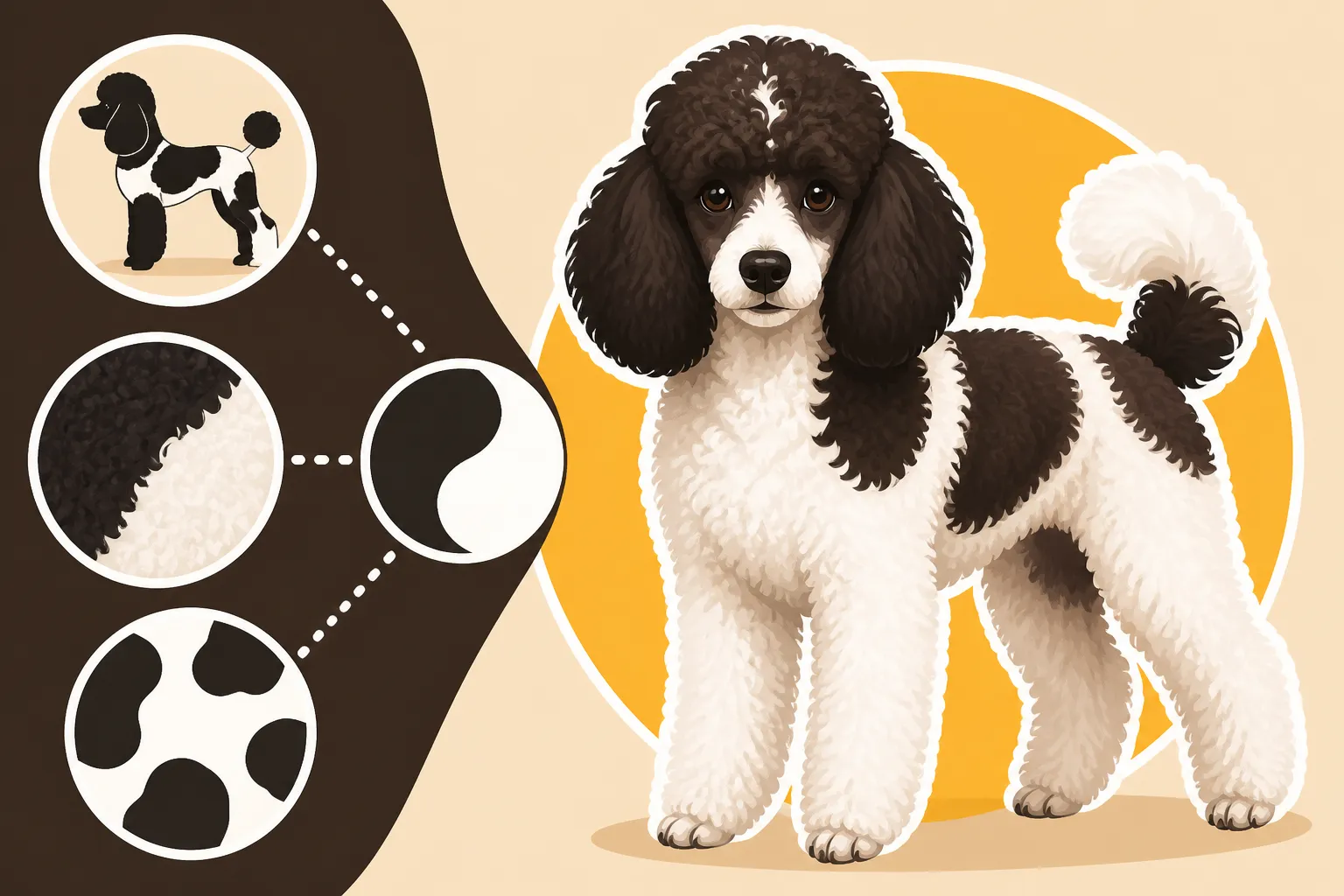
When we talk about a "Parti Poodle," we're simply referring to a Poodle that has a bi-colored coat – meaning it displays two or more distinct, clearly delineated colors. The key characteristic of a parti-colored Poodle is that one of those colors must be white, with patches of another solid color. Think of it like a canvas of white adorned with splashes of another hue.
These patches can vary wildly in size, shape, and distribution. You might see a mostly white Poodle with a few bold black or brown patches, or perhaps a Poodle that's almost 50/50 white and another color, like apricot or red. The patches could be concentrated over the ears, across the back, or dotting the legs. It’s a very dynamic and unique appearance for each individual dog. Unlike abstract paintings, these patches have defined edges, not a gradual blending of colors. This sharp contrast is part of the Parti Poodle's charm. It’s also important to note that the term "parti" doesn't specify which two colors; it just means white plus one or more other colors. So, you can have black and white parti, brown and white parti, red and white parti, and so on.
The Genetic Basis of Parti
The beautiful pattern you see on a Parti Poodle isn't just a random occurrence; it's all thanks to genetics! Specifically, it's due to a particular gene at what scientists call the "S locus" (S for spotting). Most Poodles, especially those you see in the conformation ring, are solid-colored. This means they carry genes that ensure their coat is a single, uniform color. But a Parti Poodle carries specific genes that prevent pigment from developing in certain areas of the coat, resulting in those crisp white patches.
It's similar to how other spotted or piebald animals get their patterns. These genes dictate where the pigment cells will "turn on" during development. The amount of white and color can be influenced by other modifying genes, which is why you see such a wide range of parti patterns, from minimal spotting to extensive white areas. It's a natural genetic variation within the Poodle breed, not something that comes from mixing breeds. This genetic explanation is crucial because it helps dispel the misconception that parti-colored Poodles are anything other than purebred. They simply express a different, yet natural, coat pattern dictated by their inherited genetic makeup.
History and Recognition of Parti Poodles
The perception of Parti Poodles has shifted dramatically over the centuries, often influenced by changing trends and selective breeding goals. Understanding this history helps explain why they aren't always seen in the show ring today.
A Return to Roots
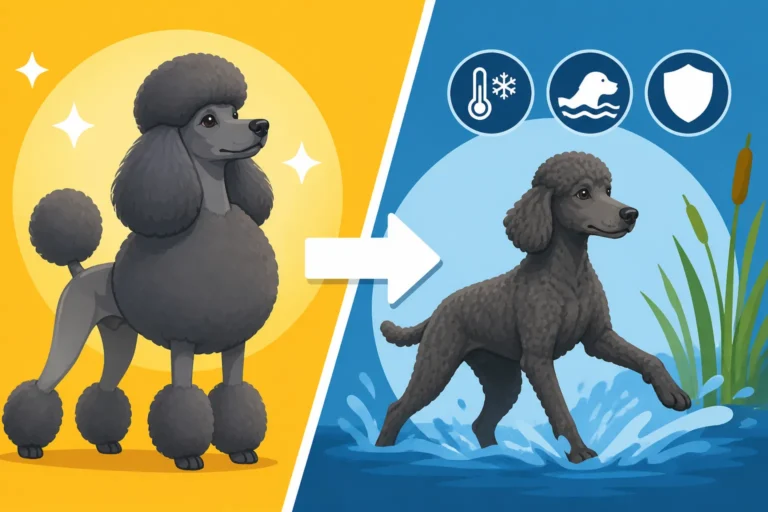
It might surprise you to learn that parti-colored Poodles are actually very much a part of the breed's original heritage. If you look back at old paintings, historical records, and early breeding programs, you'll find plenty of evidence of Poodles with multi-colored coats. The Poodle, after all, originated as a water retrieving dog – the word "Pudel" in German means "to splash in water." Their primary purpose was to work alongside hunters, plunging into cold water to retrieve waterfowl. In a working environment, a dog's coat color was far less important than its ability to perform its job.
These early Poodles weren't bred for strict uniformity in color. Breeders focused on temperament, intelligence, coat quality for water repellency, and retrieving drive. Whether a dog was solid black, solid white, or black and white parti, it didn't matter so long as it could do the work. The patches of color might have even helped hunters distinguish their dogs in dense foliage or varied terrain. The push for solid colors largely came later, as Poodles transitioned from working dogs to companions and show dogs, where aesthetic uniformity became a more significant factor. So, in many ways, the Parti Poodle represents a direct link to the breed's foundational history and its original purpose as a resilient, intelligent water dog.
The Modern Show Ring Divide
Here's where things get a bit complicated for Parti Poodles in the modern era. While parti-colors are genetically purebred Poodles, many major kennel clubs around the world, including the American Kennel Club (AKC), have historically favored solid-colored Poodles for their conformation show rings. For a long time, the Poodle breed standard, which describes the ideal appearance of a Poodle, specified solid colors, effectively disqualifying parti-colored Poodles from competing for championships in conformation events.
This doesn't mean Parti Poodles aren't recognized at all, however. The AKC, for example, registers parti-colored Poodles as purebred. They can compete in a vast array of performance events like obedience, agility, rally, and hunt tests, where their intelligence and athleticism shine, and their color is irrelevant to their performance. Poodle Obedience and Rally Titles are well within reach for a Parti Poodle. They just can't compete in the conformation ring, which judges a dog against the breed standard for physical appearance. This distinction is often a point of confusion and frustration for owners of beautiful parti-colored Poodles. Some smaller, independent kennel clubs do allow parti-colored Poodles in their conformation rings, but these are not the major organizations that most people associate with dog shows. The tide is slowly turning in some areas, with more acceptance of diverse colors, but the traditional conformation ring remains largely a solid-color domain for Poodles. What a Parti Poodle Can Be Registered covers this in more detail.
Common Misconceptions About Parti Poodles
The lack of mainstream show ring acceptance for many years has unfortunately led to a host of misunderstandings about Parti Poodles. It's time to set the record straight on some of these pervasive myths.
Parti Poodles Are Not Mixed Breeds
This is perhaps the most common misconception and one that causes a lot of grief for Parti Poodle owners. People often see their distinctive two-tone coat and immediately assume they must be a "designer dog" or a Poodle mix – perhaps crossed with a Cocker Spaniel or some other spotted breed. Let me be absolutely clear: a Parti Poodle, bred from two purebred Poodle parents, is 100% a purebred Poodle. Their coloration is simply an expression of a natural genetic variation within the Poodle breed itself, as discussed earlier with the S locus gene.
The confusion is understandable given the rise of "Doodle" crosses, many of which also display parti patterns. However, Doodles are deliberate crosses between Poodles and other breeds (like Labradors or Golden Retrievers), whereas Parti Poodles are purebred. It's vital for prospective owners to understand this distinction. A reputable breeder of Parti Poodles will be able to provide full pedigree papers proving their lineage, showing generations of purebred Poodles. Do not fall for the notion that a parti coat signifies impure breeding. It simply signifies a beautiful, historical, and genetically valid Poodle coat pattern. Telling a Poodle From a Doodle by Coat can help clarify the differences.
Health and Temperament Are Unrelated to Color
Another significant misconception is that a Parti Poodle might be inherently different in health or temperament compared to a solid-colored Poodle. This is simply not true. A Poodle's health predispositions, intelligence, and overall temperament are determined by its genetic background, its parents' health, and its early socialization – not by the color or pattern of its coat. A parti-colored Poodle should possess the same keen intelligence, athletic ability, and affectionate nature that Poodles are renowned for. The Poodle Character is consistent across all colors.
Whether you're looking at a black Poodle, an apricot Poodle, or a black and white Parti Poodle, you should expect the same breed-specific traits and potential health concerns. Why Poodle Health Splits by Size and other health issues like Addison's Disease in Standard Poodles or Luxating Patella in Toy and Miniature Poodles are tied to genetics within the breed as a whole, and sometimes to specific size varieties, but never to coat color or pattern. A responsible breeder will prioritize health testing and good temperament regardless of coat color. If a breeder tries to tell you that a parti-colored Poodle is "hardier" or "calmer" simply because of its color, that should be a red flag. Judge the dog and its lineage, not its aesthetics.
The "Rare Color" Premium
Beware of breeders who try to charge exorbitant prices for Parti Poodles, marketing them as "rare" or "exclusive" colors. While parti patterns might not be as common in the show ring, they are far from rare in the general Poodle population. In fact, due to their historical prevalence, the genes for parti coloration are quite widespread. Responsible breeders focus on health, temperament, and adherence to the overall breed standard, not on creating "rare" colors for a premium.
While you might find that prices for all Poodles vary based on factors like breeder reputation, health testing, location, and pedigree, a significantly inflated price solely for a parti coat should raise your eyebrows. Ethical breeders aim to find good homes for their puppies, not to capitalize on perceived rarity. Always ask about the health testing of the parents, the puppy's lineage, and the breeder's overall practices. Don't let a "rare color" marketing ploy distract you from the essential due diligence of finding a healthy, well-socialized puppy from a reputable source. The true value of a Poodle lies in its health, temperament, and your connection with it, not in a superficial color premium. Why Rare Poodle Colors Are Priced Higher can offer further insights into this deceptive practice.
Living With a Parti Poodle
Bringing a Parti Poodle into your home is much like bringing home any other Poodle, with all the joys and responsibilities that entail. However, there are a couple of nuances worth considering.
Grooming Considerations for Multi-Colored Coats
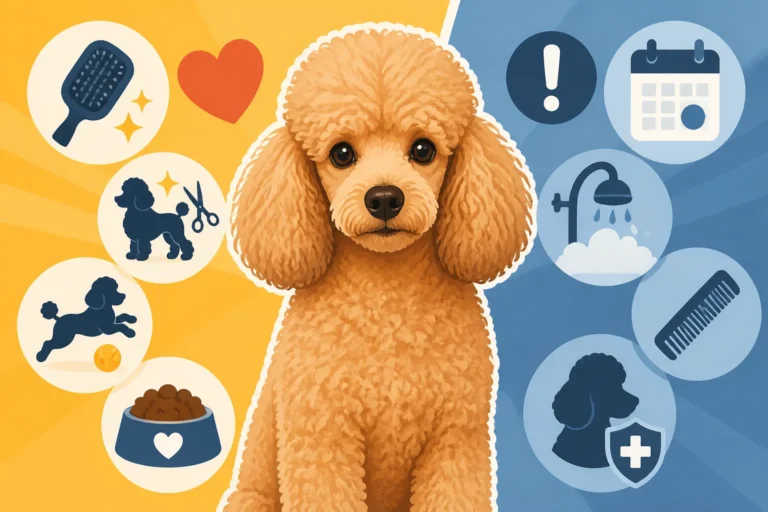
The great news is that the coat type of a Parti Poodle is identical to that of a solid-colored Poodle. It's still that marvelous, non-shedding, curly hair that requires regular and diligent grooming. You'll still need to commit to Brushing a Poodle to the Skin several times a week, regular bathing, and professional grooming every 4-8 weeks to prevent matting. The Poodle Coat and Why It Never Stops Growing applies universally.
However, the parti pattern can influence your choice of clip. Many owners of parti-colored Poodles love to choose clips that highlight their dog's unique patterns. For example, a clip that leaves longer hair on a colored patch and shorter hair on a white area can really emphasize the contrast. Some might opt for a standard Sporting and Kennel Poodle Clips while others might get creative. You'll still need quality tools, and places like Chewy offer a fantastic selection of combs, slicker brushes, and shampoos designed for Poodle coats. No matter the clip, the underlying care for preventing mats and keeping the skin healthy remains the same. Your groomer will be a great resource for suggesting clips that not only look fantastic but are also practical for your lifestyle and your Poodle's particular coat pattern.
Finding a Reputable Parti Poodle Breeder
Finding a reputable breeder is paramount for any Poodle, and Parti Poodles are no exception. Given the misconceptions surrounding their color, it’s even more important to be discerning. Start by looking for breeders who are open and transparent about their dogs' health testing. This includes screenings for common Poodle health issues relevant to their size, such as hip and elbow dysplasia (especially for Standards), eye certifications, thyroid function, and genetic testing for conditions like Progressive Retinal Atrophy (PRA) or Von Willebrand Disease. What a Poodle Breeder Must Test For is a critical checklist.
A good breeder will welcome questions, allow you to visit their facility (or offer video calls if distance is an issue), and be eager to educate you about the breed and their specific lines. They will prioritize temperament and health above all else. Don't be swayed by "rare" color claims or breeders who can't provide clear health records for the parents. They should also provide a comprehensive contract and possibly ask about your experience with Poodle grooming, as the commitment is significant. Health Clauses in a Poodle Breeder Contract are important to review.
Look for breeders who are passionate about Poodles, not just producing puppies. They often participate in various dog sports or activities, showing their dogs' versatility and intelligence beyond just their looks. Websites like Chewy often have resources or reviews that might mention quality breeders, but always do your own independent research. A truly ethical breeder will be proud of their parti-colored Poodles and treat them with the same respect and care as any other Poodle in their program.
Parti Poodle vs. Solid Poodle: A Comparison
To help clarify the distinctions and similarities, here's a quick comparison of Parti Poodles and solid-colored Poodles:
| Feature | Parti Poodle | Solid-Colored Poodle |
|---|---|---|
| Coat Appearance | Two or more distinct colors, one of which is white, with clear patches. | Uniform color across the entire coat (e.g., black, white, apricot, brown). |
| AKC Conformation Ring | Generally not eligible for championship titles in major kennel club conformation shows. | Eligible to compete for championship titles in major kennel club conformation shows. |
| AKC Registration | Fully registrable as a purebred Poodle. | Fully registrable as a purebred Poodle. |
| Performance Events | Fully eligible for obedience, agility, rally, hunt tests, etc. | Fully eligible for obedience, agility, rally, hunt tests, etc. |
| Health Considerations | Same breed-specific health concerns as solid Poodles; color is not a factor. | Same breed-specific health concerns as parti Poodles; color is not a factor. |
| Temperament | Same intelligent, affectionate, and active temperament as solid Poodles. | Same intelligent, affectionate, and active temperament as parti Poodles. |
| Grooming Needs | Requires identical diligent grooming as solid Poodles to prevent mats. | Requires identical diligent grooming as parti Poodles to prevent mats. |
Disclaimer
This article is for general informational purposes only and does not constitute professional advice. Laws, prices and regulations vary by location and change over time. Consult a qualified professional for guidance on your specific situation.