When a Poodle Puppy’s Color Settles
Bringing home a new Poodle puppy is one of life's greatest joys, filled with endless cuddles and adorable antics. But if you’re anything like me, you’ve probably found yourself staring at that beautiful little fluffball and wondering, "Is this the color they're going to be forever?" It’s a common question, especially since Poodle colors are famously dynamic, often shifting and settling long after puppyhood. This guide will help you understand the fascinating journey of your Poodle puppy's coat color, from their first weeks to full maturity, and what factors might influence those delightful transformations.
The Poodle Coat: A Living Canvas of Color Evolution
Poodles are renowned not just for their intelligence and elegant appearance, but also for their incredible coats. Unlike many other breeds, a Poodle's coat is often a work in progress, especially when it comes to color. What you see in a tiny puppy is often just the beginning of a beautiful evolution. This characteristic is what makes owning a Poodle so unique – it's like watching a living piece of art change and develop right before your eyes.
Why Poodle Colors Are So Dynamic
The reason Poodle colors can be so unpredictable stems from their unique genetics, particularly genes associated with "clearing" or "fading." It's not just about a simple dominant or recessive trait; several genes interact to determine how intensely a color will be expressed and whether it will lighten over time. For example, a puppy born what appears to be a solid black might carry genes that cause its coat to "clear" into a smoky blue or even a striking silver as they mature. This clearing process is a hallmark of many Poodle lines and is perfectly normal, even desirable in some cases. It's a testament to the complex genetic tapestry that makes up The Poodle as a Breed.
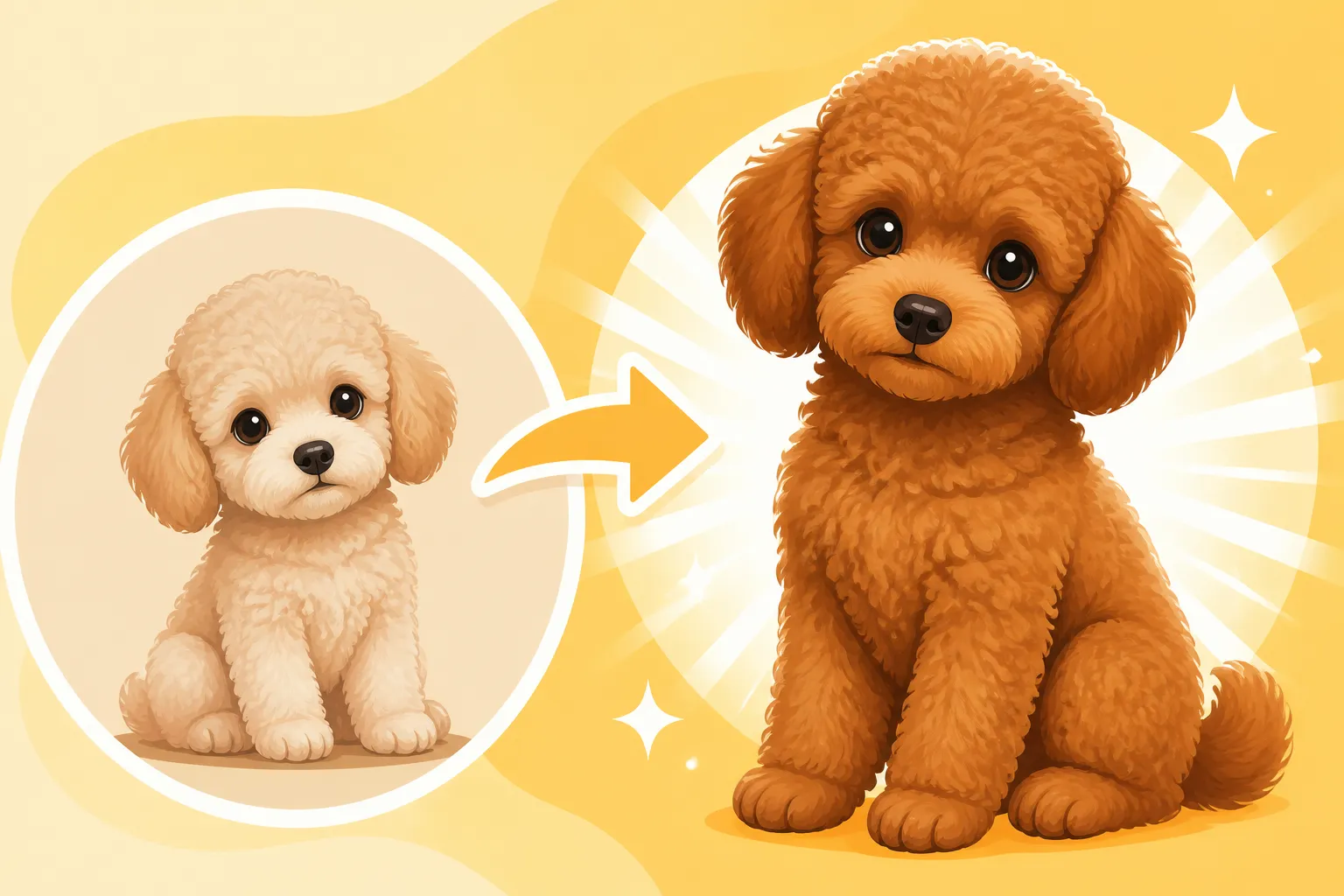
These genetic factors mean that what looks like a deep, rich color in a very young puppy can be a precursor to something much lighter. Imagine bringing home a puppy with the darkest, most intense apricot coat, only for it to mellow into a soft cream or even a light gold by the time they're a year or two old. This isn't due to poor breeding, but rather the way Poodle genetics are designed. Breeders who truly understand their lines can often give you a good estimate, but even then, nature has its own timeline. It's a journey of discovery for both you and your furry friend.
Understanding "Puppy Coat" Versus "Adult Coat"
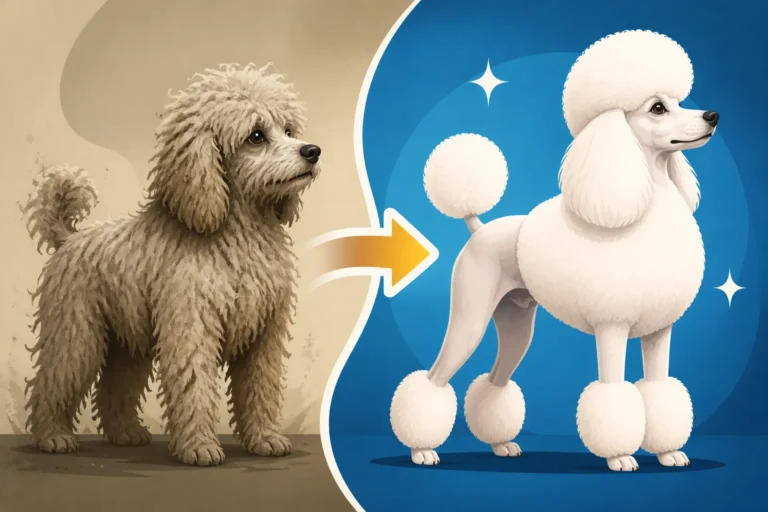
Another significant factor in color change is the transition from a Poodle's puppy coat to their adult coat. A puppy's coat is generally much softer, fluffier, and less dense than the coarser, more tightly curled adult coat. This "coat change" typically begins around 9-18 months of age, though it can start earlier or later depending on the individual dog and their size – Toy Poodles might transition sooner than Standards, for instance. During this period, the puppy coat sheds out (though not like a shedding breed, it mostly gets trapped in the adult coat) and is replaced by the thicker, more resilient adult hair.
This change in texture and density often brings a change in perceived color. The soft, wispy puppy hair might hold color differently than the more substantial adult hair. For instance, a brown puppy might appear lighter or darker as their adult coat starts to come in, simply because the new hair reflects light differently or has a slightly different pigmentation at a microscopic level. It's a crucial stage to be aware of, not just for grooming (the matting can be intense!) but also for understanding why your Poodle's color seems to be evolving. Many Poodle owners find that their dog's true adult color doesn't fully stabilize until after this coat change is complete, sometimes not until they are two or even three years old. This is part of the magic of The Poodle Coat and Why It Never Stops Growing.
Common Poodle Colors and Their Transformations
Poodles come in a magnificent array of solid colors, and each has its own story of transformation from puppyhood to maturity. Understanding these typical shifts can help manage expectations and appreciate the unique beauty of your dog's evolving hue. It's truly fascinating to observe these changes firsthand.
Blacks, Blues, and Silvers: The Clearing Process
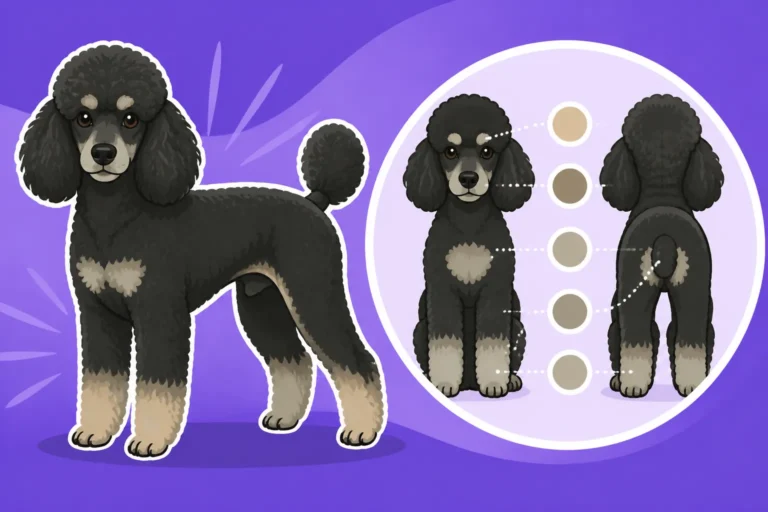
Puppies destined to be blue or silver Poodles are almost always born black. Yes, you read that right! A blue Poodle is essentially a diluted black, and a silver Poodle is a black that has "cleared" to a much lighter shade. The "clearing" process can be incredibly subtle at first, often beginning with a slight lightening around the muzzle, eyes, and paws. For blues, the black coat will gradually develop a charcoal or slate-grey hue, often taking up to two years to fully manifest. It's a beautiful, deep, smoky color that is distinct from a true black.
Silvers are perhaps the most dramatic transformers. A silver Poodle puppy will be born black, but if they carry the silvering gene, their coat will start to lighten significantly, sometimes as early as 6-8 weeks, but more commonly between 6-18 months. You might notice the roots of their hair growing in silver even while the tips are still black. This process can continue for up to two or three years, with the coat eventually becoming a gorgeous, shimmering silver. This is precisely why a breeder will tell you that it's impossible to predict a Poodle puppy's final silver shade, only that it will silver. You can find out more about these transformations in How a Black Poodle Puppy Turns Blue and Whether Silver Poodles Are Born Silver.
Reds, Apricots, and Creams: The Fading Phenomenon
On the warmer side of the Poodle color spectrum, reds, apricots, and creams often experience what is commonly referred to as "fading." Unlike the clearing gene in blacks and silvers, which actively lightens the pigment, fading in reds and apricots is more about the intensity of the phaeomelanin (red pigment) diminishing over time. Red Poodles, a more recent addition to the recognized color palette, are prized for their deep, vibrant hue. However, many red puppies will soften to an apricot, and many apricots will lighten to a cream.
Several factors contribute to this fading. Genetics play a significant role; some lines are simply predisposed to retaining their intense color better than others. Environmental factors also come into play: prolonged sun exposure can bleach a red or apricot coat, much like human hair. Even certain shampoos or conditioners might subtly affect the color over time, though good quality products, available at retailers like Chewy, are formulated to be gentle and color-safe. It's not uncommon for a bright red puppy to settle into a rich apricot by their first birthday, and then continue to soften slightly into adulthood. This is a natural part of the Poodle's genetic expression, and while some owners might try to preserve the deepest red, it's essential to appreciate the beauty of the evolving shade. Understanding this process can help temper expectations and prevent disappointment, as detailed in Why Red Poodles Are Recent and Whether Apricot and Red Poodles Are the Same.
Browns, Cafe-au-Laits, and Silvers: Subtle Shifts
Brown Poodles also undergo their own unique color journey. Puppies born a rich, dark chocolate brown may gradually lighten to a beautiful cafe-au-lait shade. This isn't as dramatic as the silvering process, but it's a distinct lightening that gives the coat a milky coffee hue. The transformation usually happens over the first year or two, and the resulting color is incredibly striking, offering a soft, warm alternative to the deeper brown. It's important to differentiate between a true cafe-au-lait, which is a genetic variant of brown, and a brown Poodle that simply fades.
Sometimes, a brown Poodle might develop silver "points" or accents on their face or feet, particularly if they carry both the brown and the silvering gene. These are often more subtle changes than full silvering but can add beautiful depth to the coat. The key with browns and cafe-au-laits is the consistency of the color throughout the coat. A truly well-bred Poodle of these colors will have an even, solid shade, even if it lightens. Any patchiness or uneven fading might suggest a different genetic combination or simply natural variation within the coat. Just like other Poodles, sun exposure can also play a role in how light these coats become over time, as explored in Why Poodle Colors Fade With Age.
| Poodle Color Family | Puppy Born As | Adult Color Can Be | Common Age of Stabilization | Key Factor |
|---|---|---|---|---|
| Black/Blue/Silver | Black | Black, Blue, Silver | 1-3 years | Clearing Gene |
| Red/Apricot/Cream | Red, Apricot | Red, Apricot, Cream | 1-2 years | Fading Gene, Sun |
| Brown/Cafe-au-Lait | Brown | Brown, Cafe-au-Lait | 1-2 years | Dilution Gene, Sun |
When to Expect Your Poodle's True Colors to Emerge
It’s often a waiting game to see your Poodle puppy's final coat color, and patience is definitely a virtue for Poodle owners! While some initial clues appear early on, the complete picture usually takes time to develop. Think of it as a slow reveal, adding to the excitement of watching your puppy grow.
The First Few Months: Rapid Changes
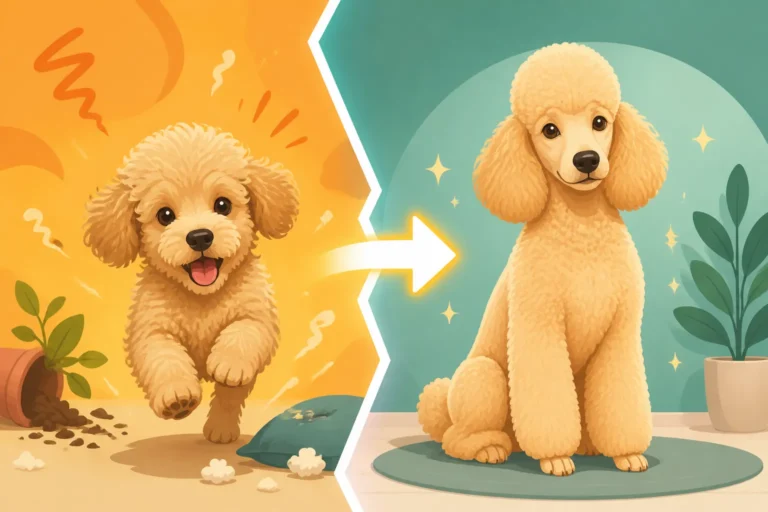
During the first few weeks and months of your Poodle puppy’s life, you’ll see the most rapid, albeit sometimes subtle, color shifts. Puppies are born with their "baby" coats, which can look quite different from what's to come. For instance, a black puppy destined to be silver might already show slight lightening around their paw pads or the very tips of their fur by 6-8 weeks of age. This early lightening can be a tiny hint of the dramatic clearing that will unfold later. Similarly, apricot puppies might appear quite dark, almost red, at birth, and then soften to a classic apricot by 3-4 months.
These early months are like the first draft of their coat. The pigment is still forming, and the initial growth is often not representative of the final density or shade. You might notice tiny variations in color intensity across their body, or even a different shade emerging at the roots when you part their hair. A good breeder will often be able to give you an educated guess based on their experience with their specific lines and the puppy's parents, but even they will acknowledge that the definitive color is still a future mystery. It's a wonderful time to take lots of photos, not just to document their growth, but to track these fascinating color changes!
Adolescence to Adulthood: The Main Clearing Period
The most significant and noticeable color transformations typically occur during your Poodle's adolescence, roughly from 6 months up to two years of age. This period coincides with the "coat change" we discussed earlier, where the softer puppy coat gives way to the denser adult coat. It's during this time that "clearing" colors like blue and silver truly begin to emerge, spreading from the initial lighter areas to encompass the entire body. A formerly black puppy can be well on their way to a striking silver by their first birthday, and a blue will likely have developed a smoky depth to their coat.
For red and apricot Poodles, this is often when fading becomes most apparent. That vibrant red might settle into a beautiful apricot, or a deep apricot could become a soft cream. It's a critical window, and many owners find themselves surprised by how much their Poodle's color has transformed by their second birthday. While the most dramatic shifts generally conclude by two years, it's worth noting that some Poodles, especially those with very slow-clearing genes, might continue to lighten or deepen slightly even beyond this point. This extended period of development is part of the charm and unique genetics of The Colors a Poodle Comes In.
Lifelong Color Evolution and Factors Affecting It
Even after your Poodle reaches full adulthood and their color appears to have "settled," it’s not necessarily fixed in stone for their entire life. Various factors can continue to influence their coat color, making it a truly living and breathing aspect of their appearance. Sun exposure, for instance, is a big one. Just like human hair, a Poodle's coat can lighten or develop reddish tones if they spend a lot of time outdoors in direct sunlight. This is especially true for reds, apricots, and even browns, which can become sun-bleached.
Diet and overall health can also play a subtle role. A Poodle with a well-balanced diet and healthy skin will generally have a more vibrant and consistent coat color. Some owners use specific color-enhancing shampoos or conditioners to maintain or deepen certain hues, particularly for black or red Poodles. These products, often found at pet supply stores like Chewy, can help protect the coat from environmental damage and keep it looking its best. As Poodles age, you might also notice some natural lightening, particularly around the muzzle, as silver or grey hairs start to appear – a beautiful sign of a life well-lived. This gradual shift is a normal part of Caring for an Aging Poodle and often adds character.
What a Breeder Can Tell You About Color Inheritance
Choosing a Poodle puppy is a big decision, and understanding their potential adult color can be part of that process. A reputable breeder is your best resource for insights into what to expect from your puppy's coat. They invest heavily in understanding the genetic heritage of their dogs, including coat color.
Genetic Testing and Predictability
In modern Poodle breeding, genetic testing plays an increasingly important role in understanding color inheritance. Breeders can utilize DNA tests to identify specific genes that influence coat color, such as those for black, brown, red, and the various clearing or fading genes. For example, a breeder can test a black Poodle to see if it carries the gene for blue or silver, which helps them predict what color the offspring might become. This isn't about altering the dog's natural color, but rather about understanding the genetic blueprint that will guide its development.
While genetic tests can confirm the potential for certain colors, they don't always predict the exact shade or the rate of clearing/fading. For instance, a test can confirm a puppy is genetically silver, but it won't tell you if it will be a dark silver or a very light, almost white silver, nor exactly when that color will stabilize. These tests are incredibly valuable for ethical breeders to ensure they are making informed breeding decisions and for transparency with prospective puppy owners. They are just one part of the comprehensive health and genetic screening a good breeder performs, as outlined in What a Poodle Breeder Must Test For and Genetic Panels for the Three Poodle Sizes.
Observing Parentage and Past Litters
Perhaps the most practical way to gauge your Poodle puppy's future color is by observing their parents and, if possible, previous litters from the same parents. A good breeder will be transparent about the parents' colors and how their coats have developed over time. If both parents are true blacks with no clearing, it's highly likely their puppies will remain black. However, if one or both parents are silver, even if they were born black, there's a good chance their offspring will also clear to silver.
By looking at older siblings from previous litters, you can often see firsthand the range of colors that typically emerge from that specific pairing. Has an older sibling from a red parent faded to apricot? Did a black sibling clear to blue? These real-world examples are invaluable. A reputable breeder will be happy to show you photos of their adult dogs and previous litters, demonstrating the color trajectories of their lines. They understand that transparency is key to building trust and helping you find the perfect Poodle companion. They want you to be as thrilled with your Poodle at two years old as you are on day one, confident in the beauty of its unique, evolving coat.
Disclaimer
This article is for general informational purposes only and does not constitute professional advice. Laws, prices and regulations vary by location and change over time. Consult a qualified professional for guidance on your specific situation.