What a Breed Test Says About a Doodle
It can be incredibly frustrating to love your Doodle deeply but still feel a sense of mystery surrounding their exact genetic makeup and what that truly means for their health and behavior. This guide will walk you through what a commercial breed identification test can and cannot tell you about your beloved Doodle, separating the marketing hype from the scientific reality.
The Allure and Uncertainty of Doodles
Many of us are drawn to Doodles – Goldendoodles, Labradoodles, Bernedoodles, you name it – for their charming personalities, often perceived "hypoallergenic" coats, and the promise of a robust, healthy companion. However, this popularity has also led to a lot of questions and sometimes, misconceptions, about what these wonderful dogs truly are, genetically speaking.
The Promise of Hybrid Vigor
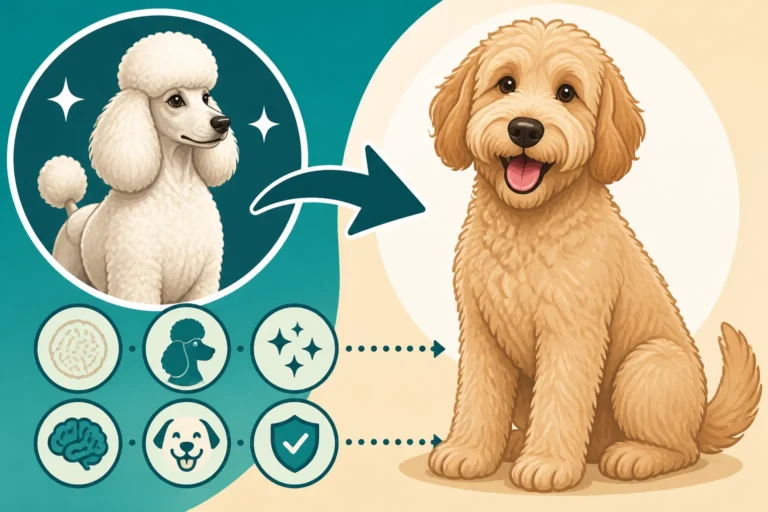
The concept of "hybrid vigor" often floats around when discussing Doodles. The idea is that by mixing two different purebred dogs, you create offspring that are genetically stronger and less prone to the specific health issues that can sometimes plague single purebred lines due to concentrated genetics. It's a lovely thought, isn't it? The best of both worlds, a Poodle's intelligence and coat, combined with the biddability of a Lab or the goofiness of a Golden. This is a huge draw for many prospective owners, hoping to sidestep some of the more well-known breed-specific ailments.
The reality, however, is a bit more nuanced. While hybrid vigor can offer some benefits in a truly diverse gene pool, it's not a guarantee against disease. A Doodle can, and often does, inherit health conditions from either parent breed. If both parent breeds share a common predisposition, like certain types of hip issues, the risk might even be compounded. It's a roll of the genetic dice, and without clear insight into both parents' health, it's hard to predict.
The Genetic Lottery
When you bring home a Doodle, you're essentially embracing a genetic lottery. Unlike a purebred Poodle, where generations of selective breeding have established a predictable range of traits, a Doodle's genetic blueprint can be a wild card. You might end up with a coat that sheds profusely despite the Poodle parentage, or a temperament that leans more heavily into the energetic drive of a retriever than the calm, thoughtful nature of some Poodles.
This unpredictability can be a source of both delight and dismay for owners. You might have envisioned a specific look or personality, only to find your dog is a unique blend that surprises you at every turn. This isn't a bad thing, of course; every dog is an individual. But it does mean that relying solely on the "Doodle" label for expectations about coat, size, or temperament can lead to unexpected challenges. This is where breed identification tests come in, offering a peek behind the curtain of your dog's ancestral background.
What a Breed Identification Test Actually Tells You About Your Doodle
So, you've decided to demystify your Doodle's origins. You send off a cheek swab or blood sample, wait a few weeks, and then a report lands in your inbox. What exactly are you looking at, and what can you glean from it?
Pinpointing Parental Breeds and Percentages
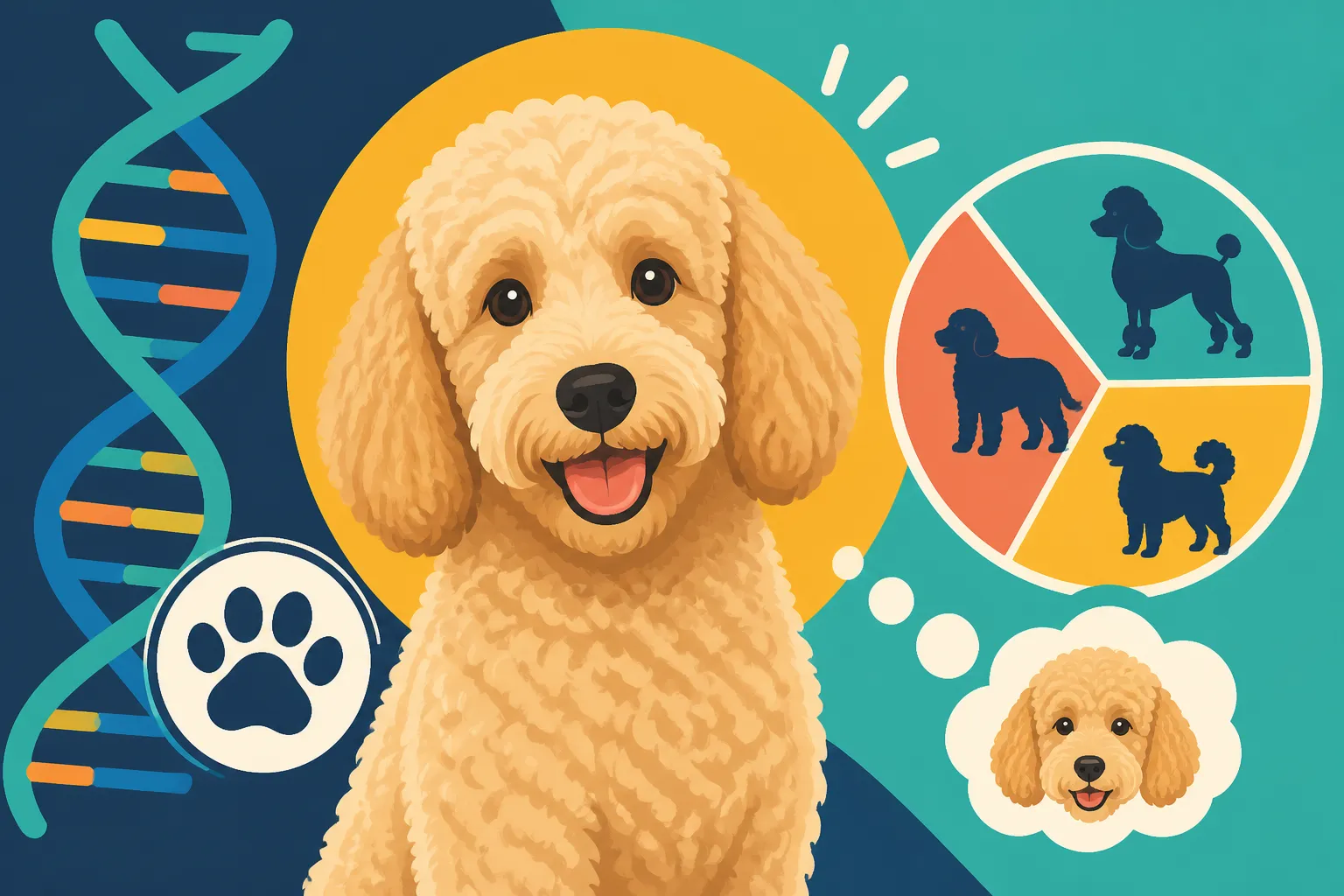
The primary function of a commercial breed identification test is to analyze your dog's DNA and compare it against a vast database of known breed markers. The results will typically give you a percentage breakdown of the breeds detected in your dog's genetic makeup. For an F1 (first-generation) Goldendoodle, for instance, you'd expect to see roughly 50% Poodle and 50% Golden Retriever. But for F2, F3, or multi-generational Doodles, the percentages can be far more varied and surprising.
You might discover unexpected breeds in the mix, especially if your Doodle's lineage isn't a simple first-generation cross. Sometimes, a "Labradoodle" might have a dash of another sporting breed or even a small percentage of an entirely different group. These percentages give you a clearer picture of their genetic blueprint, going beyond what the eye can see. It's a fascinating look into their heritage, offering clues to some of those unidentifiable traits you might have noticed.
Uncovering the Poodle Lineage
For us Poodle lovers, one of the most interesting aspects of these tests for Doodles is clearly seeing the Poodle contribution. The Poodle is a magnificent breed, celebrated for its intelligence, elegance, and that iconic non-shedding coat. Knowing the exact percentage of Poodle in your Doodle can help you understand certain traits that might otherwise seem baffling.
A high Poodle percentage, for example, might explain a strong retrieving drive, an aptitude for learning complex commands, or a tendency towards certain grooming needs. If your Doodle is 75% Poodle, you'll want to pay close attention to the specific health concerns common in Poodles, even if the other parent breed is theoretically "healthier." This is invaluable information when planning for their long-term care, diet, and even training approach. Think of it as a roadmap to their inherent predispositions. You might realize your dog's uncanny ability to problem-solve comes directly from their Poodle ancestors, rather than just being a clever individual.
The Limitations of Breed ID for "Designer" Dogs
While breed identification tests are fantastic for revealing ancestry, it's important to understand their limitations, especially for Doodles. These tests tell you what breeds are in your dog, not necessarily which traits from those breeds your dog will express. For example, a dog could be 50% Poodle but inherit a shedding coat gene from the other parent. The test confirms the Poodle presence, but doesn't predict the coat type.
Furthermore, these tests don't necessarily explain why your dog acts a certain way beyond broad breed characteristics. Individual personality, early socialization, and training all play a massive role. So, while you might find out your "Cockapoo" is indeed a mix of Cocker Spaniel and Poodle, the test won't tell you if they'll be prone to barking or love swimming. It's a piece of the puzzle, not the whole picture. For specific predictions about behavior or appearance, you still need to observe your individual dog.
Beyond Breed Percentages: Health Screening in Doodles
While knowing your Doodle's ancestral cocktail is interesting, perhaps the most critical information you can gain from genetic testing goes beyond simple breed identification: it's about their health. Many commercial DNA tests now offer health screening alongside breed identification, and this is where the real value lies for proactive Doodle ownership.
The Critical Distinction: Breed ID vs. Health Screening
It’s absolutely crucial to distinguish between a breed identification test and a genetic health screening panel. A breed ID test tells you, "Your dog is 50% Poodle, 50% Golden Retriever." A genetic health screening, on the other hand, tells you, "Your dog carries a gene for Progressive Retinal Atrophy," or "Your dog is clear of Von Willebrand Disease." They are two distinct, albeit often bundled, services.
Many owners get a breed identification test and assume it covers everything. However, without the specific health panel, you're missing out on vital information that could impact your dog's entire life. This is especially true for Doodles, where the mixed breed aspect can sometimes obscure potential inherited conditions. Responsible breeders, whether of purebreds or well-planned Doodles, should perform these health screenings on their breeding stock before any puppies are conceived, but if you've adopted a Doodle without this history, a DNA health panel is your next best tool.
Common Poodle-Related Health Concerns Relevant to Doodles
Given that all Doodles have a Poodle parent (or grandparent, or great-grandparent!), it's essential to understand the health concerns that are prevalent in Poodles. Many of these conditions are genetic, meaning they can be passed down. A good genetic health screening panel for your Doodle will test for common Poodle issues such as:
- Progressive Retinal Atrophy (PRA): This is a group of genetic diseases that cause the retina to degenerate over time, eventually leading to blindness. Certain forms, like progressive rod-cone degeneration (prcd-PRA), are well-known in Miniature and Toy Poodles. If your Doodle has a Poodle heritage, especially smaller varieties, screening for this is vital. A positive result means you can prepare for potential vision loss and help your dog adapt. Progressive Retinal Atrophy in Miniature Poodles delves deeper into this condition.
- Von Willebrand Disease (vWD): A common inherited bleeding disorder in various breeds, including Standard Poodles. It affects the blood's ability to clot properly. Knowing if your Doodle is affected or a carrier is crucial, especially before any surgeries or injuries that might lead to excessive bleeding.
- Degenerative Myelopathy (DM): While often associated with German Shepherds, DM is an insidious, progressive disease of the spinal cord that can affect Poodles as well. It typically appears later in life and leads to weakness and paralysis in the hind limbs.
- Addison's Disease: Particularly common in Standard Poodles, this autoimmune disorder affects the adrenal glands, leading to a deficiency in certain hormones. Symptoms can be vague and mimic other illnesses, often leading to a difficult diagnosis. A genetic predisposition can be identified. Addison's Disease in Standard Poodles provides extensive details on this condition.
Knowing your Doodle's status for these Poodle-specific conditions allows you to work proactively with your veterinarian. You can discuss early monitoring, preventative measures, or simply be aware of symptoms to look out for. This knowledge empowers you to provide the best possible care for your companion.
Looking at the Non-Poodle Parent's Genetic Risks
Of course, a Doodle isn't just Poodle. The other half (or a significant portion) of their genetic code comes from the other parent breed, whether it's a Golden Retriever, Labrador Retriever, Bernese Mountain Dog, or another purebred. Each of these breeds comes with its own set of genetic predispositions, and a comprehensive health panel should also screen for these.
For instance, if your Doodle is part Golden Retriever, you'd want to check for conditions like Ichthyosis, various forms of PRA, and certain heart conditions. For a Labrador, common concerns include Exercise-Induced Collapse (EIC) and Centronuclear Myopathy (CNM). The best genetic tests will cover a wide range of conditions relevant to all the breeds identified in your dog's DNA, offering a truly holistic view of their genetic health risks. This comprehensive approach means you're not just looking at the Poodle side, but the full spectrum of their inheritance.
Interpreting Your Doodle's Test Results
Once those results are in your hands, it can feel a bit overwhelming. All those percentages, all those technical terms! But breaking it down makes it much more manageable and actionable.
Understanding the "Poodle" Percentage
The percentage of Poodle in your Doodle's breed identification results offers clues about what traits might dominate. A higher Poodle percentage might mean a stronger likelihood of that signature curly, non-shedding coat (though nothing is 100% guaranteed in a mixed breed!). It also suggests a stronger influence on temperament, possibly making them highly intelligent, quick to learn, and often quite sensitive. Owners with high-Poodle-percentage Doodles often report how easily their dogs pick up new tricks and sometimes, how quickly they get bored if not mentally stimulated. Why a Bright Poodle Gets Bored covers the need for mental occupation.
Conversely, a lower Poodle percentage might mean less of the "hypoallergenic" quality and more of the shedding characteristics from the other parent. It also could mean a less intense grooming regimen, but also a less Poodle-like temperament. Understanding this balance helps you adjust your expectations and adapt your care, from grooming supplies you might buy on Chewy to the type of training and mental stimulation your specific Doodle will thrive on.
The "Carrier" vs. "Affected" Status
When you get genetic health screening results, you'll often see terms like "clear," "carrier," or "affected." These distinctions are critically important:
- Clear: This means your dog does not have the gene mutation for the disease and cannot pass it on to offspring. This is the ideal result for any genetic test.
- Carrier: Your dog carries one copy of the gene mutation but will not develop the disease themselves (for recessive conditions). However, if bred with another carrier, their offspring could be affected. This is why testing breeding dogs is so vital. For a pet Doodle, being a carrier means you don't have to worry about the disease developing, but it still informs their genetic background.
- Affected: Your dog has two copies of the gene mutation (for recessive conditions) or one copy for dominant conditions, and is expected to develop the disease, or is already showing symptoms. This is the most concerning result and requires immediate consultation with your vet.
Knowing whether your Doodle is a carrier or affected allows for proactive management. For an affected dog, it means working with your vet to manage symptoms and provide supportive care. For a carrier, it offers peace of mind that they won't develop the condition, but highlights the importance of genetic testing in any potential future breeding program (though most pet Doodles are desexed).
| Test Type | Primary Purpose | What It Reveals | Key Benefit for Doodle Owners |
|---|---|---|---|
| Breed ID Test | Identify the breeds present in a mixed-breed dog | Percentage breakdown of parental breeds, potential surprises | Understand ancestral background, predict general size/temperament ranges, manage coat expectations. |
| Genetic Health Screen | Screen for inherited diseases | Whether a dog is "clear," "carrier," or "affected" for specific conditions | Proactive health management, early detection, informed veterinary care, avoids unexpected health issues. |
Working with Your Vet and Breeder
Once you have your Doodle's breed and health test results, don't just file them away. This information is a powerful tool for your dog's long-term well-being. Share these results with your veterinarian. They can help you interpret the findings, especially the health screening portions, and recommend specific monitoring or preventative care based on any predispositions. For example, if your Doodle is a carrier for a Poodle-related eye condition, your vet might recommend regular ophthalmology check-ups. Whether Poodle Eyes Need Yearly Checks covers the importance of routine eye exams.
If you purchased your Doodle from a breeder, you can also share these results with them. Responsible breeders often welcome this feedback as it helps them evaluate the health outcomes of their lines. While not all Doodle breeders perform extensive health testing on their breeding stock (which is a red flag, to be honest), having your pet's genetic information means you can still be an informed owner, regardless of their background. It empowers you to be your Doodle's best advocate, ensuring they get care tailored to their unique genetic blueprint. And for buying supplies, a store like Chewy is a fantastic resource for everything from specific foods to supplements recommended by your vet based on your dog's test results.
Ultimately, a breed test for your Doodle isn't just about curiosity; it's about empowerment. It peels back the layers of genetic mystery, giving you a clearer picture of who your dog is, inside and out. This knowledge allows you to anticipate potential health challenges, understand their unique personality traits, and provide targeted care that truly makes a difference in their long, happy life with you.
Disclaimer
This article is for general informational purposes only and does not constitute professional advice. Laws, prices and regulations vary by location and change over time. Consult a qualified professional for guidance on your specific situation.