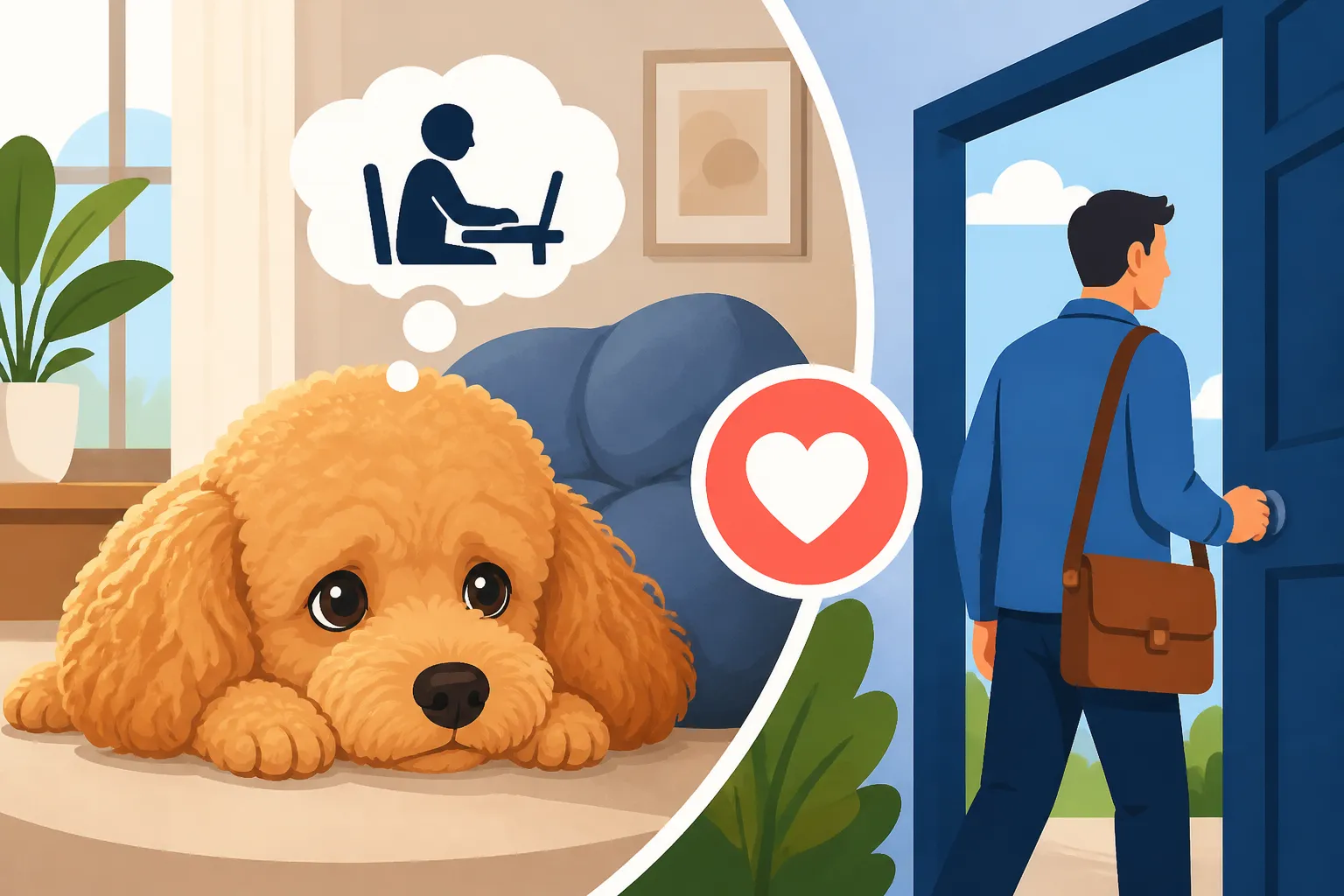
Leaving a Poodle While You Work
Leaving your beloved Poodle alone while you head off to work can stir up a cocktail of guilt, anxiety, and a genuine concern for their well-being. It's a common struggle for many Poodle parents, wondering if their intelligent, sensitive companion is truly happy and settled during those quiet hours. This guide is here to walk you through understanding your Poodle's needs, preparing them for solo time, and exploring practical solutions to ensure they're not just surviving, but thriving, in your absence.
Understanding Your Poodle's Need for Company
Poodles, across all three sizes, are renowned for their intelligence, sensitivity, and deep emotional bonds with their families. They aren't just pets; they're integral members of the household who thrive on interaction and mental stimulation. Recognizing this fundamental aspect of their character is the first step in helping them cope with being left alone.
The Poodle's Social Nature: Why They Bond So Deeply
Poodles were originally bred as working retrievers, often working closely alongside their human handlers. This historical role ingrained in them a strong desire for companionship and purpose. They are truly people-oriented dogs, often described as "Velcro Poodles" because they tend to follow their favorite humans from room to room. This strong attachment means that sudden or prolonged solitude can be genuinely distressing for them. They aren't just missing you; they can experience a real sense of abandonment or confusion. It's not uncommon for a Poodle to sit by the door or window for extended periods, simply waiting for your return, rather than settling down to amuse themselves. This deep bond is a wonderful quality, but it also means we, as their guardians, have a responsibility to manage their expectations and emotional state when we can't be by their side. Many owners find their Poodle exhibits behaviors like "the Poodle that follows you everywhere", highlighting this deep need for connection.
Intelligence and Boredom: How a Clever Mind Copes with Solitude
Poodles consistently rank among the most intelligent dog breeds. While this makes them incredibly quick learners and a joy to train, it also means a bored Poodle is a mischievous Poodle, or worse, an anxious one. Their clever minds need engagement, and if you're not there to provide it, they'll often find their own "jobs" to do, which might not align with your home's pristine condition. This could manifest as chewing on furniture, investigating the trash, or even attempting to "redecorate" with cushions and blankets. A Poodle's intelligence, far from making them independent, often makes them more susceptible to boredom and the stress of under-stimulation when left alone. Imagine being highly intelligent but having nothing to do for eight hours; it would drive anyone stir-crazy. This is why Keeping a Poodle Mind Occupied is so crucial, especially for working owners.
Reading Their Cues: What Signs to Look For
Your Poodle communicates their feelings, even when you're not there to witness them directly. Understanding these cues is vital. Before you even leave, watch their body language. Do they become clingy? Do they pace? Do they seem to anticipate your departure with dread? When you return, observe their behavior. Are they overly exuberant, frantic, or do they seem relieved but also a bit deflated? Beyond your presence, look for indirect signs. If you come home to chewed items, potty accidents (especially if they are house-trained), excessive barking complaints from neighbors, or signs that they’ve been pacing (worn spots on the carpet), these are all indicators that their alone time isn't going as smoothly as you'd hoped. Learning to read these often subtle signals is key to understanding whether your current strategy is working or if changes need to be made.
Preparing Your Poodle for Alone Time
It's not fair to simply expect your Poodle to adapt to your work schedule without some thoughtful preparation. Just like you wouldn't send a child to kindergarten without getting them used to separation, you need to gently ease your Poodle into understanding that your departures are temporary and that they are safe and loved even when you're not physically present.
Gradual Desensitization: Building Up Alone Time Slowly
The key to successful alone training is a slow, steady approach. Start incredibly small. Leave your Poodle alone for just a few minutes – literally, just step outside the door and come back in. Don't make a big fuss when you leave or return. The goal is to make your departure and return as unremarkable as possible. Gradually increase the time you're away: five minutes, then ten, then twenty, and so on. This isn't a race. Some Poodles will progress faster than others, and that's perfectly fine. If your Poodle shows signs of distress, shorten the duration for the next attempt. You want to build positive associations with alone time, not create anxiety. Providing a high-value, long-lasting chew or a puzzle toy as you leave can create a positive anchor for their solo experience. Think of it as leaving them a fun "task" to complete while you're gone.
Creating a Safe and Engaging Space: Crate Versus Free Roam
Deciding where your Poodle spends their alone time is a crucial decision that impacts both their safety and your peace of mind. For many Poodles, a crate can be a wonderful den – a safe, comfortable, and predictable space where they can feel secure. If you choose crate training, it needs to be introduced positively and slowly, never as punishment. A properly crate-trained Poodle views their crate as their bedroom, a place of solace. Crate Training a Poodle That Wants Company often involves making the crate a truly inviting spot with soft bedding and tempting treats.
However, not all Poodles thrive in a crate for long hours, particularly if they are older or have specific anxieties. For these dogs, a designated "Poodle-proofed" room or section of the house might be better. Remove anything valuable or potentially dangerous, ensuring they have access to fresh water, comfortable bedding, and a variety of safe, engaging toys. Consider a pet camera to monitor their behavior, especially in the early stages, to see how they're truly coping. Brands like Chewy offer a wide selection of durable crates, comfy beds, and secure gates to help you set up the perfect safe space.
Establishing a Consistent Routine: Predictability is Key
Poodles are intelligent creatures who thrive on routine. A predictable schedule helps reduce anxiety because they learn what to expect. Before you leave for work, ensure your Poodle has had ample opportunity to relieve themselves and has enjoyed a good bout of physical and mental exercise. A tired Poodle is more likely to settle down and rest.
| Time Slot | Activity | Benefit for Alone Time |
|---|---|---|
| Early Morning | Potty Break & Vigorous Exercise | Empties bladder, burns physical energy, promotes rest. |
| Breakfast | Meal (potentially in a puzzle feeder) | Sustains energy, provides mental stimulation. |
| Mid-Morning | Quick Potty Break (if possible/needed) | Last chance to relieve themselves before longer stretch. |
| Just Before Leave | High-Value Chew Toy or Puzzle | Distraction, positive association with your departure. |
| Arrival Home | Potty Break & Calm Greeting | Address immediate needs, prevent over-excitement. |
| Evening | Playtime, Training, Affection | Reconnect, mental and physical stimulation. |
Stick to this schedule as much as possible, even on weekends, to reinforce the predictability. Consistency teaches them that while you leave, you always come back, and certain enjoyable activities are associated with your absence. This helps alleviate the stress of the unknown.
Solutions for Working Owners
Even with the best preparation, a Poodle often needs more than just a safe space and a chew toy to happily spend an entire workday alone. For working owners, integrating external support and enriching their environment can make all the difference.
Professional Help: Dog Walkers and Daycare
For many working Poodle owners, professional help is not a luxury, but a necessity.
A dog walker can break up your Poodle's day by providing a mid-day potty break, a refreshing walk, and some much-needed human interaction. This isn't just about physical relief; it's about mental stimulation and a friendly face. A good dog walker will also engage your Poodle in a short play session or some basic training, further enriching their day. They can tailor their visit to your Poodle's specific needs, ensuring they get the right amount of activity without being over-stimulated.
Doggy daycare can be an excellent option for highly social Poodles who thrive on interaction with other dogs and people. It offers constant supervision, play, and mental enrichment. However, daycare isn't for every Poodle. Highly sensitive Poodles might find the constant noise and activity overwhelming, leading to stress rather than enjoyment. If you're considering daycare, look for facilities with small play groups, attentive staff, and a good understanding of Poodle temperament. Always do a trial day or two to see how your Poodle responds before committing. It's a significant financial investment, so ensure it's a good fit. Remember that Hours a Poodle Copes With an Empty House varies widely, and some just can't handle long stretches without company.
At-Home Enrichment: Puzzle Toys, Chew Items, Remote Cameras
If professional help isn't feasible every day, or even if it is, providing ample at-home enrichment is critical. Puzzle toys that dispense treats are fantastic for Poodles, tapping into their intelligence and making them "work" for their food or treats. Brands like Chewy offer an incredible variety, from simple snuffle mats to complex interactive games. Rotate these toys regularly to keep them novel and engaging.
Durable chew items are also essential. Poodles love to chew, and providing appropriate outlets can prevent them from turning to your furniture. Ensure they are safe, non-toxic, and sized correctly for your Poodle's mouth. Stuffable toys filled with peanut butter or plain yogurt and then frozen can provide long-lasting distraction.
Remote pet cameras with two-way audio can offer invaluable peace of mind. You can check in on your Poodle, speak to them, and even dispense treats from some models. This allows you to monitor for signs of distress or boredom and adjust your strategy accordingly. It's a fantastic way to feel connected and intervene if necessary. These tools contribute significantly to Cameras and Puzzle Feeders for a Lonely Poodle.
Considering a Second Poodle: Pros and Cons
The idea of getting a second Poodle to keep the first one company is a romantic one, and sometimes, it works beautifully. For some Poodles, having a canine companion can indeed alleviate loneliness and Whether a Second Poodle Fixes Loneliness for good. They can play together, nap together, and provide mutual comfort. However, it's not a guaranteed solution and comes with its own set of considerations.
Firstly, you might end up with two Poodles with separation anxiety, or worse, one teaches the other bad habits. Compatibility is key; not all dogs get along, and even Poodles, with their strong personalities, might prefer solo attention or find another Poodle's energy incompatible with their own. Secondly, two Poodles mean double the expense, double the grooming, and double the potential for vet bills. Before making such a significant commitment, consider fostering a second dog or arranging playdates to observe how your Poodle interacts with a potential companion. It's a big decision that shouldn't be taken lightly.
Addressing Specific Challenges
Even with the best intentions and preparations, challenges can arise. It's important to differentiate between general boredom and more serious issues like separation anxiety, and to approach destructive behaviors with understanding rather than frustration.
Recognizing Separation Anxiety: Differentiating from Boredom
While both boredom and separation anxiety can lead to destructive behaviors, they stem from different emotional states and require different approaches.
| Feature | Poodle Boredom | Poodle Separation Anxiety |
|---|---|---|
| Root Cause | Lack of mental/physical stimulation. | Distress/panic from being alone, fear of abandonment. |
| Timing | Can occur any time they're under-stimulated. | Occurs only when owner is absent or preparing to leave. |
| Symptoms | Chewing inappropriate items, pacing, seeking attention, mild barking/whining, digging. | Excessive barking/howling, destructive chewing (often around exits), frantic escape attempts, house soiling (even if fully trained), drooling, shaking, self-harm. |
| Intensity | Generally less intense, may stop if stimulated. | High intensity, panic-driven, difficult to interrupt. |
| Response to Owner | Excited to see you, but calms down. | Overly frantic greeting, prolonged relief/excitement, can take a long time to settle. |
If you suspect Separation Anxiety in a Velcro Poodle, it's crucial to consult with a professional dog behaviorist or a veterinary behaviorist. This is a serious condition that requires a structured, often multi-faceted treatment plan, which may include counter-conditioning, desensitization, and sometimes medication. It’s important to understand that your Poodle isn’t being "naughty"; they are genuinely suffering from a panic disorder.
Managing Destructive Behaviors: Root Causes and Interventions
Destructive behaviors like chewing furniture, scratching doors, or inappropriate urination are almost always symptoms of an underlying issue, not acts of defiance. If your Poodle is destroying things, consider:
- Insufficient Exercise: A Poodle with pent-up energy will find ways to release it. Ensure they're getting adequate physical activity before you leave, such as a brisk walk, a run, or a vigorous play session. Daily Exercise for a Standard Poodle is not just about physical health, but mental equilibrium too.
- Lack of Mental Stimulation: An intelligent Poodle needs to use their brain. Incorporate training, puzzle toys, and scent games into their daily routine. Mental Work That Tires a Poodle is just as important as physical exercise. A mentally fatigued Poodle is less likely to be destructive.
- Anxiety or Fear: As discussed, separation anxiety is a major culprit. Loud noises (thunder, fireworks), new environments, or changes in routine can also trigger anxiety that manifests as destruction.
- Boredom: Sometimes it truly is just boredom. They’re looking for something to do, and your sofa leg looked like a good option. Provide more appropriate outlets like high-quality chew toys and interactive feeders.
- Puppyhood: If you have a Poodle puppy, destructive chewing is often a normal part of exploration and teething. Ensure they have an abundance of appropriate chew toys.
Interventions often involve increasing exercise, providing more appropriate chew items, using puzzle feeders, and potentially calming aids (natural supplements or vet-prescribed options) under professional guidance. Avoid punishing your Poodle after the fact; they won't connect the punishment to something they did hours ago. Instead, focus on prevention and redirection. What an unexercised Poodle does to the house is often a cry for help or a need for engagement.
The Importance of Exercise and Mental Stimulation: Before and After Work
You might think a quick walk before work is enough, but for a Poodle, especially a Standard Poodle, it rarely is. Before you head out, dedicate a good 30-60 minutes to vigorous physical exercise. This could be a long walk, a run, fetch in the park, or even a swimming session if your Poodle enjoys water. The goal is to get them physically tired.
Equally important is mental stimulation. Incorporate a short training session, play some hide-and-seek with treats, or use a puzzle toy for their breakfast. A mentally stimulated Poodle is a happier, calmer Poodle. This is how you prevent a Poodle from inventing its own shortcuts, which often lead to trouble.
When you return home, resist the urge for an overly excited greeting if your Poodle is prone to anxiety. A calm, quiet acknowledgment is better, followed by a quick potty break. Then, dedicate time to another session of exercise and mental engagement. This not only reconnects you but also helps them burn off any residual energy or stress from their alone time. Remember, a Poodle’s day isn’t just about the hours you’re home; it’s about making the entire 24 hours fulfilling.
Leaving your Poodle while you work doesn't have to be a source of constant worry. With understanding, consistent training, and the right support systems in place, your clever, sensitive companion can learn to be content and secure during their solo hours, eagerly awaiting your return, rather than dreading your departure.
Disclaimer
This article is for general informational purposes only and does not constitute professional advice. Laws, prices and regulations vary by location and change over time. Consult a qualified professional for guidance on your specific situation.