Bowl Height and Standard Poodle Bloat Risk
The gut-wrenching fear of bloat, or Gastric Dilatation-Volvulus (GDV), is a heavy burden many Standard Poodle owners carry. It’s a sudden, life-threatening emergency, and naturally, we want to do everything in our power to prevent it. For years, one piece of advice echoed through dog communities: elevate your dog’s food bowl to reduce bloat risk. But does this widely held belief actually hold up to scrutiny, especially for our deep-chested Poodles? This guide will explore the truth about bowl height and bloat, separating fact from long-standing fiction to help you make informed choices for your beloved companion.
Understanding Gastric Dilatation-Volvulus in Standard Poodles
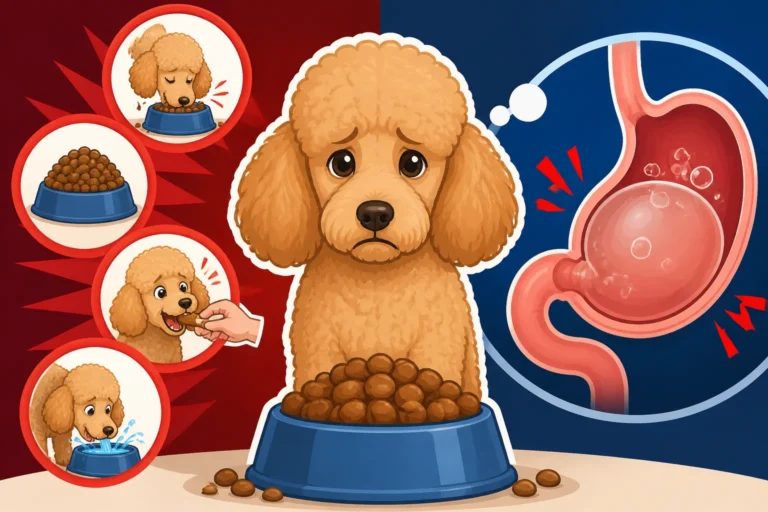
Let's start by getting a clear picture of what we're up against. Gastric Dilatation-Volvulus, or GDV, is not just an upset stomach; it's a terrifying, rapidly progressing condition where a dog's stomach fills with gas, food, or fluid (dilatation) and then twists upon itself (volvulus). When this happens, blood flow to and from the stomach is cut off, and the gas cannot escape. This puts immense pressure on other organs, obstructs major veins, and can lead to shock and death if not treated immediately. It’s an urgent medical emergency, often requiring immediate surgery.
Standard Poodles are, unfortunately, among the breeds considered at high risk for GDV. Their characteristic deep, narrow chests are a significant anatomical factor contributing to this predisposition. It's thought that this chest conformation allows the stomach more room to swing and twist, making volvulus more likely once the stomach has dilated. Other high-risk breeds include Great Danes, German Shepherds, Boxers, and Weimaraners, all sharing that tell-tale deep chest. The sudden onset and rapid progression of this condition are what make it so frightening for owners. One minute your Poodle seems fine, the next they are restless, pacing, retching unsuccessfully, and showing signs of extreme discomfort. Recognizing these critical Emergency Signs of Poodle Bloat is vital.
It’s crucial to understand that GDV is not just "bloat." Bloat, or gastric dilatation, can happen without the life-threatening twist. However, in predisposed breeds like our Standard Poodles, dilatation can very quickly lead to volvulus. The risk factors for a Standard Poodle's deep chest are a major concern.
The Historical Belief: Elevated Bowls and Bloat Prevention
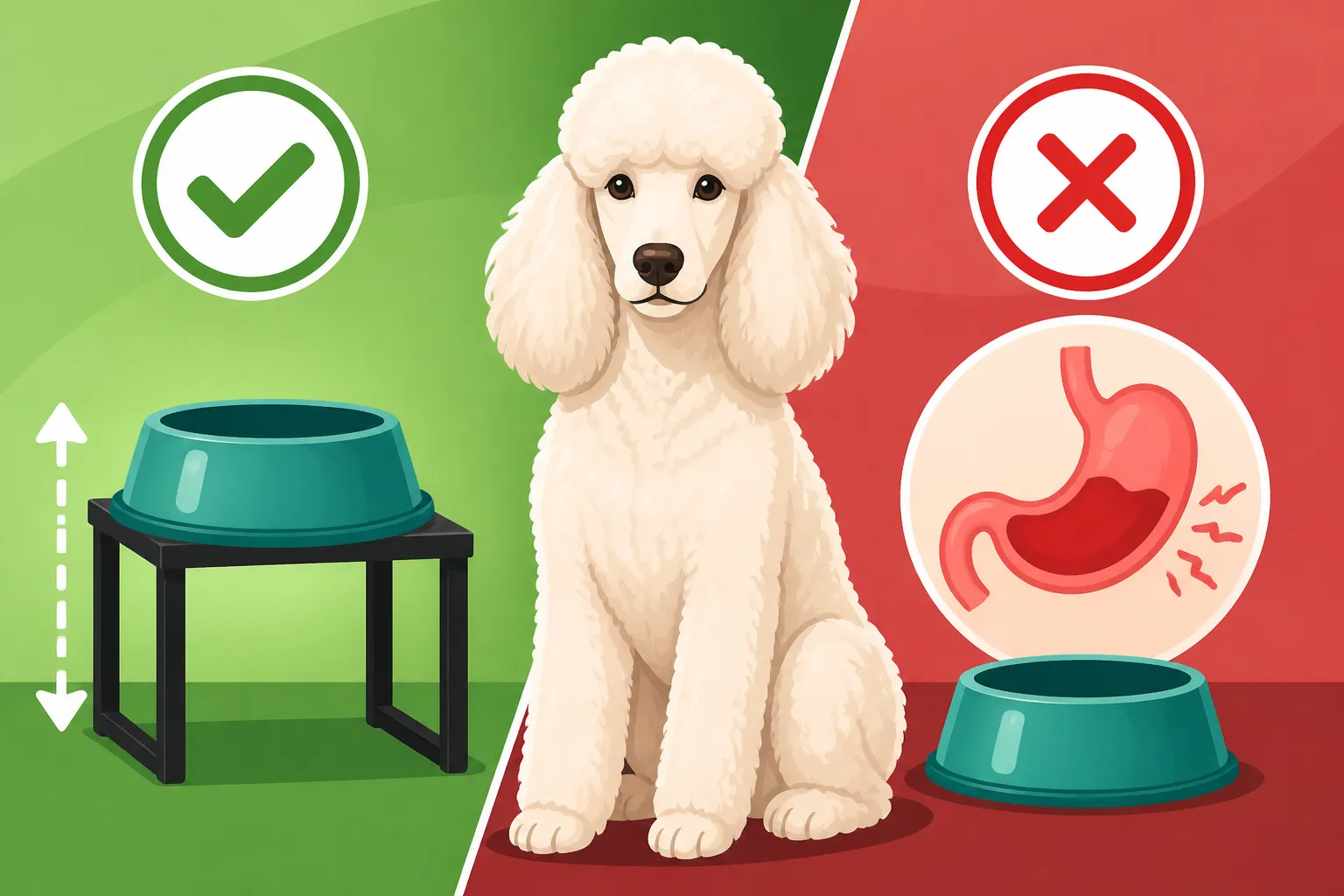
For decades, many dog owners, breeders, and even some veterinary professionals advocated for elevated food bowls. The reasoning seemed logical enough: if a dog didn't have to bend down to eat, they would swallow less air, and digestion would be easier, thereby reducing the risk of bloat. The image of a large, deep-chested dog straining its neck to reach a bowl on the floor just seemed intuitively wrong, and proponents believed that an elevated position would make mealtime more comfortable and safer.
This advice became particularly popular among owners of large and giant breeds. It was commonly believed that dogs gulping food from floor bowls ingested more air, which would then contribute to the initial gastric dilatation phase of bloat. By raising the bowl to a more "natural" height, it was thought that dogs would eat more calmly, with better posture, and therefore minimize air intake. Pet product manufacturers responded to this demand, offering a wide array of elevated feeders, complete with stylish designs and ergonomic claims, cementing the idea in the minds of dog owners that this was a necessary preventative measure. This was the conventional wisdom for a very long time, passed down from one generation of dog owners to the next, often without question.
In many cases, anecdotal evidence also played a strong role in perpetuating this belief. Owners who had switched to elevated bowls and whose dogs never experienced bloat naturally attributed this success to their feeding method. Of course, correlation doesn't always equal causation, especially with a complex multifactorial condition like bloat, but these personal experiences were powerful.
What Current Research Says About Elevated Feeding Bowls
However, when science truly delved into the matter, the widely accepted wisdom about elevated bowls took a surprising turn. A landmark study conducted by Purdue University in 2000, which examined hundreds of cases of GDV and a control group of healthy dogs, cast serious doubt on the protective effect of elevated bowls. In fact, the findings suggested quite the opposite for large and giant breeds.
The Purdue study, a monumental effort to identify risk factors for GDV, found that for large and giant breeds, having a raised food bowl was associated with an increased risk of bloat, not a decreased one. Specifically, it reported that approximately 20% of cases of GDV among large breeds, and 52% among giant breeds, were attributable to eating from a raised feeding bowl. This was a significant finding that challenged decades of common practice. The exact mechanism behind this increased risk isn't fully understood, but some theories suggest that elevated bowls might encourage faster eating or a different swallowing dynamic that inadvertently leads to more air ingestion, or perhaps a different stomach orientation that makes twisting easier.
It's important to differentiate between correlation and causation, and GDV is an extremely complex condition. However, the consistent findings from rigorous research like the Purdue study have led many veterinary professionals to reconsider and, in many cases, actively advise against the use of elevated bowls for breeds at risk of bloat. This shift in understanding means that as owners, we need to rely on the most up-to-date scientific evidence to make the best choices for our Poodles. While pet insurance companies like Healthy Paws often cover emergency treatments, proactive prevention based on solid research is always the first line of defense.
Factors That Do Influence Bloat Risk in Standard Poodles
While bowl height has largely been debunked as a protective measure and might even be a risk factor, there are several other, more substantial factors that undeniably play a role in a Standard Poodle's susceptibility to GDV. Understanding these is crucial for comprehensive bloat prevention.
One of the most significant factors is genetics and family history. If a Standard Poodle's parents or close relatives have a history of bloat, the offspring are at a higher risk. This underscores the importance of choosing a reputable breeder who prioritizes health and can provide detailed health histories of their breeding lines. Ask about incidences of bloat in their Poodle lines.
Eating habits are another major concern. Dogs who eat very quickly, gulping down their food, appear to be at greater risk. The act of rapid consumption can lead to swallowing excessive air along with the food, contributing to gastric dilatation. Similarly, feeding one large meal a day, rather than multiple smaller ones, has been linked to increased risk. This puts a significant volume of food and gas into the stomach at once, potentially making it more unstable. Consider using a slow feeder or puzzle bowl to encourage your Poodle to eat more deliberately. Our guide on Feeding Habits That Raise Poodle Bloat Risk dives deeper into specific mealtime practices to avoid.
| Risk Factor | Impact on Bloat Risk | Mitigation Strategy |
|---|---|---|
| Deep Chest Conformation | High predisposition for Standard Poodles | Cannot be changed; focus on other controllable factors |
| Genetics / Family History | Strong indicator of individual risk | Inquire with breeders about lineage history |
| Rapid Eating | Increased air swallowing, stomach distension | Use slow-feeder bowls, spread food on a flat surface |
| Single Large Meals | Large volume in stomach at once, more prone to gas | Feed 2-3 smaller meals throughout the day |
| Stress / Anxiety | Can alter digestive processes, lead to frantic eating | Create calm feeding environment, consider anxiety management |
| Vigorous Exercise After Eating | Stomach jostling, increased motion | Restrict activity for at least an hour before and after meals |
| Age | Risk increases with age, particularly in older dogs | Maintain vigilance, regardless of past history |
| Sex | Males historically show a slightly higher risk | Not a controllable factor, but good to be aware of |
| Food Type | Specific ingredients (e.g., oil, citric acid) and kibble type | Discuss with vet, avoid sudden food changes, choose quality kibble |
Temperament also plays a role. Anxious, fearful, or highly stressed Poodles might be more prone to bloat. Stress can impact digestion and lead to more frenetic eating. Creating a calm, consistent environment, particularly around meal times, can be beneficial.
Exercise around meal times is another critical element. It's widely recommended to restrict strenuous activity for at least one hour before and two hours after eating. Jumping, running, and vigorous play can jostle the stomach, especially if it's full of food and gas, potentially triggering a twist. A relaxed post-meal rest is always best for digestion. For a comprehensive look at the condition, check out Gastric Torsion Risk in a Standard Poodle.
Even the type of food can be a factor, though research in this area is still ongoing and sometimes conflicting. Some studies have suggested a potential link between diets with specific ingredients like oil or citric acid and increased bloat risk, as well as dry kibble with smaller particle sizes. However, it's not as clear-cut as some other factors. Discussing your Poodle's diet with your veterinarian is always a good idea, as they can provide tailored advice based on the latest understanding. Regular check-ups are key, and a robust pet insurance plan like Healthy Paws can give you peace of mind regarding diagnostics and treatment if you ever face a health crisis.
Lastly, age and sex can also influence risk. Older dogs generally have a higher risk, and male dogs have historically shown a slightly higher incidence of GDV compared to females. These are factors we can't change, but awareness helps in overall risk assessment.
Practical Feeding Strategies to Reduce Bloat Risk
Since bowl height isn't the magic bullet we once thought, focusing on proven, practical feeding strategies is the most effective way to help reduce your Standard Poodle's bloat risk. These strategies aim to slow down eating, reduce swallowed air, and keep the stomach stable during digestion.
One of the most impactful changes you can make is to feed multiple smaller meals throughout the day instead of one or two large ones. Instead of two substantial meals, consider three or even four smaller portions. This prevents the stomach from becoming overly distended at any one time, reducing the amount of gas and food it holds, making it less prone to dilatation and subsequent twisting. For instance, if your Poodle eats a total of three cups of kibble daily, dividing it into three one-cup meals offers a safer approach than two 1.5-cup meals. Remember, even with smaller meals, it’s important to give your Poodle sufficient time to rest afterwards.
To combat rapid eating, slow feeders and puzzle bowls are incredibly effective tools. These bowls have various ridges, mazes, or compartments that force your Poodle to work for each mouthful, significantly slowing down their consumption. Instead of inhaling their dinner in 30 seconds, they might take 5-10 minutes, which drastically reduces the amount of air they swallow. There's a whole range of options, from simple inserts to more complex interactive feeders. Our article on Slow Feeders for a Gulping Standard Poodle provides excellent recommendations for specific products and techniques. Even just spreading their kibble across a wide, flat baking sheet can achieve a similar effect by making them chase individual pieces.
Managing activity levels around meal times is absolutely paramount. Imagine trying to digest a full meal while doing jumping jacks – not pleasant! For Poodles, intense exercise immediately before or after eating can be dangerous. The consensus is to provide at least an hour of calm before meals and ideally 1-2 hours of restful digestion afterwards. This means no vigorous play, running, or car rides that could jostle their stomach. A short, calm leash walk before dinner is fine, but intense fetching or a trip to the dog park should be scheduled well away from meal times. This gives the stomach time to process food and gas without unnecessary movement.
Finally, while often overlooked, water intake management can also contribute to overall digestive health. Ensure your Poodle always has access to fresh water, but be mindful of excessive gulping immediately after a meal, which can add to stomach volume and gas. If your Poodle tends to drink huge amounts of water very quickly, especially after eating or exercise, consider offering smaller amounts more frequently, or using a slow-drink bowl designed to reduce gulping. This proactive approach to care, alongside being prepared for emergencies, is something that pet insurance providers like Healthy Paws actively encourage to promote overall canine wellness.
Discussing Prophylactic Gastropexy
Given the frightening reality of GDV, many Standard Poodle owners find themselves exploring all preventative options, and one that frequently comes up in discussions with veterinarians is a prophylactic gastropexy. This elective surgical procedure can be a true lifesaever, though it's important to understand what it does and doesn't do.
A prophylactic gastropexy involves surgically attaching the stomach to the abdominal wall. This permanent attachment prevents the stomach from twisting (volvulus) if it dilates. It's crucial to note that a gastropexy does not prevent the stomach from filling with gas (dilatation or "bloat"), but it completely eliminates the life-threatening twist. So, a Poodle with a gastropexy could still experience gastric dilatation, but it wouldn't progress to the severe, emergency state of GDV where the blood supply is cut off. This distinction is vital for owners to understand.
The timing of a prophylactic gastropexy is often a consideration. It's frequently performed at the same time as spaying or neutering, as the dog is already under anesthesia, making it a more convenient and often less costly option than a standalone procedure later in life. For male Standard Poodles, it can be done at any age, but for females, it typically aligns with their spay procedure. Of course, the decision to undergo this surgery should always be made in close consultation with your veterinarian, weighing the risks and benefits for your individual Poodle. Our detailed article on Gastropexy Surgery Costs for a Standard Poodle can give you an idea of the financial aspect, and it's worth noting that insurance companies like Healthy Paws may cover these preventative procedures or at least the emergency costs if GDV occurs without one.
For some owners, particularly those with a strong family history of bloat in their Poodle's line or those who simply cannot bear the thought of such an emergency, a prophylactic gastropexy offers significant peace of mind. While it's an invasive procedure, the recovery is generally straightforward, especially when performed electively on a healthy dog. It's a proactive step that can dramatically improve the prognosis if your Poodle were to experience bloat. After all, the cost of an emergency bloat surgery is astronomical, and knowing you've taken steps to mitigate the worst outcome can be incredibly reassuring. Having a financial safety net for unexpected veterinary care, like coverage from Healthy Paws, allows you to make these critical decisions without crippling financial stress. It’s about being prepared for a serious issue that for many owners could lead to the question of What Usually Ends a Standard Poodle's Life. While gastropexy prevents the twist, vigilance for initial bloat symptoms remains important. It's a key part of ensuring a Poodle's overall health and lifespan, especially considering Why Poodle Health Splits by Size and how Standard Poodles face unique challenges like bloat that smaller varieties rarely encounter.
Ultimately, preventing bloat in Standard Poodles requires a multi-faceted approach. While the outdated advice about elevated bowls has been superseded by scientific research, focusing on proven strategies like slow feeding, multiple smaller meals, careful management of exercise around meal times, and considering prophylactic gastropexy can significantly reduce your Poodle's risk. Being an informed owner, understanding the true risk factors, and working closely with your veterinarian are the best ways to protect your beloved companion from this terrifying condition.
Disclaimer
This article is for general informational purposes only and does not constitute professional advice. Laws, prices and regulations vary by location and change over time. Consult a qualified professional for guidance on your specific situation.