Emergency Signs of Poodle Bloat
Many Poodle owners dread the mention of "bloat" – that sudden, terrifying condition that can turn a perfectly normal evening into a frantic rush to the emergency vet. It's a truly harrowing experience, often striking without much warning, and recognizing the signs early is absolutely critical to saving your beloved companion's life. This guide is here to walk you through the emergency signs of Poodle bloat, helping you understand what to look for, what to do, and why swift action is paramount.
Understanding Bloat in Poodles
Bloat, medically known as Gastric Dilatation-Volvulus (GDV), isn't just a simple upset stomach. It's a life-threatening condition where a dog's stomach fills with gas and then twists on its axis. This twisting cuts off blood supply to the stomach and often the spleen, and prevents gas and food from leaving the stomach, leading to rapid expansion and excruciating pain. It's a true veterinary emergency that demands immediate attention, as time is of the essence for survival. For Poodle owners, understanding this threat is not just useful, it's essential.
The Anatomy of the Risk
Poodles, particularly Standard Poodles, possess a specific body conformation that unfortunately predisposes them to bloat. Their characteristic deep, narrow chest, while elegant and a hallmark of the breed, leaves ample space for the stomach to distend and rotate. This anatomical feature means the stomach isn't as tightly held in place as it might be in dogs with broader, shallower chests. It's a cruel irony that a beloved breed trait contributes to such a dangerous condition. This is why discussions around Bloat and the Deep Standard Poodle Chest are so important within our Poodle community.
When the stomach distends, it swells rapidly, stretching the ligaments that normally hold it in place. If it then twists, it seals off both the entrance (esophagus) and exit (duodenum), trapping everything inside. This immense internal pressure quickly leads to shock, organ damage, and can even cause the stomach wall to rupture. It's not just discomfort; it's a cascade of systemic failures that can overwhelm a dog's body in a matter of hours. This inherent vulnerability means Poodle owners must always be on high alert for any warning signs.
The Rapid Progression of GDV
Perhaps the most terrifying aspect of bloat is its lightning-fast progression. This isn't a condition that gives you days to monitor or deliberate. A Poodle can go from seemingly fine to critically ill in as little as 30 minutes to a few hours. This rapid onset means that "waiting to see" if symptoms improve is a gamble you absolutely cannot afford to take. Every minute that passes without intervention increases the risk of irreversible damage and significantly reduces the chances of survival.
I've heard countless stories from frantic owners who observed their Poodle acting slightly off, perhaps just restless, only to find them collapsed and in shock a short time later. The internal damage, including tissue death from lack of blood flow, begins almost immediately after the stomach twists. This makes early recognition and immediate action paramount. If you're ever in doubt, it's always safer to assume the worst and head to the emergency vet. This critical timeframe is precisely why learning about The Hour That Decides a Bloating Standard Poodle is so crucial for every Poodle guardian.
Early, Subtle Signs of Bloat
Before the dramatic and unmistakable symptoms of advanced bloat take hold, there are often subtle, insidious clues that observant owners can pick up on. These early indicators are your Poodle's quiet cry for help, and recognizing them quickly can be the difference between a full recovery and a tragic outcome. It’s about being tuned into your dog’s baseline behavior and noticing anything out of the ordinary.
Restlessness and Pacing
One of the first signs many Poodle owners report is an inexplicable shift in their dog's behavior, specifically a pronounced restlessness or an inability to settle. Your Poodle, who might usually be content napping on the sofa, suddenly can't get comfortable. They might pace around the house, shift positions frequently, get up and lie down repeatedly, or try to stretch out in unusual ways. This isn't just typical anxiety or a desire for a walk; it's a persistent, agitated discomfort stemming from internal pain.
Imagine having a terrible stomach cramp or severe indigestion – you’d likely be unable to find comfort, constantly moving to try and relieve the pressure. Your Poodle experiences something similar, but often with escalating intensity. They might continually look at their flank, as if trying to understand the source of their distress, or stand hunched with an arched back. If your Poodle begins this kind of unusual pacing, especially after eating or exercise, it's a significant red flag that warrants immediate attention and monitoring. This can be an early indicator that their stomach is beginning to distend or twist.
Excessive Drooling and Retching
Another common early symptom that can be easily dismissed is increased salivation, often accompanied by unproductive retching or gagging. Your Poodle might repeatedly try to vomit, straining with visible effort, but nothing comes up except perhaps foamy saliva or white phlegm. This is a classic sign of GDV because the twisted stomach blocks the normal pathway for gas and stomach contents to escape. The dog feels intense nausea and the urge to vomit, but cannot.
This isn't just an occasional cough or spitting up a little water. This is persistent, strenuous heaving and gagging, often sounding distressed and escalating in frequency. The drooling might be excessive, forming puddles on the floor. If you observe your Poodle making these repeated, unsuccessful attempts to throw up, combined with any restlessness or signs of abdominal discomfort, do not wait. This symptom is a strong indicator of a serious internal blockage and necessitates immediate veterinary contact.
Abdominal Discomfort and Swelling Early Stage
While a visibly distended, rock-hard abdomen is a hallmark of advanced bloat, you might notice subtle changes in your Poodle's belly much earlier. They might be unusually tender or sensitive when you gently touch their abdomen, pulling away or yelping softly. You might also perceive a slight fullness or tightness in the upper abdomen, just behind the ribs, that wasn't there before. This can be particularly challenging to spot in Poodles with thick, curly coats, so a careful, tactile examination is necessary.
Regularly feeling your Poodle’s belly helps you understand what’s normal for them. Any deviation – a subtle firmness, a slight enlargement, or an unexpected tenderness – should raise your suspicion. Your Poodle might repeatedly stretch or assume a prayer-like stance (front paws down, rear end up) in an attempt to alleviate the pressure. Given the Poodle's sensitive nature and tendency to hide illness, as discussed in Reading Pain in a Sensitive Poodle, these subtle signs of discomfort are incredibly important to heed. Pay close attention to these nuances; they are your earliest warnings.
Obvious and Rapidly Progressing Symptoms
When bloat advances, the subtle signs give way to unmistakable, severe symptoms that leave no doubt about the gravity of the situation. These are the emergency signs that demand immediate, frantic action. If you observe any of these, your Poodle is in critical danger and requires urgent veterinary care.
Distended Abdomen and Hardness
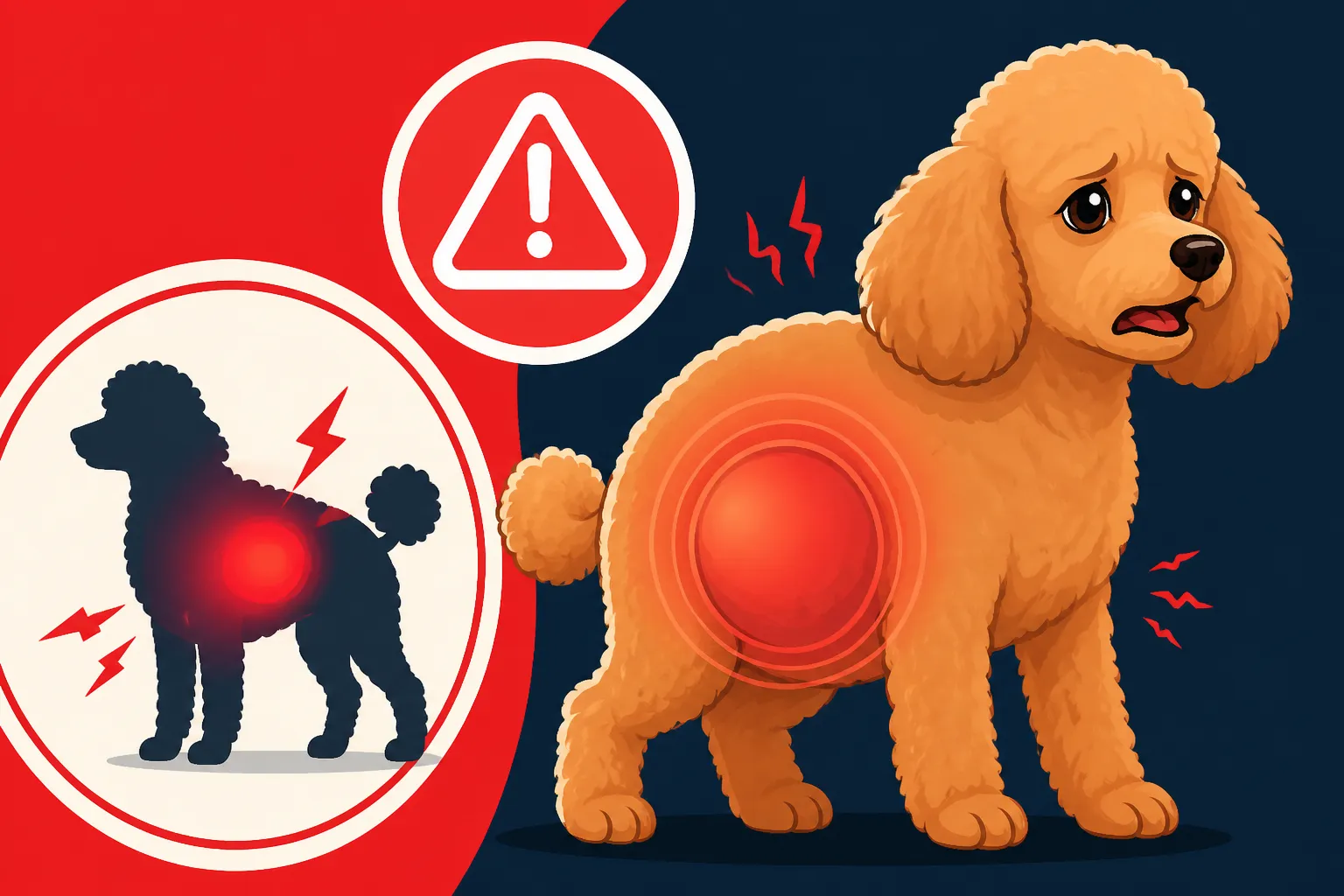
This is arguably the most recognizable and terrifying sign of full-blown bloat: a visibly enlarged, often lopsided, and drum-tight abdomen. The stomach, rapidly filling with gas that cannot escape, will swell dramatically, making your Poodle's belly appear significantly larger and feel as hard as a board. It can feel like a tightly inflated balloon. This distension can occur with shocking speed, sometimes within an hour or two of the initial subtle signs.
The hardness isn't just superficial; it's a consequence of intense internal pressure. Your Poodle will likely be in excruciating pain if you even gently press on their belly, possibly crying out or snapping due to the agony. This extreme distension places immense pressure on their lungs, making breathing difficult, and severely compromises blood circulation. If your Poodle’s abdomen is visibly swollen and feels hard, do not hesitate for a second. This is a full-blown emergency.
Weakness, Collapse, and Shock
As bloat progresses and the Poodle's circulatory system becomes severely compromised, their condition will deteriorate rapidly into a state of shock. They may become profoundly weak, unable to stand or walk without staggering, and might even collapse completely. Their legs may give out, and they might appear disoriented, dazed, or unresponsive to their name or touch. Their eyes might be sunken, and their body language will convey extreme distress.
Their breathing will become shallow, rapid, and labored as the distended stomach presses against the diaphragm, making it difficult for their lungs to fully expand. This lack of oxygen further exacerbates the shock. In this advanced stage, your Poodle is literally fighting for their life, and without immediate medical intervention, organ damage and death are imminent. This rapid decline is a testament to the severity of conditions like Gastric Torsion Risk in a Standard Poodle and the urgent need for action.
Pale Gums and Increased Heart Rate
Checking your Poodle's gums can provide critical insight into their circulatory status. In a healthy Poodle, the gums should be a healthy bubblegum pink color, and when you gently press on them with your finger, the color should return within one to two seconds (this is known as capillary refill time). In a Poodle experiencing bloat and progressing into shock, their gums may become very pale, white, or even bluish (cyanotic) due to the lack of oxygen and severely compromised blood flow.
Simultaneously, their heart rate will likely skyrocket as their body desperately tries to compensate for the plummeting blood pressure. You might be able to feel a rapid, weak, or "thready" pulse by placing your hand on their chest behind their elbow. This rapid heart rate, combined with pale gums and an increasingly distressed demeanor, are definitive physiological signs that your Poodle is in a life-threatening crisis. These symptoms signal that their circulatory system is failing and they are in dire need of emergency medical care.
| Symptom Category | Early/Subtle Signs | Advanced/Emergency Signs |
|---|---|---|
| Behavior | Restlessness, pacing, unable to settle, arching back | Extreme weakness, collapse, unresponsiveness, severe pain |
| Gastrointestinal | Unproductive retching/gagging, excessive drooling | Visible abdominal distension, drum-tight, hard belly |
| Circulatory/Respir | Mild discomfort, looking at flanks | Pale/white/bluish gums, rapid/weak pulse, labored/shallow breathing |
| General Demeanor | Anxious, uncomfortable, seeking attention | Dazed, disoriented, profound distress, inability to stand |
| Abdominal Feel | Slightly tight, tender to touch | Rock-hard, highly painful, severely distended |
What to Do in a Bloat Emergency
This is the most crucial section. Knowing what to do in the panicked moments when you suspect bloat can mean the difference between life and death for your Poodle. There's no time for hesitation, no time for "what ifs." You need a plan, and you need to execute it immediately.
Immediate Veterinary Contact
As soon as you notice any combination of the aforementioned symptoms that make you suspect bloat, drop everything and call your veterinarian immediately. Do not, under any circumstances, waste time searching online for home remedies, trying to induce vomiting, or "waiting to see if it gets better." Bloat is a rapidly progressing medical emergency that requires swift professional intervention. Clearly state that you suspect Gastric Dilatation-Volvulus (GDV) or bloat in your Poodle and that you are on your way.
This advance warning allows the veterinary team to prepare for your arrival – they can ready an operating room, gather necessary equipment, and mobilize staff, potentially saving crucial minutes that could determine your Poodle's fate. If it's after hours, immediately call your nearest 24-hour emergency veterinary clinic. It's a smart practice to have their number readily available, perhaps taped to your fridge or programmed into your phone, before an emergency strikes. When every second counts, knowing where to go and who to call can make all the difference. This is also where having pet insurance, such as Healthy Paws, can be a huge relief, allowing you to bypass financial concerns and authorize immediate life-saving care without hesitation.
Transporting Your Poodle Safely
Once you've made that critical phone call, your next step is to get your Poodle to the veterinary clinic as quickly and safely as possible. If your Poodle, especially a Standard Poodle, is large and in significant pain, moving them can be a challenge. Try to recruit help if you can. Gently lift and support their body, being extremely careful not to put any additional pressure on their already distended and painful abdomen. If possible, use a blanket or a sturdy piece of fabric as a stretcher to keep their body stable and minimize jarring.
Place them in your car in a way that allows them to lie down in a natural, comfortable position, minimizing movement and stress. For smaller Poodles like Miniatures or Toys, a secure carrier might be suitable, but ensure it's spacious enough for them to stretch out without touching their distended belly. Your primary goal is swift transport without causing further discomfort or injury. Drive carefully but with a sense of urgency, avoiding sudden stops or turns, and navigating rough roads as smoothly as possible. The journey to the vet is a critical part of the emergency protocol for Gastric Torsion Risk in a Standard Poodle.
Preparing for the Vet Visit
While getting your Poodle to the clinic is the paramount concern, taking a moment to mentally prepare for the vet visit can help streamline the process. If this is not your regular veterinarian or if it's an emergency clinic, bring any pertinent medical records you have. Be ready to provide a concise and accurate history: when did you first notice the symptoms? What exactly did you observe? Has your Poodle eaten or exercised recently? Any details, no matter how small, can be helpful to the veterinary team.
Upon arrival, the veterinary team will immediately assess your Poodle's condition. They will likely perform a physical examination, take X-rays to confirm the stomach twist, and run blood work to check for shock and organ function. Treatment for GDV typically involves stabilizing your Poodle for shock, attempting to decompress the stomach to release trapped gas, and then emergency surgery to untwist the stomach. During surgery, a gastropexy – a procedure to tack the stomach to the abdominal wall to prevent future twists – is highly recommended. You can learn more about this preventative surgery in Whether a Standard Poodle Should Have a Gastropexy. Having pet insurance, like Healthy Paws, can be incredibly beneficial here, as it can cover a significant portion of the emergency surgery and subsequent care costs, allowing you to make decisions based on what’s best for your Poodle, not your wallet.
Preventative Measures and Risk Factors
While our focus has been on recognizing and responding to emergency signs, understanding and mitigating risk factors is another crucial aspect of Poodle ownership. Proactive measures won't guarantee your Poodle won't bloat, but they can certainly reduce the likelihood and give you peace of mind.
Identifying High-Risk Poodles
Knowledge of individual risk factors is a powerful tool in prevention. As we've discussed, Standard Poodles are generally at a higher risk due to their deep-chested conformation, but bloat can affect Miniature and even Toy Poodles, though less frequently. Other significant factors include genetics; if a Poodle's close relatives (parents, siblings) have had bloat, their risk increases substantially. Older dogs also tend to have a higher incidence of bloat, with the risk often increasing with age, typically after five years old.
Temperament can also play a role; some studies suggest that anxious, stressed, or fearful dogs may be more predisposed. Furthermore, dogs that eat rapidly or are fed one large meal per day are often cited as being at increased risk. It's not about living in constant fear, but about informed vigilance. If your Poodle fits several of these high-risk categories, discussing a prophylactic gastropexy with your veterinarian might be a wise decision. Understanding broader breed-specific health concerns, such as Why Poodle Health Splits by Size, helps put these risks into perspective.
Feeding Practices and Bloat
How you feed your Poodle can significantly impact their risk of bloat. Instead of providing one large meal a day, which can cause the stomach to be excessively full at one time, split their daily food allowance into two or three smaller meals. This distributes the volume of food and gas in the stomach throughout the day, reducing pressure. For Poodles who tend to "scarf" down their food, a slow feeder bowl is an excellent investment. These bowls have ridges or obstacles that force your dog to eat more slowly, thereby reducing the amount of air they ingest while eating.
It is absolutely crucial to avoid strenuous exercise an hour before and at least two hours after meals. Give your Poodle’s stomach ample time to digest food peacefully. Ensure they always have access to fresh water, but prevent them from gulping down huge amounts immediately after eating or vigorous activity. While the consensus on elevated bowls has shifted (some studies suggest they might increase risk, rather than decrease it), it’s always best to discuss bowl height with your vet. For more in-depth advice on dietary practices that influence risk, exploring resources like Feeding Habits That Raise Poodle Bloat Risk can provide valuable insights. Additionally, maintaining a healthy weight for your Poodle, avoiding obesity, is generally good for their overall health and can reduce stress on their digestive system, tying into concerns highlighted in Poodle Obesity and Its Consequences. Even with the most diligent preventative measures, emergencies can still arise, making emergency savings or a comprehensive pet insurance plan from providers like Healthy Paws an invaluable asset.
Disclaimer
The information provided in this article is for general educational and informational purposes only, and does not constitute veterinary advice. Always consult with a qualified veterinarian for any health concerns or before making any decisions related to your Poodle's health and treatment. In case of a suspected emergency like bloat, seek immediate veterinary attention.