Adopting a Matted Poodle and the First Groom
Bringing a new Poodle into your home is an incredibly exciting time, full of dreams of cuddles and playful adventures. But for many who adopt, especially from rescues, that joy can quickly be overshadowed by the stark reality of severe matting. It's truly heartbreaking to see your new companion suffering under a tangled, painful coat, and it can feel overwhelming trying to figure out where to even begin. This guide is here to walk you through the often-challenging process of adopting a matted Poodle, from understanding the situation to navigating that crucial first groom and setting up a lifetime of comfortable, healthy coat care.
Understanding the Challenge of a Matted Poodle Adoption
When you first lay eyes on a matted Poodle, your heart probably just aches. It’s not just a bad hair day; it’s a sign of discomfort, pain, and often, past neglect or simply a lack of understanding about this unique breed's coat. A matted Poodle presents both immediate physical challenges and long-term emotional considerations for both the dog and its new family.
Why Matting Happens and Its Dangers
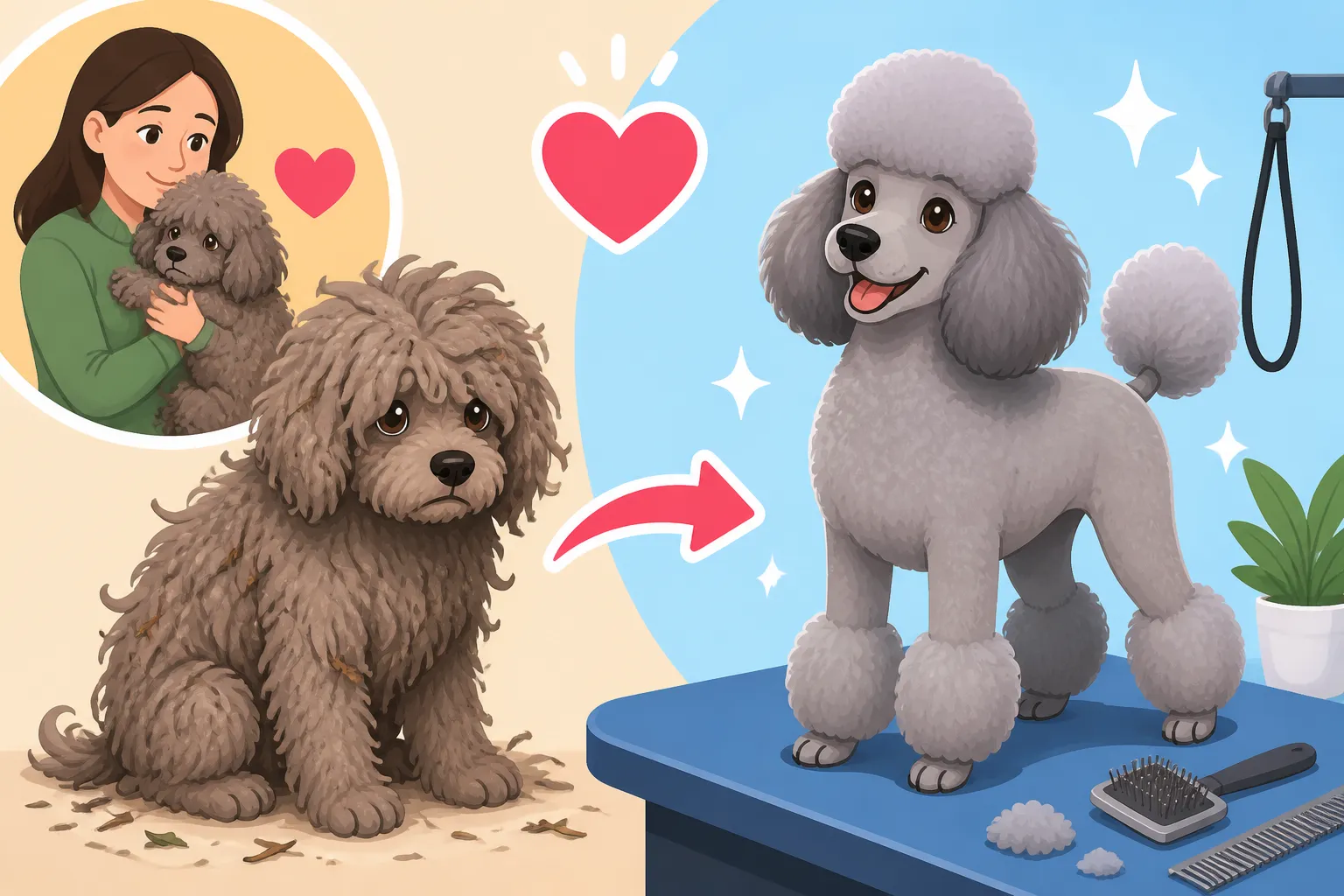
Poodles, with their continuously growing, curly hair, are absolute magnets for mats if not groomed regularly. Unlike dogs with fur that sheds, a Poodle’s hair traps loose strands within its curls, forming dense, felt-like knots. This isn't just about aesthetics; severe matting can lead to a host of serious health problems. Imagine having your own hair constantly pulling at your skin, restricting your movement, and slowly tightening. That's what a matted coat feels like for a Poodle, but all over its body.
Beyond the constant pain from skin being pulled and tugged, mats create a perfect breeding ground for bacteria and parasites. The trapped moisture and lack of air circulation under a thick mat can lead to painful skin infections, hot spots, and yeast overgrowths. We've seen Poodles come into rescues with severe skin inflammation, open sores, and even maggot infestations hidden beneath what looks like a thick, albeit tangled, coat. Mats can also hide underlying injuries, tumors, or external parasites like fleas and ticks, making them incredibly difficult to detect until the matting is removed. Their ears, armpits, and groin areas are particularly prone to matting, often leading to painful ear infections or sores in sensitive areas. It's a cruel reality that many Poodles endure silently.
The Emotional Rollercoaster for New Owners
Adopting a matted Poodle can trigger a surprising array of emotions for new owners. You might feel a profound sense of sadness or even anger at the previous circumstances that led to this state. There can be guilt – a feeling that you should have done more, or done it sooner, even though you just met this sweet dog. And let's be honest, it's a lot of work right off the bat, which can be overwhelming. You might question if you're truly prepared for the commitment.
It’s crucial to remember that you are doing an incredible service by giving this Poodle a second chance. Those feelings of frustration, heartbreak, or being overwhelmed are valid. You're confronting a visible sign of distress on your new family member, and it’s natural to feel distressed yourself. Your Poodle, too, might be feeling anxious, shy, or even painful due to their condition. They might be wary of touch, especially around matted areas, making initial bonding a challenge. Patience, gentle reassurance, and focusing on their comfort above all else will be your guiding principles during these initial days. This is where the real bond begins, built on trust and the promise of a better future.
The Essential First Groom: What to Expect
The first groom for a severely matted Poodle is more than just a haircut; it's often a medical procedure and a crucial step in their recovery. It can be a lengthy, delicate process, and managing your expectations is key.
Finding the Right Professional Groomer
When facing a severely matted Poodle, this is not the time for a quick, cheap trim at any groomer. You need a seasoned professional who specializes in Poodle coats and, ideally, has experience with rescue dogs or heavily matted cases. Start by asking your veterinarian for recommendations, as they often know which local groomers handle difficult cases with compassion and skill. Look for a groomer who is empathetic, understands canine body language, and prioritizes the dog's comfort and safety over aesthetics.
Don't hesitate to call around and ask specific questions. Inquire about their experience with matted Poodles, their policy on sedation (some may require veterinary oversight if the dog is particularly stressed or in pain), and how they handle dogs who are fearful or sensitive. A good groomer will explain the process transparently, show you their facility, and confirm that they use high-quality, sharp blades to minimize discomfort. Brands like Chewy can be a good resource for finding highly-rated grooming facilities in your area, or for purchasing specialized tools once you're ready to tackle maintenance at home. A quality groomer understands that this first visit is about relief and health, not a fancy show clip.
The Inevitable Shave Down and Its Aftermath
For Poodles with severe, dense matting, a complete shave-down is almost always the only humane and safe option. Trying to brush out extreme mats is excruciating for the dog and often impossible without causing severe skin irritation, nicks, or even tearing the skin. The groomer will use clippers with a very short blade length, essentially shaving the mats off against the skin. This can expose tender, irritated skin underneath, and sometimes, minor nicks or clipper burn can occur, despite the groomer's best efforts, simply because the skin is pulled taut and uneven by the mats.
It’s important to prepare yourself for your Poodle to look very different immediately after this first groom. They will likely be "naked," their once fluffy coat replaced by a short, uniform fuzz. This drastic change can be a shock for owners, and sometimes, even the Poodle themselves might seem a little surprised or shy about their new appearance. The good news? The hair will grow back! And it will grow back healthier, without the pain of the mats. Focus on the immense relief your Poodle is experiencing. For more on this, you might find "When a Poodle Coat Has to Be Shaved Off" to be a helpful read.
Post-Grooming Immediate Care
Once your Poodle comes home from that initial, necessary shave, their skin will be incredibly sensitive. It's a bit like peeling off a tight bandage after a long time. Here’s what you can do:
- Check for Irritation: Gently inspect their skin for any signs of redness, clipper burn, nicks, or sores. Your groomer should have pointed out any areas of concern. Keep an eye out for hot spots, which can flare up quickly on freshly exposed skin.
- Provide Comfort: Your Poodle might feel cold without their insulating coat, especially if it's chilly outside or your home is cool. Provide soft blankets, sweaters, or dog pajamas to keep them warm and cozy. They might also feel vulnerable or shy.
- Gentle Bathing: If the groomer didn't bathe them (sometimes they wait if the skin is too irritated), you might need to give a gentle bath a few days later, using a soothing, hypoallergenic shampoo designed for sensitive skin. Ensure the water is lukewarm and rinse thoroughly to avoid leaving any residue that could cause further irritation. Products available from retailers like Chewy can often offer excellent choices for sensitive skin shampoos and conditioners, such as those with oatmeal or aloe.
- Pain Management: If your Poodle seems particularly sore or uncomfortable, consult your vet. They might recommend a mild pain reliever or a topical ointment to help with any skin irritation. Remember, a Poodle is a Reading Pain in a Sensitive Poodle, so observe them closely for subtle signs of discomfort.
Nurturing Your Poodle's Coat and Confidence
The first groom is a huge step, but it’s just the beginning. Long-term care involves establishing a consistent routine for both their physical coat health and their emotional well-being.
Establishing a Consistent Grooming Routine
Now that your Poodle has a fresh start, preventing future matting is paramount. This means committing to a regular, consistent grooming schedule.
- Daily Brushing: Even with a short clip, daily brushing is crucial, especially as the hair starts to grow out. The key technique for Poodles is called "line brushing," where you systematically brush small sections of hair down to the skin. This ensures you're reaching all the way through the dense undercoat and preventing tangles from forming at the base of the hair shaft. For a deeper dive, check out "Line Brushing a Poodle Explained".
- Essential Tools: Invest in good quality grooming tools. A slicker brush and a metal greyhound comb are indispensable for a Poodle owner. The slicker brush helps remove loose hair and minor tangles, while the comb is vital for checking that you've brushed all the way to the skin. "Tools That Reach a Poodle's Undercoat" can guide your purchases.
- Professional Grooming: Schedule professional grooming appointments every 4-6 weeks, even if you plan to do some maintenance yourself. These regular visits ensure the coat stays healthy, prevents matting, and allows the groomer to check for any developing issues. Consistency is far easier and less expensive in the long run than trying to fix severe matting again.
- Positive Association: Make grooming a positive experience. Use high-value treats and praise generously. Start with short sessions, gradually increasing the duration as your Poodle becomes more comfortable. If they show signs of stress, take a break. The goal is for them to associate grooming with pleasant sensations and rewards, not fear or discomfort. This helps them learn to enjoy grooming, which is covered more in "Training a Poodle to Enjoy Grooming".
Addressing Skin Health and Diet
A healthy coat starts from within. Now that your Poodle’s skin is exposed, it's the perfect time to optimize their diet and monitor for any underlying skin issues.
- High-Quality Diet: Feed a premium dog food rich in omega fatty acids, which are crucial for skin and coat health. Brands like Ollie, which offers fresh, human-grade ingredients, can make a noticeable difference in coat quality, reducing dryness and promoting a healthy sheen. Avoid foods with excessive fillers or common allergens if your Poodle shows signs of sensitivity.
- Supplements: Consider adding a fish oil or omega-3 supplement to their diet, as recommended by your vet. These can significantly improve skin hydration and reduce inflammation.
- Monitor for Allergies and Skin Issues: With their skin freshly exposed, it's easier to spot problems. Keep an eye out for excessive itching, redness, flaky skin, or bumps. Poodles can be prone to allergies, which manifest as skin issues. If you notice persistent problems, a vet visit is essential. Your vet can help determine if it's environmental allergies, food sensitivities, or another skin condition like "Poodle Allergies and Skin Reactions".
- Hydration: Ensure your Poodle always has access to fresh, clean water. Good hydration is vital for overall health, including skin and coat.
Building Trust and Emotional Recovery
The physical relief of being mat-free will go a long way in helping your Poodle feel better, but emotional recovery also takes time. Their previous experiences might have left them wary or anxious.
- Gentle Handling: Always approach your Poodle calmly and speak in a soft voice. Avoid sudden movements, especially around their head and sensitive areas. Let them come to you for affection.
- Positive Reinforcement: Use treats, praise, and gentle play to build a positive association with you and their new home. Every interaction should reinforce that they are safe and loved.
- Patience is Key: Some Poodles bounce back quickly, while others take weeks or even months to fully relax and show their true personality. Don't rush the bonding process. Celebrate small victories, like a wagging tail, a relaxed sigh, or them initiating contact.
- Security and Routine: A predictable routine for feeding, walks, and play can provide a sense of security and stability, helping them feel more at ease in their new environment.
- Addressing Potential Vet Bills: Unfortunately, skin infections, clipper burn complications, or uncovering previously hidden issues can lead to unexpected vet bills. Having pet insurance from providers like Healthy Paws can offer peace of mind, covering accidents and illnesses, especially if you get it before any symptoms arise. You might want to consider "Insuring a Poodle Before Any Diagnosis".
Long-Term Management and Prevention
Preventing future matting and maintaining your Poodle's health and happiness is an ongoing commitment. It requires thoughtful choices and consistent effort, but the rewards of a comfortable, beautiful Poodle are immeasurable.
Choosing the Right Clip for Easy Maintenance
The beauty of the Poodle coat is its versatility! Now that your dog has had its fresh start, you can work with your groomer to choose a clip that suits your lifestyle and commitment to grooming. While the dramatic Continental clip is stunning for show dogs, most pet Poodles thrive in more practical, easy-to-maintain styles.
- The Kennel Clip: This is a very short, uniform clip all over the body, usually about a quarter to a half-inch in length. It's incredibly low maintenance, dries quickly, and is comfortable for active dogs.
- The Sporting Clip: This leaves the hair a bit longer on the body (around 1-2 inches) with a clean-shaved face and feet. It offers a soft, plush look while still being practical for outdoor adventures.
- The Lamb Clip: Similar to the sporting clip but with slightly longer hair on the legs and often a rounder, fuller head.
- The Puppy Clip: This leaves the coat at a medium length all over, giving a soft, youthful appearance. It's adorable but requires more frequent brushing than shorter clips. You can learn more about this in "The Poodle Puppy Clip and Who It Suits".
Discuss with your groomer what length and style would best suit your Poodle’s coat type, your climate, and how often you're willing to brush. Remember, a longer clip means more dedicated home brushing to prevent mats.
Recognizing Early Signs of Matting
One of the biggest lessons from adopting a matted Poodle is the importance of early detection and intervention. You need to become an expert at feeling for the subtle signs of tangles before they become severe mats.
- Regular Touch-Checks: Beyond daily brushing, make it a habit to run your fingers through your Poodle's coat every day, especially after playtime or naps. This helps you familiarize yourself with their coat texture and quickly spot any new tangles.
- Problem Areas: Pay extra attention to common matting areas: behind the ears, in the armpits, under the collar or harness, on the chest, around the tail base, and between the toes. These spots are high-friction areas where mats form quickly. "Finding Poodle Mats Before the Groomer Does" offers detailed guidance.
- Small Tangles, Quick Fixes: If you find a small tangle, try to gently tease it out with your fingers or the end of a comb. If it’s stubborn, use a detangling spray and carefully work it out from the ends of the hair towards the skin. Never pull directly on the mat, as this is painful. If a small mat is too tight to comb, it’s safer to carefully snip it out with blunt-nosed scissors, always pointing the scissors parallel to the skin and away from the body.
Financial Considerations for Ongoing Poodle Care
Bringing a Poodle into your life, especially one needing a health intervention like a mat shave-down, highlights the ongoing financial commitment of responsible pet ownership. Grooming is a significant and non-negotiable expense for a Poodle.
- Professional Grooming Costs: Regular professional grooming for a Poodle can range from $70-$150+ per session, depending on size, location, and the groomer's skill. This means budgeting anywhere from $800 to $1,800 annually for professional care. These costs can be substantial, as explored in "Professional Grooming Costs by Poodle Size".
- Home Grooming Supplies: Even with professional grooming, you'll need to invest in quality brushes, combs, shampoos, and detangling sprays for home maintenance. Expect to spend $100-$200 initially, with ongoing replacement costs.
- Vet Visits: While routine check-ups are standard, skin issues, allergies, or other health problems uncovered or exacerbated by matting can lead to additional vet bills. Having pet insurance can truly be a lifesaver in these situations. Healthy Paws, for example, is well-regarded for covering a wide range of accidents and illnesses, which can include the treatment of severe skin infections resulting from neglect.
Adopting a matted Poodle is an act of love and rescue. While the initial challenges might seem daunting, providing them with a pain-free, healthy coat is one of the most immediate and impactful ways to show them they are finally safe and cherished. With the right tools, a great groomer, and consistent effort, you’ll see your Poodle transform from a matted mess into a confident, happy companion with a glorious, well-cared-for coat.
Disclaimer
Please remember that the information provided in this article is for general informational purposes only and does not constitute veterinary advice. Always consult with a qualified veterinarian or professional groomer for any health concerns or before making any decisions about your Poodle's care.