Training a Poodle to Enjoy Grooming
If you own a Poodle, you know the struggle is real when it comes to grooming. Their glorious, ever-growing coats are a defining feature, but they demand consistent care. Getting your Poodle to actually enjoy the process, rather than dread it, can feel like an exhausting, hair-pulling battle, leaving both of you stressed. This guide is all about transforming grooming from a dreaded chore into a positive, even joyful, bonding experience, laying out practical, empathetic steps to help your Poodle not just tolerate, but truly embrace their regular pampering sessions.
Understanding the Poodle's Unique Grooming Needs
Before we even think about picking up a brush or clippers, it's crucial to grasp why Poodle grooming is such a big deal. It's not just about aesthetics; it's fundamental to their health and comfort. Unlike many other breeds, Poodles have hair, not fur, which means it continuously grows, much like human hair. This unique characteristic is a double-edged sword: it's what makes them excellent for allergy sufferers, but it also means their coat doesn't shed in the traditional sense. Instead, loose hairs get tangled within the growing coat, forming mats that can quickly become painful, pull on their skin, and even restrict movement.
A matted Poodle is an uncomfortable, often miserable Poodle. Imagine having a tight, sticky bun of hair pulling at your scalp constantly, and you'll get a sense of what a mat feels like. These mats can also hide skin infections, parasites, and other issues that go unnoticed until they become severe. Ignoring regular grooming leads to significant discomfort for your Poodle and, inevitably, a professional groomer needing to shave them down completely, which can be a traumatic experience for a dog not accustomed to extensive handling. The goal isn't just a pretty Poodle; it's a happy, healthy Poodle.
The Unique Poodle Coat: A Blessing and a Challenge
The Poodle's signature curly coat is undeniably beautiful, whether it's a tight lamb clip or a flowing show style. But its density and texture are what make it prone to matting at an astonishing speed. Every single day, your Poodle's coat is growing, and every single day, dead hair and environmental debris are trying to weave their way into that living tapestry. This is why the common advice to "brush them to the skin" exists, and it’s not an exaggeration. Surface brushing, where you only skim the top layer of hair, is probably the number one reason Poodle owners discover painful mats close to the skin after thinking they've been diligent.
Different Poodle sizes can also present unique challenges. A Toy Poodle's delicate skin and smaller body parts mean you have to be incredibly gentle and precise, especially around their tiny ears and paws. A Standard Poodle, with its sheer volume of coat, requires significant time and physical effort to brush thoroughly. Then there's the dreaded "coat change" phase, typically between 6 to 18 months, where their soft puppy coat transitions into a denser adult coat. During this period, mats can form seemingly overnight, even with regular brushing. Understanding The Poodle Coat and Why It Never Stops Growing is the first step in appreciating the commitment.
The Mental Component of Grooming: Sensitivity and Trust
Beyond the physical demands of their coat, Poodles are renowned for their intelligence and sensitivity. This means they are incredibly perceptive to our emotions and intentions. If you approach grooming with a sense of dread, impatience, or frustration, your Poodle will pick up on that immediately. They learn quickly, both good habits and bad ones. A negative grooming experience, even a minor one, can quickly lead to a Poodle who fears the brush, the clippers, or even just being picked up for a quick trim. Building trust is paramount; your Poodle needs to feel safe and secure in your hands.
This sensitivity also means that force or harsh handling is counterproductive. A Poodle that feels cornered or hurt during grooming can develop defensive behaviors like snapping, biting, or simply shutting down. We want our Poodles to see grooming as a cooperative activity, a routine part of their life that comes with rewards and gentle handling, not something they must endure. Remember, for a Poodle, grooming isn't just a physical sensation; it's a psychological interaction. Your attitude, your touch, and your consistency will shape their entire perception of the process.
Starting Early: The Puppy Foundation
The absolute best time to start training your Poodle to love grooming is the moment you bring them home, whether they're an 8-week-old puppy or an older rescue dog. For puppies, this is a blank slate, full of potential for positive associations. For older dogs, it might be more about rehabilitation and counter-conditioning, but the principles of gentle introduction and positive reinforcement remain the same. Think of this early period as laying the groundwork for a lifetime of comfortable grooming sessions. You're not just trimming nails; you're building a relationship of trust and resilience.
Many new Poodle owners get overwhelmed by the sheer volume of grooming advice. Don't worry about perfecting techniques right away. The primary goal in these early weeks is exposure and comfort, not perfection. Every touch, every sound, every new sensation should be as pleasant as possible. This means keeping sessions short, sweet, and always ending on a good note, even if you only accomplished one tiny thing. It's about teaching your Poodle that human hands are kind, tools aren't scary, and that staying still pays off.
Handling and Touch from Day One
Your Poodle puppy needs to become accustomed to being handled all over their body, every single day. This isn't just about grooming; it's about making vet visits, health checks, and general interaction stress-free. Start by gently stroking their ears, lifting their paws, touching their tail, and running your hands all over their body. Do this while they're relaxed, perhaps cuddling on your lap or after a play session. Pair every touch with calm praise and a tiny, high-value treat.
Focus particularly on the areas that grooming tools will touch: around their mouth, ears, paws, and tail. These are often sensitive spots for dogs, and areas that require precise work. Practice holding their paw gently, spreading their toes, and touching their nails. Gently open their mouth to get them used to having their teeth and gums examined. Lift their ears and peek inside. The more routine and non-threatening these touches become, the less they will object when a brush or clippers come into play. It's about normalizing the intrusion, making it feel completely ordinary.
Introducing Tools Gradually
Once your Poodle puppy is comfortable with general handling, you can start introducing grooming tools one by one. Don't just spring a noisy clipper on them. Let them see, sniff, and investigate each item. Place the brush on the floor, let them sniff it, then reward them. Then, gently touch the brush to their back for a second, then reward again. Gradually increase the duration and intensity of the touch. The same goes for clippers: first, just let them see it. Then, turn it on away from them, so they hear the sound. Reward for calmness. Then, gently touch the back of the vibrating clipper (not the blade!) to their body for a split second, then reward.
Remember that a Poodle's sensitive nature means they are often more wary of new sensations and sounds than other breeds. The high-pitched hum of clippers or the strong airflow of a dryer can be frightening. Introducing these things slowly and positively is key. Many excellent clippers designed for home grooming can be found on Amazon and often come with lower noise levels, which can be helpful during these early stages. The more control you give your Poodle over the interaction, allowing them to approach and investigate on their own terms, the more comfortable they will be. This also applies to things like nail grinders; let them feel the vibration on your hand first, then on a paw, all while rewarding.
Short, Sweet Sessions
Consistency is important, but length is not. Especially for puppies, grooming sessions should be incredibly short – think 2 to 5 minutes at most. The goal is to finish before your puppy gets bored, frustrated, or decides they'd rather be doing something else. It's far better to have several very short, positive sessions throughout the day or week than one long, exhausting battle. As your puppy grows more comfortable, you can gradually extend the time.
Always aim to end the session on a positive note. If you're working on brushing, do a few gentle strokes, reward, and then put the brush away. If you're tackling nails, trim just one or two, reward heavily, and stop. This teaches your Poodle that grooming isn't an endless ordeal and that cooperation leads to good things (and freedom!). It’s also important to make sure your Poodle is tired before a grooming session. A puppy who has just had a good play or a stimulating walk is far more likely to settle down for a few minutes of calm handling than one bursting with energy. This quiet time can be a great opportunity to snuggle and bond, reinforcing that hands-on time is pleasant.
Building Positive Associations
The cornerstone of successful, stress-free Poodle grooming is positive association. We want our Poodles to literally think that grooming means good things are about to happen. This isn't about tricking them; it's about genuinely making the experience pleasurable through rewards, calm energy, and careful desensitization. If your Poodle wags their tail when they see the brush, you've won half the battle. This mindset shift is crucial, especially for Poodles who might have had less-than-ideal experiences in the past.
Remember that Poodles are intelligent, and they will quickly learn patterns. If the brush always appears just before a yummy treat, they'll start to anticipate the treat, not dread the brush. This requires patience and consistency on your part, but the payoff of a Poodle who enjoys or at least tolerates grooming without a fuss is immeasurable. It saves you time, stress, and potentially expensive emergency vet visits for matted skin.
The Power of High-Value Treats
When we talk about positive reinforcement, we're talking about rewards, and for most Poodles, food is a powerful motivator. But not just any food – we need high-value treats. These are special treats your Poodle absolutely adores, things they don't get at any other time. Think small pieces of cooked chicken, cheese, hot dogs, or liver paste. These are the "jackpot" rewards that make enduring a brush stroke or a nail trim worthwhile.
Use these treats judiciously. Each successful interaction with a grooming tool, no matter how small, should be immediately followed by a high-value treat and verbal praise in a calm, soothing voice. For example, if you touch their paw and they don't pull it away, immediately give a treat. If they stand still for a few seconds while you brush, treat. The timing is critical: the treat needs to come within 1-3 seconds of the desired behavior so your Poodle clearly links the action with the reward. Over time, you can fade the treats as the behavior becomes ingrained, but in the beginning, be generous!
Play and Relaxation Techniques
Sometimes, the best way to prepare your Poodle for grooming isn't directly related to grooming tools at all. Instead, it's about ensuring they are in the right mental state: calm, relaxed, and receptive. Incorporate play sessions before grooming to burn off excess energy. A tired Poodle is a much more cooperative Poodle. A game of fetch or a brisk walk can work wonders. Afterward, allow them to settle down before you bring out the grooming kit.
You can also incorporate relaxation techniques. Gentle massage, calming music, or even pheromone diffusers can create a more serene environment. For dogs with anxiety, a snug-fitting thundershirt or calming wrap might provide a sense of security. The goal is to make the grooming area a positive, zen space. If your Poodle associates lying on the grooming table with receiving a soothing massage before the brushing even begins, you're already building a foundation of comfort and positive expectation. This pre-grooming ritual can be just as important as the grooming itself.
Desensitization and Counter-Conditioning
For Poodles who already have negative associations with grooming, we employ desensitization and counter-conditioning.
- Desensitization means gradually exposing your Poodle to the fearful stimulus (e.g., clippers, dryer) at such a low level that they don't react negatively, then slowly increasing the intensity. If your Poodle is terrified of the clippers, start by having the clippers in the same room but turned off. Reward. Then, turn them on across the room. Reward. Slowly bring them closer, always rewarding calm behavior, until they are comfortable with the sound and vibration.
- Counter-conditioning means changing your Poodle's emotional response to that stimulus from negative to positive. This is where those high-value treats come in. Every time the scary thing (clippers, dryer, brush) appears, and your Poodle remains calm, they get something wonderful. The goal is for them to eventually think, "Oh, clippers! That means chicken is coming!"
This process can take time, especially if the fear is deeply ingrained. Be patient, never rush, and never force your Poodle beyond their comfort level. If they show signs of stress (lip licking, yawning, tail tucked, trying to escape), you've gone too far, too fast. Back up to a level where they are comfortable and try again. Online training programs, such as those offered by BAXTER & Bella, often provide detailed step-by-step guidance on these techniques, which can be invaluable for owners needing a structured approach. They often offer video tutorials demonstrating exactly how to execute these steps effectively.
Essential Tools and Techniques
Having the right tools is half the battle when it comes to grooming a Poodle. Their dense, curly coat demands specific types of brushes, combs, and clippers to do the job effectively without causing pain or damage. Trying to groom a Poodle with substandard tools is like trying to paint a masterpiece with a toothbrush – frustrating, ineffective, and ultimately damaging. Investing in quality equipment will save you time, effort, and your Poodle's comfort in the long run.
Learning the proper techniques is equally important. Simply running a brush over the top of the coat won't cut it for a Poodle. You need to understand how to get down to the skin, how to safely use clippers, and how to dry them properly to prevent matting. Don't be intimidated; these skills are learned through practice and patience.
Brushes and Combs for Poodle Hair
For a Poodle, your arsenal of brushes and combs is non-negotiable.
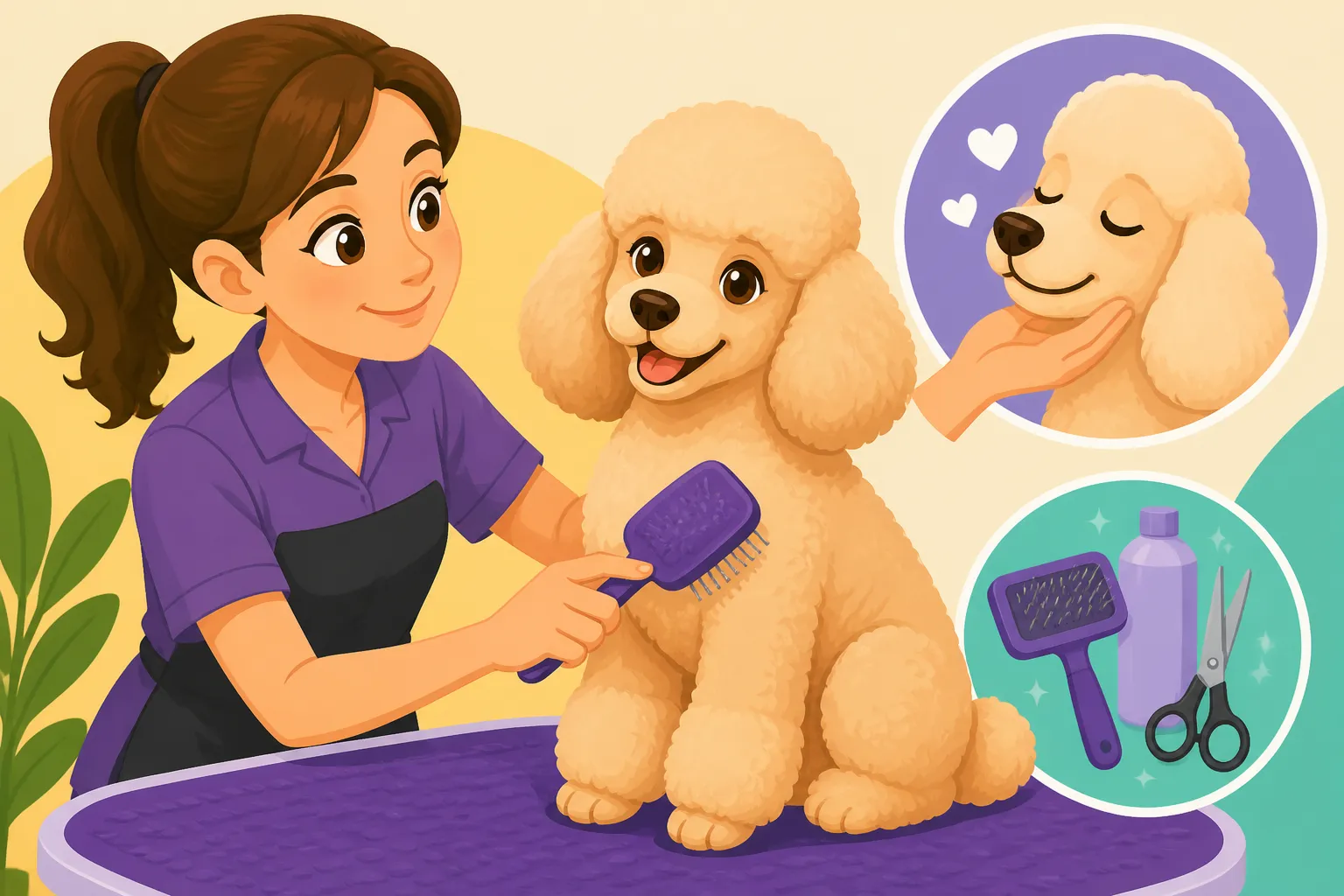
- Slicker Brush: This is your workhorse for detangling and removing loose hair. Look for one with firm but flexible pins. You'll need to use this brush with a technique called Brushing a Poodle to the Skin, which involves parting the hair and brushing in sections, working from the skin outwards. Many Poodle owners find excellent, durable slicker brushes on Amazon.
- Metal Greyhound Comb: This is essential for finding mats the slicker brush might have missed and for ensuring the coat is thoroughly brushed out. It has both wide and fine teeth. After using the slicker, run the comb through the entire coat. If the comb glides through from root to tip, you've done a good job. If it snags, there's a mat you need to work on.
- Pin Brush: Less for detangling, more for finishing and stimulating the skin, especially on longer coats or topknots.
- Detangling Spray: A good quality detangling spray is a lifesaver. Never brush a dry Poodle coat, as this can cause breakage and static. Always spritz the coat with water or a detangling spray before brushing to lubricate the hair and make detangling easier.
When you're brushing, always be gentle. If you encounter a snag or a mat, don't yank. Use your fingers to try and tease it apart first, then work through it with the slicker brush, holding the hair at the base of the mat to prevent pulling on the skin. This careful approach prevents pain and helps maintain your Poodle's trust.
Clippers and Scissors
Even if you plan on professional grooming, a set of clippers for touch-ups is incredibly useful, especially for keeping sanitary areas, paw pads, and faces neat between full grooms.
- Clippers: Invest in a good quality, quiet set of clippers designed for dogs. Cheap clippers can overheat, pull hair, and frighten your Poodle. Look for clippers with interchangeable blades (like a #10 blade for sanitary areas and paw pads, and longer blades like a #4F or #5F for body work). Remember to get a cooling spray for the blades to prevent clipper burn. Learning Clippers Worth Buying for a Poodle can save you money and headaches.
- Scissors: A blunt-nosed pair of scissors is vital for safely trimming around the eyes, ears, and for tidying up edges. Curved shears are excellent for shaping. Always use dog-specific grooming scissors, which are designed with safety in mind.
When using clippers, always ensure the blade is clean, cool, and sharp. Hold the skin taut to prevent nicks, and move the clippers smoothly in the direction of hair growth for a uniform cut. For scissors, be extra cautious around delicate areas. Always point the tips away from your Poodle's body and use your fingers as a guard when trimming near skin folds.
Bathing and Drying Equipment
Bathing a Poodle is a multi-step process that needs to be done correctly to avoid mats.
- Shampoo and Conditioner: Use a high-quality dog shampoo and conditioner. Poodle coats can be prone to drying out, so a moisturizing formula is often beneficial. Make sure to thoroughly dilute the shampoo and rinse every trace of product out of the coat to prevent skin irritation and residue that can attract dirt. You can find excellent selections of Shampoo and Conditioner for a Poodle Coat on Amazon.
- High-Velocity Dryer: This is a game-changer for Poodle owners. A high-velocity dryer uses powerful, unheated (or low-heated) air to blast water out of the coat, significantly reducing drying time and helping to straighten the hair, making it easier to brush and clip. Air-drying a Poodle almost guarantees mats. The sound can be intimidating at first, so remember your desensitization techniques. Teaching a Poodle to Accept the Dryer is a key training step.
- Absorbent Towels: Microfiber towels can help absorb excess water before you move to the dryer.
When bathing, make sure to thoroughly wet the entire coat before applying shampoo. Lather well, paying special attention to areas prone to mats like armpits and behind the ears. Rinse, rinse, and rinse again. Then, apply conditioner, let it sit for a few minutes, and rinse thoroughly. Blot your Poodle with towels, then immediately move to the high-velocity dryer, brushing as you dry to ensure the coat dries straight and mat-free.
Addressing Common Grooming Challenges
Even with the best intentions and tools, Poodle grooming can present its fair share of challenges. From those stubborn mats that appear out of nowhere to a Poodle who suddenly decides the dryer is a monster, these hurdles can test even the most patient owner. It’s important to remember that these challenges are normal, and with the right approach, they can be overcome. Don't get discouraged; instead, view each challenge as an opportunity to reinforce positive training and build deeper trust with your Poodle.
The key to tackling these issues effectively is a combination of prevention, patience, and positive reinforcement. Never resort to anger or force, as this will only exacerbate the problem and erode the trust you've worked so hard to build. A Poodle's sensitive nature means that a negative experience can linger far longer than with some other breeds.
Tackling Mats Without Trauma
Mats are probably the most common and frustrating Poodle grooming challenge. They happen to the best of us, especially during coat change, after a swim, or if a regular brushing session gets missed. The golden rule: never try to brush out a dry, severely matted coat. This is painful for your Poodle and will likely result in damaged hair.
- Assess the Mat: Feel how close it is to the skin and how tight it is. Small, loose mats can often be worked out. Large, tight mats are often best left to a professional, or may require a very close shave with clippers to prevent pain.
- Apply Detangling Spray: Liberally spray the mat with a good quality detangling spray or a coat conditioner mixed with water. Let it soak in for a few minutes.
- Finger Pick First: Gently try to separate the mat with your fingers. Work from the outer edges inwards, trying to pull individual hairs apart.
- Use a Mat Splitter or Comb: If finger picking isn't enough, you can use a mat splitter tool (found on Amazon) or the corner of a metal comb to carefully slice through the mat, creating smaller sections. Always hold the hair at the base of the mat to protect the skin from pulling.
- Brush in Sections: Use your slicker brush and comb, working through the mat in small sections, one layer at a time. Be incredibly gentle.
- Know When to Stop: If your Poodle is showing significant signs of pain or discomfort, or if the mat is too tight, it's time to stop. Forcing it will only make them fear grooming. Sometimes, a mat is so severe it simply needs to be carefully shaved off by a professional. Don't risk injuring your dog. Understanding Surcharges Groomers Add for a Matted Poodle might help you decide if it's better to outsource this particular battle.
Overcoming Fear of the Dryer
The sound and force of a high-velocity dryer can be genuinely terrifying for some Poodles. If you didn't desensitize them as a puppy, or if they had a bad experience, you'll need to go back to basics with counter-conditioning.
- Start Small: Begin by just having the dryer in the room, off. Reward. Then turn it on on its lowest setting, far away. Reward. Gradually decrease the distance.
- Introduce the Air First: Once your Poodle tolerates the sound, direct the airflow away from them at first, then gently towards their hindquarters, a less sensitive area. Keep the nozzle a good distance away, moving it constantly.
- Pair with Treats: Every moment your Poodle tolerates the sound or airflow, give a high-value treat. If they flinch, go back a step.
- Use Ear Protection: Some Poodles benefit from "Happy Hoodies" or cotton balls gently placed in their ears to muffle the sound.
- Make it a Game: Some owners turn drying into a game, tossing treats or engaging in calm praise while drying. The key is never to chase them with the dryer or pin them down. Allow them to move away if they need a break, then try again. Remember the lesson in Teaching a Poodle to Accept the Dryer and be patient.
Managing Nail Trims and Paw Handling
Many dogs, Poodles included, hate having their paws touched and nails trimmed. This is often due to past negative experiences or simply a lack of early desensitization. The key is consistent, positive paw handling.
- Frequent Gentle Touches: Regularly pick up your Poodle's paws, gently spread their toes, and touch their nails without actually trimming them. Reward heavily. Do this multiple times a day.
- Introduce the Tools Slowly: Let your Poodle sniff the clippers or grinder. Touch the back of the clippers to their paw, or turn on the grinder nearby. Reward.
- Practice Short Sessions: When you do trim, aim for one nail at a time initially, followed by a jackpot treat and praise. Gradually increase the number of nails.
- Avoid the Quick: The "quick" is a sensitive blood vessel and nerve that runs through the nail. Cutting it is painful and can make your Poodle fear nail trims for life. If your Poodle has dark nails, it can be hard to see the quick. Trim tiny amounts at a time, or consider using a nail grinder, which allows for more control.
- Professional Help: If you're truly struggling, ask your vet or groomer to demonstrate proper technique. Some Poodles simply do better with a professional. Getting a Poodle Comfortable With Nail Grinding is a skill worth developing for your Poodle's comfort.
Dealing with Face and Ear Sensitivity
Poodles require regular cleaning and trimming around their eyes, ears, and muzzles. These are highly sensitive areas, and many Poodles are naturally wary of having things near their face.
- Early Acclimation: As with all grooming, start early. Gently touch around their eyes, mouth, and ears daily, pairing it with treats.
- Use Blunt-Nosed Scissors: When trimming around the eyes, always use blunt-nosed safety scissors and keep your non-trimming hand firmly but gently placed to guide their head and prevent sudden movements.
- Ear Cleaning: Poodles' drop ears and hair inside the ear canal make them prone to ear infections. Get them used to having their ears lifted and cleaned. Use a veterinary-approved ear cleaner and cotton balls. If you pluck ear hair, make sure it's done gently or by a professional, as it can be uncomfortable. Plucking Hair From a Poodle's Ear Canal can be a contentious topic, so consult your vet.
- Muzzle Shaving: If you opt for a clean face, introduce the clippers slowly to their muzzle area. The buzzing and sensation can be ticklish or startling. Practice short bursts with rewards.
For all these sensitive areas, the principle remains: go slow, use positive reinforcement, and never force the issue. If your Poodle consistently resists, break the task down into even smaller steps and practice frequently.
Maintaining the Routine: Lifelong Habits
Grooming a Poodle isn't a one-and-done task; it's a lifelong commitment. Their unique coat demands consistent attention, and maintaining a regular routine is far easier (and less stressful) than trying to fix problems after they've developed. Think of it as preventative care, just like regular vet check-ups or daily exercise. Establishing these habits early and sticking to them will ensure your Poodle remains happy, healthy, and looking their best.
The consistency benefits both you and your Poodle. For you, it means less time battling mats and less chance of expensive emergency grooming. For your Poodle, it means predictable, positive interactions that contribute to their overall well-being and sense of security. It's about integrating grooming seamlessly into your shared life, making it a natural part of their day.
Consistency is Key
The most important aspect of maintaining good grooming habits is consistency. A daily quick brush, even for just a few minutes, is far more effective than one long, arduous session once a week. This consistent handling reinforces positive associations and allows you to catch any potential mats before they become serious problems.
Consider setting a schedule:
- Daily: Quick full-body once-over with a slicker brush, paying attention to high-friction areas like armpits, behind ears, and groin. A quick comb-through. Check eyes for discharge and wipe.
- Weekly: Thorough line brushing session, checking every inch of the coat with a comb. Nail trim/grind. Ear check and clean.
- Bi-weekly/Monthly: Bath and blow dry. Paw pad and sanitary trim. Face trim.
Here's a sample weekly grooming schedule, though adjust based on your Poodle's coat length and lifestyle:
| Day | Task | Focus Area | Tools Needed |
|---|---|---|---|
| Daily | Quick Brush & Inspection | Face, Feet, Armpits, Tail base | Pin brush, metal comb |
| Mon, Wed, Fri | Full Body Line Brush | Entire coat, ensuring no mats | Slicker brush, greyhound comb, detangler spray |
| Sunday | Nail Trim & Ear Clean | Nails, inside ears (if needed) | Nail clippers/grinder, ear cleaner, cotton balls |
| As Needed (2-4 weeks) | Paw Pad & Sanitary Trim | Hair between pads, private areas | Small clippers (#10 blade) or blunt-nosed scissors |
| Monthly (or as needed) | Bath & Full Blow Dry | Whole body | Shampoo, conditioner, high-velocity dryer, slicker brush |
This routine will keep their coat manageable and help you keep an eye on any developing issues. Remember to adjust based on your Poodle's specific needs – a swimming Poodle might need more frequent baths and thorough drying, for example. Establishing training a Poodle to stand for the groomer is crucial for these longer sessions.
Recognizing Stress Signals
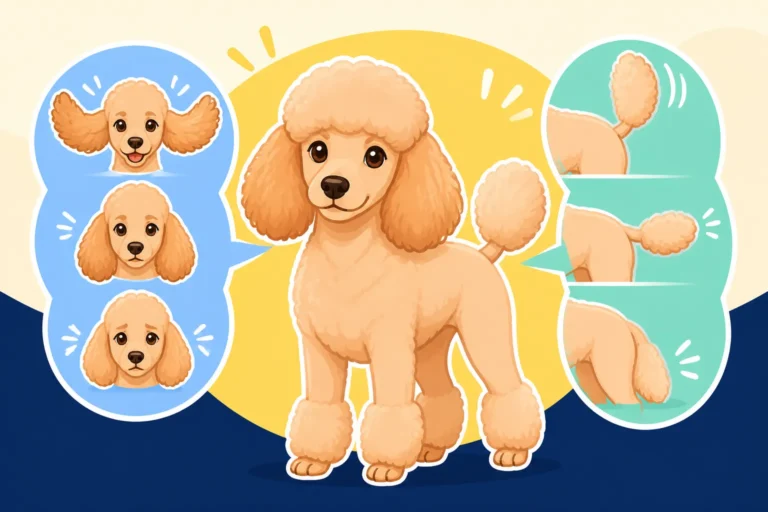
Even the most well-trained Poodle might have an off day, or you might unintentionally do something that causes them discomfort. It’s vital to be able to read your Poodle’s body language and recognize subtle signs of stress or discomfort. Ignoring these signals can lead to your Poodle escalating their protests, potentially resorting to growling or snapping if they feel unheard.
Look for these signs:
- Lip licking or yawning (when not tired): Often indicates mild stress or anxiety.
- Averted gaze or turning head away: A way of saying "I'm uncomfortable, please stop."
- Tense body posture, stiff tail: Signals discomfort or fear.
- Tail tucked between legs: Clear sign of fear.
- Whining or low growl: A warning that they are reaching their limit.
- Trying to escape, struggling: They want out of the situation.
If you see these signals, pause. Take a deep breath. Reassess what you’re doing. Can you adjust your technique? Can you offer a higher-value treat? Can you simply take a break and come back later? Learning to respond empathetically to these cues strengthens your bond and teaches your Poodle that you will listen to their boundaries. This makes future grooming sessions much more cooperative.
Making Grooming a Partnership
Ultimately, successful Poodle grooming is a partnership. You're not just doing something to your Poodle; you're working with them. This means creating an environment where they feel safe, respected, and heard. Use a calm, reassuring voice. Be predictable in your actions. Reward cooperation. Celebrate small victories.
By turning grooming into a consistent, positive, and predictable part of your Poodle's life, you transform it from a source of stress into an opportunity for bonding. Your Poodle will learn that while grooming might not always be their favorite activity, it's a safe one, that you are gentle, and that it always ends with praise and rewards. This builds deep trust, and a Poodle who trusts you implicitly is a Poodle who will happily stand still for their regular pampering, making both your lives a little bit easier and a lot more enjoyable.
Seeking Professional Help
Despite all your best efforts, there might come a time when you need to call in the cavalry. This is perfectly normal and nothing to be ashamed of. Grooming a Poodle is a skilled task, and sometimes, a professional touch or expert guidance is exactly what's needed. Don't let pride get in the way of your Poodle's comfort and health. Recognizing when you need help is a sign of a responsible and caring Poodle owner.
There are various reasons to seek professional help, from handling severe matting to addressing deep-seated fears or simply maintaining a complex show clip. Knowing when and who to ask can make all the difference.
When to Call a Certified Groomer
A professional, certified groomer is a valuable partner in your Poodle's care. Here are some situations where their expertise is invaluable:
- Severe Matting: If your Poodle has developed extensive, tight mats, trying to remove them yourself can be incredibly painful and risk cutting their skin. A professional groomer has the tools and experience to safely and humanely address severe matting, even if it means a full shave-down. They can also provide advice on how to prevent future matting.
- Complex Clips: If you desire a specific style, like a Continental or a fancy show clip, a professional groomer has the artistic eye and technical skill to achieve it. Maintaining these clips at home is often beyond the average owner's capabilities.
- Grooming Phobias: If your Poodle has developed a severe fear of clippers, dryers, or handling despite your desensitization efforts, a professional groomer often has techniques and a calm, confident approach that can help. They may even recommend working with a vet for sedation if the fear is extreme, but usually, their experience alone can help.
- Time Constraints or Physical Limitations: Let's be honest, grooming a Poodle takes time and can be physically demanding, especially for a large Standard Poodle. If you simply don't have the time, or if physical limitations prevent you from adequately grooming your Poodle, a professional groomer is essential. Remember that regular professional grooming is a significant part of What Grooming Adds to a Poodle's Lifetime Cost.
- Specific Skills: Some groomers specialize in certain areas, like hand stripping (though not common for Poodles, good to know for other breeds) or specific behavioral issues. Look for groomers who are patient and use positive reinforcement.
When choosing a groomer, ask about their experience with Poodles, their approach to fearful dogs, and if you can observe a session. A good groomer will prioritize your Poodle's comfort and safety above all else.
Working with a Veterinary Behaviorist
For Poodles with extreme fear, anxiety, or aggression related to grooming, a veterinary behaviorist might be the most appropriate specialist. Unlike a regular groomer or even a standard veterinarian, a veterinary behaviorist is a doctor who has specialized training in animal behavior. They can diagnose underlying anxiety disorders, pain issues, or even prescribe medication to help manage severe fear.
Consider consulting a veterinary behaviorist if:
- Your Poodle's fear of grooming is so intense that they become aggressive (snapping, biting).
- They experience extreme panic attacks during grooming, even with gentle handling.
- You suspect there might be an underlying medical condition (like chronic pain, ear infections, or skin sensitivities) making grooming unbearable.
- You've tried all positive reinforcement and desensitization techniques with no success.
- Your regular vet suggests medication to reduce anxiety during grooming.
A veterinary behaviorist will work with you to develop a comprehensive behavior modification plan, often in conjunction with medication, to help your Poodle cope. This is about addressing the root cause of their distress, not just managing the symptoms. Sometimes, a combination of working with a behaviorist and a specially trained groomer can provide the best outcome for your Poodle. Finding a Trainer a Poodle Will Not Shut Down For is crucial for these sensitive dogs, and a behaviorist can help guide you to such a professional.
Disclaimer
This article is for general informational purposes only and does not constitute professional advice. Laws, prices and regulations vary by location and change over time. Consult a qualified professional for guidance on your specific situation.