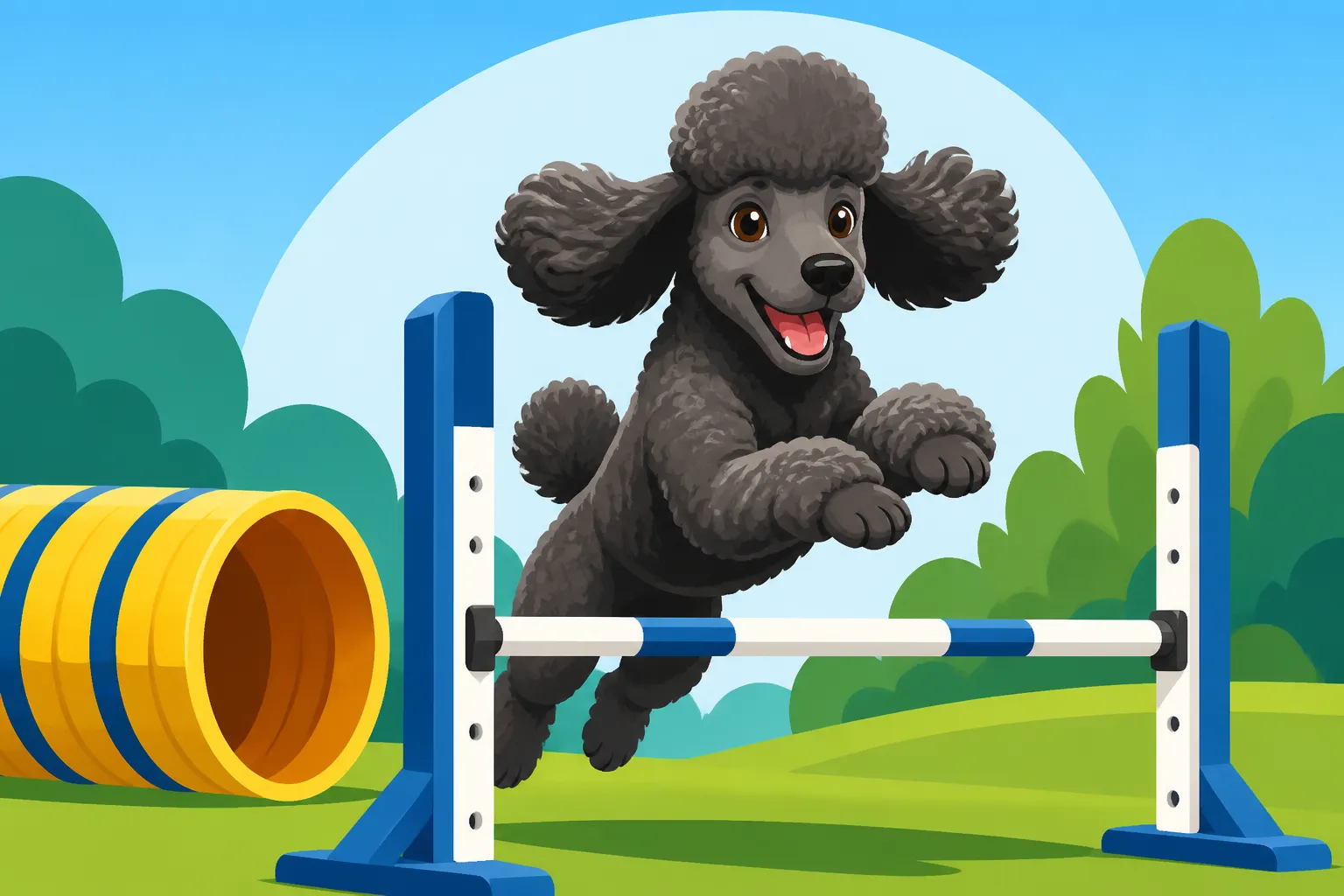
Starting a Poodle in Agility
Many Poodle owners find themselves with a dog that's incredibly smart, bursting with energy, and seemingly always looking for a job. If that sounds like your Poodle, you know the frustration of a brilliant mind without a proper outlet, which can sometimes lead to mischievous behaviors or boredom. This guide is all about channeling that incredible Poodle energy and intellect into the thrilling sport of agility, walking you through how to get started, what to expect, and how to set your Poodle up for success.
Understanding Your Poodle's Agility Potential
Poodles, regardless of their size, are exceptionally well-suited for agility. It’s a sport that demands both physical prowess and mental acuity, traits that are practically in a Poodle’s DNA. Before you even think about jumping over a hurdle, understanding your Poodle’s natural talents and ensuring their physical well-being is paramount.
The Poodle's Natural Aptitude for Agility
There's a reason Poodles consistently rank high on intelligence lists, and it's not just for their ability to learn tricks. Their sharp minds, coupled with an inherent athleticism, make them naturals for agility courses. Originally bred as water retrievers, Poodles possess a unique combination of strength, agility, and a strong drive to work alongside their human companions. This retrieving instinct translates beautifully into a desire to chase and interact with toys, which are often used as high-value rewards in agility training.
Beyond their physical gifts, Poodles tend to be highly biddable and eager to please, especially when positive reinforcement is used. They thrive on engagement and mental stimulation, which agility provides in spades. The intricate sequences of obstacles and the constant communication between handler and dog create a profound bond and satisfy their need for a "job." If you've ever watched your Poodle solve a puzzle toy in mere minutes or figure out how to open a cupboard, you know they possess the problem-solving skills necessary to navigate complex agility courses. It’s not just about speed; it’s about thoughtful movement, understanding cues, and anticipating the next challenge.
Physical Readiness and Health Checks
Before your Poodle leaps over their first bar or darts through a tunnel, a thorough veterinary check-up is absolutely non-negotiable. Agility is a physically demanding sport, and you need to ensure your Poodle is sound and healthy enough to participate without risking injury. This means confirming that their joints, muscles, and overall physique are in good shape. Your vet can perform a comprehensive examination, checking for any underlying conditions that might be exacerbated by intense physical activity.
Crucially, it's vital to wait until your Poodle's growth plates have fully closed, typically around 12 to 18 months of age, depending on the size. Starting agility too early can lead to serious and irreversible joint damage. Standard Poodles, in particular, can be prone to conditions like hip dysplasia, and while Miniature and Toy Poodles aren't immune, they can face issues such as luxating patellas. Poodle Hip Dysplasia by Size and Luxating Patella in Toy and Miniature Poodles are important reads to understand these risks. Your vet might recommend specific screenings, such as X-rays for hips and elbows, or an ophthalmic exam to check for inherited eye conditions like those discussed in Inherited Blindness in Poodles. A healthy Poodle is a happy Poodle, and a physically sound Poodle is a safe Poodle in agility. Don't skip this crucial step; it's an investment in your Poodle's long-term health and your shared enjoyment of the sport.
Foundational Training Before the First Obstacle
You might be itching to get your Poodle weaving through poles, but before you tackle any equipment, a solid foundation of obedience and body awareness is essential. Think of it like building a house: you need a strong base before you can add the fancy roof. Without these fundamental skills, agility can be confusing, frustrating, and even dangerous for your Poodle.
Building a Strong Obedience Base
Agility isn't just about running fast; it's about control, communication, and teamwork. A strong obedience foundation means your Poodle understands and responds reliably to basic cues, even amidst exciting distractions. Imagine being on an agility course with loud noises, other dogs, and tempting smells – your Poodle needs to be able to focus on you. Key cues include a rock-solid recall, a reliable "stay" (both in position and duration), "sit," "down," and a "touch" or "focus" cue that brings their attention directly to you. These commands are not just polite manners; they are safety cues on an agility course. A Poodle that can "stay" at the start line or recall immediately if they're heading towards the wrong obstacle is a safe Poodle.
Poodles are incredibly intelligent and often pick up new cues quickly, sometimes in as few as five repetitions, as explored in Why Poodles Learn a Cue in Five Repetitions. This means you can establish a strong understanding of these basics fairly rapidly with consistent, positive reinforcement. Use high-value treats and enthusiastic praise to make learning fun and rewarding. Avoid harsh corrections; Poodles are sensitive and tend to shut down under pressure, which is counterproductive to building a confident agility dog. Online training platforms, like those offered by BAXTER & Bella, can be a great way to systematically build these foundational skills from home, focusing on positive, engaging methods that resonate with a Poodle's eager-to-please nature. Mastering these basics makes the transition to agility obstacles much smoother and more enjoyable for both of you.
Body Awareness and Confidence Building
Beyond basic obedience, developing your Poodle’s body awareness – their understanding of where their body is in space and how to move it – is crucial for agility. This isn't something dogs instinctively understand for complex movements. Exercises that build proprioception (the sense of self-movement and body position) and confidence will make learning obstacles much easier and reduce the risk of injury. Start with simple activities: walking over different textures like blankets, pillows, or even low garden hoses laid on the ground. These create uneven surfaces that encourage your Poodle to lift their feet and think about their placement.
Cavaletti poles, which are low bars laid on the ground, are fantastic for teaching precise foot placement and rhythm. Start with just a couple of poles, spaced far enough apart for your Poodle to step over comfortably, and gradually increase the number and adjust the spacing. You can also introduce balance exercises using wobble boards or large, stable cushions, encouraging them to stand and shift their weight. The goal here is not speed, but thoughtful movement and stability. Building confidence with these novel surfaces and movements translates directly to mastering contact obstacles, which require precise footing on inclined surfaces. A Poodle who is confident in their own body will approach new obstacles with less hesitation and more grace, making the agility journey much more rewarding.
Finding the Right Agility Program and Equipment
Once your Poodle has a clean bill of health and a solid foundation of obedience and body awareness, it's time to think about actually starting agility. This involves finding a good training environment and getting the right gear to support your new hobby.
Choosing a Poodle-Friendly Agility Class
Finding the right agility class is like finding the right school for your child; the environment and instruction can make all the difference. Look for trainers who prioritize positive reinforcement and force-free methods. Poodles, with their sensitive natures, truly excel when learning is a fun, rewarding experience, not one based on fear or correction. A trainer who understands and respects this will help your Poodle thrive. Ask about class sizes; smaller classes often mean more individualized attention for you and your dog. Inquire about the instructor's experience, especially with Poodles or other intelligent, sensitive breeds. A good instructor will also be able to adapt exercises for different dog sizes and temperaments.
It's always a great idea to observe a class before committing. See how the dogs and handlers are interacting, and notice the overall atmosphere. Is it relaxed and encouraging, or tense and overly competitive? You want a place where both you and your Poodle feel comfortable learning and making mistakes. Don't be afraid to ask questions about the curriculum, safety protocols, and how they handle dogs that might be anxious or over-excited. Remember, the goal is to build a confident, happy agility dog, and that starts with a positive learning environment. Finding a trainer a Poodle will not shut down for is paramount, as discussed in Finding a Trainer a Poodle Will Not Shut Down For. Group classes can vary in cost, so be sure to factor in Poodle Training and Sports Class Costs when budgeting for this exciting new endeavor.
Essential Gear for Your Agility Journey
You don't need a massive investment to start, but having the right equipment makes a huge difference. First things first, your everyday walking gear: a sturdy, flat collar (no choke chains or prong collars, please, especially not in agility) and a non-retractable leash. A retractable leash has no place in an agility environment as it can be dangerous. You'll also need a generous supply of high-value treats – think tiny pieces of cooked chicken, cheese, or hot dogs – and a favorite toy that can be used as a reward for motivation. A treat pouch that attaches to your waist is incredibly handy for quick access during training.
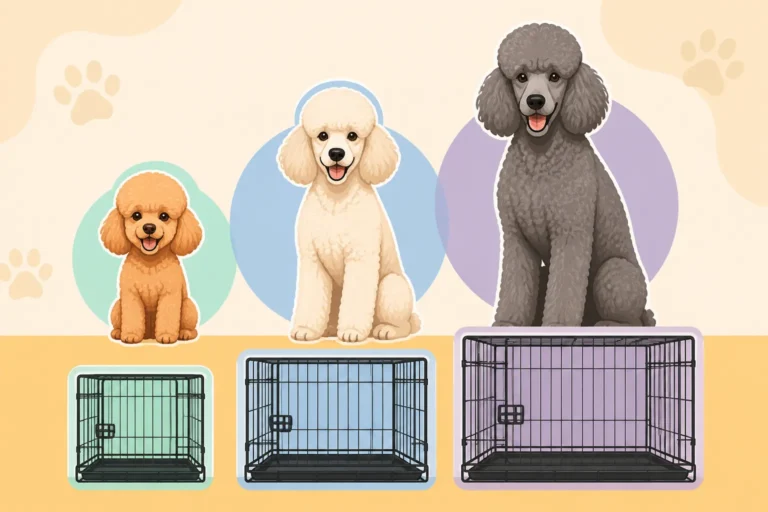
For safety, especially for smaller Poodles, a well-fitting, comfortable harness is often preferred over a collar for running the course, as it distributes pressure more evenly across the chest. You can find a wide variety of excellent harnesses suitable for agility on Amazon, often with adjustable straps to ensure a snug fit that won't impede movement. If you're looking to practice at home between classes, a practice tunnel is an excellent first purchase; they are relatively inexpensive and easy to set up in a yard or even a large living room. Again, Amazon is a great resource for collapsible tunnels that store easily. As you progress, you might consider investing in a few low practice jumps or weave pole guides, but these can wait until you're sure agility is the right fit for your Poodle. Don't forget a crate if you plan on attending trials; Crate Prices by Poodle Size gives you an idea of what to expect there.
Introducing Your Poodle to Agility Obstacles
This is where the real fun begins! Once your Poodle has their foundational skills down and you’ve found a great class, you can start introducing them to the exciting world of agility obstacles. Patience, positive reinforcement, and a keen eye on your Poodle’s comfort level are your most important tools here.
Starting with Tunnels and Jumps
Tunnels are often the first obstacle introduced in agility because most dogs find them naturally fun and non-intimidating. Start with a short, straight tunnel, ideally one where your Poodle can see you at the other end. Crouch down, call your Poodle's name enthusiastically, and toss a high-value treat or favorite toy through to the exit. Encourage them to run through to get their reward. The goal is to make it a thrilling game, building speed and confidence. As your Poodle gets comfortable, you can gradually lengthen the tunnel or introduce slight curves. Always make it a positive experience, celebrating every successful run, no matter how small.
Jumps are another excellent starting point. Begin with the bar set at its lowest possible height, or even just laid on the ground. Lure your Poodle over it with a treat, or use a target stick. Praise and reward heavily for simply stepping or trotting over the bar. The focus is on teaching the motion of going over the jump, not on clearing a challenging height. Gradually raise the bar in tiny increments as your Poodle gains confidence. Remember that The Age a Poodle Can Begin Jumping is important for joint health, and for smaller Poodles, there are specific Jump Heights for a Toy Poodle in Agility to be mindful of, even in practice. Keep sessions short, fun, and end on a high note. The aim is to build a Poodle who loves to jump, not one who fears knocking bars.
Contact Obstacles and Weave Poles
Contact obstacles – like the A-frame, dog walk, and teeter-totter – are more complex and require specific training to ensure your Poodle safely touches designated "contact zones" at the bottom of the ramp. This is crucial for competition and, more importantly, for preventing falls and injuries. Start by introducing these obstacles very low to the ground, allowing your Poodle to simply walk across the flat surface. For the A-frame and dog walk, gradually increase the height, always ensuring a secure footing. Use luring with treats to guide them over the obstacle and reinforce touching the yellow or colored contact zone at the bottom. Never force your Poodle onto a contact obstacle; build their confidence slowly, step by step.
The teeter-totter (or see-saw) can be the most intimidating for dogs due to its movement and sound. Start with the teeter secured so it doesn't move, allowing your Poodle to walk over it like a flat board. Gradually introduce a very slight, controlled movement, eventually letting it tip gently. Again, luring, positive reinforcement, and immense patience are key. Weave poles, where your Poodle must serpentine through a series of poles, are another challenge that takes time and specific training methods. Common techniques include the "2×2 method" (starting with two poles and gradually adding more), channel weaves (poles set wide apart and slowly narrowed), or using guide wires. Regardless of the method, consistency and clear communication are vital. Remember, these are advanced skills, and celebrating small victories is far more important than rushing the process.
Overcoming Common Agility Challenges with Poodles
Agility, like any sport, comes with its challenges. Even the smartest Poodle isn't immune to moments of frustration, over-excitement, or needing a little extra help. Understanding these common hurdles and knowing how to navigate them with your Poodle's unique temperament in mind will make your agility journey smoother and more enjoyable.
Managing Sensitivity and Frustration
Poodles are known for their intelligence, but they are also deeply sensitive creatures. This sensitivity can manifest in agility training in a few ways. They might become easily discouraged if they don't understand a cue, shut down if they feel they've made a mistake, or even refuse an obstacle if they find it intimidating or confusing. Harsh corrections or an impatient handler can quickly extinguish a Poodle's drive and joy for the sport, as highlighted in Why Harsh Handling Breaks a Poodle. The key is to keep training sessions positive, upbeat, and free of pressure. If your Poodle is struggling with an obstacle, break it down into smaller, easier steps. Revisit foundational skills if needed, and always end a session on a success, even if it’s just a simple tunnel run.
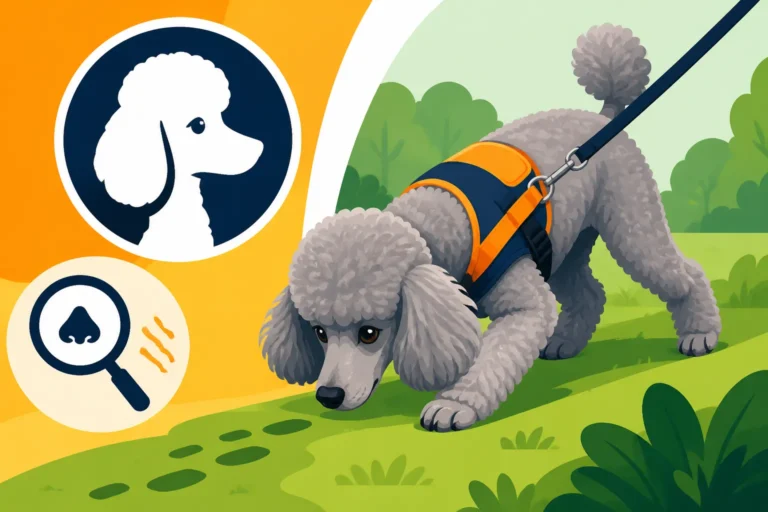
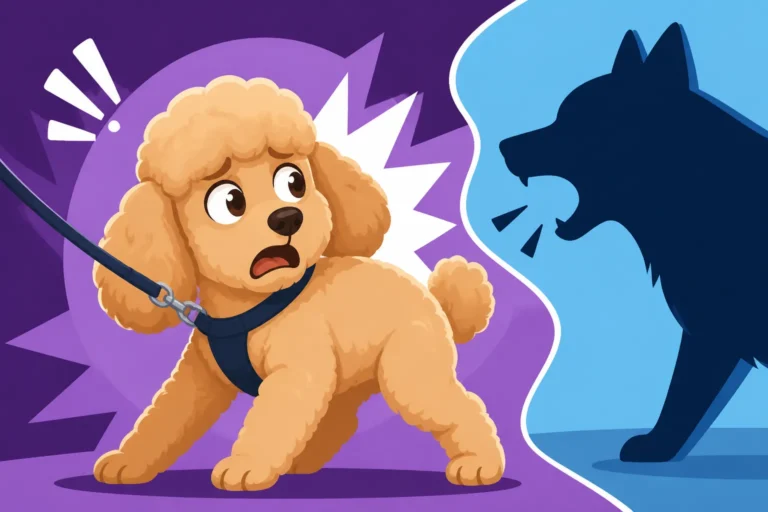
Frustration isn't just limited to the dog; handlers can get frustrated too! When a Poodle gets frustrated, they might start barking excessively (a common Poodle trait discussed in Poodle Barking and Alertness), sniff the ground, or simply walk away from the obstacle. This isn't defiance; it's often a sign that they're confused, overwhelmed, or tired. Keep training sessions short, typically 5-10 minutes, especially when introducing new concepts. Multiple short sessions throughout the day are far more effective than one long, grueling one. Focus on clarity in your cues, consistent rewards, and celebrating every effort, even if it's not perfect. Remember, you're a team, and building trust and confidence is paramount.
Harnessing High Drive and Channeling Excess Energy
While Poodles are sensitive, they also often possess a high drive and boundless energy, which is fantastic for agility but can sometimes be a challenge to manage on a busy course. An over-excited Poodle might anticipate cues, bark excessively, or struggle to maintain focus amidst the myriad of smells, sounds, and other dogs. This is where your strong obedience foundation comes into play. Reinforce focus exercises regularly, teaching your Poodle to tune out distractions and key into you. Use a special "agility only" toy or treat that your Poodle absolutely adores to capture and redirect their attention.
Channeling excess energy before training begins is also crucial. A Poodle who hasn't had adequate physical and mental exercise might struggle to settle and focus. A good walk or a quick game of fetch before an agility session can help them burn off some of that initial exuberance, making them more receptive to learning. Remember, a bored Poodle is often a creative Poodle, and that creativity might not always be in line with your agility goals, as mentioned in Why a Bright Poodle Gets Bored. Agility itself is a fantastic outlet for both physical and mental energy, but consistent daily exercise and mental stimulation are still vital. Incorporate warm-up exercises before you start running sequences and cool-down stretches afterward to prevent injury and teach your Poodle how to transition from high-intensity work to relaxation.
The Path to Competition
For many, agility starts as a fun way to bond with their Poodle and keep them active. But for some, the thrill of seeing their Poodle master a course sparks a desire to compete. The journey from enthusiastic beginner to confident competitor is a rewarding one, filled with learning, growth, and teamwork.
From Beginner to Advanced Skills
As your Poodle masters individual obstacles, the next step is to combine them into short sequences. This introduces the challenge of 'reading' a course and understanding handler direction. You'll start with two or three obstacles, then gradually add more, focusing on smooth transitions and maintaining your Poodle's speed and enthusiasm. This is where handler skills become as important as your Poodle's ability. You'll learn about different handling moves – front crosses, rear crosses, blind crosses – and how your body language, footwork, and verbal cues guide your Poodle through the course. It’s a dance between you and your dog, a constant conversation of movement and trust.
Advanced training also involves teaching discriminations. This means your Poodle needs to understand which obstacle to take when multiple options are present, such as choosing between two tunnels placed side-by-side. It requires precision and clear communication from you. You'll also work on refining weave pole entries, perfecting contact performances for both safety and speed, and increasing your Poodle's overall course speed while maintaining accuracy. This phase is less about teaching new obstacles and more about refining existing skills, building stamina, and developing the seamless partnership that defines high-level agility teams. Agility Titles Poodles Commonly Earn will give you an idea of the progression through different levels of competition.
Entering Your First Agility Trial
The thought of entering your first agility trial can be both exciting and nerve-wracking! It’s a big step, but it’s also an incredible experience to share with your Poodle. Before you enter, make sure your Poodle is proficient and confident on all the standard obstacles and can complete short sequences reliably in a trial-like environment (even if it's just a busy practice session). Review the rules and regulations of the specific organization you plan to trial with (e.g., AKC, USDAA, UKI). Understanding the judging criteria, course maps, and ring procedures will help you feel more prepared.
On trial day, the most important thing is to manage your own nerves! Dogs are incredibly attuned to our emotions, and if you're stressed, your Poodle will pick up on it. Focus on having fun and celebrating your teamwork, regardless of the outcome. The first few trials are often about gaining experience, getting comfortable with the environment, and learning how to navigate the pressure. Remember to warm up your Poodle properly before their run and cool them down afterward. Even if you "go off course" or your Poodle knocks a bar, learn from it, enjoy the moment, and celebrate the journey you’ve taken together. It's about participation, the bond, and the joy of seeing your Poodle do what they love best: running, jumping, and working with you.
| Poodle Size | Agility Suitability | Key Considerations |
|---|---|---|
| Standard | Excellent | Very athletic, powerful jumpers, strong drive. May require more space to turn. Ensure proper growth plate closure before serious jumping. Potential for bloat (manage pre/post exercise feeding). |
| Miniature | Excellent | Often very fast and agile, highly intelligent, good "pocket rocket" energy. Excellent for weaving and tight turns. Watch for luxating patella. |
| Toy | Good to Excellent | Surprisingly athletic and enthusiastic. Must be handled with care due to smaller size and fragility. Jumps will be very low. Watch for luxating patella and tracheal issues. Needs very specific jump heights. |
| Moyen/Klein | Excellent | A mid-size Poodle, offering a blend of Miniature agility and Standard power. Robust and agile, excellent for the sport. |
Disclaimer
This article is for general informational purposes only and does not constitute professional advice. Laws, prices and regulations vary by location and change over time. Consult a qualified professional for guidance on your specific situation.