Poodle Hunt Tests and Field Work
It’s easy to look at a Poodle, especially one meticulously groomed in a show clip, and think they're purely creatures of elegance and leisure. But if you stop there, you’re missing out on a huge part of what makes this breed so incredibly special. Poodles were originally bred as robust water retrievers, and that powerful instinct is still very much alive in them. This guide will help you understand their working heritage and explore how engaging your Poodle in hunt tests and field work can unlock a world of fulfillment for both of you.
Understanding the Poodle's Natural Instincts for Field Work
Before we even talk about specific tests, it’s vital to acknowledge the Poodle's deep-rooted genetic blueprint. These aren't just pretty faces; they possess an impressive drive and natural aptitude for working alongside humans, particularly in tasks involving retrieving.
The Water Dog Heritage
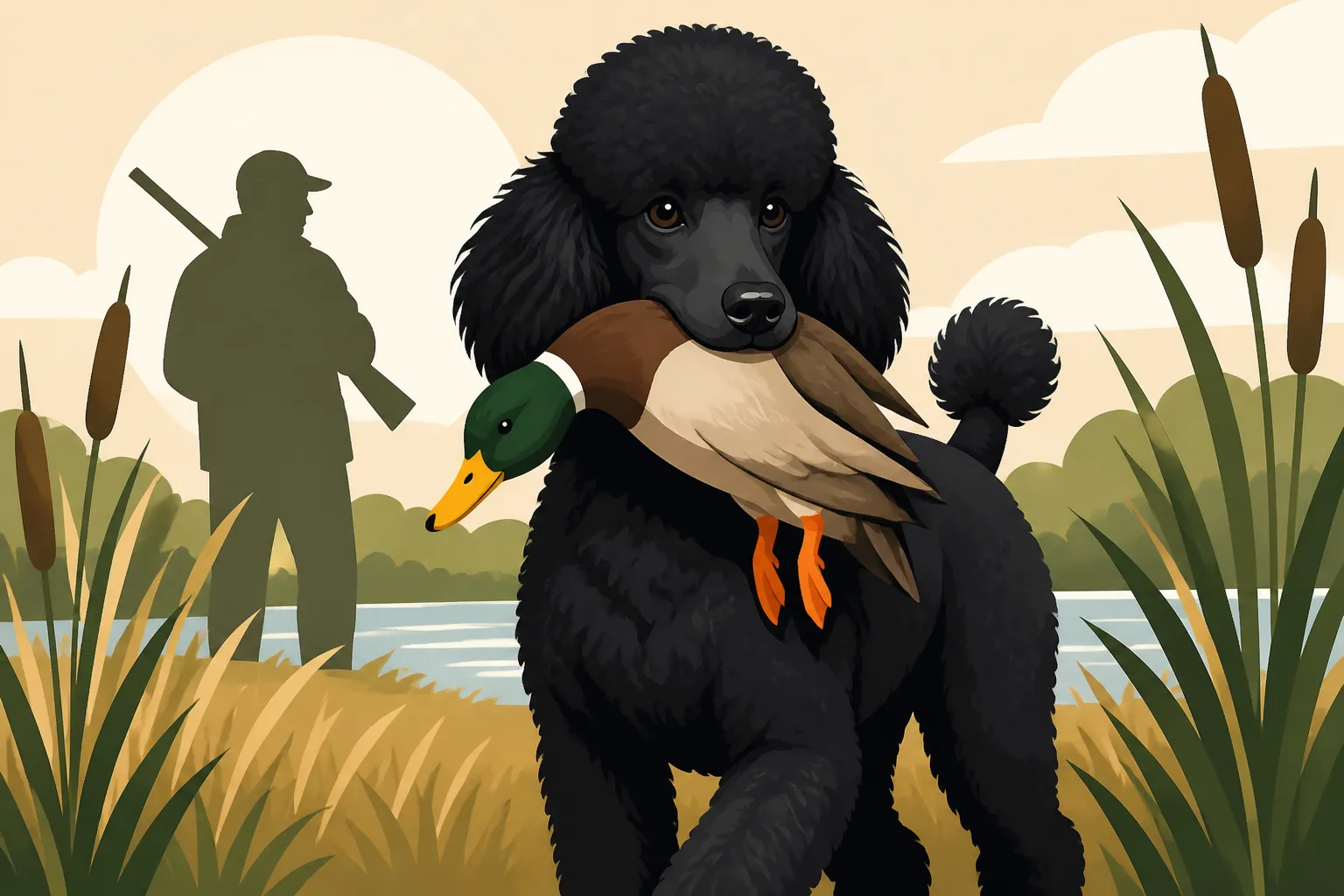
Many people are genuinely surprised to learn that the name "Poodle" comes from the German word "Pudel" or "Pudeln," which means "to splash in water." This isn't just a quirky historical tidbit; it's a direct reference to their original job. Poodles were, first and foremost, water retrieving dogs, developed to fetch shot waterfowl from chilly lakes and rivers. This history means they come equipped with an incredible set of natural attributes that make them perfect for field work.
Think about it: their dense, curly coat, which often gets clipped into those iconic 'puffs' in the show ring, actually served a very practical purpose. It provided insulation and protection from icy water and brambles, with strategic shaving around joints to allow for freedom of movement. They also have webbed feet, a subtle but significant adaptation that aids in swimming and maneuvering through muddy terrains. This combination of physical traits, paired with their innate desire to retrieve, means that when you see a Poodle bounding into a pond after a dummy, you're not just seeing a dog playing; you're witnessing generations of selective breeding for a specific purpose. It's truly a beautiful thing to watch them embrace their original calling. If you're curious about their history, you might enjoy The Water Dog Behind the Poodle.
Intelligence and Trainability in the Field
Beyond their physical capabilities, Poodles are renowned for their intelligence. They consistently rank among the smartest dog breeds, a trait that makes them exceptionally trainable. In the context of field work, this intelligence is a massive advantage. They don't just mechanically perform tasks; they think, problem-solve, and adapt.
A Poodle in the field isn't merely following a rote command; they're analyzing the environment, remembering fall locations, and using their keen senses to locate game or dummies. This requires more than just basic obedience; it demands a dog that can process information, retain complex patterns, and execute multi-step tasks under pressure and distraction. Their eagerness to please, coupled with their sharp minds, means they pick up new concepts and commands with surprising speed. Handlers often find that Poodles learn a new cue in just a handful of repetitions, making them a joy to train for intricate retrieving scenarios. This also means that consistency and positive reinforcement are key; a Poodle that understands why they are doing something and enjoys the process will give their all. It's often said that Poodles learn a new command in roughly Why Poodles Learn a Cue in Five Repetitions, which tells you just how quickly they can grasp complex instructions. This makes them superb partners in the field, as they can quickly learn intricate patterns and hand signals crucial for advanced retrieves.
Types of Hunt Tests and Field Work for Poodles
For Poodle owners keen to explore their dog's retrieving instincts, there's a structured world of activities waiting. These tests are designed to evaluate a dog's natural abilities and trained manners in a simulated hunting environment, providing an excellent outlet for their energy and intelligence.
AKC Hunt Tests: Levels and Objectives
The American Kennel Club (AKC) offers a popular series of hunt tests open to all retrieving breeds, including our beloved Poodles. These tests are not about shooting live game, but rather about demonstrating the dog's ability to retrieve fallen birds (usually dead or live flyers, or dummies) efficiently and obediently. There are three progressive titles a dog can earn: Junior Hunter (JH), Senior Hunter (SH), and Master Hunter (MH).
- Junior Hunter (JH): This is the entry-level title, focusing on basic retrieving skills and enthusiasm. A Poodle working towards their JH title will be expected to make single retrieves on land and water. This means a bird or dummy is thrown, and the dog is sent to retrieve it, bringing it promptly and directly back to the handler. They must also be steady, meaning they don't break until sent, and respond to basic commands. It's a fantastic starting point that builds confidence and enthusiasm, proving your Poodle has the foundational instincts.
- Senior Hunter (SH): Stepping up from JH, the Senior Hunter title requires more advanced skills. Here, a Poodle will face multiple marked retrieves (where they see multiple birds fall and must remember their locations), blind retrieves (where the dog doesn't see the bird fall and must be guided by the handler to the hidden bird), and honoring another dog's retrieve (staying steady while another dog works). The tests involve more varied terrain, cover, and distances. This level truly starts to challenge a Poodle's memory, focus, and responsiveness to handler direction.
- Master Hunter (MH): The pinnacle of AKC hunt tests, the Master Hunter title demands consistent, high-level performance under a variety of complex scenarios. These tests involve multiple marked and blind retrieves, intricate setups, advanced handling skills, and perfect steadiness. A Master Hunter Poodle demonstrates exceptional natural ability combined with highly refined training. This level truly showcases a Poodle's full potential as a retriever, requiring them to think critically and execute flawlessly, often in challenging conditions. The progression through these titles is a rewarding journey, highlighting the Poodle's inherent retrieving talent and trainability.
Working Certificate Tests
Beyond the AKC, the Poodle Club of America (PCA) also offers its own specialized Working Certificate (WC) programs, sometimes known as Working Certificate Excellent (WCX). These tests are designed specifically for Poodles and often place a strong emphasis on water work, which harks back directly to their origins.
These PCA Working Certificates are a wonderful way to celebrate the Poodle's unique heritage. The tests often involve more challenging water retrieves than some of the early AKC levels, requiring the dog to enter deep water confidently, swim long distances, and retrieve from boats or across significant water bodies. They might also include retrieves from dense cover along the water's edge, simulating the marshy environments Poodles once worked in. The focus is on demonstrating the Poodle's natural retrieving drive, their swimming prowess, and their ability to work cooperatively with their handler in an aquatic setting. Earning a WC or WCX title is a source of immense pride for many Poodle owners, as it directly acknowledges and honors the breed's foundational purpose. It’s a powerful affirmation that the Poodle is far more than just a glamorous companion; they are capable, driven working dogs. For more on how Poodles naturally take to water, check out Water Work and the Poodle.
Other Field-Oriented Activities
Even if competitive hunt tests aren't your end goal, there are plenty of other ways to tap into your Poodle's field instincts. The beauty of these activities is that they don't require the same intense training commitment as formal competitions, but they still provide incredible enrichment.
Simple retrieving games in a field or even a large, safe backyard can be incredibly satisfying for a Poodle. Using different types of dummies – soft ones, harder plastic ones, even scented ones – can keep things interesting. Think about how much joy they get from chasing a tennis ball; now imagine that amplified by a natural instinct to find and deliver a specific object. Scent work, where your Poodle uses their nose to locate hidden items, is another fantastic field-oriented activity. While not directly retrieving, it engages their tracking abilities and provides immense mental stimulation. Many Poodles excel at nose work, which can be done anywhere, from your living room to a vast open field. You can set up simple "find it" games with treats or a favorite toy, gradually increasing the difficulty. Even something as seemingly modern as shed hunting (searching for antlers dropped by deer) can be a natural fit, as it combines tracking with retrieving. These activities allow your Poodles to engage their natural hunting instincts in a safe, fun, and non-competitive environment, preventing boredom and channeling their energy constructively. For more ideas on how to keep your Poodle active, read Poodles in Sport and Working Roles.
Preparing Your Poodle for Field Work and Hunt Tests
Embarking on the journey of hunt tests and field work with your Poodle is incredibly rewarding, but it does require careful preparation. It's not just about natural talent; it's about building a solid foundation of training, confidence, and a strong partnership.
Foundation Training and Socialization
Before you even think about throwing dummies in a field, your Poodle needs a rock-solid foundation of basic obedience and extensive socialization. This is non-negotiable for success and safety in any field environment. A Poodle needs to understand and reliably respond to commands like "sit," "stay," "here" (recall), and "heel" under increasing levels of distraction. Imagine your Poodle off-leash in a large field with other dogs, birds, and tempting smells – their recall needs to be instant and unwavering. Many Poodles are highly sensitive, so harsh corrections or punitive training methods can be detrimental. Positive reinforcement, patience, and clear communication are key to building their confidence and enthusiasm for the work. Poodle Recall Training is an excellent resource for strengthening this vital command.
Beyond obedience, proper socialization is crucial. This means exposing your Poodle to a variety of sights, sounds, people, and other dogs from a young age. In a field environment, they might encounter gunshots (even if blanks), the sound of birds, different weather conditions, and unfamiliar people and dogs. A well-socialized Poodle will be less likely to be fearful or distracted by these elements, allowing them to focus on their job. If your Poodle is wary of new experiences, they won't be able to perform their best. Consider joining a local obedience class or seeking guidance from a professional trainer experienced in working dogs. A Poodle that has been properly socialized and introduced to a variety of stimuli will be far more confident and focused in the field. This also means starting early; a Poodle that is Socializing a Poodle Before It Turns Wary will have a much easier time adapting to the sights and sounds of field work.
Introducing Retrieves and Water Work
Once you have a strong foundation of obedience, you can begin to introduce the specific skills needed for field work. The key here is to make every experience positive and fun, building their drive and enthusiasm.
Start with simple retrieves in a quiet environment. Use a retrieving dummy (avoid regular toys at first, as you want to differentiate "play" from "work") and make it a highly rewarding game. Throw it a short distance, encourage them to fetch, and praise them lavishly when they bring it back. Gradually increase the distance and introduce light cover (like tall grass). Never force a retrieve or turn it into a chore; if your Poodle starts losing interest, end the session on a positive note and try again later. For water work, the same principles apply. Many Poodles are natural swimmers, but some may need a gentle introduction. Start in shallow, calm water, like a kiddie pool or a shallow edge of a pond. Toss a favorite floating toy just a few feet out and encourage them to wade in. Never throw them in or force them into the water. Build up their confidence slowly, making it a fun, splashing experience. Their natural instincts will often take over once they feel comfortable. Remember, the goal is to ignite their passion for retrieving and water, not to create a negative association. For a deeper dive into teaching your Poodle to retrieve, check out Teaching a Poodle to Retrieve. If your Poodle is new to water, guidance like Introducing a Poodle to Water can be incredibly helpful.
Essential Gear and Safety Considerations
Just like any outdoor activity, field work requires the right gear and a keen eye for safety. Being prepared ensures both you and your Poodle have a positive and secure experience.
- Training Dummies: Invest in good quality retrieving dummies. These are typically canvas or rubber, some designed to float, others to sink slightly. You can find a wide variety of these on platforms like Amazon. Having different types can keep your Poodle engaged and help them learn to retrieve various textures.
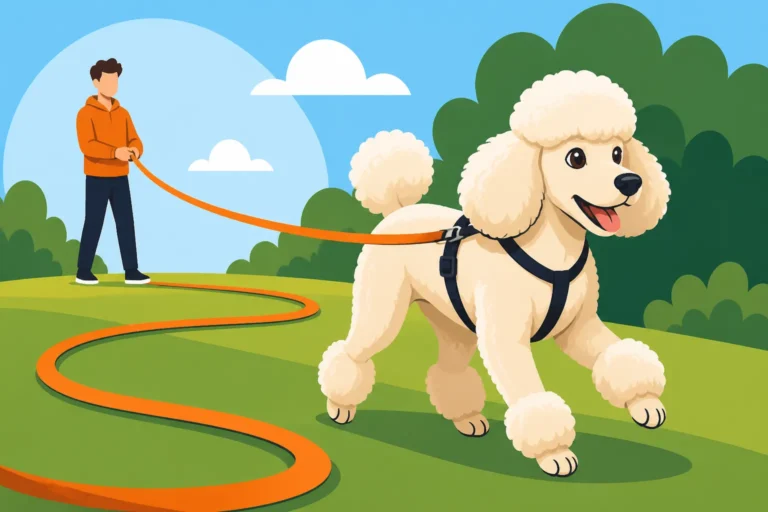
- Long Lines: A long line (a very long leash, often 15-30 feet or more) is invaluable for practicing recall and control in open areas before your Poodle earns full off-leash privileges.
- Whistle: A dog training whistle can be incredibly effective for long-distance recall and directional commands in the field, especially when your voice might not carry.
- Vests/Protective Gear: For Poodles working in dense cover or colder water, a neoprene vest can provide warmth and protection from abrasions. Their magnificent coats, while protective, can get matted and snagged, so consider a shorter, practical clip for field work.
- First Aid Kit: Always carry a basic canine first aid kit. This should include bandages, antiseptic wipes, tweezers (for thorns or ticks), and any personal medications your Poodle might need.
- Water and Bowls: Hydration is key, especially during active sessions. Always have fresh water and a collapsible bowl handy.
- Weather Awareness: Be mindful of the weather. Avoid working in extreme heat or cold. Poodles can be susceptible to overheating with their dense coats, and freezing temperatures can be dangerous, especially during water retrieves.
- Location Safety: Ensure the area you're working in is safe. Check for hazards like sharp objects, poisonous plants, or strong currents in water bodies. Be aware of local hunting seasons if you're in areas with wildlife. Always let someone know where you are going and when you expect to return. Safety always comes first for your beloved Poodle.
| AKC Hunt Test Level | Primary Objective | Key Skills Evaluated | Poodle Suitability |
|---|---|---|---|
| Junior Hunter (JH) | Introduce to retrieving, build desire | Single marked retrieves (land/water), steadiness | Excellent beginner |
| Senior Hunter (SH) | Intermediate retrieving, handling | Multiple marked retrieves, single blind retrieve, honoring | Great for engaged |
| Master Hunter (MH) | Advanced retrieving, precise handling | Complex multiple marked/blind retrieves, advanced honoring | High-level, dedicated |
| Working Certificate | Poodle-specific water retrieving | Deep water retrieves, boat work, dense cover | Excellent, heritage |
The Benefits of Engaging Your Poodle in Field Work
Engaging your Poodle in hunt tests and field work isn't just about earning titles or showing off. It’s about unlocking a deeper connection with your dog, fulfilling their innate needs, and enriching their life in profound ways.
Mental and Physical Enrichment
Poodles are incredibly intelligent and energetic dogs. If their minds and bodies aren't given adequate outlets, they can become bored, frustrated, and even destructive. This is often when Poodles invent their own "jobs," which might include excessive barking, chewing, or counter-surfing. Field work offers the perfect combination of intense physical exercise and challenging mental stimulation, precisely what a Poodle craves.
Think about the focus required to mark a fall, navigate complex terrain, remember multiple retrieve locations, and respond to hand signals, all while resisting distractions. This isn't just running around; it's active problem-solving. This kind of mental engagement is incredibly tiring in the best possible way. A Poodle that has spent an hour or two engaged in field work is a happy, calm, and well-behaved Poodle at home. It channels their natural drive, satisfies their curiosity, and provides a profound sense of purpose. This deep level of engagement can effectively prevent many common behavioral issues that arise from under-stimulation. If you're wondering What an Unexercised Poodle Does to the House, field work provides a strong answer! For more on keeping their clever minds busy, explore Keeping a Poodle Mind Occupied.
Strengthening the Handler-Dog Bond
Working together as a team in the field creates an unparalleled bond between you and your Poodle. Unlike simply going for a walk, field work requires constant communication, trust, and mutual understanding. You are relying on your Poodle's instincts and training, and they are relying on your guidance and cues.
Every successful retrieve, every perfectly executed blind, reinforces that partnership. You learn to read your Poodle's body language in new ways, understanding their subtle cues as they work through cover or scent a bird. They, in turn, learn to trust your direction implicitly, even when their instincts might pull them elsewhere. This shared experience of overcoming challenges together, celebrating successes, and learning from mistakes builds a powerful, unbreakable connection. It's a dance of cooperation, where each partner plays a vital role. This kind of collaborative activity deepens respect and affection far beyond what passive companionship alone can achieve. It's a true partnership, built on shared effort and triumph.
Connecting with Poodle Heritage and Community
One of the most profound benefits of engaging in field work with your Poodle is the deep satisfaction of honoring their historical purpose. It’s truly special to see your Poodle thriving, doing what generations of their ancestors were bred to do. You're not just owning a dog; you're preserving a legacy.
This journey also opens doors to a vibrant community of like-minded Poodle owners and working dog enthusiasts. You'll find clubs, training groups, and trials where you can connect with people who understand and appreciate the Poodle's working capabilities. These communities are invaluable resources for advice, encouragement, and friendship. Sharing your passion with others who truly 'get it' can be incredibly enriching. Many trainers, like those found through BAXTER & Bella, emphasize building a comprehensive training foundation that can easily translate to field work, offering a supportive path into this world. From local Poodle clubs to broader retriever organizations, you'll discover a welcoming network. It’s a wonderful feeling to watch your Poodle excel, knowing you're helping them live a full, purposeful life that taps into their deepest natural drives. You're part of a tradition that celebrates the Poodle's true versatility and spirit.
Engaging your Poodle in hunt tests and field work is a phenomenal way to honor their rich history, provide unparalleled mental and physical stimulation, and forge an unbreakable bond built on teamwork and trust. It's about seeing beyond the show ring and discovering the capable, intelligent, and driven retriever that lies beneath that iconic coat. Whether you pursue competitive titles or simply enjoy structured retrieving games in your local park, giving your Poodle a "job" that taps into their instincts will lead to a happier, healthier, and more fulfilled companion for both of you. So, don't hesitate—explore the exciting world of Poodle field work!
Disclaimer
This article is for general informational purposes only and does not constitute professional advice. Laws, prices and regulations vary by location and change over time. Consult a qualified professional for guidance on your specific situation.