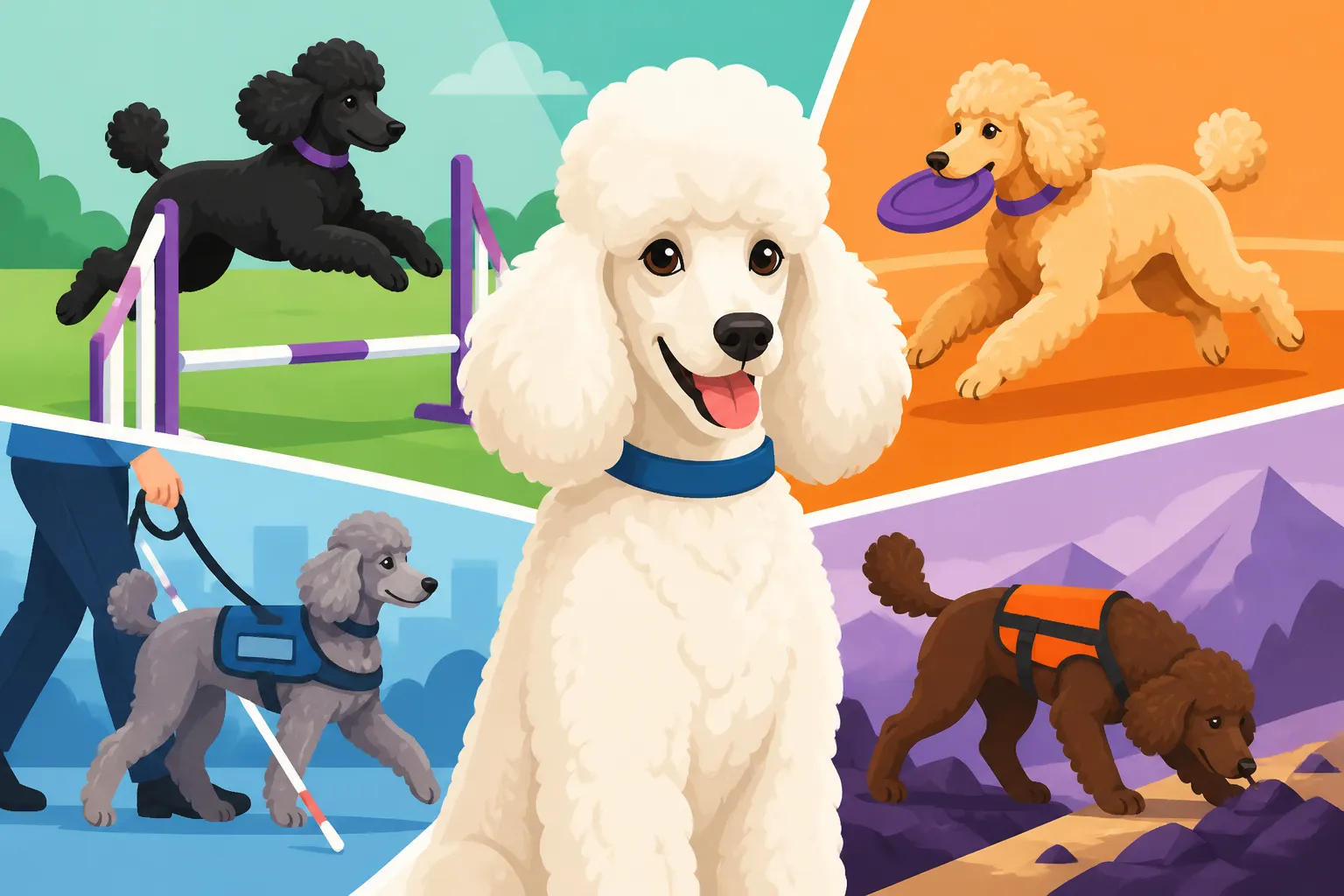
Poodles in Sport and Working Roles
Many Poodle owners, and even those just admiring the breed from afar, often get caught up in the sophisticated appearance, the elaborate grooming, or the playful antics. But beneath that elegant coat lies a driven, intelligent, and highly capable dog with a rich history of working alongside humans. If you've ever wondered if your Poodle is truly satisfied with just a daily walk or if there's more to their potential, this guide is for you. We're going to dive deep into the fascinating world of Poodles in sport and working roles, exploring their history, their amazing aptitudes, and how you can unleash their full potential.
The Poodle's Sporting Roots: More Than Just a Pretty Face
It's easy to look at a Poodle in a fancy show clip today and imagine them as purely ornamental. But that couldn't be further from the truth! This breed, in all its sizes, carries a deeply ingrained heritage of athleticism and working drive. They weren't always sashaying across a show ring; they were splashing through icy waters, retrieving game for hunters, and putting their keen minds to task.
From Waterfowl Retriever to Modern Athlete
The very name "Poodle" comes from the German word "Pudel," meaning "to splash in water." This gives you a massive clue right there! Long before they became known for their sophisticated looks, Poodles were highly prized waterfowl retrievers in Germany and later in France. Imagine a bustling hunting scene: the crisp air, the scent of the marsh, and a Poodle, powerful and agile, plunging into chilly water to bring back a downed bird. Their dense, curly coat, far from being just a fashion statement, was perfectly designed for this task, providing insulation and buoyancy. They were working dogs through and through, requiring stamina, intelligence, and a strong drive to please their human companions.
This history means that even your cuddly Toy Poodle or stately Standard Poodle likely has a retrieving instinct lurking deep within. It’s why so many Poodles absolutely adore playing fetch, and why they often have a natural affinity for water. They're not just playing; they're tapping into centuries of genetic programming. This inherent drive to "do something" is crucial to understanding why they thrive in modern dog sports. They aren't simply performing tricks; they are fulfilling a fundamental need for purpose and activity. Understanding The Water Dog Behind the Poodle really helps us appreciate their origins.
The Functionality Behind the Iconic Clip
Let's talk about that famous Poodle clip, the one with the pom-poms and shaved sections. While it looks purely aesthetic now, it actually originated from a very practical need in their working days. When Poodles were retrieving in cold water, their thick coat could become waterlogged and heavy, hindering their movement and increasing the risk of hypothermia. Hunters quickly realized that by shaving certain areas, they could reduce drag and weight, making the dog more efficient in the water.
However, they didn't just shave everything. Key areas like the joints, chest, and sometimes the kidneys were left covered with longer hair, or "pom-poms," to protect them from the cold. Think of it as natural joint warmers and vital organ insulation for a working athlete! It was a brilliant, functional solution that allowed the dogs to perform optimally in challenging conditions. So, the next time you see a Poodle in a traditional clip, remember its utilitarian roots. It’s a testament to the breed's working heritage and a clear indicator of how practical considerations shaped their appearance. If you're curious, you can learn more about Why the Poodle Clip Was a Working Design.
Poodle Prowess in Competitive Dog Sports
Today, Poodles aren't typically out retrieving ducks, but their intelligence, agility, and eagerness to work mean they excel in a huge array of modern dog sports. These activities provide the mental stimulation and physical exercise that Poodles, especially Standard Poodles, absolutely crave. It's a wonderful way to bond with your dog, channel their energy, and showcase their incredible talents.
Agility: Grace, Speed, and Smarts
Agility is perhaps one of the most exciting dog sports, and Poodles, across all sizes, are absolutely phenomenal at it. This sport involves guiding your dog through an obstacle course against the clock, navigating jumps, tunnels, weave poles, and a seesaw, all without verbal commands or physical touch from you. It demands incredible teamwork, communication, and, of course, a dog that is both fast and smart enough to understand complex sequences.
Poodles, with their inherent intelligence and keen ability to pick up new commands, often master agility courses with dazzling speed and precision. Their athletic build, particularly the Standard Poodle, gives them powerful jumping ability and quick turns. Even Miniature and Toy Poodles can dart through courses with surprising speed and accuracy, often making them crowd favorites. Watching a Poodle gracefully leap over a jump or weave through poles with such focus and joy is truly something to behold. They love the challenge, the problem-solving aspect, and the sheer exhilaration of running full out with their favorite person. Many Poodle owners find that agility is a fantastic way to burn off that boundless Poodle energy and keep their dog's mind sharp. You might be surprised at the array of Agility Titles Poodles Commonly Earn.
Obedience and Rally: Precision and Partnership
If you prefer something a bit more structured, Poodles are also stars in obedience and rally. Traditional obedience trials judge a dog's ability to perform a set series of exercises precisely, often off-leash, with commands like "heel," "sit," "stay," and "recall." It's about perfect execution and a strong, seamless partnership between dog and handler. Poodles, being the highly trainable and intelligent dogs they are, often excel here, showing incredible focus and an almost uncanny ability to anticipate their handler's next move. Their desire to please shines through, and they often pick up cues with remarkable speed. As you might know, Poodles rank very highly in intelligence, as discussed in The Poodle's Place in Dog Intelligence.
Rally obedience is a slightly more relaxed version, often described as a "friendly walk with your dog." You navigate a course with numbered signs, each indicating a specific exercise to perform, such as a spiral, a figure-eight, or a specific sit-stay command. The focus is less on perfect precision and more on the dog's enthusiastic and willing performance. Poodles, with their playful spirit and sharp minds, really seem to enjoy rally. It still challenges them mentally but allows for more handler encouragement, which many Poodles adore. Both obedience and rally are excellent ways to strengthen your bond and ensure your Poodle is a well-behaved and responsive companion. It's also a fantastic way to show off their incredible brainpower! They really do love learning, and Obedience Titles Poodles Take at Trials are a testament to that.
Dive, Fetch, Track: Beyond the Traditional Arena
While agility and obedience are popular, Poodles also shine in many other dog sports that tap into their natural instincts and athleticism. Dock diving, for example, is a sport where dogs run down a dock and leap into a pool of water, trying to jump the farthest or highest to retrieve a toy. Given their history as water retrievers, it’s no surprise that many Poodles take to this sport like a duck to water! They have a powerful drive to fetch and a natural love for swimming, making them natural candidates for high-flying, big-splashing fun.
Scent work and tracking are other fantastic options that engage a Poodle's powerful nose and problem-solving skills. These sports involve teaching your dog to locate specific scents or follow a track, often mimicking real-life search and rescue scenarios. Poodles have excellent olfactory senses and the focus required to methodically search an area. It’s an incredible way to provide mental enrichment and exercise, especially for those rainy days when a long walk isn't possible. Poodles genuinely enjoy having a "job" to do, and using their nose is a deeply satisfying one for them. Moreover, they are keen on retrieval, so you might want to look into Poodle Hunt Tests and Field Work for a deeper dive.
Poodles Making a Difference: Essential Working Roles
Beyond the world of competitive sports, Poodles are increasingly finding themselves in crucial working roles, leveraging their calm temperament, high intelligence, and strong desire to connect with humans. These are roles where a dog’s presence and capabilities can truly change lives.
Therapy and Emotional Support Poodles
Perhaps one of the most heartwarming roles a Poodle can take on is that of a therapy dog or emotional support animal. Their empathetic nature, gentle demeanor, and incredible intuition make them perfectly suited for bringing comfort and joy to people in need. Therapy dogs, often with their handlers, visit hospitals, nursing homes, schools, and even disaster sites, providing a calming presence and a welcome distraction. The soft, curly Poodle coat is often well-tolerated by those with allergies, making them excellent choices for these environments where hypoallergenic qualities are a plus.
A Poodle's ability to read human emotions, to sit quietly and offer a comforting nudge, or to simply be a warm, furry presence for someone experiencing distress is truly remarkable. I've heard countless stories of Poodles bringing smiles to elderly patients or helping children overcome reading anxieties in school programs. They have this incredible capacity to connect, to simply be with someone, and that connection can be profoundly healing. You can learn more about Therapy Dog Work for a Poodle to understand the impact these dogs have.
The Dedicated Service Poodle
Service dogs perform specific tasks to assist individuals with disabilities, allowing them to live more independently. While Labrador Retrievers and Golden Retrievers are often the first breeds that come to mind, Poodles, particularly Standard Poodles, are increasingly being recognized for their immense potential in this field. Their intelligence, trainability, and moderate size make them versatile partners for a wide range of tasks.
A Poodle service dog might be trained to retrieve dropped items for someone in a wheelchair, open and close doors, alert a hearing-impaired person to sounds, or provide balance support for someone with mobility issues. For individuals with psychiatric disabilities, a Poodle might provide deep pressure therapy to interrupt panic attacks or offer a stable presence during moments of anxiety. Their steady temperament and focus allow them to perform these tasks reliably in public spaces, making them invaluable companions. It truly highlights Why Poodles Read People So Well, demonstrating their empathy and dedication.
Detection and Search Work: Unsung Heroes
You might be surprised to learn that Poodles also have a knack for detection and search work. While not as common as breeds like Beagles or German Shepherds in these roles, their intelligence, keen sense of smell, and drive to work can make them effective. Poodles have been utilized in niche detection roles, such as sniffing out certain types of mold, bed bugs, or even specific medical conditions due to their incredible olfactory abilities.
In search and rescue scenarios, their agility and stamina can be an asset, especially in urban or less rugged environments. Their non-shedding coats can also be an advantage in certain sterile environments or for handlers with allergies. The key to a successful detection or search Poodle is consistent training, a strong bond with their handler, and a healthy dose of that inherent Poodle "puzzle-solving" intelligence. They thrive on the mental challenge and the satisfaction of finding what they're looking for, proving that the Poodle's talents extend far beyond mere beauty.
What Makes a Poodle So Apt for Performance?
So, what is it about the Poodle that makes them such powerhouses in sports and working roles? It’s not just one thing; it’s a remarkable combination of traits that breeders have, perhaps unintentionally, refined over centuries. These qualities make them incredibly adaptable and capable, ready for almost any challenge you throw their way.
The Unmatched Poodle Intelligence
Let's face it, Poodles are brilliant. They consistently rank among the most intelligent dog breeds, often second only to the Border Collie in many studies. This isn't just a fun fact; it's a huge asset in any sport or working role. A Poodle's brain is like a sponge, soaking up new commands and concepts with astonishing speed. Where other breeds might need dozens of repetitions, a Poodle often grasps a new cue in just a handful. This makes training not just efficient, but genuinely enjoyable for both dog and handler. They thrive on learning and problem-solving.
This high intelligence means they can understand complex sequences, anticipate their handler's moves, and even improvise when necessary – a crucial skill in dynamic environments like agility courses or real-world service work. However, this intelligence comes with a caveat: a bored Poodle is a mischievous Poodle. If their minds aren't adequately challenged, they'll often invent their own "jobs," which might include counter-surfing, excessive barking, or finding creative ways to get into trouble. Providing an outlet for their intelligence through sports or training is essential for their overall well-being. It really highlights the importance of Training the Second Smartest Dog Breed.
Eagerness to Please and Trainability
Beyond just being smart, Poodles possess a strong desire to please their human companions. They genuinely enjoy working with people and earning praise. This "biddability" makes them incredibly trainable. They respond well to positive reinforcement methods and form deep bonds with their handlers, which is the foundation of any successful working or sporting partnership. They often show a remarkable willingness to try new things and push their boundaries, as long as it means they get to spend quality time and earn approval from their favorite person.
This eagerness also translates into excellent focus. When a Poodle is engaged in a task or sport, they tend to tune out distractions and concentrate on the job at hand. This is invaluable in busy competition environments or public access situations for service dogs. They are not easily deterred and possess a tenacious spirit when motivated. However, it's worth noting that Poodles are also highly sensitive dogs. Harsh training methods can quickly shut them down and damage their trust. Positive, reward-based training is key to unlocking their full potential. If you're looking for guidance, consider resources like Finding a Trainer a Poodle Will Not Shut Down For.
Athleticism Across All Sizes
While Standard Poodles are often lauded for their athleticism, it's important to remember that all three sizes of Poodles possess impressive physical capabilities. Standard Poodles are powerful, agile, and have excellent stamina, making them ideal for high-impact sports like agility, flyball, and even running long distances. Their elegant gait and strong build are built for movement.
Miniature Poodles are equally athletic, just in a smaller package. They are often incredibly quick and nimble, excelling in agility and rally obedience. They might not cover as much ground as a Standard, but their speed and tight turns are truly impressive. Toy Poodles, despite their delicate appearance, are far from fragile. They are surprisingly robust, energetic, and intelligent, and can excel in scaled-down versions of agility, obedience, and scent work. They have a boundless enthusiasm for life and a surprising amount of stamina for their size. Don't let their small stature fool you; a Toy Poodle can often outlast much larger dogs in a game of fetch! So, regardless of your Poodle's size, there's likely a sport or activity perfectly suited to their athleticism. And remember, Daily Work for a Poodle's Body and Mind is essential for all Poodles.
Here's a quick overview of Poodle sizes and their common aptitudes in sports and work:
| Poodle Size | Typical Athleticism | Common Sports & Roles | Key Advantages |
|---|---|---|---|
| Standard | High stamina, powerful, agile | Agility, Obedience, Rally, Dock Diving, Hunt Tests, Service, Therapy, Detection | Strength, speed, endurance, versatility |
| Miniature | Fast, nimble, good stamina | Agility, Obedience, Rally, Freestyle, Scent Work | Quick turns, focus, moderate size for travel |
| Toy | Energetic, quick, surprisingly robust | Smaller-scale Agility, Obedience, Rally, Scent Work, Therapy | Portability, delicate touch, keen intelligence |
Getting Your Poodle Involved: First Steps into the World of Work and Sport
So, you're convinced your Poodle has more to offer than just being a pampered pet? Fantastic! Getting involved in dog sports or exploring working roles can be an incredibly rewarding journey for both you and your Poodle. But where do you start? It can feel a little overwhelming at first, but with a clear plan, you'll be well on your way.
Assessing Your Poodle's Aptitude and Your Goals
Before you jump into signing up for classes, take a moment to observe your Poodle. What do they naturally enjoy? Do they love to chase a ball endlessly (retrieving)? Are they always exploring with their nose (scent work)? Do they get excited when you practice commands (obedience)? While Poodles are versatile, tapping into their natural inclinations will make the experience more enjoyable and successful for both of you. Don't force them into something they clearly don't enjoy. For example, if your Poodle is a bit hesitant about water, dock diving might not be the best starting point!
Next, consider your own goals and lifestyle. Are you looking for a fun weekend hobby? Do you have aspirations of competing at a high level? Or are you hoping to train your Poodle for a specific working role, like therapy visits? Being realistic about the time commitment, your own physical capabilities, and what you want to achieve will help you choose the right path. It's perfectly fine to start with something simple, like a basic obedience class, just to enhance your bond and see what sparks your Poodle's interest. Remember, the journey is just as important as the destination. This is all part of Keeping a Poodle Mind Occupied.
Finding the Right Training and Community
Once you have a better idea of your interests, the next step is to find appropriate training and a supportive community. Local kennel clubs, specialized dog training centers, and even online resources can be great places to start. Look for trainers who use positive reinforcement methods – Poodles thrive on praise, treats, and toys, and respond poorly to harsh corrections. A good instructor will help you understand your Poodle's learning style and guide you through the process step-by-step. Don't be afraid to observe a class before committing to ensure it's a good fit for your Poodle's personality and your training philosophy.
Connecting with other Poodle owners in sports or working roles can also be invaluable. They can offer advice, share resources, and provide encouragement. Many local clubs have open days or introductory sessions where you can watch different sports and talk to experienced handlers. This is also a great way to socialize your Poodle and get them used to new environments and other dogs, which is a crucial foundation for any competitive or working endeavor. Websites like Chewy often have community forums where experienced Poodle owners discuss training tips and local resources.
Essential Gear for Active Poodles
Getting involved in sports or working roles often means you'll need a few specialized items, but don't worry, you don't need to break the bank from day one. Good quality training treats are a must, something high-value and easily digestible. A comfortable, well-fitting harness or flat collar, and a sturdy leash, are also essential for safety and control. For certain sports like agility, you might eventually invest in specialized items like a long line or specific types of toys. For general everyday training and play, Chewy offers a fantastic selection of durable toys that can withstand even the most enthusiastic Poodle play sessions.
For working roles, especially service dogs, you'll need to consider specific vests or patches that identify your Poodle, as well as comfortable booties for paw protection if they'll be on varied terrain. And of course, a reliable grooming routine is always important for a Poodle, especially one that's active. Mud, burrs, and general grime can quickly lead to mats in their glorious coats. A good slicker brush and a wide-toothed comb are indispensable after any outing. Again, Chewy is a great resource for all these essentials, from grooming supplies to training aids, making it easier to equip your active Poodle for success.
Disclaimer
This article is for general informational purposes only and does not constitute professional advice. Laws, prices and regulations vary by location and change over time. Consult a qualified professional for guidance on your specific situation.