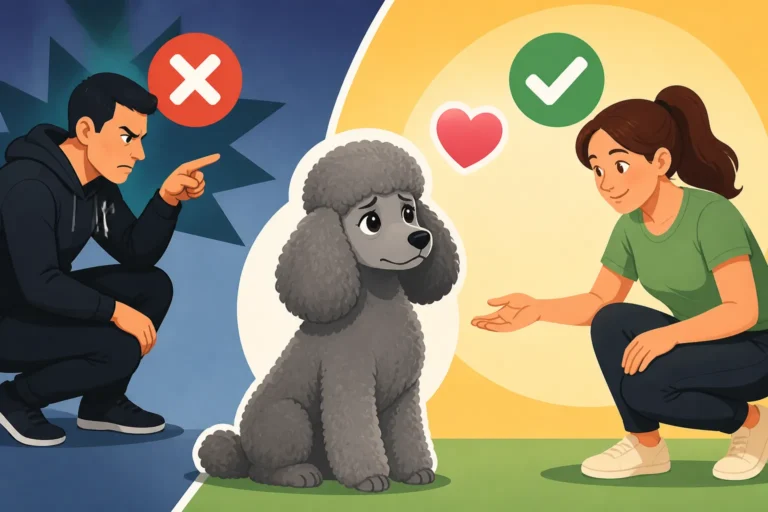
Bringing a Wary Poodle Out of Its Shell
It can be heartbreaking to watch your Poodle shrink from the world, whether they're a sensitive puppy who missed out on early experiences or an adult who’s suddenly become fearful after a traumatic event or illness. This guide is here to walk you through the compassionate steps to gently coax your wary Poodle out of their shell, helping them build confidence and discover that the world isn't such a scary place after all.
Understanding Why Your Poodle Might Be Wary
Poodles, for all their intelligence and elegance, are often quite sensitive souls. Their keen minds and observant nature can sometimes make them more prone to anxiety and wariness if not properly supported. It’s not about them being "stubborn" or "misbehaving"; it’s usually a deep-seated fear response that needs understanding and patience. If you've ever felt frustrated that your Poodle seems to be intentionally avoiding new things or cowering, remember that their reactions are likely driven by genuine fear, not defiance.
Genetic Predisposition and Early Experiences
Sometimes, wariness can be rooted in genetics. Just like people, some Poodles are simply born with a more reserved or anxious temperament. If a Poodle comes from a lineage where parents or grandparents were overly shy, fearful, or lacked confidence, those traits can sometimes be passed down. This isn't a guarantee, of course, but it's a factor to consider, especially if you adopted a puppy with unknown parentage.
Even more impactful are early life experiences, or the lack thereof. The critical socialization window for puppies (roughly 3 to 16 weeks) is vital. During this time, puppies need positive exposure to a wide variety of sights, sounds, people, and other friendly, vaccinated dogs. A Poodle puppy kept in isolation, or one that experienced negative interactions early on, might develop a lasting fear of new situations. They simply didn't learn that the world outside their immediate comfort zone is safe and interesting, rather than frightening. This can often lead to a Poodle who is wary of strangers or new environments, finding comfort only within their trusted circle.
Traumatic Events or Lack of Exposure
Even a well-socialized Poodle can become wary if they experience a traumatic event. This could be anything from a frightening vet visit, a fall, a severe fright from a loud noise, or an unpleasant encounter with another dog. These single, negative incidents can have a profound and lasting impact on a sensitive Poodle's psyche, causing them to generalize that fear to similar situations or even entirely new ones. Suddenly, a dog who once loved walks might refuse to leave the house, or one who enjoyed meeting new people might now cower behind your legs.
Beyond trauma, simply a lack of ongoing, positive exposure to novel stimuli can cause a Poodle to become wary over time. If a Poodle lives a very sheltered life, rarely leaving the house or meeting new people, they might naturally become more cautious and fearful when confronted with unfamiliar circumstances. Their world shrinks, and anything outside of it becomes a potential threat. It's not that they've forgotten how to be brave; it's that they haven't had the opportunities to practice it. This can be particularly true for Poodles who thrive on routine and predictability; a sudden deviation can throw them off balance and trigger anxiety.
Physical Discomfort or Illness
It's absolutely essential to consider your Poodle's physical health when they suddenly become wary or fearful. Reading Pain in a Sensitive Poodle is crucial, as dogs are masters at hiding discomfort. A Poodle experiencing pain from conditions like arthritis, dental issues, ear infections, or even a subtle injury might become withdrawn, irritable, or fearful because they associate new interactions or environments with increased discomfort. Imagine if every step you took caused a twinge; you'd likely become hesitant to explore.
Underlying medical conditions, especially those affecting the brain or endocrine system, can also manifest as behavioral changes like increased anxiety or fear. For example, some Poodles can suffer from Thyroid Disease in Poodles, which can sometimes lead to behavioral shifts. Before embarking on any extensive behavioral modification plan, a thorough veterinary check-up is non-negotiable. Your vet can rule out any physical causes and ensure your Poodle isn't silently suffering, which would make any training efforts frustrating and ineffective. If your Poodle is experiencing pain, their wariness is a self-preservation mechanism.
Crafting a Sanctuary: The Home Environment
For a wary Poodle, their home needs to be more than just a house; it needs to be a predictable, safe sanctuary where they feel completely secure. This feeling of safety is the bedrock upon which all confidence-building will stand. Without it, you're trying to build a castle on sand. The aim is to reduce stress triggers within their immediate environment, allowing their nervous system to calm down and learn that not everything is a threat.
Establishing Predictable Routines
Consistency is truly a comfort for a wary Poodle. When their day is predictable, they learn what to expect, and this reduces anxiety. Try to establish a consistent schedule for feeding, walks, playtime, and potty breaks. For example, if walks always happen at 7 AM and 5 PM, your Poodle will anticipate these events rather than being surprised by a sudden leash grab. The same goes for meal times; a set schedule means they're not constantly wondering when their next meal will appear, which can be a subtle stressor for some dogs.
Predictable routines also extend to how you interact with them. If cuddles always happen when you sit on the sofa, and training sessions always involve upbeat praise and treats, your Poodle will learn to look forward to these interactions. Sudden, unpredictable movements or changes in your tone can be jarring for a sensitive Poodle. Sticking to a calm, consistent approach in your own behavior will go a long way in communicating stability and safety to your dog.
Creating Safe Zones
Every wary Poodle needs a designated "safe zone" – a place where they can retreat and feel completely unbothered. This might be a crate, a cozy dog bed in a quiet corner, or even a spot under a desk. The key is that this space is theirs, and no one (especially children or other pets) should disturb them when they are there. Make it comfortable with soft bedding and maybe a favorite blanket. You can even place a calming scent diffuser nearby.
For some Poodles, a Crate Size for Each Poodle Variety that allows them to stand, turn around, and lie down comfortably can be an ideal safe haven. Introduce it positively with treats and toys, never as punishment. This den-like space provides a sense of security and control. If visitors come over, or if there's loud activity, your Poodle should always have the option to retreat to their safe zone without judgment or interference. This autonomy is vital for building their sense of control over their environment, which in turn reduces fear.
Managing External Stimuli
The world outside your door, and even inside your home, can be full of overwhelming stimuli for a wary Poodle. Think about what might trigger their anxiety: loud noises, unexpected visitors, delivery trucks, or even just the sight of people walking by the window. Your job is to manage these inputs to prevent your Poodle from constantly being on edge. Consider using white noise machines, calming music, or even leaving a TV on low to mask unsettling outdoor sounds.
For Poodles who react strongly to things they see through windows, consider privacy film or simply closing curtains during peak times. When it comes to visitors, manage introductions carefully. A wary Poodle should never be forced to interact. Instead, have guests ignore them, allowing the Poodle to approach when they feel ready. You can even use a baby gate to create a visual and physical barrier between your Poodle and new people. Reducing these stressors isn't about coddling; it's about gradually introducing manageable doses of the world so your Poodle can learn to cope, rather than being constantly bombarded and overwhelmed.
| Behavior | What it Might Mean | How to Respond |
|---|---|---|
| Tail tucked low | Fear, submission, insecurity | Give space, avoid direct eye contact, speak in soft tones |
| Ears flattened/pulled back | Fear, anxiety | Reduce perceived threat, remove from situation, offer a safe retreat |
| Lip licking, yawning | Stress, appeasement | Pause interaction, allow a break, check environment for stressors |
| Freezing, reluctance to move | Overwhelmed, unsure what to do | Don't force movement, wait for them to initiate, gently encourage with treats |
| Growling, snapping | Warning, feeling threatened | Immediately stop interaction, create distance, re-evaluate situation |
| Hiding, retreating | Seeking safety, overwhelmed | Respect their need for space, ensure their safe zone is accessible |
| Shaking, trembling | High anxiety, fear | Remove from stressor, provide comfort in their safe space, use calming aids |
Building a Bridge of Trust: Training and Interaction
Once your Poodle feels somewhat safe in their home environment, the next step is to actively build a strong, positive relationship based on trust. This means becoming a reliable source of good things, someone they can look to for guidance and comfort, rather than another potential source of fear or unpredictability. This bridge of trust is fundamental for helping them venture out of their shell.
Positive Reinforcement and Gentle Handling
Positive reinforcement is your most powerful tool. It means rewarding desired behaviors with something your Poodle loves – tasty treats, gentle praise, or a favorite toy. Avoid any harsh corrections, yelling, or punishment, as these will only deepen a wary Poodle's fear and erode trust. When your Poodle offers a moment of curiosity, however small, reward it immediately. Did they look at a new object without flinching? Treat! Did they take a step towards a new person? Treat!
Gentle handling is equally important. Always approach your Poodle calmly and slowly. Avoid sudden movements or reaching over their head, which can be perceived as threatening. Instead, offer your hand to their side for a sniff, and let them initiate contact. During grooming or vet visits, which can be sources of anxiety, use treats and soft words to create positive associations. Learning to read your Poodle's body language is key to knowing when they are comfortable and when they are feeling overwhelmed. Forcing interaction will only set you back. Consider resources from reputable trainers like BAXTER & Bella, which emphasize positive, force-free methods. They often have materials that can help guide you through gentle interactions.
Confidence-Building Activities
Engaging your Poodle's clever mind in fun, confidence-boosting activities can work wonders. Poodles thrive on mental stimulation, and successfully solving a puzzle or mastering a new trick can be incredibly empowering. Start with simple puzzle toys where they have to nudge or flip something to get a treat. You can find a huge variety of these on Amazon, from beginner to advanced. As they get better, gradually increase the difficulty. Each time they figure it out, they build a tiny bit more self-assurance.
Scent work is another fantastic activity for Poodles, tapping into their natural retrieving instincts and requiring focus rather than bravery. Start by hiding treats in plain sight and encouraging them to find them. As they become proficient, hide them in more challenging spots around the house or yard. This engages their powerful noses and builds their independent problem-solving skills, without the pressure of external stimuli. Even simple training games, where they learn a new, fun trick, can help them feel more capable and connected to you. Trick Training a Poodle can really tap into their innate intelligence and desire to please.
Desensitization and Counter-Conditioning Basics
These are the cornerstones of helping a fearful dog. Desensitization means gradually exposing your Poodle to something they fear at a very low intensity, so low that it doesn't trigger a fearful response. Counter-conditioning means changing their emotional response to that fearful thing from negative (fear) to positive (happiness). You're essentially teaching them, "When [scary thing] appears, good things happen!"
For example, if your Poodle is wary of strangers, start by having a trusted friend stand far away, perhaps across the street, while you give your Poodle high-value treats. The goal is for your Poodle to notice the person but not react with fear. Over many sessions, very slowly decrease the distance, always staying below your Poodle's "threshold" of fear. If they start to show signs of stress (lip licking, tail tucking), you've gone too fast; increase the distance again. The moment the stranger appears, treats should rain down. The moment they leave, treats stop. The idea is to create a positive association, not just exposure. This process requires immense patience and keen observation of your Poodle's subtle cues. Sound Work for a Noise-Sensitive Poodle is a great example of this in action.
Gradual Steps Towards the World: Controlled Socialization
Bringing a wary Poodle out of its shell isn't about throwing them into the deep end. It's about meticulously planning their interactions with the world, ensuring each step is positive, controlled, and never overwhelming. This is where patience truly becomes a virtue, as rushing the process can set you back significantly.
Observing and Respecting Your Poodle's Thresholds
Every Poodle has a "threshold" – a point at which a stimulus (a new person, a strange dog, a loud noise) becomes too much, and they switch from being curious or neutral to being fearful. Your primary job is to identify this threshold and always stay below it. This means starting with very minimal exposure. If your Poodle is scared of other dogs, for instance, their threshold might be seeing a dog 50 feet away. If you try to walk them closer, or let another dog approach, you've crossed their threshold, and they'll likely react fearfully.
Learning to read your Poodle's subtle body language cues (lip licking, yawning, stiffening, pulling away, sniffing the ground excessively) is critical. These are often early signs of stress before a full-blown fearful reaction. The moment you see these signs, you need to either increase distance, decrease the intensity of the stimulus, or end the session on a positive note. Pushing them past their threshold will not make them braver; it will only reinforce their fear. Remember, this is a marathon, not a sprint. Telling Poodle Fear From Poodle Refusal can help you interpret their signals.
Controlled Introductions to New Experiences
When it comes to introducing new people, places, or things, control is everything. Start with very calm, predictable environments. If your Poodle is wary of new people, choose one or two very calm, dog-savvy friends to help. Have them sit quietly, ignore your Poodle, and perhaps occasionally toss a high-value treat in their direction without making eye contact. Let your Poodle approach them at their own pace. Never force interaction or allow strangers to rush up and pet them.
For new places, begin with quiet parks or sidewalks during off-peak hours. Take short walks, focusing on positive reinforcement for calm behavior, even if it's just sniffing the grass. Gradually introduce slightly busier environments, always with an escape route planned. Use a long line (easily found on Amazon) to give them freedom to explore safely while maintaining control. Remember the principles of What a Poodle Puppy Should Meet by Sixteen Weeks – even for an adult, the idea of positive, varied, controlled exposure applies. Slowly expanding their world, one positive experience at a time, builds confidence organically.
The Role of a Trustworthy Training Partner
Sometimes, trying to bring a wary Poodle out of their shell by yourself can feel overwhelming, especially if their fear is deeply ingrained. This is where a professional, force-free dog trainer or behaviorist can be an invaluable partner. Look for someone who specializes in fear and anxiety, uses positive reinforcement methods, and has experience with sensitive breeds like Poodles. They can help you identify triggers, develop a tailored desensitization and counter-conditioning plan, and teach you how to effectively read and respond to your Poodle's signals.
A good trainer acts as a coach, guiding you through the process and providing crucial support and expertise. They can also provide controlled environments for introductions, such as "parallel walks" with a calm, confident dog at a distance your Poodle can handle. This allows your Poodle to observe positive interactions from a safe distance without feeling pressured. Think of it as having an expert navigator for a challenging journey; while you're still doing the driving, they're helping you steer clear of danger and find the smoothest path forward.
Disclaimer
This article is for general informational purposes only and does not constitute professional advice. Laws, prices and regulations vary by location and change over time. Consult a qualified professional for guidance on your specific situation.