The Cues a Poodle Picks Up in a Week
Bringing a new Poodle into your home is an incredibly exciting time, filled with dreams of perfect companionship and clever tricks. But let's be real: while Poodles are renowned for their intelligence, many new owners wonder just how quickly their smart little fluffball will pick things up. It's frustrating to feel like you're speaking a different language. This guide will help you understand the Poodle's incredible learning capacity and precisely which foundational cues you can realistically expect your Poodle to master within their very first week with you.
The Poodle's Natural Aptitude for Learning
Poodles didn't get their reputation as highly intelligent dogs by accident. They are consistently ranked among the smartest breeds, and for good reason! This isn't just about showing off; their sharp minds are a fundamental part of their heritage and personality, making them incredibly receptive to training from a young age. Understanding this innate ability is the first step to leveraging it effectively in your training journey.
Why Poodles Are So Quick on the Uptake
Poodles were originally bred as water retrievers, a job that required not only physical prowess but also significant problem-solving skills and a strong bond with their human handler. This history imprinted a keen intellect and a desire to work alongside people into their genetic makeup. They thrive on mental stimulation and genuinely enjoy the process of learning, often making connections much faster than other breeds. It’s almost as if they were designed to be trainable, eager to understand what you want and how to achieve it. This makes them truly rewarding partners in training, but it also means they require consistent engagement to prevent boredom.
What this means for you, the owner, is that your Poodle isn't just listening; they're actively processing and trying to figure out the puzzle you've presented. They pick up on patterns, body language, and tone of voice with remarkable speed. This quick grasp of information allows them to associate actions with consequences, whether positive or negative, very rapidly. Many Poodle owners marvel at how their pups seem to understand complex sequences or generalize commands to new situations almost effortlessly, often requiring fewer repetitions than you might expect for them to Why Poodles Learn a Cue in Five Repetitions. This intellectual capacity is a gift, but it also means you need to be sharp and consistent yourself!
The Importance of Early Training
Given their intelligence, early and consistent training is not just beneficial for a Poodle; it's practically essential. A Poodle's brain is like a sponge, especially during those critical puppy development stages. The longer you wait to introduce basic concepts and expectations, the more deeply ingrained unwanted behaviors might become. It's far easier to shape a young Poodle's habits than to try and undo months of self-taught mischief. Think of it as laying a strong foundation for a magnificent building – the stronger the start, the better the structure will hold up over time.
Beyond just learning commands, early training helps to build a robust communication system between you and your Poodle. It establishes you as a reliable leader and helps your Poodle understand the rules of their new home. This bond, built on trust and clear communication, is invaluable. Early positive experiences with training also boost your Poodle's confidence and adaptability, making them more resilient to new situations and less prone to anxiety or fear later in life. Remember, a well-socialized and well-trained Poodle is a happy Poodle, ready to tackle the world with you. The Age a Poodle Puppy Starts Learning is a great resource if you're wondering when to start.
Essential Cues for the First Week
When you first bring your Poodle home, especially if it's a puppy, the goal isn't to turn them into a circus performer overnight. Instead, focus on building a strong foundation of communication and trust. The first week is about introducing crucial life skills and basic manners that will serve as building blocks for more complex training down the road. Don't be surprised if your Poodle surprises you with how quickly they grasp these fundamentals!
The Foundation: Sit, Stay, Come
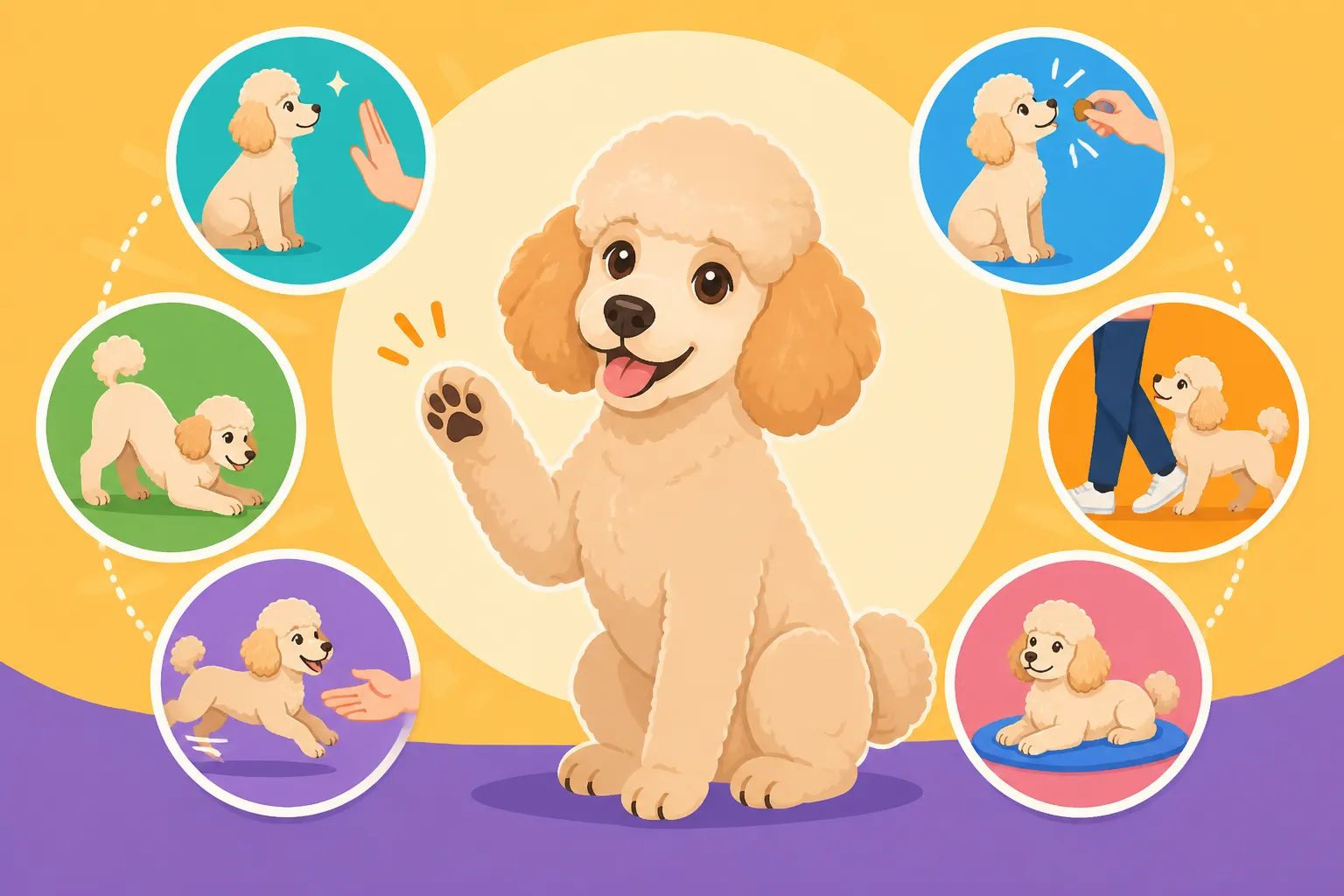
"Sit" is often the first cue owners teach, and for good reason. It’s a simple, natural action for a dog, and teaching it immediately gives both you and your Poodle a win, boosting confidence. Hold a treat near their nose, move it back over their head, and as their rear naturally lowers, say "Sit!" and reward them instantly. Poodles usually connect this action and word within a few repetitions, often within a single short session. Practicing this in different locations, even just moving from the kitchen to the living room, helps them generalize the command.
"Stay" is a bit more challenging as it requires impulse control, but a Poodle's intelligence helps them understand the concept quickly. Start with very short durations (a second or two) and gradually increase. Reward them for staying put even if you're just taking one step away and coming right back. The key is to set them up for success. You might find that after a few days of consistent practice, your Poodle can hold a "stay" for 5-10 seconds with you standing a few feet away.
"Come" (or "Recall") is arguably the most vital cue for safety. Start teaching "Come" in a quiet, distraction-free environment. Use an excited, happy tone, and reward lavishly with high-value treats and praise when your Poodle comes to you. Never scold your Poodle if they eventually come after a delay; you want them to associate "come" with good things. With a Poodle, you can often see them making the connection between the cue and the action within a day or two, especially when motivated by delicious rewards. Poodle Recall Training goes into even more detail on this essential command.
Potty Training and Crate Introduction
Potty training is less about teaching a cue and more about establishing a routine and teaching your Poodle where to eliminate. Poodles are generally clean dogs and, given the right structure, take to potty training quite well. The first week should focus on frequent trips outside (every 1-2 hours for puppies, after waking, after eating, before bed), immediate praise and treats for outdoor success, and diligent supervision indoors to prevent accidents. You'll likely see a significant reduction in indoor accidents within the first week if you're consistent.
Crate training is an invaluable tool for potty training, safety, and providing your Poodle with a secure den. Introduce the crate as a positive place, never for punishment. Feed meals inside, offer special treats, and use a soft bed. Many Poodles take to crates readily, appreciating the security, but some may need more encouragement. Within the first week, your Poodle should be comfortable spending short periods in their crate, especially overnight, which is crucial for successful potty training. Remember to size the crate appropriately; it should be just large enough for them to stand up, turn around, and lie down comfortably. A crate that's too big allows them to soil one end and sleep at the other, defeating the potty training purpose. Crate Training a Poodle That Wants Company offers more specific tips for this.
Leash Manners and Name Recognition
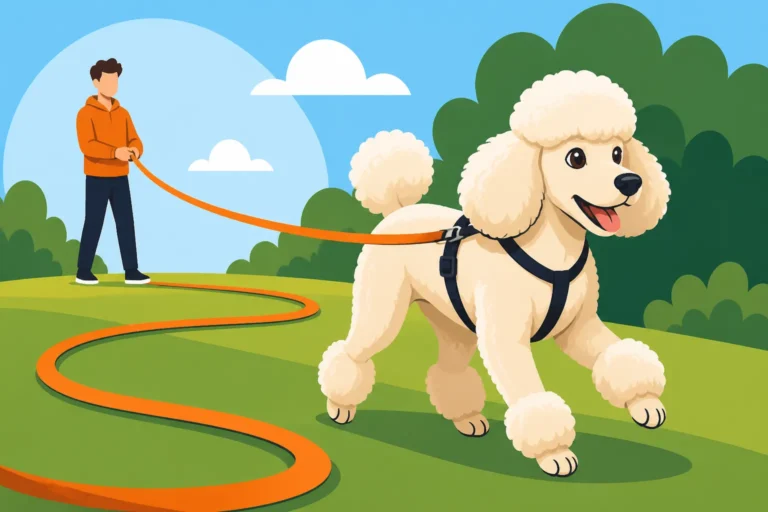
Even if your Poodle is a tiny puppy, getting them comfortable with a collar or harness and a leash is important early on. Start by letting them wear a lightweight collar for short periods, supervised, then attach a leash and let them drag it around indoors (again, supervised!). The goal for the first week isn't perfect heel work, but rather getting them used to the feel and the gentle pressure. Poodles often adapt quickly to new sensations, and within a few days, they should tolerate walks on a leash without too much fuss. Focus on making it a positive experience with treats and praise.
Teaching your Poodle their name is usually one of the quickest things they learn. Say their name in a happy tone, and when they look at you, immediately reward them. Repeat this frequently throughout the day, associating their name with good things. Because Poodles are so attuned to their owners and eager to please, most will respond to their name consistently within a day or two. This is a foundational element for all future training, as it gets their attention before you give a command. You can find excellent quality leashes and harnesses on Amazon that are suitable for Poodles of all sizes.
Strategies for Rapid Poodle Learning
Poodles are quick studies, but even the brightest student benefits from good teaching methods. Employing effective training strategies will not only accelerate your Poodle’s learning but also strengthen your bond and make the process enjoyable for both of you. It's about working with their natural intelligence, not against it.
Positive Reinforcement and High-Value Treats
This is the cornerstone of successful Poodle training. Poodles respond exceptionally well to positive reinforcement, meaning you reward desired behaviors. This could be verbal praise ("Good boy/girl!"), a gentle pat, or, most effectively, high-value treats. For a Poodle, a tasty treat is often the strongest motivator. Think small, soft, smelly treats that they don't get at any other time. Cut them into tiny, pea-sized pieces to avoid overfeeding and keep their attention. The moment your Poodle performs the desired action, mark it with a verbal "Yes!" or a clicker, and then immediately deliver the treat. This clear association helps them understand exactly what they did right. Clicker Timing With a Fast-Learning Poodle can teach you more about this method.
Beyond treats, remember that Poodles are often "people pleasers" and thrive on your approval. Genuine enthusiasm and excited praise can be just as powerful as food, especially as they get older and more confident. The more positive and rewarding you make the training experience, the more eager your Poodle will be to participate and learn new things. Avoid punishment or harsh corrections; Poodles are sensitive and can easily shut down or become fearful if handled roughly, which completely stalls the learning process. Instead, focus on rewarding the behaviors you do want to see. Look for Treats Small Enough for a Toy Poodle to ensure you're not overfeeding your little learners.
Short, Frequent Training Sessions
Given their intelligence and propensity for boredom, short, frequent training sessions are far more effective for Poodles than long, drawn-out ones. Aim for 3-5 sessions a day, each lasting no more than 5-10 minutes, especially for puppies. Their attention spans are limited, and pushing them too hard can lead to frustration for both of you. Think of these sessions as fun, engaging games rather than tedious drills. End each session on a positive note, even if it's just by asking for an easy command your Poodle knows perfectly and rewarding them heavily. This leaves them feeling successful and excited for the next session.
These brief bursts of focused attention keep your Poodle engaged and prevent mental fatigue. It also ensures that training is integrated into their daily life rather than being a separate, isolated event. You can incorporate training into everyday activities, like asking for a "sit" before putting down their food bowl or a "stay" before opening the door for a walk. This natural integration helps them generalize commands to real-world situations much faster. If you're looking for structured guidance, online programs like BAXTER & Bella offer excellent short, focused lessons that fit well with a Poodle's learning style.
Consistency Across All Family Members
One of the biggest challenges, and yet most crucial elements, in training a Poodle, is consistency. Every person who interacts with your Poodle needs to use the same cues, hand signals, and expectations. If one family member uses "down" for lying flat and another uses it for getting off the sofa, your intelligent Poodle will become confused and frustrated. This can slow down their learning significantly and even lead to your Poodle ignoring commands altogether because they don't understand what's expected.
Before you even bring your Poodle home, sit down with everyone in the household and agree on the exact words and signals you'll use for each command. Discuss the rules, such as whether the Poodle is allowed on furniture, and make sure everyone enforces them uniformly. Poodles thrive on structure and predictability. When everyone is on the same page, your Poodle learns faster and feels more secure, knowing what's expected of them from every person they interact with. A unified front makes training significantly more efficient and less stressful for everyone involved.
Common Pitfalls and How to Avoid Them
While Poodles are incredibly smart and eager learners, that doesn't mean the training journey will be without its bumps. There are common mistakes owners make that can inadvertently hinder progress, even with the brightest of dogs. Recognizing these pitfalls early can save you a lot of frustration and ensure your Poodle continues to thrive.
Overwhelming Your Poodle
One of the most common mistakes with an intelligent breed like a Poodle is trying to teach too much, too fast. Because they pick up on cues so quickly, it can be tempting to keep piling on new commands. However, just because they can learn quickly doesn't mean they should learn everything at once. Pups, especially, need time to process and solidify what they've learned. Bombarding them with too many new concepts can lead to mental overload, causing them to shut down, become disengaged, or even develop anxiety about training sessions.
Instead of rushing, focus on mastering a few core concepts really well. Once your Poodle is consistently performing a command in various environments and with distractions, then you can gradually introduce a new one. Think of it as building a pyramid: a broad, strong base is necessary before you can add layers on top. Take breaks, reinforce known commands, and keep the learning environment low-stress. Remember, the goal is long-term retention and a happy, confident learner, not a quick-fix trick dog. An online training program, like the comprehensive resources found at BAXTER & Bella, often structures learning into manageable steps to prevent overwhelming.
Lack of Engagement and Boredom
Ironically, a Poodle's intelligence can also be a challenge if their minds aren't kept stimulated. A bored Poodle is a mischievous Poodle. If training sessions are repetitive, uninspired, or too easy, they will quickly lose interest and may even start inventing their own "games," which usually involve behaviors you don't want. They need mental challenges to prevent them from becoming destructive or developing undesirable habits like excessive barking or digging. Why a Poodle Gets Bored highlights this perfectly.
To avoid boredom, vary your training routine. Introduce new tricks, practice commands in novel locations, or incorporate puzzle toys into their daily feeding. Keep your energy high during training sessions to keep them engaged, and always make it fun! Use different types of rewards – sometimes a treat, sometimes a favorite toy, sometimes a quick game of fetch. A Poodle's mind is a powerful tool, and if you don't give it a job, it will find one for itself, often to your detriment. Providing varied mental stimulation is key to maintaining their enthusiasm for learning throughout their lives. You can find a huge variety of puzzle toys and enrichment tools on Amazon to keep their clever minds occupied.
Inconsistent Expectations
Another significant pitfall is inconsistency in expectations. This ties into consistency among family members, but it also applies to your own behavior. For instance, if you sometimes allow your Poodle to jump on guests but other times scold them for it, they won't understand what the rule is. If a "stay" command is sometimes enforced for ten seconds and other times only for one, they will learn that the duration is flexible and may choose to break the command sooner. Poodles, with their ability to pick up on patterns, will quickly notice these inconsistencies.
This lack of clear, predictable boundaries can confuse your Poodle, leading to frustration for both of you. It can also teach them that commands are optional or that they only need to obey when they feel like it, or when you are particularly stern. Be firm, fair, and consistent from day one. If a rule is in place, it must be enforced every single time, by every single person. This clarity provides your Poodle with a sense of security and trust in your leadership, allowing them to learn and behave confidently. Remember, a Poodle thrives on knowing exactly what is expected of them.
A Poodle's First Week: Anticipated Learning Progress
Let's summarize what you can realistically expect your Poodle to achieve in their first week, assuming consistent effort and positive reinforcement. This isn't a race, but a guide to set reasonable expectations for such an intelligent breed.
| Cue/Concept | Expected Mastery in Week 1 | Key to Success |
|---|---|---|
| Name Recognition | Consistently responds to name, looks at you. | Frequent, happy repetition; immediate reward for looking. |
| Sit | Consistently sits on cue in a quiet environment. | Lure with treats; reward instantly; keep sessions short. |
| Come (Recall) | Comes when called in low-distraction environments. | High-value treats; enthusiastic praise; never punish coming. |
| Stay | Holds stay for 1-5 seconds with minimal distraction. | Start with very short durations; gradually increase distance/time. |
| Potty Training | Significantly reduced indoor accidents; signals need to go. | Frequent outdoor trips; immediate reward for outdoor success; supervision. |
| Crate Comfort | Enters crate willingly; settles for short periods/overnight. | Positive association (meals/treats inside); never use for punishment. |
| Leash Introduction | Tolerates collar/harness & leash for short periods. | Make it a positive experience; minimal pressure; short durations. |
This table provides a general outline, but every Poodle is an individual. Some may zoom past these benchmarks, while others might need a little more time on specific commands. The most important thing is to celebrate every small victory and continue building a positive relationship with your clever companion. Your Poodle's intelligence is a wonderful asset, and with the right approach, you'll be amazed at what they can achieve!
Disclaimer
This article is for general informational purposes only and does not constitute professional advice. Laws, prices and regulations vary by location and change over time. Consult a qualified professional for guidance on your specific situation.