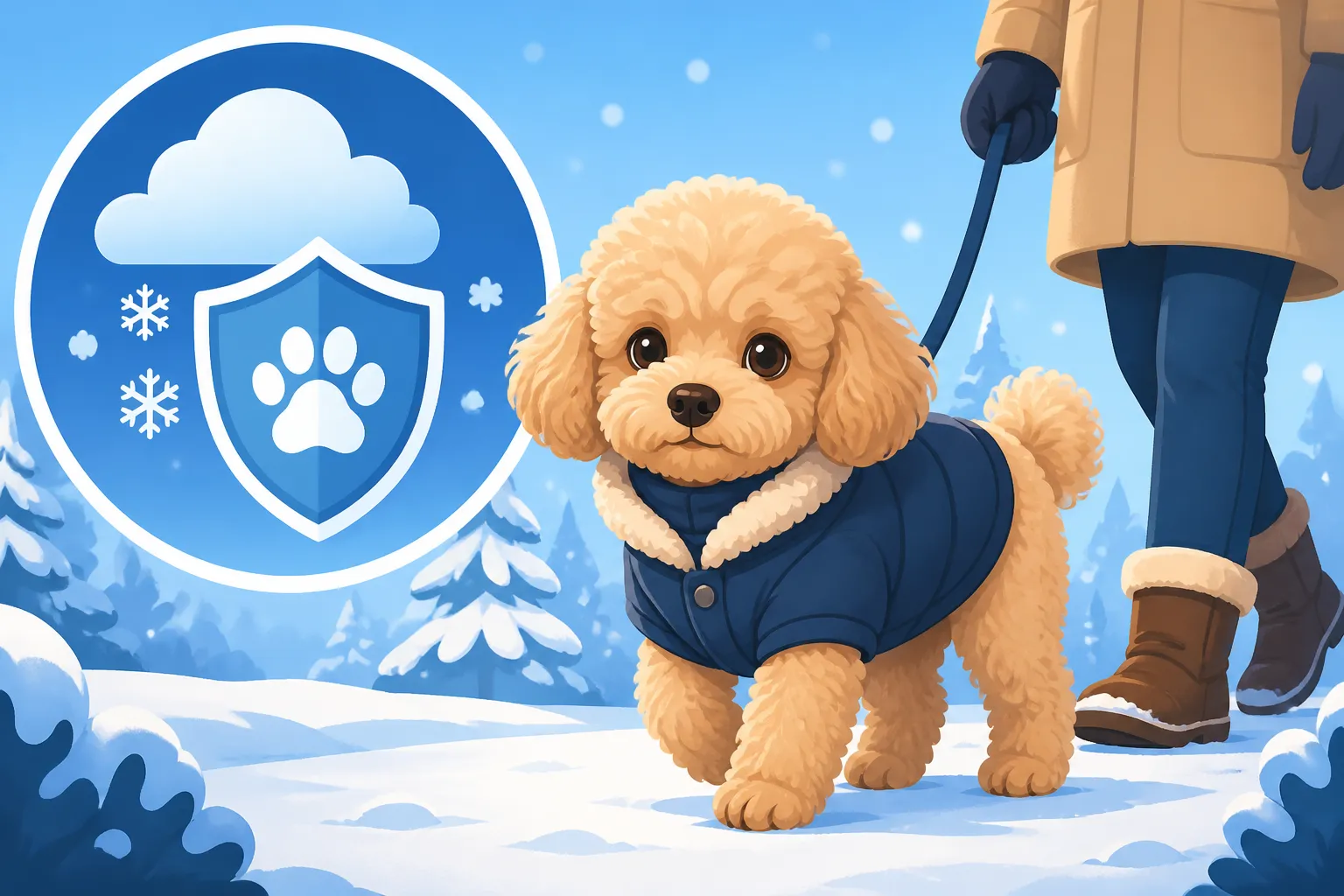
Getting a Toy Poodle Outside in the Cold
That crisp, cold air outside might feel invigorating to some, but if you share your home with a dainty Toy Poodle, you know the struggle is real. You look out the window at a frosty morning, bundled up in your warmest clothes, and then you glance down at your tiny companion, who is giving you "the look"—the one that screams, "Are you serious? Out there?" It’s a common frustration for Toy Poodle parents: how do you convince a small, often quite sensitive, dog that going outside when it’s chilly isn’t a form of torture? This guide is here to help you navigate those frosty days, ensuring your Toy Poodle stays safe, comfortable, and perhaps even learns to enjoy their cold-weather outings.
Understanding Your Toy Poodle's Unique Cold Sensitivity
It's not just dramatics when your Toy Poodle shivers or tries to turn back at the door; their small size and specific physical traits genuinely make them more susceptible to the cold than larger, more robust breeds. Understanding these biological realities is the first step toward effectively preparing them for winter weather.
Why Tiny Bodies Get Colder Faster
Think about it from a physics perspective. A Toy Poodle has a much larger surface area-to-volume ratio compared to a Standard Poodle, for example. This means they lose body heat to the environment at a significantly faster rate. They simply don't have the sheer mass to retain warmth efficiently, especially when the temperature drops. Their little legs are also closer to the cold ground, exposing them more directly to icy surfaces and snow, which acts as a constant drain on their core temperature.
Furthermore, many Toy Poodles are on the leaner side, which means they have less subcutaneous fat to act as insulation. While their curly coat is dense and provides some protection, it's not a double coat designed for extreme cold like that of a husky or a shepherd. If their coat gets wet, it loses much of its insulating properties, leaving them even more vulnerable. This combination of size, proximity to the cold ground, and limited natural insulation means they can go from comfortably warm indoors to dangerously chilled outdoors in a matter of minutes. Owners often worry about their Hypoglycemia in a Toy Poodle Puppy when they are small, but even adult Toy Poodles can experience rapid drops in body temperature if not adequately protected in the cold.
Health Considerations in Cold Weather
Beyond just feeling chilly, cold weather can pose specific health risks for Toy Poodles due to their delicate physiology. Respiratory issues are a particular concern; the sudden inhalation of very cold, dry air can irritate sensitive airways. If your Toy Poodle already has a predisposition to a Collapsing Trachea in a Toy Poodle, the cold can exacerbate the characteristic "honking cough," making outdoor excursions uncomfortable or even risky. Their tiny lungs are just not designed for sustained exposure to harsh elements.
Joint health is another area where cold weather can cause discomfort. Toy Poodles can be prone to conditions like Luxating Patella in Toy and Miniature Poodles, and much like in humans, cold temperatures can make joints feel stiffer or more painful. A sudden slip on ice or uneven snowy ground could potentially worsen an existing joint issue or even cause a new injury. It's not just about keeping them warm, but also protecting their delicate skeletal structure from the stresses of winter conditions. Even seemingly minor issues, like ice or snow accumulation around their paw pads or between their toes, can become painful, leading to limping or reluctance to walk.
Equipping Your Tiny Companion for Winter Adventures
Once you understand why your Toy Poodle is so sensitive to the cold, the next logical step is to provide them with the right gear. It's not about fashion; it's about function and safety. Thinking through their needs from head to paw will make a huge difference in their willingness to face the elements.
The Essential Cold-Weather Wardrobe
A good coat or sweater is paramount for a Toy Poodle. You need something that provides insulation and, ideally, offers some protection from moisture if you live in a snowy or wet climate. Look for options that cover your poodle's chest and belly, as these are areas where they lose a lot of heat and are exposed to snow and slush. A coat made from a waterproof or water-resistant outer layer with a warm fleece or insulated lining is often ideal. For milder cold, a well-fitting wool or fleece sweater might suffice, but if there's any precipitation, a proper coat is a must.
When selecting a coat, ensure it fits snugly but doesn't restrict movement. You want them to be able to walk, run, and relieve themselves comfortably. Adjustable straps are a huge plus. You can find an incredible range of options on platforms like Amazon, from practical waterproof jackets to adorable fleece-lined parkas. Remember that this isn't just about warmth; it's also about preventing their fine hair from becoming matted or encrusted with ice, a common issue for Coats and Sweaters for a Clipped Poodle. Some designs even incorporate reflective strips, which is a great safety feature if you're out walking in low light conditions during shorter winter days.
Protecting Delicate Paws
Your Toy Poodle's paws are incredibly vulnerable to cold, ice, salt, and de-icing chemicals. Just imagine walking barefoot on icy pavement yourself! Boots are often the best solution. They provide a barrier against the cold ground, prevent ice and snow from balling up between their paw pads, and protect against irritating or corrosive de-icing agents. It can take some time to get your Toy Poodle accustomed to wearing boots, so start with short sessions indoors, offering plenty of positive reinforcement and treats. Many owners find that while dogs initially walk like they're wearing invisible shoes, they quickly adapt once they realize the comfort it provides.
If boots aren't an option, or as an additional layer of protection, consider paw wax. Products designed to create a protective barrier on paw pads can help moisturize them, prevent cracking, and offer a slight defense against ice and chemicals. However, paw wax doesn't offer the same level of insulation as boots and won't prevent snow and ice from building up between toes, where it can cause significant discomfort. Regardless of whether you use boots or wax, always check your Poodle's paws after every cold-weather outing for any signs of irritation, cracking, or ice build-up. Regular grooming, including Nail Trims Between Poodle Grooms and trimming the hair between paw pads, will also make paw protection more effective and comfortable.
Making Outdoor Trips Manageable and Even Enjoyable
Equipping your Toy Poodle is only half the battle; the other half is implementing strategies that make going outside in the cold a positive experience, rather than a dreaded chore. This involves adjusting your expectations and routines.
Short and Sweet Potty Breaks
When the temperatures really plummet, long walks are out. Your Toy Poodle isn't built for enduring freezing winds or deep snow. Instead, focus on efficient, purposeful potty breaks. Take them out frequently but for very short durations – just long enough for them to do their business. We're talking five minutes, maybe ten if it's not too bitter, and then immediately back inside to warm up. Don't linger for play or extensive sniffing during these extreme cold snaps. The goal is function, not recreation.
If your Toy Poodle is particularly reluctant, consider creating a designated "potty zone" in a sheltered area of your yard, perhaps under an overhang or on a cleared patch of concrete, which can be less intimidating than deep snow. Some owners even invest in indoor potty solutions for extreme weather, like artificial grass patches or puppy pads, to avoid forcing their small dogs out into truly dangerous conditions. While the ideal is always to go outside, there are times when an indoor alternative is the safer and more humane choice for a tiny dog.
Engaging Indoors and Warming Up Post-Excursion
Since outdoor exercise will be limited, it's crucial to boost indoor mental and physical stimulation. This means more playtime inside, puzzle toys to keep their clever Poodle minds engaged, and perhaps even some indoor training sessions. A good session of fetch down a hallway or learning new tricks can burn off energy and keep them happy and healthy, even if they're not getting their usual outdoor romp. Resources like BAXTER & Bella offer excellent online training programs that can provide endless ideas for indoor enrichment, ensuring your Poodle's brain stays active when their body is cooped up. Remember, a bored Poodle can quickly become a destructive Poodle!
After any cold-weather outing, even a short one, establish a warm-up routine. Immediately after coming inside, gently wipe down their paws and any areas that might have gotten wet or exposed to snow. Use a soft towel to dry them thoroughly, paying special attention to their delicate feet and between their toes. You might even gently rub their chest and belly to stimulate circulation and help them regain warmth. Offer them a cozy bed or a warm blanket to snuggle into. A small, healthy treat can also be a nice reward for braving the chill. This routine helps reinforce that coming inside means comfort and positive attention, making the next trip out a little less daunting. Caring for an Aging Poodle means being even more diligent with these warm-up routines, as older dogs can struggle more with thermoregulation.
Adjusting Expectations and Activities
It's important to remember that a Toy Poodle's exercise needs can still be met, even in colder weather, but the type of exercise might change. While a Daily Exercise for a Standard Poodle might involve long, brisk walks, a Toy Poodle's needs can often be satisfied with shorter, more intense bursts of activity, especially indoors. For very cold days, focus on quality over quantity. Ten minutes of enthusiastic indoor fetch or a game of hide-and-seek with treats might be far more beneficial and safer than a prolonged, chilly outdoor stroll.
Consider mental stimulation as a primary form of "exercise." Poodles are incredibly intelligent, ranking high in canine intelligence tests, so challenging their brains can be just as tiring as challenging their bodies. Treat-dispensing toys, learning new cues, or even scent games around the house can provide immense enrichment. If you live in an area with accessible indoor dog parks or doggy daycare facilities that your Toy Poodle enjoys, these can be fantastic options for safe, warm socialization and play when outdoor conditions are too severe. This flexibility is key to keeping your little Poodle happy and healthy through the colder months.
Recognizing and Preventing Cold-Related Risks
While keeping your Toy Poodle warm and comfortable is important, it's even more critical to understand the serious health risks cold weather poses and how to prevent them. These small dogs can quickly succumb to extreme conditions.
Spotting the Signs of Hypothermia and Frostbite
Hypothermia occurs when a dog's body loses heat faster than it can produce it, causing their core temperature to drop dangerously low. For a Toy Poodle, this can happen surprisingly quickly. Watch for signs like uncontrolled shivering, which is often an early indicator. As hypothermia progresses, your Poodle might become lethargic, weak, and uncoordinated. Their breathing and heart rate may slow, and their gums might appear pale or bluish. They might also curl up tightly or try to burrow to conserve heat. If you suspect hypothermia, immediately get them indoors, wrap them in warm towels or blankets, and contact your vet. You can use your own body heat to help warm them, but avoid drastic measures like very hot water, which can cause shock.
Frostbite is another serious concern, especially for extremities like paw pads, ear tips, and tail. These areas have less blood flow and are more exposed to the cold. Signs of frostbite initially include pale, grayish, or bluish skin, which might feel cold or hard to the touch. Your Poodle might show pain or sensitivity when you touch the affected area. Later, as the tissue thaws, it can become red, swollen, and blistered. In severe cases, the tissue may turn black and slough off. If you suspect frostbite, warm the affected area gently with lukewarm (not hot!) water, and seek veterinary care immediately. Never rub the affected area, as this can cause further damage. The best defense is prevention: limit exposure, use protective gear like boots, and avoid prolonged contact with snow and ice.
Safe Winter Grooming Practices
The Poodle's continuously growing coat is fantastic for insulation when properly maintained, but it also presents unique challenges in cold weather. If your Poodle's coat gets wet and matted, it loses all its insulating properties and can actually make them colder, not warmer. Moisture trapped in mats against the skin in freezing temperatures can quickly lead to skin irritation or even frostbite. Therefore, regular brushing, especially line brushing, is vital to prevent mats from forming. If you typically keep your Toy Poodle in a longer coat during the winter, ensure you are brushing them to the skin daily to avoid matting, particularly in friction areas like armpits, behind the ears, and around the legs.
When bathing your Toy Poodle in winter, make sure they are completely dry before going outside, even for a quick potty break. Using a high-velocity dryer and ensuring their coat is bone-dry right down to the skin is crucial. If you opt for a shorter clip during winter, which some owners do for easier maintenance, remember that this removes some of their natural insulation. In this case, Coats and Sweaters for a Clipped Poodle become even more important for outdoor protection. A very short clip can also expose their delicate skin to windburn or dryness, so consider applying a dog-safe moisturizer if you notice any flaky skin.
Recognizing When It's Too Cold to Go Out
There's no single temperature that applies to all dogs, but for a Toy Poodle, anything below freezing (32°F or 0°C) warrants caution, and temperatures significantly below that are generally considered unsafe for anything more than the briefest potty break. Wind chill can make even moderately cold temperatures feel much colder, so always factor that in. If there's heavy snow, freezing rain, or icy conditions, it's often best to keep your Toy Poodle indoors and rely on indoor potty options.
Listen to your Poodle. If they are reluctant to go out, shiver excessively despite wearing a coat, lift their paws frequently, or try to turn back towards the house, they are telling you it's too cold for them. As their guardian, it’s your responsibility to interpret these signals and prioritize their safety and comfort over rigid routines. Some Toy Poodles, like all dogs, are more resilient than others, but it's always better to err on the side of caution with such a small, delicate breed. Even for short trips, consider the duration of exposure and your Poodle’s overall health. A sick or very old Poodle will be even more susceptible to the cold.
| Cold Weather Gear Type | Primary Benefit | Best Use Case | Considerations |
|---|---|---|---|
| Insulated Coat | Warmth, chest/belly coverage | Freezing temps, dry snow | Must be waterproof if wet snow/rain; ensure good fit |
| Waterproof Coat | Protection from rain, wet snow | Rainy, slushy, or wet snowy conditions | May need additional insulation layer underneath |
| Fleece/Wool Sweater | Lightweight warmth | Mild cold, layering under a waterproof coat, indoors | Not good in wet conditions; check for static |
| Dog Boots | Paw protection from ice, salt, chemicals, cold | Icy sidewalks, salted roads, deep snow | Requires training to accept; ensure secure fit |
| Paw Wax | Barrier against irritants, moisture | Mild cold, light snow, as boot alternative/addition | Offers less insulation; does not prevent ice balls |
| Snood/Ear Warmer | Ear tip protection from frostbite | Extreme cold, high winds | May not be tolerated by all Poodles |
Disclaimer
This article is for general informational purposes only and does not constitute professional advice. Laws, prices and regulations vary by location and change over time. Consult a qualified professional for guidance on your specific situation.