Nail Trims Between Poodle Grooms
Poodle owners know the unique demands that come with that glorious coat, but often, the silent struggle of nail care gets overlooked until it becomes a painful problem. Those lovely curly coats distract us, and before you know it, your Poodle's nails are clicking on the floor, getting snagged, or worse, causing discomfort. This guide is here to walk you through exactly how to confidently manage your Poodle's nail trims between professional grooming appointments, ensuring their comfort and health.
Why Regular Poodle Nail Trims Are Non-Negotiable
It’s easy to think that if your Poodle is getting groomed every 4-6 weeks, their nails are covered. And while professional groomers absolutely include nail trims in their services, a Poodle’s nails often grow faster than that schedule allows. Neglecting nail care can lead to a host of problems, impacting everything from their posture to their overall happiness.
The Health Risks of Overgrown Nails
Imagine wearing shoes that are constantly too small, pushing your toes back. That's essentially what long nails do to your Poodle's paws. When nails get too long, they push against the ground, forcing the toes to splay out and putting unnatural pressure on the paw pads and joints. Over time, this can lead to serious orthopedic issues. Your Poodle might start shifting their weight to avoid the pain, which can alter their natural gait and put strain on their wrists, elbows, and even hips. We've seen Poodles develop limping or become reluctant to walk or run because of this chronic discomfort. It's not just an inconvenience; it's a genuine health concern that can contribute to problems like Poodle Hip Dysplasia by Size over the long term, or exacerbate existing ones.
The pain can be subtle at first, manifesting as a slight reluctance to jump or a change in how they lie down. They might even try to chew at their paws more frequently, not necessarily because of an allergy, but because their nails are causing irritation. This persistent pressure can also lead to ingrown nails, which are incredibly painful and can become infected, requiring a trip to the vet.
Beyond Aesthetics: The Poodle's Comfort and Mobility
Poodles are active, intelligent dogs, regardless of their size. A Standard Poodle loves to run and play fetch, a Miniature Poodle enjoys agile romps, and even a Toy Poodle zips around with surprising speed. Long nails hinder this natural athleticism. They can catch on carpets, get torn on rough terrain, and make it difficult for your Poodle to get proper traction on smooth floors, leading to slips and falls. This isn't just about an ugly-looking nail; it's about your Poodle's quality of life.
A Poodle with comfortably short nails can grip the ground better, pivot without pain, and enjoy their zoomies without worrying about their nails getting in the way. It allows them to maintain their natural, healthy posture, which is vital for a breed prone to certain joint issues. Regular trims contribute directly to their joy and freedom of movement, letting them be the bouncy, happy Poodles they're meant to be. This proactive care ensures they can partake in all the activities that keep their sharp minds and bodies engaged, from a spirited game of fetch in the park to a quiet stroll around the block.
Understanding Poodle Nails: The Quick and the Cut
Before you pick up any tool, it's crucial to understand what you're actually trimming. The fear of "quicking" your Poodle – cutting into the sensitive part of the nail – is a very real concern for many owners, and it's what often deters them from at-home nail care. But with a little knowledge, you can approach it confidently.
Anatomy of a Poodle's Nail
Every Poodle nail, just like ours, has a living part and a non-living part. The outer, hard shell is the part you trim. Inside this shell is the "quick," a soft core containing blood vessels and nerves. If you cut into the quick, it will bleed and be painful for your Poodle. This is why caution is paramount.
The great thing about the quick is that it recedes as the nail is trimmed regularly. If a Poodle's nails are allowed to grow long, the quick grows longer with it. This means you can only take off a small amount at a time. However, with frequent, small trims (think weekly or bi-weekly), the quick will gradually recede further back into the nail bed, allowing you to achieve shorter, healthier nails over time. This is particularly important for Poodles, as their sensitive nature means a painful quicking incident can set back your nail trimming efforts significantly, making them fearful for future sessions.
Identifying the quick can be challenging, especially in Poodles with dark nails, where it's not visible from the outside. In light-colored nails, you can often see the pink quick through the translucent nail. For dark nails, look at the underside of the nail. As you trim tiny slivers, you'll see a small, darker circle appear in the center of the cut surface – that's the beginning of the quick. Stop just before you reach it.
Choosing the Right Tools for Your Poodle
Having the correct tools makes all the difference in making nail trims a less stressful experience for both you and your Poodle. There are a few main types to consider:
- Guillotine Clippers: These are often favored for larger dogs but can work for Standard Poodles. The nail is inserted into a hole, and a blade slides across, slicing it off. Ensure the blade is sharp for a clean cut.
- Scissor-Style Clippers: These resemble small, sturdy scissors and are often preferred for smaller Poodles like Toys and Miniatures, or for owners who feel they have more control. They come in various sizes, so choose one appropriate for your Poodle's nail thickness.
- Nail Grinders (Dremel-style): These electric tools sand down the nail rather than cutting it. Many Poodle owners swear by grinders, especially for sensitive Poodles, as they reduce the risk of quicking and can create smoother edges, preventing snags. They are also excellent for slowly pushing the quick back over time. Brands like Dremel offer pet-specific attachments, and you can find a good selection on Chewy or Amazon. The downside is the noise and vibration, which some Poodles dislike, so desensitization is key.
Regardless of the tool you choose, ensure it's sharp and clean. Dull clippers can crush the nail, which is painful, and can lead to splintering.
Essential "Oops" Tool: Always, always have styptic powder on hand. This is a crucial first-aid item. If you accidentally cut into the quick, applying styptic powder with firm pressure will stop the bleeding quickly. Don't panic; it happens to the best of us. Having it ready means you can deal with it efficiently and minimize distress for your Poodle.
| Tool Type | Pros | Cons | Best For |
|---|---|---|---|
| Guillotine Clippers | Quick and efficient for experienced users | Can crush nails if dull; higher quicking risk | Standard Poodles, confident owners |
| Scissor-Style Clippers | Good control, easy to use for small nails | Less powerful for very thick nails; can still quick | Toy and Miniature Poodles, beginners |
| Nail Grinder | Reduces quicking risk; smooth finish; helps quick recede | Noise/vibration can scare Poodles; takes longer; dust | All Poodles, especially those with dark nails or anxiety |
Step-by-Step: Trimming Your Poodle's Nails at Home
Now that you're equipped with knowledge and tools, let's get down to the actual trimming. Remember, patience and positive reinforcement are your best friends here.
Preparing Your Poodle for a Calm Trim Session
Poodles are intelligent and sensitive. A bad experience can create lasting fear, so approach this with a calm demeanor and plenty of treats.
- Start Early (if possible): If you have a puppy, begin handling their paws and nails gently from day one. Touch their toes, tap their nails with the clippers, and let them hear the grinder buzz without actually touching their nails. Pair this with high-value treats and praise. This is part of Getting a Poodle Puppy Used to Being Handled.
- Create a Zen Zone: Choose a quiet, comfortable spot where your Poodle feels safe. Avoid high-traffic areas or times when there's a lot of household commotion. Lay down a non-slip mat or towel if you're working on a slick surface like a table.
- Introduce the Tools: Let your Poodle sniff the clippers or grinder. Turn the grinder on briefly away from them so they hear the sound. Give them a treat. Repeat this over several days or weeks until they associate the tools with positive things.
- Short Sessions are Key: Don't try to do all four paws in one go, especially at first. Aim for one nail, or one paw, and then celebrate with lots of praise and treats. Gradually increase the number of nails you tackle as your Poodle's comfort grows.
The Actual Trim: Technique and Safety
Whether you're clipping or grinding, the core principles of safety and small increments remain the same.
For Clippers:
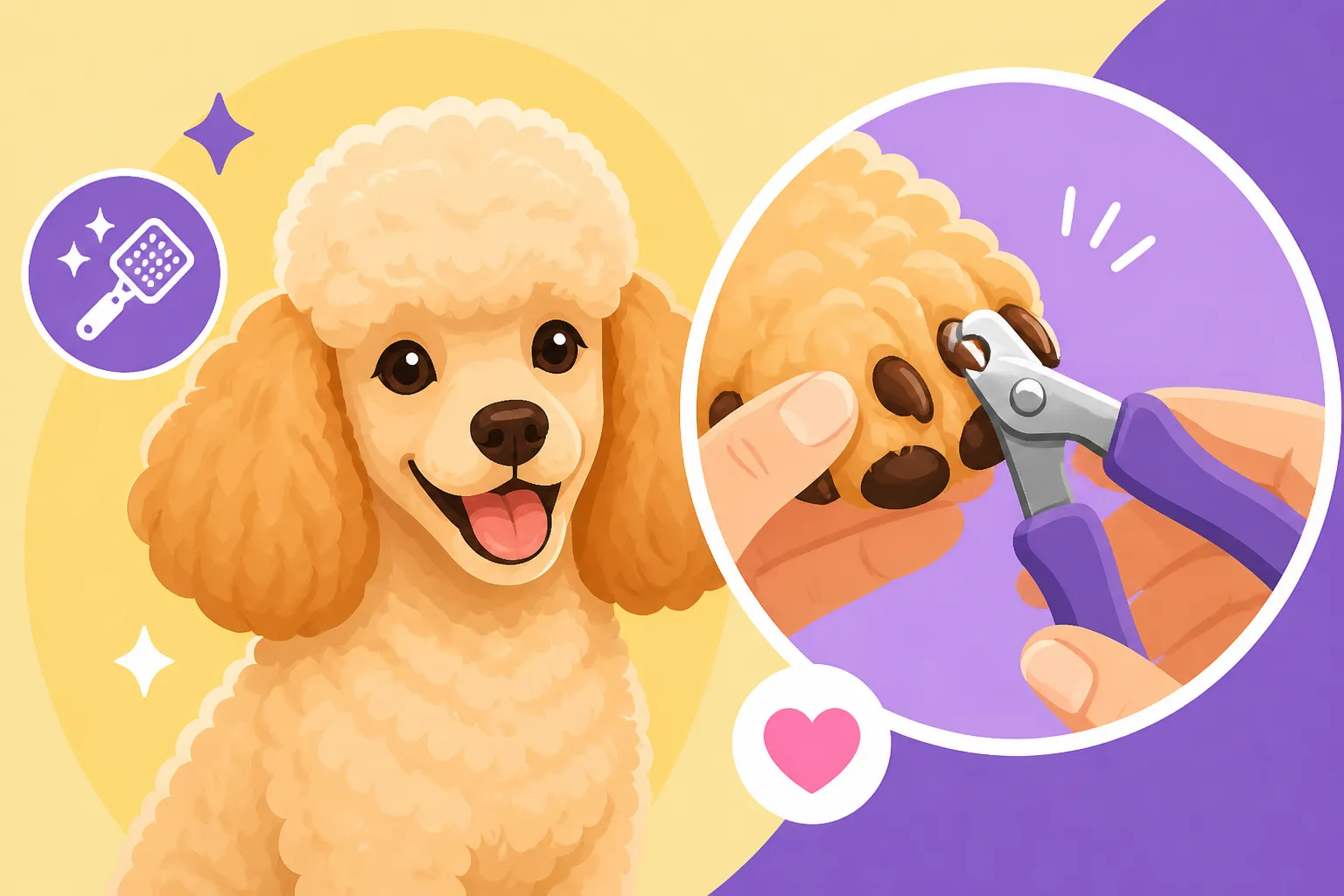
- Hold the Paw Securely: Gently but firmly hold your Poodle's paw. For most Poodles, you'll need to reach around the back of the leg and hold the paw from underneath, gently extending one toe at a time.
- Isolate the Nail: Use your thumb on top of the toe and your pointer finger underneath to extend the nail fully, pushing back the fur and the paw pad.
- Identify Your Target: For clear nails, you'll see the pink quick. Aim to cut just a millimeter or two before the quick. For dark nails, look for the 'dry' or chalky tip and aim to cut just that small amount.
- Small Snips: Make very small, quick cuts. It's better to take off too little and have to do another tiny snip than to take off too much and hit the quick.
- Angle: The natural angle of a Poodle's nail is to slope down towards the ground. Try to maintain this angle, cutting straight across the tip.
- Don't Forget the Dewclaws: If your Poodle has dewclaws (the thumb-like nail higher up on the inside of their leg), remember to trim these as well. They don't wear down naturally and can grow into the paw pad if neglected.
For Grinders:
- Hold Firmly: Again, secure the paw and isolate the nail, pushing back hair and paw pad.
- Short Bursts: Touch the grinder to the tip of the nail for only 1-2 seconds at a time. The friction generates heat, which can be uncomfortable.
- Angle and Shape: Use the grinder to shape the nail, aiming for a rounded, smooth edge. You'll grind the tip, then gently angle from the bottom up to create a nice curve.
- Look for the "Dot": For dark nails, as you grind, you'll eventually see a small, dark dot appear in the center of the nail. This is the beginning of the quick. Stop immediately when you see it.
- Cool Down: Allow the nail to cool between bursts. You can gently feel the nail with your finger to check for heat.
If You Quick the Nail:
- Stay Calm: Your Poodle will pick up on your anxiety.
- Apply Styptic Powder: Immediately apply a generous pinch of styptic powder to the bleeding nail. Press firmly for 30-60 seconds.
- Praise and Comfort: Once the bleeding stops, offer comfort and a high-value treat. Don't punish them for pulling away; acknowledge their discomfort. You might need to stop the session for the day and try again later.
Making Nail Trims a Positive Routine
Consistency is truly the secret ingredient for Poodles when it comes to grooming. Weekly or bi-weekly mini-trims are far less stressful and more effective than waiting until the nails are dangerously long.
Think of it as a small, regular interaction rather than a dreaded chore. Each short, positive session builds on the last. Keep a jar of irresistible treats handy. A smear of peanut butter on a lick mat can also be a fantastic distraction for more reluctant Poodles. After each successful nail (or paw!), provide immediate positive reinforcement.
Your Poodle thrives on routine and predictability. Incorporating nail trims into a regular schedule, perhaps after a walk when they're a bit tired, or during a quiet evening cuddle session, can help them accept it as just another part of their care, much like you would approach Training a Poodle to Enjoy Grooming. The goal is to make it boring, predictable, and ultimately, rewarding.
When to Seek Professional Help and How to Maintain Between
Sometimes, despite your best efforts, managing your Poodle's nails at home can be challenging. Knowing when to call in the professionals is important, and even with their help, you still have a role to play in between appointments.
Recognizing When Professional Intervention Is Needed
It's absolutely okay to admit when you need help. There are several scenarios where a professional groomer or even your vet can provide invaluable assistance:
- Severely Overgrown Nails: If your Poodle's nails are so long that the quick has grown out significantly, it can be daunting (and risky) to trim them back yourself. Professional groomers are experts at safely taking nails down in increments, or they might recommend a series of regular, short trims to slowly encourage the quick to recede. In extreme cases, a vet might even suggest light sedation for a more comfortable and thorough trim.
- Fear and Aggression: If your Poodle becomes genuinely aggressive, snaps, or is extremely fearful during nail trims, it's safer for everyone to seek professional help. A groomer has specialized equipment and techniques to manage anxious dogs, and they can often work with you on a desensitization plan.
- Owner Discomfort or Fear: If you are too nervous or fearful of hurting your Poodle, that anxiety will transfer to them, making the experience worse. There's no shame in leaving it to someone more confident, at least initially.
- Medical Conditions: If your Poodle has a medical condition that makes holding still difficult, or if their nails are unusually brittle, thick, or painful, consult your veterinarian. They can rule out underlying issues like fungal infections or nutritional deficiencies.
Groomers are also skilled at helping to "train" the quick back. By consistently trimming small amounts every week or two, they can gradually shorten the quick, allowing the nail itself to be trimmed shorter and shorter over time. This is a commitment, but it's incredibly beneficial for your Poodle's long-term health. Knowing How Many Grooms a Poodle Needs a Year might help you plan regular appointments for overall maintenance, including nails.
Maintaining Nail Length Between Groomer Visits
Even if your Poodle sees a professional groomer every few weeks, those nails can still grow quickly. Think of professional grooming as the "main event" nail trim, and your at-home care as the essential maintenance in between.
Your goal isn't to take off a huge amount each time, but rather to just nip the very tip or gently grind the edge. This small, consistent effort keeps the quick from advancing, prevents painful snagging, and reinforces positive associations with nail care. It's much easier to take off a tiny bit of nail every few days than to battle overgrown claws right before their next groomer appointment.
This regular maintenance is a crucial part of a holistic A Poodle Year: Grooms, Food and Vet Care schedule. It ensures that nail health is a continuous priority, not just something addressed during scheduled professional services. By staying on top of nail trims at home, you're not only contributing to your Poodle's physical well-being but also strengthening your bond through gentle, consistent care. Remember to check their paws and nails regularly, perhaps during your daily brushing routine, to catch any growth early.
Disclaimer
This article is for general informational purposes only and does not constitute professional advice. Laws, prices and regulations vary by location and change over time. Consult a qualified professional for guidance on your specific situation.