Harness or Collar for a Toy Poodle
Choosing the right equipment for walks with your Toy Poodle can feel like a minefield. You want them to be safe and comfortable, but with their tiny, delicate frames, it’s easy to worry that any pressure could cause harm. This guide will walk you through the crucial differences between harnesses and collars for Toy Poodles, helping you make an informed decision to protect your precious companion.
The Unique Vulnerabilities of a Toy Poodle's Neck and Trachea
When you look at a Toy Poodle, you see elegance and grace, but beneath that beautiful coat lies a surprisingly delicate physical structure, especially around the neck. Unlike larger, more robust breeds, Toy Poodles are built with finer bones and a more susceptible throat area, which makes the choice of walking equipment incredibly important.
Why Neck Safety is Paramount for Tiny Dogs
Imagine your tiny Toy Poodle, all enthusiasm and bounce, suddenly spotting a squirrel across the park. In a flash, they lunge, and that sudden, sharp tug on their collar can exert a disproportionate amount of pressure on their neck. Their delicate cervical vertebrae and the soft tissues of their throat simply aren't designed to withstand such force. It's not just the dramatic lunges either; even consistent, moderate pressure from a collar can cause long-term issues. We're talking about potential strain on neck muscles, damage to the trachea, or even exacerbating existing predispositions to certain conditions.
It's heartbreaking to think that our efforts to keep them safe on a leash could inadvertently cause discomfort or injury. Many new Toy Poodle owners, and even some seasoned ones, don't fully grasp just how fragile this area can be until an incident occurs. You want to avoid any situation that could lead to a vet visit for neck pain or respiratory distress, and that starts with understanding their unique anatomy. This sensitivity is precisely why devices that put pressure solely on the neck are often ill-advised for these smaller, more fragile breeds.
Understanding Collapsing Trachea Risk
One of the most significant concerns for Toy Poodle owners when it comes to neck pressure is the risk of a collapsing trachea. This is a condition where the cartilage rings that normally hold the windpipe (trachea) open weaken and flatten, making it difficult for air to pass through. It often manifests as a dry, harsh, honking cough, sometimes described as a "goose honk." While some dogs are genetically predisposed to this condition, external factors, like repeated pressure on the neck from a collar, can significantly worsen it or even trigger its onset.
Think about it: every time your Toy Poodle pulls on their collar, that pressure directly compresses their already vulnerable windpipe. Over time, or with a single strong tug, this can cause the tracheal rings to weaken further, leading to permanent damage. It's a progressive disease that can range from mild, occasional coughing to severe respiratory distress, especially during exercise or excitement. Preventing unnecessary strain on the trachea is a cornerstone of responsible Toy Poodle care. Understanding this risk really highlights Why Harnesses Matter for a Toy Poodle's Throat and can help you avoid the distressing experience of hearing The Honking Cough of a Toy Poodle from your beloved companion.
When a Collar Might Be Considered for Your Toy Poodle
While I generally advocate for harnesses for walking Toy Poodles, it's true that collars still have a place in responsible dog ownership. It’s important to distinguish between their function for identification versus their use for actual leash attachment during walks.
Identification and Tags
The most crucial role a collar plays for any dog, including our dainty Toy Poodles, is as a holder for identification tags. Even the most well-behaved, securely fenced-in Poodle can have an unexpected moment of adventure or an accidental escape. A small, lightweight flat buckle collar, worn loosely enough to not put pressure on the trachea but securely enough not to slip off, is ideal for carrying essential information. This includes your phone number, your Poodle's name, and their microchip number.
Imagine the sheer panic if your Poodle were to slip out the door when a delivery person arrives, or if they somehow found a gap in the fence. Having that visible ID on their collar is often the first line of defense in getting them safely back home. While microchips are indispensable for permanent identification—and I strongly recommend ensuring your Poodle is microchipped, as discussed in Microchipping a Toy Poodle—a collar with tags offers immediate visual identification for anyone who finds them. It allows for a quicker reunion without needing a vet or shelter to scan for a chip. For this purpose, a simple, non-constricting collar is perfectly acceptable and, frankly, vital.
Training and Light Leash Work (with extreme caution)
In very specific, controlled training environments, a flat collar could be used for extremely light leash work, but I want to stress the "extreme caution" part. This is not for daily walks where unexpected lunges might occur. We’re talking about highly supervised, low-distraction settings where the goal is teaching a very loose leash heel with absolutely no tension on the leash. For instance, practicing "sit-stay" in your quiet living room, where the leash is merely a prop and never taut.
The idea here is to teach your Poodle to move with you without any pulling whatsoever. If you find your Poodle even gently leaning into the collar, switch to a harness immediately. A technique like positive reinforcement, using treats to reward slack leash behavior, is key here. BAXTER & Bella, for example, heavily emphasize positive reinforcement and avoiding any aversive methods that might involve leash corrections. Even then, the risk of a sudden, unforeseen movement by your Poodle – a dart towards a dropped crumb, a startled jump – makes this a precarious choice. For the vast majority of walking and training, especially outdoors, a harness is simply the safer option to prevent any accidental injury to your Toy Poodle's delicate neck. Remember, a sensitive breed like a Poodle can shut down under harsh handling, as explored in Why Harsh Handling Breaks a Poodle.
The Clear Advantages of a Harness for Toy Poodles
When it comes to walking your Toy Poodle, a harness isn't just an alternative; it's often the superior choice, primarily because it fundamentally changes where pressure is applied, protecting their most vulnerable areas.
Protecting the Delicate Trachea and Neck
The most compelling reason to opt for a harness for your Toy Poodle is its ability to completely bypass the delicate neck and throat area. Instead of concentrating pressure at the base of the neck, a well-fitting harness distributes any pulling force across the stronger structures of your Poodle's chest, shoulders, and back. This design eliminates the direct compression of the trachea, drastically reducing the risk of a collapsing trachea or other neck injuries.
Imagine a scenario: you're walking along, enjoying a lovely day, when suddenly a bicycle whizzes by, startling your Poodle. Instinctively, they might jump or lunge. If they're wearing a collar, that jolt goes straight to their throat. With a harness, however, that same force is absorbed by their chest and shoulders, allowing them to remain safe and comfortable, even in moments of surprise. This peace of mind, knowing you're safeguarding their respiratory health, is invaluable. It directly addresses the concerns we discussed earlier about conditions like Collapsing Trachea in a Toy Poodle and ensures your beloved companion can breathe easy on every outing.
Enhanced Control and Security
Beyond safety, harnesses offer a significant advantage in terms of control and security, especially with small, agile dogs like Toy Poodles. A standard collar, even if well-fitted, can be surprisingly easy for a determined or frightened Poodle to slip out of. A quick duck of the head, a wiggle, and suddenly, they're free, darting into traffic or disappearing from sight. This terrifying possibility is greatly reduced with a properly fitted harness, which cradles their body and makes escape much more difficult.
Furthermore, many harnesses come with both back clips and front clips. A front-clip harness, where the leash attaches to a ring on the dog's chest, is particularly effective for managing a Poodle who pulls. When your Poodle pulls forward, the leash connection on the front gently redirects them back towards you, rather than allowing them to lean into the pull. This provides a humane and effective way to teach loose-leash walking without any discomfort to their neck. For training purposes, and especially for tiny dogs where control can sometimes be tricky due to their size, this enhanced security and gentle redirection are huge benefits. Even if you consider your Poodle well-trained, a harness offers that extra layer of confidence, especially around distractions. You can find many effective training harnesses, often recommended by trainers like BAXTER & Bella, readily available on Amazon.
Comfort and Fit Considerations
A good harness isn't just about safety and control; it's also about your Poodle's comfort. Just like ill-fitting shoes can cause discomfort for us, a poorly designed or improperly sized harness can rub, chafe, or restrict movement. The key is finding a harness that allows for a full range of motion, especially around the shoulders and front legs, while remaining snug and secure.
There are several common harness styles, each with its own benefits:
- H-style harnesses: These often feature straps that form an "H" shape on the back, with a ring for leash attachment. They tend to be lightweight and offer good freedom of movement.
- Y-front harnesses: These have straps that form a "Y" over the chest, distributing pressure well and keeping material away from the armpits.
- Vest-style harnesses: These are wider and often padded, covering a larger area of the chest and back. They can be very comfortable for dogs with sensitive skin or those who prefer a more secure feel.
No matter the style, always check for signs of chafing, especially under the armpits. The material should be soft, breathable, and not too bulky for a Toy Poodle's small frame. A properly fitted harness should allow you to slide two fingers comfortably under any strap, ensuring it's not too tight or too loose. Prioritizing comfort ensures your Poodle enjoys their walks as much as you do.
| Harness Type | Key Feature | Pros | Cons | Ideal For |
|---|---|---|---|---|
| H-Style Harness | Straps form an "H" shape on the back. | Lightweight, good freedom of movement. | Can be easier for escape artists if not perfectly fitted. | Poodles who don't pull much, general identification and walks. |
| Y-Front Harness | Straps form a "Y" over the chest. | Distributes pressure well, keeps straps from armpits. | Can be slightly more complex to put on initially. | Poodles prone to chafing, good for most walkers. |
| Vest-Style Harness | Wide fabric panel covering chest/back. | Very comfortable, secure, often padded, good for sensitive skin. | Can be bulkier, may retain heat in warm weather. | Poodles needing extra comfort, very tiny or delicate Poodles. |
| Front-Clip Harness | Leash attachment on the chest. | Excellent for discouraging pulling, gentle redirection. | Can sometimes tangle legs if Poodle changes direction quickly. | Poodles who pull, training loose-leash walking. |
| Dual-Clip Harness | Attachments on both back and chest. | Versatile for different situations, maximum control. | Can be more expensive, more straps to adjust. | Versatile walkers, training, and everyday use. |
Choosing the Right Harness: What to Look For
Selecting the perfect harness for your Toy Poodle isn't just about picking the cutest one on the shelf. It's about finding a functional piece of equipment that prioritizes their safety, comfort, and the unique needs of their delicate build.
Material and Design
When you're browsing for a harness, pay close attention to the materials. For a Toy Poodle, softness and breathability are paramount. Look for harnesses made from lightweight, soft webbing, often nylon or polyester, with padded areas, especially around the chest and armpits. Some harnesses use mesh fabrics, which can be excellent for breathability, particularly if you live in a warmer climate or your Poodle enjoys active outings. Avoiding stiff, rough, or bulky materials will help prevent chafing and discomfort on their delicate skin.
Consider the design in terms of ease of use for you and your Poodle. Step-in harnesses, where your Poodle simply steps their front paws through two loops, can be great for dogs who are head-shy or don't like things going over their head. Overhead harnesses, which buckle around the neck and chest, are also common. Whichever you choose, ensure there are no hard edges, buckles that might dig in, or excessive fabric that could restrict movement. Many dog product lines, easily found on Amazon, offer various designs tailored for small breeds, ensuring you have plenty of options to find the perfect fit and feel.
Proper Sizing and Adjustment
This is arguably the most critical aspect of harness selection. An ill-fitting harness, whether too big or too small, can defeat its purpose. Too loose, and your Poodle can easily back out of it; too tight, and it can cause chafing, restrict breathing, or even impact circulation. Before you even think about buying, grab a soft tape measure and accurately measure your Toy Poodle's chest girth (the widest part of their rib cage, usually right behind the front legs) and, for some harness styles, their neck circumference.
Most harness brands provide sizing charts, and it’s always best to go by these measurements rather than just guessing by weight or breed alone, as Poodles within the 'Toy' category can still vary quite a bit in size. Once you have the harness, the "two-finger rule" is your best friend: you should be able to comfortably slide two fingers under any strap of the harness once it's on your Poodle. This ensures it's snug enough to be secure but loose enough to be comfortable and allow for full movement. Don't be afraid to adjust the straps several times, or even try different sizes or brands, until you achieve that perfect fit. Your Poodle's comfort and safety depend on it.
When bringing a new harness home, introduce it slowly. Let your Toy Poodle sniff it, offer treats, and praise them for simply tolerating it. Gradually increase the time they wear it inside before attempting a walk. This positive association will make the harness a welcome part of their routine, rather than something they dread.
Conclusion
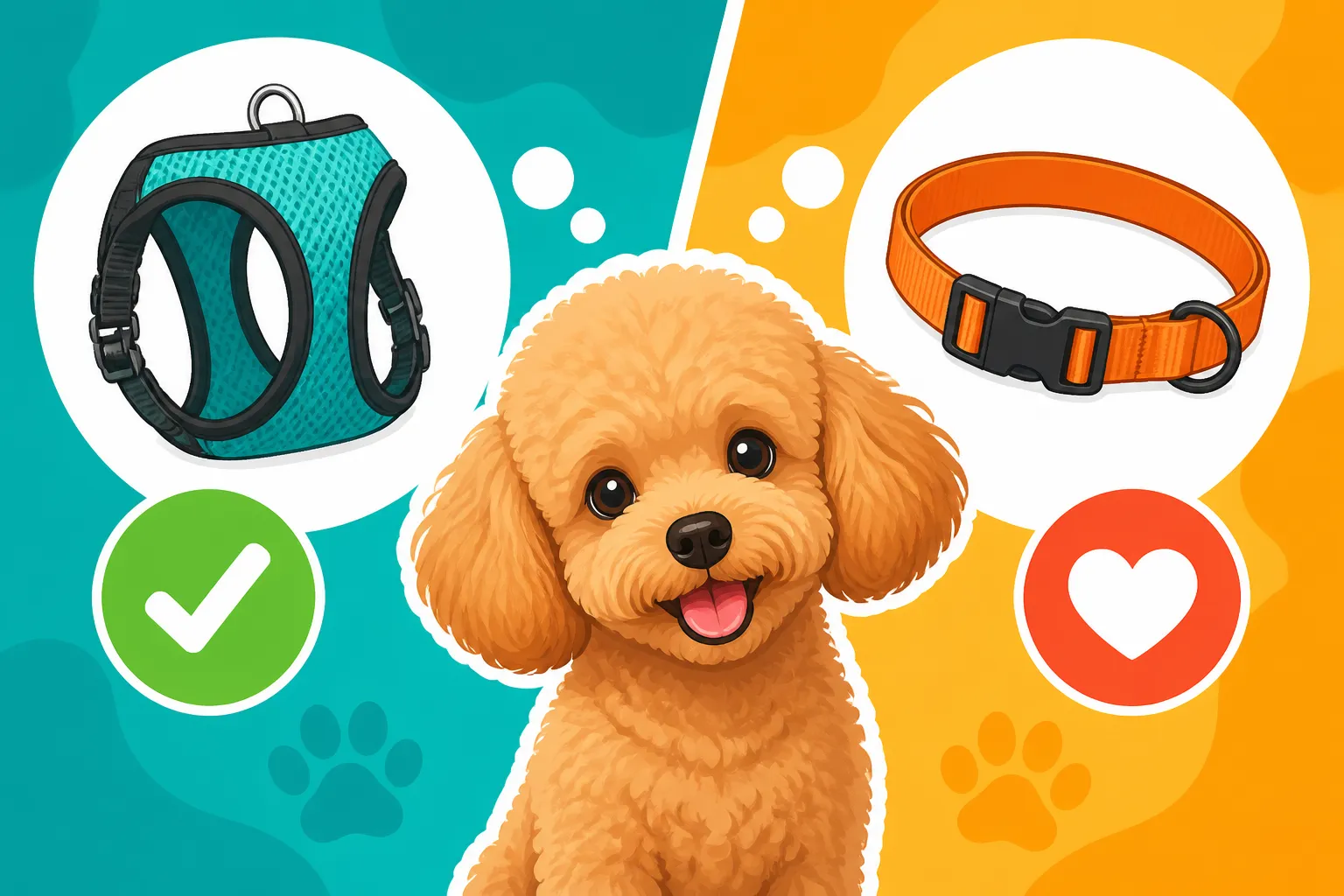
The choice between a harness and a collar for your Toy Poodle really boils down to prioritizing their delicate anatomy and overall well-being. While a lightweight collar is essential for carrying identification tags, for walks and any form of leash training, a well-fitted harness is almost always the safer and more comfortable option. It protects their vulnerable neck and trachea from injury, offers better control, and minimizes the risk of escape. By taking the time to select the right harness and ensure a proper fit, you're not just buying a piece of equipment; you're investing in your Toy Poodle's health, happiness, and a lifetime of safe, enjoyable adventures together.
Disclaimer
This article is for general informational purposes only and does not constitute professional advice. Laws, prices and regulations vary by location and change over time. Consult a qualified professional for guidance on your specific situation.