Why Harnesses Matter for a Toy Poodle’s Throat
It’s a common sight, isn't it? A tiny Toy Poodle, all fluff and personality, trotting along beside you on a leash with a cute little collar. But what many loving owners don’t realize is that this seemingly innocent setup can be silently, gradually, and sometimes acutely damaging to their precious companion’s fragile throat. This guide is here to shed light on why a harness is not just a preference but a crucial health decision for your Toy Poodle.
The Delicate Anatomy of a Toy Poodle's Throat
Our little Toy Poodles are masterpieces of miniaturization, but with that tiny stature comes certain vulnerabilities. Their throats, in particular, are far more delicate than many realize, making them susceptible to a range of issues that can significantly impact their quality of life. Understanding this unique physiology is the first step in safeguarding their health.
Understanding the Toy Poodle's Tracheal Vulnerability
The trachea, often called the windpipe, is essentially a tube made of C-shaped cartilage rings, connected by soft tissue. It’s the highway for air getting to and from the lungs. In larger breeds, these rings are robust and resilient. In a Toy Poodle, however, these rings are inherently smaller, thinner, and less rigid. Imagine trying to breathe through a flimsy straw that easily squishes – that's somewhat the reality for a Toy Poodle with a compromised trachea. This anatomical difference is precisely why conditions like a collapsing trachea are disproportionately common in Toy Poodles and other small breeds. Genetic predisposition also plays a significant role; some lines simply have weaker tracheal cartilage, making them more prone to this condition from a young age or as they age. Even seemingly minor pressure can begin to weaken the tracheal rings over time, setting the stage for more severe issues down the line.
Recognizing the Signs of Throat Discomfort and Damage
Because our Poodles are often so stoic and eager to please, they might not immediately show obvious signs of discomfort. However, there are tell-tale indicators that something might be amiss with their throat, especially if a collar has been putting pressure on it. The most classic symptom of a collapsing trachea is a distinctive "honking cough of a Toy Poodle," which sounds much like a goose honking. This cough often worsens with excitement, exercise, or when pulling on a leash. You might also notice your Poodle gagging, struggling to breathe, or making wheezing noises after exertion. Some dogs might even try to clear their throat repeatedly, pawing at their mouth, or become unusually quiet during walks, showing reluctance to move forward. These are not just quirky Poodle behaviors; they are serious signals that their airway might be compromised. Catching these early signs is critical, as prompt veterinary intervention can often lead to better management and outcomes. Ignoring these warnings can lead to chronic respiratory distress and a much lower quality of life for your beloved companion.
The Hidden Dangers of Traditional Collars
While collars are ubiquitous for dogs of all sizes, their use on a Toy Poodle carries specific, elevated risks that many owners are simply unaware of. It’s not just about comfort; it's about preventing serious health complications that can impact their respiratory system and beyond.
Direct Trauma from Leash Pressure
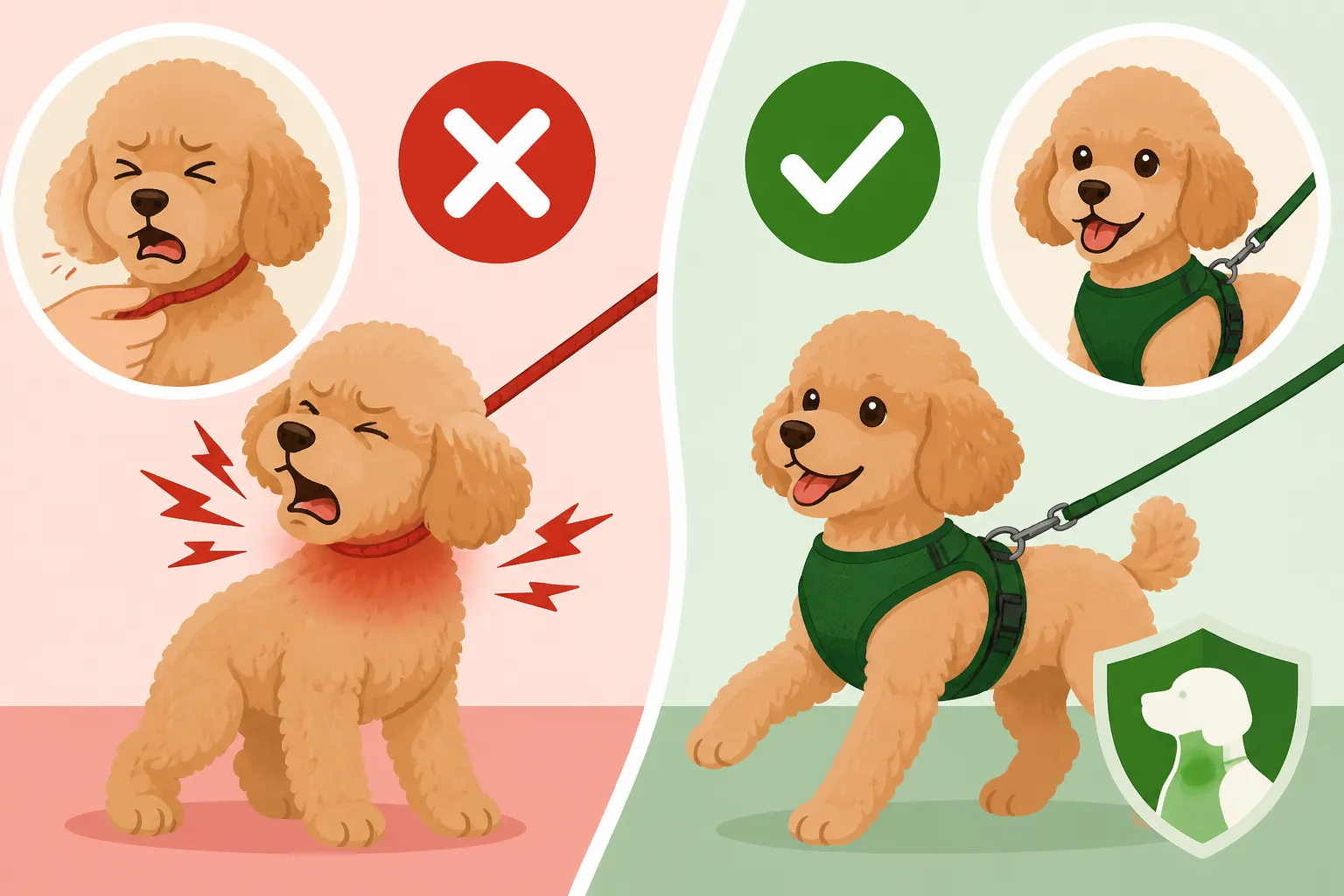
A collar, by its very design, exerts pressure directly on the neck. For a small, delicate breed like a Toy Poodle, even a seemingly gentle tug on the leash can cause significant trauma. Think about the common scenarios: your Poodle sees a squirrel and lunges, you quickly correct them on a walk, or they simply pull consistently because they're excited to explore. Each instance of pressure against the collar can compress the fragile tracheal rings. This isn't just a momentary discomfort; repeated compression can lead to inflammation, irritation, and over time, weakening of the cartilage. This gradual damage often goes unnoticed until the cumulative effect results in a full-blown collapsing trachea. The constant friction and pressure can also irritate the skin underneath, leading to hot spots or infections, especially with their dense Poodle coat. Unlike us, a dog can't tell us, "My throat hurts when you pull on the leash," so we need to be proactive in preventing potential harm.
Exacerbating Existing Conditions and Long-Term Risks
For Toy Poodles already predisposed to or suffering from a collapsing trachea, a collar is particularly dangerous. It acts like a vise, squeezing an already weakened windpipe, making it harder for air to pass through. This exacerbates symptoms like the honking cough and difficulty breathing, turning what could be a manageable condition into a severe, distressing one. But the risks don't stop at the trachea. Constant pressure on the neck can also affect other vital structures. For instance, it can increase intraocular pressure within the eyes, which is a concern for breeds prone to eye conditions like glaucoma. This might not manifest immediately, but long-term stress on these delicate areas is something responsible owners should strive to avoid. Furthermore, certain nerves run through the neck region, and persistent pressure could potentially lead to nerve damage, manifesting as pain or even weakness in the front limbs. It's a complex network, and collars can inadvertently create a cascade of problems beyond the obvious respiratory issues. Considering the high cost of emergency vet visits, preventing these issues is paramount, and many pet insurance providers like Healthy Paws emphasize preventative care to keep claims down and pets healthy.
Why a Well-Fitted Harness is a Lifesaver for Your Toy Poodle
Making the switch from a collar to a harness is one of the simplest yet most impactful decisions you can make for your Toy Poodle's long-term health and comfort. It's about fundamentally changing how pressure is applied during walks and keeping your little companion safe.
How Harnesses Protect the Neck and Distribute Pressure
The genius of a well-designed harness lies in its ability to completely bypass the delicate neck and throat area. Instead of concentrating pressure on the trachea, a harness distributes force broadly across the chest, shoulders, and back. When your Toy Poodle pulls, or you need to gently guide them, the pressure is absorbed by their strongest skeletal structures, not their fragile windpipe. This means no more crushing forces on the trachea, no more risk of aggravating or initiating a collapsing trachea, and a significant reduction in stress for your dog. For breeds with a propensity for conditions like a collapsing trachea in a Toy Poodle, this design difference is truly life-changing. It allows them to walk, explore, and even get excited without the inherent risk associated with a collar. The freedom from neck pressure also makes walks more enjoyable, reducing any potential pain or discomfort that could make them reluctant to walk in the first place.
Choosing the Right Harness Style and Material
Not all harnesses are created equal, especially when it comes to the specific needs of a Toy Poodle. The goal is to find one that is secure, comfortable, and doesn't restrict movement or rub delicate skin.
- Y-Front (or H-Style) Harnesses: These are often highly recommended for Toy Poodles because they allow for complete freedom of shoulder movement and ensure that no straps cross the shoulder joint, which can impede a natural gait. They typically have a strap that goes across the chest (forming the bottom of the 'Y') and another that goes behind the front legs and over the back. This design is excellent for avoiding neck pressure entirely.
- Vest Harnesses: These offer a broader surface area, distributing pressure even more widely, which can be great for very sensitive or tiny Poodles. They often look like a little jacket and can be very comfortable. However, ensure they don't restrict shoulder movement too much or cause overheating in warmer climates or with their dense coat.
- Step-In Harnesses: These are popular for ease of use, where the dog steps into the leg holes, and the harness clips over the back. While convenient, always check that the chest strap doesn't ride up too high, potentially putting pressure on the throat when the leash is taut.
When it comes to material, look for something lightweight, breathable, and soft, especially where it touches your Poodle’s skin and armpits. Neoprene, soft mesh, or padded nylon are excellent choices. Avoid stiff, rough materials that could chafe or cause discomfort. Consider harnesses from reputable brands known for their ergonomic designs and durability. While I can't recommend specific brands to buy, many popular options focus on comfort and fit for small dogs. Remember, the investment in a good harness is minimal compared to potential vet bills for throat issues, which even with pet insurance like Healthy Paws, can still involve deductibles and co-pays.
The Critical Importance of a Proper Fit
A harness is only effective if it fits correctly. A poorly fitting harness can be just as problematic as a collar, leading to chafing, restriction of movement, or even escape.
- Measure Accurately: Before purchasing, measure your Toy Poodle's chest girth (the widest part behind the front legs) and neck circumference (where a collar would sit). Most harness brands provide sizing charts. When in doubt, size up if your Poodle is between sizes, as you can usually adjust down.
- Adjust for Two-Finger Rule: Once the harness is on, you should be able to comfortably slide two fingers between any strap and your dog's body. This ensures it's snug enough not to slip but not so tight that it restricts breathing or movement. Pay particular attention to the area around the armpits to prevent rubbing and chafing.
- Check for Freedom of Movement: Observe your Poodle walking in the harness. The front straps should not restrict their shoulder movement. They should be able to walk, run, and jump naturally without the harness digging in or causing an awkward gait. If you notice them hesitant to move or looking uncomfortable, the fit might be wrong, or the style might not suit them.
- Test for Escapability: Poodles are clever, and some can be Houdinis. Ensure the harness is secure enough that they can't back out of it, especially if they get spooked. A well-fitting harness should feel like a secure hug, not a loose garment. Remember that their Toy Poodle kneecaps and windpipes are fragile, and an escape could lead to other injuries.
Getting the fit just right might take a couple of tries, possibly even exchanging a harness for a different size or style. But this effort is well worth it for your Poodle's safety and well-being.
Making the Switch and Embracing Harness Habits for Life
Transitioning your Toy Poodle from a collar to a harness might seem like a small change, but it's a significant upgrade in their daily comfort and long-term health. Like any new routine, it requires a bit of patience and positive reinforcement.
Gentle Introduction and Positive Reinforcement
If your Toy Poodle has only ever worn a collar, a harness might feel strange at first. The key is to introduce it gradually and make it a positive experience.
- Step 1: Acclimation (No Pressure): Start by simply letting your Poodle sniff and investigate the harness. Place it near their food bowl or bed. You can even put a few high-value treats on it. The goal is for them to associate the harness with good things.
- Step 2: Brief Wear Indoors: Once they're comfortable with its presence, try putting the harness on for very short periods indoors. Distract them immediately with praise, treats, or a favorite toy. Take it off before they get annoyed or try to chew it. Gradually increase the time they wear it, always in a positive context.
- Step 3: Leash Attachment (Indoors First): Once they're used to wearing the harness, attach the leash while still indoors. Let them drag the leash around for a few minutes under supervision. This helps them get used to the feel of the leash attached to their body differently.
- Step 4: First Outdoor Walks: Start with short walks in a familiar, low-distraction environment. Keep the atmosphere light and positive. Praise them enthusiastically for walking calmly in their new gear. If they seem uncomfortable, don't force it; go back to a previous step. This gentle approach helps prevent them from developing a negative association with the harness. For some sensitive Poodles, this might take a few days, for others, a week or two. Patience is a virtue here.
Beyond the Walk: Harness Use for Safety and Training
The benefits of a harness extend far beyond just preventing throat damage on walks. They are valuable tools for overall safety and can even aid in certain training aspects.
- Car Safety: A properly fitted harness is essential for securing your Toy Poodle in the car, whether using a seatbelt attachment or a booster seat. This prevents them from becoming a projectile in the event of a sudden stop or accident, protecting both them and other passengers. Think of it like a child's car seat – it's non-negotiable for safety. While a Standard Poodle might need a specialized car restraint for a Standard Poodle, the principle of secure restraint applies to all sizes.
- Secure Handling: For very small or timid Toy Poodles, a harness offers a much more secure way to pick them up or gently guide them without putting pressure on their neck. This is particularly useful in busy environments or when navigating obstacles.
- Training Aid: While harnesses are primarily for safety, some designs can assist with leash training. Front-clip harnesses, for example, can gently redirect a pulling dog's attention back towards you, making it harder for them to pull effectively without choking themselves. This can be a much kinder and more effective training tool than harsh collar corrections. Remember, Poodles are intelligent and sensitive; positive reinforcement works wonders.
- Identification: While the harness is on their body, it's still crucial for your Toy Poodle to wear a lightweight, comfortable collar with identification tags at all times. This ensures that if they somehow manage to slip out of their harness (which a well-fitted one makes very difficult), they still have vital contact information on them.
Long-Term Prevention and Peace of Mind
Embracing the harness for your Toy Poodle is a long-term commitment to their health and well-being. It’s a preventative measure that can save them from pain, discomfort, and potentially expensive veterinary interventions later in life. Consistent use of a harness means you're actively protecting their delicate trachea and reducing the risk of conditions like a collapsing trachea in a Toy Poodle.
Regular vet check-ups remain crucial, even with preventative measures. Your veterinarian can monitor your Poodle's respiratory health and advise on any changes. Should any issues arise, having a good pet insurance policy like Healthy Paws can provide immense peace of mind, covering unexpected costs for diagnostics or treatments. For example, procedures to manage a collapsing trachea can be costly, and an insurance plan can help alleviate the financial burden. The effort you put into choosing and consistently using the right harness translates directly into a happier, healthier, and more comfortable life for your cherished Toy Poodle. It's truly one of the most loving things you can do for their long-term health.
| Feature | Traditional Collar | Well-Fitted Harness |
|---|---|---|
| Pressure Point | Direct pressure on the trachea and neck | Pressure distributed across chest, shoulders, and back |
| Tracheal Risk | High risk of damage, exacerbates collapsing trachea | Low risk, protects trachea |
| Comfort | Can cause discomfort, choking, coughing | Designed for comfort, allows free breathing |
| Control | Can provide control, but with potential harm | Provides excellent, humane control |
| Safety | Higher risk of escape if not properly secured | More secure, harder to slip out of (if fitted correctly) |
| Training Aid | Can be used for corrections (risky for neck) | Front-clip options aid in polite leash walking (gentle) |
| Car Use | Unsafe for car restraint without additional gear | Ideal for securing with seatbelt attachments |
| Common Issues | Honking cough, gagging, choking, tracheal collapse | Chafing (if ill-fitting), potential restriction (if wrong style) |
Disclaimer
This article is intended for informational purposes only and is not a substitute for professional veterinary advice. Always consult with your veterinarian regarding any health concerns or before making any changes to your Poodle's care or treatment plan.