A Toy Poodle Around Larger Dogs
One of the most heart-wrenching sights for any Toy Poodle owner is watching their tiny companion get bowled over or frightened by a much larger, boisterous dog. It's a constant tightrope walk, wanting your little one to be social and confident, but also needing to protect them from accidental harm or overwhelming interactions. This comprehensive guide will walk you through understanding the unique challenges your Toy Poodle faces around bigger dogs, how to foster positive experiences, and practical strategies to ensure their safety and well-being in a world designed for creatures of all sizes.
Understanding the Size Disparity and Its Challenges
The sheer difference in size between a petite Toy Poodle and a large breed dog isn't just a matter of aesthetics; it dictates their entire experience of the world and the potential risks they face. It’s a reality that can cause a lot of anxiety for owners, and it's completely valid to feel that way.
The Physical Vulnerabilities of a Toy Poodle
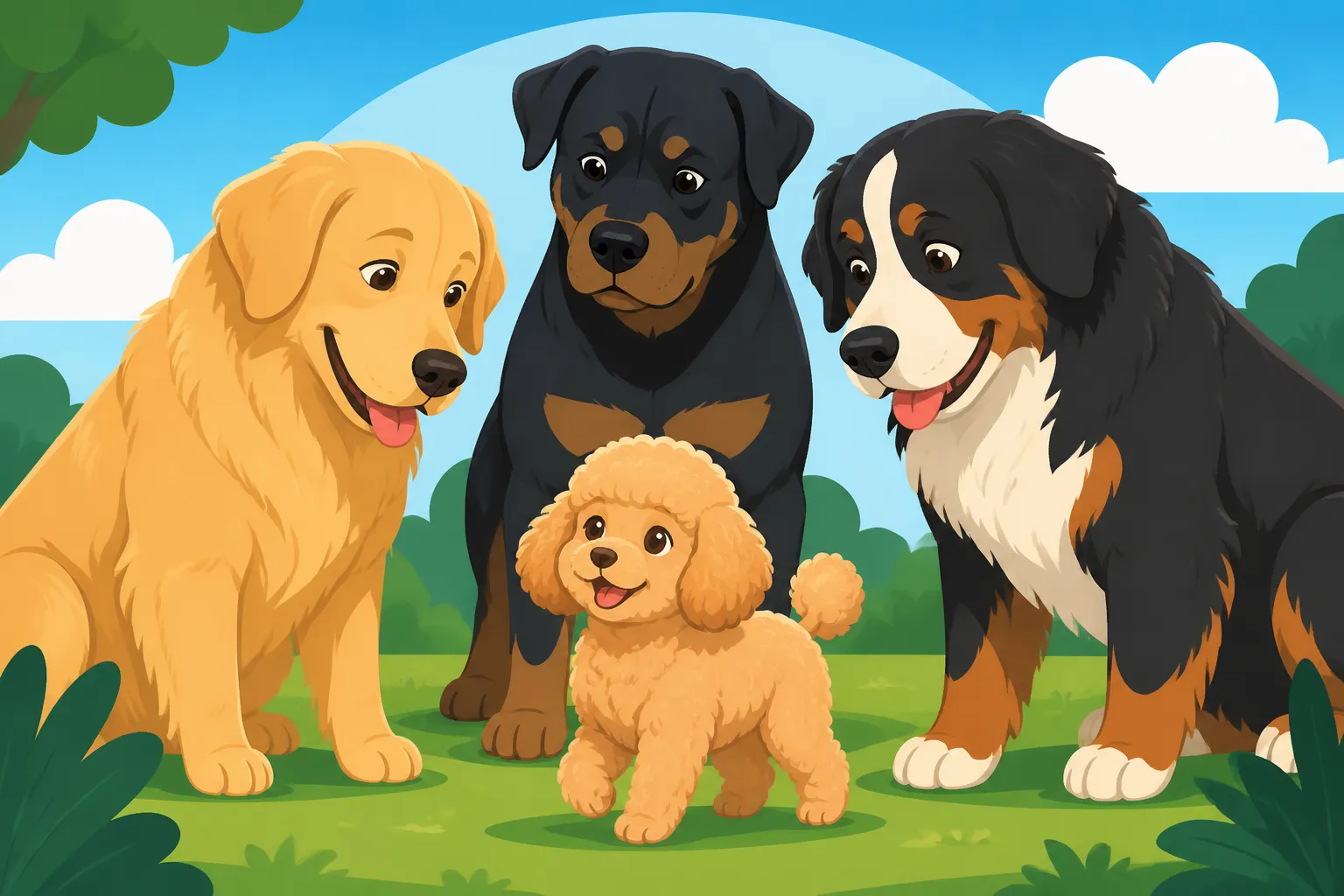
Let's be brutally honest: a Toy Poodle is small. A few pounds of delicate bone and muscle, often weighing less than a large dog’s head. This isn't about being weak, but about simple physics. An accidental bump from a playful Labrador, a clumsy step from a Golden Retriever, or a full-speed body check from a young German Shepherd can have devastating consequences for a Toy Poodle. We're talking about potential broken bones, internal injuries, or even spinal trauma that larger dogs just don't have to worry about in the same way. Their small stature means they are literally underfoot and easily missed in a dynamic play session.
Beyond the obvious impact injuries, consider how quickly a larger dog can physically dominate. Even if a bigger dog has no ill intent, a simple pounce during play or a pinning motion can be terrifying and potentially harmful for a Toy Poodle. Their smaller lungs and more delicate tracheas, for example, are simply not built to withstand the same kind of rough-and-tumble as a Mastiff or a Rottweiler. This vulnerability means that simply "letting them work it out" is not an option when there's a significant size difference at play.
It's also worth noting the sheer force of a larger dog's jaws, even in what might seem like innocent play. While most larger dogs are gentle, an excited nip or a playful grab that might just ruffle the fur of another big dog could easily puncture skin or cause crush injuries to a Toy Poodle. This is not about demonizing large dogs, but acknowledging the immense responsibility we have as owners to be the primary protectors of our smaller companions.
Behavioral Implications of Being Small
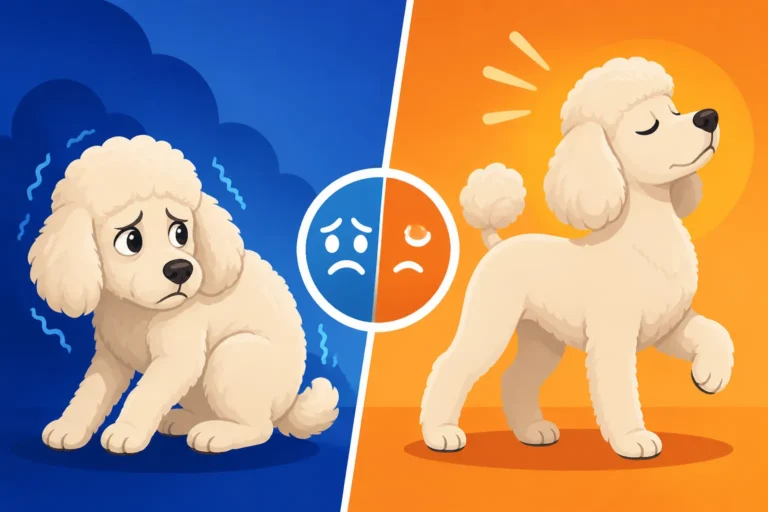
The world looks different when you're knee-high to a grasshopper. For a Toy Poodle, every interaction with a dog much larger than themselves can feel like encountering a giant. This can manifest in a few ways: some Toy Poodles become incredibly fearful, trying to hide or retreat, while others might overcompensate, becoming reactive and barking incessantly to try and ward off perceived threats. This is a common and understandable coping mechanism; if you can't outrun or outfight, you might try to intimidate.
A fearful Toy Poodle might develop a chronic anxiety around other dogs, regardless of their size, if early experiences are negative or overwhelming. They might shy away from walks, cower when they see another dog, or even lash out defensively, which can then escalate tensions. Imagine constantly feeling on edge, needing to scan your surroundings for potential threats that are many times your size. That's the daily reality for a Toy Poodle who isn't properly supported in these interactions.
On the other hand, the "big dog complex" can lead to a Toy Poodle trying to assert dominance or stand their ground with much larger dogs, often through incessant barking, lunging, or even nipping. While this behavior is usually a defensive mechanism born out of insecurity rather than true aggression, it can easily provoke a larger dog who might not tolerate such overtures. It’s a dangerous game for a small dog to play, and it's our job to teach them appropriate responses and build their confidence without relying on such risky behaviors. Reading Pain in a Sensitive Poodle can help you spot when your little one is feeling overwhelmed.
Responsible Socialization from an Early Age
Socialization is crucial for every puppy, regardless of size, but for a Toy Poodle, it needs to be approached with even greater care and intentionality, especially when it comes to larger dogs. It’s not about exposing them to every dog, but to the right dogs, in the right way.
Controlled Introductions to Calm, Larger Dogs
The key word here is "controlled." Forget about throwing your tiny puppy into a busy dog park hoping they'll learn to "dog." For a Toy Poodle, their earliest interactions with larger dogs should be meticulously managed. Start with a known, trusted, and proven calm, gentle larger dog – perhaps a friend's older, well-socialized Standard Poodle, or a laid-back Golden Retriever you know from obedience class. These initial meetings should be short, supervised, and always positive. Think of it like a carefully orchestrated play date, not a free-for-all.
These early positive experiences are foundational. Allow your Toy Poodle to approach at their own pace. Keep interactions brief and end them on a high note, before any signs of fear or overstimulation. Focus on parallel play, where the dogs are in the same space but not necessarily directly interacting intensely. Maybe the larger dog is simply sniffing around while your Toy Poodle explores nearby, building confidence that big dogs aren't always a threat. This builds a positive association without overwhelming them. For more on this crucial period, consider reading The Weeks That Set a Poodle's Nerve.
Always have an escape route or a way to safely remove your Toy Poodle if things get too intense. This might mean having them on a leash, or being ready to scoop them up. The goal is to build confidence, not trauma. If your Toy Poodle shows any signs of stress – lip licking, yawning, tucking their tail, trying to hide – immediately intervene and create space. It’s far better to err on the side of caution than to push them into an uncomfortable situation.
Prioritizing Positive Reinforcement and Confidence Building
When your Toy Poodle has a positive interaction with a larger dog, or even just calmly observes one from a distance, reward them heavily. Use high-value treats (think tiny pieces of cheese or cooked chicken) and enthusiastic praise. This helps them build a strong positive association: "Big dog equals good things!" Consistency is key here. Every calm interaction, every moment they don't react with fear or over-the-top barking, is a teaching opportunity.
Confidence isn't just about other dogs; it's about their overall sense of self and security in the world. Engage your Toy Poodle in fun training games, puzzle toys, and short bursts of obedience practice. Teach them tricks. These activities build their self-assurance and reinforce their bond with you, making them feel safer and more capable. A confident dog is less likely to be fearful or reactive. Socializing a Poodle Before It Turns Wary offers additional insights into how to foster this crucial early development.
Online resources, like the comprehensive programs offered by BAXTER & Bella, can provide structured guidance for building a Toy Poodle's confidence and teaching them to navigate new situations. These platforms often break down complex training goals into manageable steps, which is perfect for working with a sensitive and clever breed like a Poodle. The more secure your Toy Poodle feels within themselves and with you, the better equipped they'll be to handle the various social dynamics that come their way.
Managing Interactions in Public Spaces
Public spaces present a unique set of challenges because you don't always know the temperament of the other dogs you'll encounter. For Toy Poodle owners, this means being extra vigilant and proactive rather than reactive.
Assessing the Environment and Other Dogs
Before you even step into a new area with your Toy Poodle, take a moment to scan the environment. Are there other dogs present? What do they look like? How are they behaving? Is an owner struggling to control a large, boisterous dog? Are dogs playing off-leash in an on-leash area? If you see a large dog that looks overly excited, is pulling relentlessly at its leash, or whose owner is clearly not paying attention, it’s always best to simply turn around and find another route or come back later. Your Toy Poodle's safety is paramount.
Avoid crowded areas where your Toy Poodle could easily be stepped on or overwhelmed by the sheer volume of activity. Dog parks, especially, can be a minefield for small dogs. While some parks have separate small dog areas, even these can be risky if a larger, untrained dog manages to get in, or if the small dogs themselves become overly rambunctious. It's often safer to arrange playdates with known, calm dogs in a secure, private setting.
Learn to read dog body language – not just your own Poodle's, but other dogs too. Look for signs of tension, stiffness, direct stares, or a rigid tail wag that indicates something other than friendly play. If you see these signals in a larger dog approaching, it's your cue to create distance. Politely inform the other owner that your dog is small and sensitive, and you need space. Most responsible owners will understand.
Using Appropriate Leashes and Carriers
A secure harness is an absolute non-negotiable for a Toy Poodle. Due to their delicate tracheas, a collar can put dangerous pressure on their throat, especially if they pull or if you need to quickly grab them in an emergency. A well-fitting harness distributes pressure across their chest and shoulders, offering much greater safety and comfort. Look for harnesses specifically designed for small breeds, ensuring they are snug enough that your Poodle can't back out, but not so tight that they restrict movement. Why Harnesses Matter for a Toy Poodle's Throat explains this in more detail.
In situations where you anticipate a lot of foot traffic, unpredictable dogs, or simply want to give your Toy Poodle a break from navigating the world at ankle height, a carrier can be a lifesaver. This could be a secure bag, a backpack-style carrier, or even a sling carrier that allows them to be close to you and observe the world from a safe vantage point. Many excellent, well-ventilated options are available on Amazon that allow your little one to feel secure while still being part of the outing.
Carriers are particularly useful in vets' waiting rooms, bustling city streets, or during events where space is limited. It's not about being overprotective; it's about providing a safe haven and reducing the stress on your Toy Poodle. They can still take in the sights and sounds without the immediate physical threat, which can contribute to a more positive overall experience of being out and about.
Training Your Toy Poodle for Safety and Confidence
While prevention and careful management are crucial, equipping your Toy Poodle with solid training is the best long-term strategy for their safety and your peace of mind. A well-trained Poodle is a confident Poodle.
Reliable Recall and Emergency Cues
A rock-solid recall is your ultimate safety net. If a large, off-leash dog suddenly appears, or a play session with a known dog starts to get too rough, your ability to call your Toy Poodle back to you immediately can literally be life-saving. Start practicing recall in a quiet, enclosed space with minimal distractions, using incredibly high-value treats. Make coming to you the most rewarding thing they can possibly do. Gradually increase distractions and environment complexity.
Beyond a general "come," consider teaching an emergency recall cue – a unique word or sound you only use for critical situations, making it even more powerful. Practice "leave it" and "wait" cues religiously. "Leave it" can prevent them from approaching an unknown dog or picking up something potentially dangerous. "Wait" can keep them by your side while you assess an approaching situation. The principles for training this apply across all Poodle sizes; read Building Reliable Recall in a Standard Poodle for an in-depth look at making it foolproof.
Consistency and positive reinforcement are paramount. Never punish your Poodle for a slow recall; that just teaches them not to come. Instead, celebrate every successful return, reinforcing the joy and reward of being by your side. A well-rehearsed recall allows your Toy Poodle more freedom in safe environments, because you trust they will always return when called, regardless of distractions.
Building "Watch Me" and Focus Around Distractions
The "watch me" cue is invaluable for capturing your Toy Poodle's attention and redirecting it away from potential stressors, like an approaching large dog. Teach them to make eye contact with you on cue, even for just a few seconds. Start in a quiet place, holding a treat near your nose, and when they look at you, say "watch me!" and reward. Gradually increase the duration of eye contact and introduce minor distractions.
Once they've mastered it indoors, practice "watch me" outdoors, incrementally introducing distractions like other dogs from a distance. The goal is for your Toy Poodle to automatically turn to you for guidance and reassurance when encountering something potentially overwhelming. This gives you a moment to assess the situation and decide on the next course of action. It's a fantastic way to break their focus on a perceived threat and re-establish connection with you.
Leveraging online training platforms, such as BAXTER & Bella, can provide excellent modules for building focus and attention skills. Their structured approach often includes videos and step-by-step instructions that can be incredibly helpful for owners working on these crucial behaviors. Remember, Poodles are incredibly intelligent – sometimes so much so that they try to outsmart you! Building focus helps you stay ahead of them, as detailed in Training a Poodle That Outthinks You.
Common Scenarios and How to Handle Them
Even with the best preparation, life with a dog means encountering unexpected situations. Knowing how to react calmly and effectively can make all the difference for your Toy Poodle.
Accidental Off-Leash Encounters
This is probably one of the most frightening scenarios for a Toy Poodle owner: an unknown, larger dog suddenly running up to your leashed companion. Your immediate priority is the safety of your Poodle. If you can safely pick up your Toy Poodle without putting yourself in danger (i.e., the approaching dog isn't showing clear aggression towards you), do so. Hold them close, facing away from the approaching dog, to reduce direct eye contact, which can sometimes be seen as a challenge.
If picking them up isn't an option, try to create a physical barrier between your Toy Poodle and the approaching dog. This might mean stepping between them, using your body as a shield, or positioning a stroller, bench, or even a large bag between the two dogs. Do your best to stay calm, as your anxiety will transfer to your Poodle. Clearly and firmly (but not screaming) ask the other dog's owner to call their dog back. If they are unresponsive, shout "no!" or "go home!" at the approaching dog in a stern voice.
Never try to kick or hit an approaching dog unless it is actively attacking and your Poodle's life is in imminent danger. This can escalate the situation and put you at greater risk. The best defense is often a calm, assertive demeanor combined with physical shielding. Report repeat offenders to local animal control if necessary; irresponsible off-leash dogs are a public safety hazard, especially for small breeds.
Play Styles and Over-Arousal
When a Toy Poodle interacts with a large dog, even one known to be friendly, their play styles can be vastly different. A large dog might use full-body contact, pawing, vocalizations, or even a playful "hip check" that would be perfectly normal with a dog their own size, but terrifying or even dangerous for a Toy Poodle. A giant dog's playful "chase" can quickly become overwhelming for a tiny Poodle trying to keep up.
It's crucial for you to be the referee. Don't let the play escalate to a point where your Toy Poodle seems uncomfortable, overwhelmed, or where there's a risk of accidental injury. Watch for signs from your Poodle: are they still engaging, or are they trying to hide, escape, or showing subtle signs of stress like lip-licking or turning their head away? If the play involves pinning, rough mouthing, or excessive chasing, it's time to step in.
Interrupt the play before it goes too far. This isn't about scolding, but about creating breaks. Call your Poodle away for a treat, put them on a leash for a few minutes, or redirect to a different activity. Teach the larger dog's owner what to look for, too. If the larger dog is simply too boisterous or unaware of its size, then it might be best to limit interactions to parallel walking or very brief, highly supervised encounters rather than full-blown play.
When to Seek Professional Help
Sometimes, despite our best efforts, a Toy Poodle might develop anxieties or behaviors that are beyond what we can manage on our own. Recognizing these signs and knowing when to call in an expert is a sign of responsible pet ownership.
Identifying Fear-Based Reactivity
If your Toy Poodle consistently exhibits extreme fear responses – shaking, excessive barking, lunging, urinating submissively, or trying to bolt – whenever they see a larger dog, this isn't just "being wary"; it's a sign of significant fear-based reactivity. These behaviors often stem from previous negative experiences or a lack of proper, gentle socialization during critical developmental periods. It's not a phase they'll simply grow out of; left unaddressed, it can severely impact their quality of life and even lead to health issues from chronic stress.
Another indicator is if their fear extends to situations where there isn't even a large dog present, but they are anticipating one. For example, if walks become a constant source of anxiety, if they hide or bark at the sound of a dog bark from a distance, or if they seem generally jumpy and nervous in public. These behaviors indicate that the fear has become generalized and deeply ingrained. Ignoring it won't make it disappear; it will likely worsen over time.
Don't mistake aggression (snapping, growling) for confidence. Often, aggressive displays from a small dog are actually rooted in fear. They're trying to make the "threat" go away because they feel vulnerable and trapped. If your Toy Poodle is consistently displaying these kinds of fear-driven behaviors around larger dogs, it's a clear signal that they need more help than you might be able to provide on your own. For more on this, please see Fearful and Reactive Poodles.
Consulting a Certified Professional Dog Trainer or Behaviorist
When you identify persistent fear or reactivity, the next step should be to consult a certified professional dog trainer or, even better, a veterinary behaviorist. These experts specialize in understanding the root causes of behavioral issues and developing tailored plans for your specific dog. Look for professionals who use positive reinforcement and fear-free methods; harsh corrections or force-based training will only exacerbate fear in a sensitive breed like a Poodle.
A good behaviorist will assess your Toy Poodle's history, observe their reactions, and then develop a personalized behavior modification plan. This might involve desensitization (gradually exposing your Poodle to larger dogs from a distance while keeping them under threshold) and counter-conditioning (creating positive associations with the presence of larger dogs). They can also guide you in managing the environment to reduce triggers and teach you how to respond effectively when your Poodle gets stressed.
Don't feel ashamed or like you've failed if you need professional help. It's a testament to your commitment to your Toy Poodle's well-being. Early intervention can prevent these issues from becoming deeply entrenched and give your little one the best chance at living a happy, confident life around dogs of all sizes.
| Scenario | Toy Poodle Reaction (Possible) | Owner Action (Best Practice) |
|---|---|---|
| Large dog approaches excitedly | Freezes, hides, barks, lunges | Scoop up if safe; step in front to shield; calmly ask owner to recall |
| Accidental rough play | Yelps, tries to escape, stress signals | Immediately intervene, separate dogs; redirect to calm activity |
| Unknown dog off-leash | Fear, barking, flight response | Pick up if safe; create barrier; use "watch me" to redirect focus |
| In a crowded public area | Overwhelmed, anxious | Use a carrier; keep on short leash close to you; find quiet exit |
| Toy Poodle shows "big dog complex" | Barks excessively, nips, challenges | Redirect focus; interrupt interaction; leash and create distance |
| Constant fear/reactivity to large dogs | Shaking, hiding, aggression (fear-based) | Consult certified professional dog trainer/behaviorist |
Disclaimer
This article is for general informational purposes only and does not constitute professional advice. Laws, prices and regulations vary by location and change over time. Consult a qualified professional for guidance on your specific situation.