Thyroid Disease in Poodles
It's incredibly disheartening when your beloved Poodle, once full of bounce and mischief, starts to slow down, gain weight inexplicably, or develop a dull, sparse coat. You might scratch your head, wondering if it's just old age creeping in, or perhaps a new diet isn't quite agreeing with them. Many Poodle parents find themselves struggling to understand these subtle, yet persistent, changes, often dismissing them as minor quirks or natural progressions. However, these seemingly innocuous symptoms can often be the tell-tale signs of an underlying medical condition known as thyroid disease, specifically hypothyroidism, which is remarkably common in our intelligent, curly-coated companions. This guide aims to shed light on this frustratingly common ailment, providing you with detailed insights into what to look for, how it’s diagnosed, and how you can manage it effectively to ensure your Poodle lives a happy, healthy life.
The Thyroid Gland's Crucial Role and Poodle Predisposition
Before we dive into the nitty-gritty of thyroid disease, it's really helpful to understand what the thyroid gland actually does. Imagine it as the master controller for your Poodle's metabolism. When it’s not working right, a whole cascade of issues can arise, making your dog feel out of sorts in many ways you might not immediately connect.
What the Thyroid Gland Does
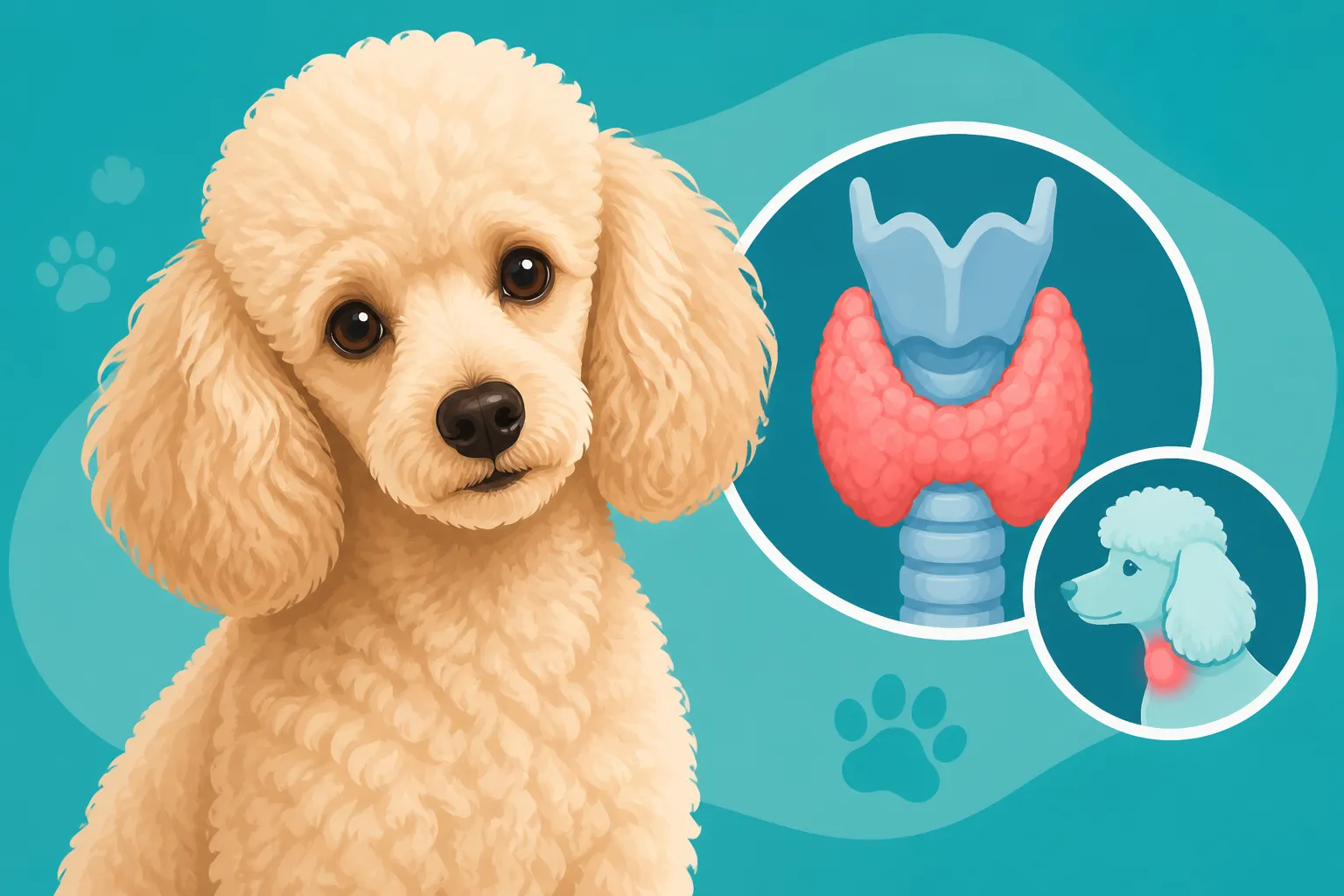
Deep in your Poodle's neck, nestled near the trachea, are two small lobes that make up the thyroid gland. Its primary job is to produce hormones, mainly thyroxine (T4) and triiodothyronine (T3). These aren't just any hormones; they're vital for regulating metabolic processes in almost every cell in the body. Think about it: energy production, body temperature regulation, heart rate, skin health, coat growth, even nerve function – all of these depend on proper thyroid hormone levels. When the thyroid isn't producing enough of these hormones, the body's systems slow down, leading to the diverse and often confusing symptoms we see with hypothyroidism. It’s like a dimmer switch for your Poodle’s entire internal engine; if the light gets too dim, everything starts to falter.
Why Poodles Are Particularly Susceptible
It feels unfair sometimes, doesn't it, how certain breeds seem to draw the short straw when it comes to specific health issues? Unfortunately, Poodles, particularly Standard Poodles, are disproportionately affected by hypothyroidism compared to many other breeds. While any dog can develop thyroid disease, there's a strong genetic component in Poodles. Most cases in dogs, including Poodles, are caused by autoimmune thyroiditis, where the dog's own immune system mistakenly attacks and destroys the thyroid gland. This genetic predisposition means that if a Poodle’s ancestors had thyroid issues, there's a higher chance their descendants might too. It’s why reputable breeders prioritize genetic health and will have information about Full Thyroid Panels Poodle Breeders Order to reduce the risk of passing on this susceptibility. It's a frustrating reality for Poodle enthusiasts, adding another layer of concern when choosing a puppy or monitoring an adult dog.
Spotting the Subtle Indicators of Hypothyroidism in Your Poodle
One of the most challenging aspects of hypothyroidism is that its symptoms can be incredibly varied and often mimic other conditions or simply "old age." This makes early detection a real puzzle, and many owners describe feeling frustrated that they just can't put their finger on what's wrong. You know your Poodle best, so paying close attention to even small shifts in their baseline is crucial.
Physical Manifestations: Coat, Skin, and Weight
The visible signs of hypothyroidism often start with changes to your Poodle’s signature curly coat and sensitive skin. Instead of that vibrant, springy curl, you might notice the coat becoming dull, dry, brittle, and perhaps even feeling greasy to the touch. Hair loss, or alopecia, is very common, often appearing symmetrically on the flanks, tail (leading to a "rat tail" appearance), or over friction points, but usually sparing the head and legs. Sometimes, the hair on their When a Poodle's Topknot Starts Thinning With Age can be an early indicator.
Beyond the coat, skin problems are frequently reported. This can manifest as dry, flaky skin, increased shedding, recurrent skin infections (pyoderma), or a darkening and thickening of the skin, especially in areas like the armpits or groin – a condition known as hyperpigmentation and lichenification. It’s a common scenario for owners to first suspect Poodle Allergies and Skin Reactions because of the skin irritation and itching, only for thyroid issues to be the true culprit.
And then there's the weight gain. This isn't usually due to overfeeding but rather a significant slowing of the metabolism. Your Poodle might be eating the same amount of food, or even less, but steadily putting on pounds. This unexplained weight gain can easily lead to Poodle Obesity and Its Consequences, adding further strain on their joints and overall health. They might also appear puffy in the face due to fluid retention, sometimes described as having a "tragic" facial expression.
Behavioral Shifts and Energy Levels
The physical changes are often accompanied by shifts in temperament and energy that can be just as unsettling. Your once-lively, playful Poodle might become noticeably lethargic, sleeping more, being less enthusiastic about walks or games, and generally having a lower stamina. They might seem mentally duller, perhaps less responsive to commands or less interested in their usual activities. This can be particularly frustrating for owners who are used to their Poodle's high intelligence and zest for life.
Another common sign is cold intolerance. Since thyroid hormones help regulate body temperature, a hypothyroid Poodle might seek out warm spots more often, shiver in mild temperatures, or generally just seem more sensitive to the cold. They might become more withdrawn, quiet, or even irritable. Some owners report their Poodles seem almost depressed or develop a general disinterest in their surroundings. It's easy to mistake this for simply Caring for an Aging Poodle or a sign of pain, so close observation is key. If you notice a shift in their willingness to interact or a pervasive low mood, it’s definitely worth investigating.
Misdiagnoses and Overlapping Symptoms
This is where the real frustration for Poodle owners often lies. Because the symptoms of hypothyroidism are so diverse and non-specific, they can easily be mistaken for a host of other conditions. As mentioned, skin issues are often initially treated as allergies. Lethargy and weight gain might be attributed to simple aging, lack of exercise, or joint pain, making it difficult to pinpoint the real problem. Sometimes, the changes are so gradual that you might not even realize how much your Poodle has shifted until you look back at old photos or recall their former vigor.
Furthermore, Poodles are known for being sensitive and often Why a Sensitive Poodle Hides Illness or discomfort. This can make them difficult to read, leading to further delays in diagnosis. It’s important to remember that many diseases can present with similar symptoms, which is why a thorough diagnostic process, guided by a vet who understands Poodle predispositions, is essential.
Here’s a quick overview of common hypothyroid symptoms in Poodles:
| Symptom Category | Common Manifestations in Poodles |
|---|---|
| Coat & Skin | Dull, dry, brittle coat; hair loss (symmetrical on flanks/tail); greasy skin; recurrent infections; hyperpigmentation |
| Energy & Mood | Lethargy, decreased activity; increased sleeping; mental dullness; less playful; withdrawn or irritable |
| Weight | Unexplained weight gain despite normal food intake; puffy face |
| Temperature | Cold intolerance; seeking warm spots |
| Other | Slow heart rate; recurrent ear infections; sometimes reproductive issues |
The Diagnostic Journey: Beyond a Simple Blood Test
You’ve noticed the changes, you’ve talked to your vet, and now it’s time to get answers. Diagnosing hypothyroidism in Poodles isn't always a straightforward "yes" or "no" with a single test. Because Poodles can be complex, and thyroid levels can fluctuate, your vet will likely recommend a series of tests to get a complete picture.
Initial Screening: T4 and TSH Baselines
The first step usually involves basic blood tests to measure total T4 (thyroxine) and thyroid-stimulating hormone (TSH). Total T4 gives an overall snapshot of the amount of thyroid hormone circulating in your Poodle's blood. If this level is low, it’s a strong indicator that something is amiss. TSH is produced by the pituitary gland in the brain and tells the thyroid gland to produce more T4. In cases of hypothyroidism, the pituitary gland tries to compensate for the underactive thyroid by releasing more TSH, so a high TSH level paired with a low T4 is a classic sign.
However, these tests aren’t foolproof. Sometimes, a Poodle can have a low T4 due to non-thyroidal illnesses (like kidney disease, heart disease, or even severe infections) or certain medications (such as steroids or anti-seizure drugs). This is known as "euthyroid sick syndrome" and means the low T4 isn't actually indicative of primary hypothyroidism. This is why interpreting these initial results requires a vet with experience, especially with breeds prone to the condition. It can be confusing for owners to get an initial low T4 reading only to find out it might not be the whole story.
Comprehensive Thyroid Panels: Delving Deeper
To get a definitive diagnosis, especially when initial results are ambiguous, your vet will likely recommend a more comprehensive thyroid panel. These panels usually include:
- Free T4 (fT4): This measures the unbound, biologically active form of T4 in the blood. Since it's less affected by non-thyroidal illnesses and medications, a low fT4 is a more reliable indicator of true hypothyroidism than total T4.
- Canine TSH (cTSH): As mentioned, elevated TSH levels often accompany low thyroid hormone production.
- Thyroid Autoantibodies (TgAA): This is where the Poodle's genetic predisposition often comes into play. Measuring thyroglobulin autoantibodies can detect if the dog's immune system is attacking its own thyroid gland, which is the leading cause of primary hypothyroidism in Poodles. A positive result for TgAA, even with normal thyroid hormone levels, can indicate an early stage of autoimmune thyroiditis before the gland is significantly damaged. Understanding Why Standard Poodles Carry Two Autoimmune Diseases helps underscore the importance of these comprehensive tests.
Some specialized labs, like those associated with Michigan State University's Animal Health Diagnostic Laboratory, are renowned for their comprehensive canine thyroid panels, offering detailed insights that can be crucial for an accurate diagnosis in challenging cases. A complete panel allows your vet to differentiate between primary hypothyroidism (a problem with the thyroid gland itself) and secondary hypothyroidism (a rare problem with the pituitary gland).
Ruling Out Other Conditions and Medications
Given the overlapping symptoms, a responsible vet won't just jump to a thyroid diagnosis without considering other possibilities. They might recommend additional tests to rule out conditions such as Addison's disease (another autoimmune condition prevalent in Standard Poodles), Cushing's disease, or various infections that could cause similar skin or energy changes. Discussing all medications your Poodle is currently taking, including supplements, is also vital, as some can suppress thyroid hormone levels.
It’s a process, not a single event. Be prepared for potentially several vet visits and blood draws. The good news is that once accurately diagnosed, hypothyroidism is one of the most treatable chronic conditions in dogs.
Navigating Treatment and Ongoing Management for a Hypothyroid Poodle
Receiving a diagnosis of hypothyroidism might feel overwhelming at first, but rest assured, this is a very manageable condition. The goal of treatment is to restore your Poodle's thyroid hormone levels to normal, thereby alleviating their symptoms and helping them regain their quality of life.
Lifelong Medication and Dosage Precision
The cornerstone of treatment for hypothyroidism is lifelong thyroid hormone replacement therapy. This usually involves administering a synthetic form of thyroxine, called levothyroxine (often sold under brand names like Soloxine, Thyro-Tabs, or Synthroid). Your Poodle will need to take this medication, typically twice a day, for the rest of their life. Consistency is absolutely crucial here; missing doses can lead to a return of symptoms and make it harder to stabilize their hormone levels.
The initial dosage is carefully calculated based on your Poodle's weight, but it's rarely a "set it and forget it" situation. It takes time to find the ideal dose, which is why regular follow-up appointments and blood tests are so important. Overdosing can lead to hyperthyroidism, causing symptoms like nervousness, increased thirst, and weight loss, while underdosing means the symptoms of hypothyroidism will persist. It’s a delicate balance that requires patience and close collaboration with your veterinarian. This long-term commitment is similar to managing other chronic conditions, so budgeting for Monthly Medication Costs for an Addisonian Poodle, for example, can give you an idea of the ongoing expense.
Monitoring Your Poodle's Progress and Adjusting Care
After starting medication, you'll typically see your Poodle's energy levels and demeanor improve within a few weeks. The coat and skin changes, however, can take several months to fully resolve as new hair grows in and skin heals. Your vet will schedule follow-up blood tests, usually around 4-8 weeks after starting treatment or after any dosage change, to check their thyroid hormone levels again. These tests are usually performed 4-6 hours after the morning dose to see how well the medication is being absorbed and utilized.
Based on these results and your observations of your Poodle's symptoms, your vet will adjust the dosage as needed. Once stable, blood tests typically transition to every 6-12 months. This regular monitoring is non-negotiable for keeping your Poodle feeling their best. It’s a journey of fine-tuning, and your observations at home are just as valuable as the lab results in guiding treatment. Be sure to note any lingering symptoms or new concerns to share with your vet.
Supporting Your Poodle Through Diet and Environment
While medication is paramount, you can also support your hypothyroid Poodle through their diet and environment. A balanced, high-quality diet is always important, but for Poodles prone to weight gain, managing calorie intake is particularly vital. Talk to your vet about appropriate food choices and portion sizes to help your Poodle maintain a healthy weight. Since Poodles are also susceptible to Poodle Obesity and Its Consequences, keeping their weight in check becomes even more critical once they are on thyroid medication.
Ensure your Poodle has a warm, comfortable place to rest, especially if they are sensitive to cold. Regular, moderate exercise is still beneficial for their overall health and well-being, but be mindful of their energy levels and don't push them too hard, especially in the initial stages of treatment. Puzzle toys and gentle training can help keep their intelligent minds engaged, even if their physical stamina is temporarily reduced. Remember, Poodles thrive on mental stimulation, and even with a slower metabolism, their brains still need a job! Consider adding enrichment activities to their daily routine.
Long-Term Outlook and Ensuring Quality of Life
A diagnosis of hypothyroidism is not a death sentence; in fact, with proper management, most Poodles go on to live full, happy, and symptom-free lives. The key is consistent, lifelong care and a proactive approach to their health.
Managing Expectations and Anticipating Improvement
Once your Poodle starts levothyroxine, you should begin to see improvements relatively quickly in terms of energy and alertness, often within a couple of weeks. Behavioral changes, like increased engagement or a reduction in lethargy, usually follow. However, be patient with the more visible changes, especially those affecting the coat and skin. It can take several months for hair to regrow fully and for skin conditions to completely clear up. Don't get discouraged if the beautiful, dense Poodle coat doesn't magically reappear overnight; it's a gradual process.
It’s also important to understand that while medication manages the symptoms, it doesn't cure the underlying autoimmune attack on the thyroid gland. Therefore, consistency with daily medication is paramount for their entire Poodle Lifespan Across the Three Sizes. If you ever notice symptoms returning, it’s often a sign that the dosage needs adjustment or that they've missed a few doses. Prompt communication with your vet is crucial to keep their condition well-controlled.
Financial Considerations and Pet Insurance Support
Dealing with a chronic condition like hypothyroidism inevitably brings financial considerations. The cost of medication, combined with regular blood tests for monitoring, can add up over time. The good news is that levothyroxine itself is generally affordable, but the frequent initial blood panels can certainly impact your budget.
This is where pet insurance can be a real lifesaver. Companies like Healthy Paws are known for their comprehensive coverage, which often includes chronic conditions like hypothyroidism once the policy is active and any waiting periods have passed. Having a robust pet insurance plan can significantly alleviate the financial burden of lifelong medication and regular veterinary check-ups. When researching policies, always scrutinize the fine print regarding pre-existing conditions and chronic care to ensure it meets your Poodle’s needs. For example, if you already suspect thyroid issues before getting insurance, it might be considered pre-existing. Planning ahead, if possible, is always the best strategy. Even without insurance, remember to ask your vet about generic medication options or whether purchasing a larger supply at once might offer a discount. Many online pharmacies can also provide more affordable options for prescriptions.
Vigilance for Complications and Co-existing Conditions
While hypothyroidism itself is highly treatable, long-term complications can arise if it's left undiagnosed or poorly managed. These can include severe skin infections, neurological issues in rare cases, or even heart problems. Regularly Reading Pain in a Sensitive Poodle is important, as some symptoms could mask other issues.
Poodles are also predisposed to other autoimmune diseases. For instance, sometimes a Poodle diagnosed with hypothyroidism might also develop Addison's Disease in Standard Poodles, another autoimmune condition. It's not uncommon for these conditions to co-exist, so your vet will likely remain vigilant for signs of other health issues throughout your Poodle’s life. Maintaining open communication with your veterinarian, adhering to the treatment plan, and observing your Poodle closely for any new or changing symptoms are the best ways to ensure they enjoy a long, healthy life despite their diagnosis. Regular wellness exams, including blood work, as part of your Poodle's preventive schedule will continue to be important.
Disclaimer
The information provided in this article is intended for general knowledge and informational purposes only, and does not constitute medical advice. It is essential to consult with a qualified veterinarian for any health concerns or before making any decisions related to your Poodle's health or treatment.