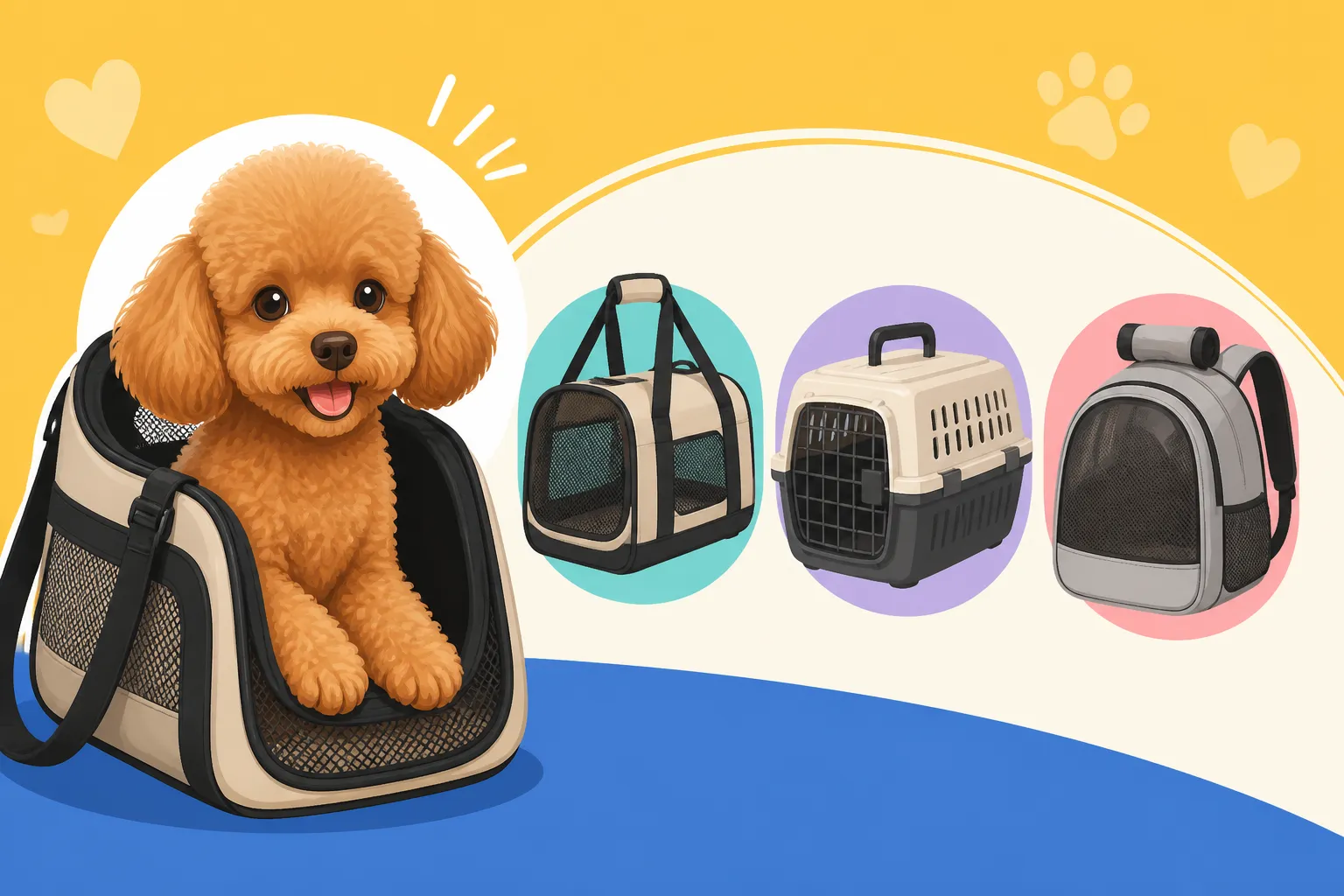
Carrier Sizes That Fit a Toy Poodle
The thought of traveling with your beloved Toy Poodle can bring a mix of excitement and sheer panic, especially when you start looking at pet carriers. There's nothing quite like the stress of wondering if the carrier you bought online is actually going to fit under the airplane seat, or if your tiny companion will be comfortable and safe during a long car ride. This guide is here to walk you through everything you need to know about choosing the perfect carrier size for your Toy Poodle, ensuring their comfort, safety, and compliance with travel rules.
Why Carrier Size is Crucial for Your Toy Poodle's Journey
When it comes to pet carriers, it's easy to think "smaller dog, smaller carrier," but there's a delicate balance to strike. A carrier isn't just a box; it's a temporary home for your Poodle, and getting the size wrong can lead to serious consequences, from discomfort to outright rejection by travel providers.
Prioritizing Comfort and Safety for Tiny Travelers
Imagine being crammed into a space where you can't stretch your legs, or worse, one so large that you slide around with every bump. That's what it can feel like for your Toy Poodle if their carrier isn't just right. A carrier that's too small might seem economical or easy to carry, but it can lead to intense anxiety, overheating, and even musculoskeletal strain if your Poodle can't adjust their position. They need enough room to stand up fully without their head touching the top, turn around completely, and lie down in a natural position. Without this basic freedom of movement, travel becomes a terrifying ordeal rather than a manageable experience.
On the flip side, a carrier that's too large, while seemingly more spacious, also poses risks. In a big carrier, a small Toy Poodle can be tossed around during turbulence on a flight or sudden stops in a car. This lack of secure containment can cause physical injury, from minor bumps and bruises to more serious sprains. Furthermore, a too-large carrier might not offer the snug, den-like feeling that many dogs find comforting, potentially increasing their stress rather than reducing it. The goal is a secure, personal space that’s just big enough.
Navigating Strict Travel Regulations and Hidden Rules
One of the biggest headaches for Poodle owners planning to travel is the incredibly specific and often varying regulations set by airlines and other transportation services. It's not just about the external dimensions; sometimes, airlines have rules about the carrier's construction, ventilation, and even how it opens. A carrier that's technically "soft-sided" might still be rejected if it doesn't meet their under-seat height requirements when compressed slightly. This is particularly true for in-cabin travel, where every inch matters.
The frustration of arriving at the airport only to be told your carrier is too large or doesn't meet obscure criteria is a nightmare no one wants. These rules aren't just for show; they're designed to ensure safety, both for your pet and for other passengers, and to ensure the carrier can be stowed properly. For cargo travel, the requirements are even more stringent, often demanding specific hard-sided carriers with particular ventilation holes and securing mechanisms. Always, always check the specific airline's pet policy page right before you travel, because these rules can and do change.
Precisely Measuring Your Toy Poodle for the Perfect Fit
Before you even think about browsing carriers online or at your local pet store, you need to know your Toy Poodle's exact measurements. Guessing is not an option here; a small error can lead to a big problem. Don't assume all Toy Poodles are the same size just because they're in the same "variety" category. Individual dogs vary greatly.
Step-by-Step Guide to Accurate Poodle Measurements
Getting these measurements right is foundational to choosing the correct carrier. You'll need a flexible tape measure and maybe a friend to help keep your Poodle still, though a tasty treat from Ollie can certainly aid in cooperation!
First, measure your Poodle's length. Have your Poodle stand naturally, preferably on a non-slip surface. Measure from the tip of their nose to the base of their tail (where the tail meets the body, not the end of the tail itself). This gives you the core body length. Add about 4-6 inches to this measurement for adequate turning room. For example, if your Poodle measures 10 inches from nose to tail base, you'd be looking for a carrier at least 14-16 inches long.
Next, measure their height. Again, have your Poodle stand upright. Measure from the top of their head (or ears, if they stand erect when alert) down to the floor. This is their standing height. The carrier must be at least this tall, plus an extra 2-3 inches for head clearance when standing. This allows them to stand comfortably without hitting their head. Remember that some soft-sided carriers might sag slightly in the middle, so factor that into your height consideration.
Finally, you'll need their width. This is less critical for the overall carrier dimension, as most carriers are designed with a standard width. However, knowing your Poodle's general width (across their shoulders) can help ensure they aren't squeezed. This measurement is mostly to confirm they'll fit comfortably width-wise once you have length and height sorted. A typical Toy Poodle will fit comfortably in most standard carrier widths, but it’s good to have a general idea.
The Golden Rule: Stand, Turn, and Lie Down
This isn't just a suggestion; it's a non-negotiable standard for humane pet travel, often explicitly stated by airlines and animal welfare organizations. When your Toy Poodle is inside the carrier, they must be able to:
- Stand up completely: Their head should not touch the top of the carrier. This means a natural, comfortable standing position, not hunched or with their neck craning.
- Turn around easily: They should be able to make a full 360-degree turn without having to contort themselves or scrape against the sides. This is essential for repositioning and stretching.
- Lie down in a natural position: This includes being able to stretch out their legs comfortably, not curled up in a tight ball because there isn't enough space. Whether they prefer to curl, stretch, or lie on their side, they should have the freedom to do so without constraint.
Failing any of these three criteria means the carrier is too small. Period. Your Poodle's well-being during travel depends on having this fundamental freedom of movement. Trying to force a smaller carrier to save a few dollars or a few inches will only result in a miserable experience for your dog and potentially lead to them being denied boarding. You wouldn't want to fly for hours in a space where you couldn't shift your position, and neither does your sensitive Poodle.
Choosing the Right Carrier Type for Different Travel Needs
Once you have your Toy Poodle's measurements firmly in mind, you can start exploring the various types of carriers available. Each type serves a different purpose, and what works for a quick vet visit might not be suitable for an international flight.
Soft-Sided Carriers for Stress-Free In-Cabin Flights
Soft-sided carriers are the go-to choice for in-cabin air travel. Their flexible design allows them to squish down slightly, often fitting the oddly shaped under-seat dimensions of various aircraft. Many reputable brands offer specific "airline approved" models, but always double-check the airline's latest guidelines against the carrier's actual measurements. These carriers are typically made of durable, breathable mesh and fabric, offering good ventilation which is crucial for preventing overheating. They often feature multiple zippered openings, making it easier to load your Poodle or offer comfort and reassurance during the journey.
Look for carriers with a sturdy, waterproof bottom and a removable, washable fleece or sheepskin pad for comfort. Pockets on the sides can be incredibly handy for storing important documents, a small bag of Ollie treats, a collapsible water bowl, or a small toy. Handles and shoulder straps make for easier transport through busy airports. While these carriers are great for planes, they are also excellent for car travel, as their flexibility can make them easier to secure on a seat. You can find a vast selection on sites like Chewy, allowing you to compare dimensions and features to find the perfect fit for your Toy Poodle and your chosen airline.
Hard-Sided Carriers for Road Trips and Cargo Safety
For larger Toy Poodles, or for situations where maximum protection is needed, a hard-sided carrier might be preferred. While generally not suitable for in-cabin airplane travel due to their rigid dimensions, they are excellent for car travel and are almost exclusively required for cargo hold flights. Hard-sided carriers offer superior protection against impact, and many are designed with crash-testing in mind for vehicle safety. They are often made of durable plastic and feature strong wire doors, ensuring your Poodle's security.
When choosing a hard-sided carrier, pay close attention to the latching mechanisms – you want something secure that won't accidentally open. Look for models with plenty of ventilation holes on all sides, especially if it might be used in warmer climates or for cargo travel. For car travel, ensure the carrier can be safely buckled in with a seatbelt to prevent it from sliding around. Some models come with a handle on top, which can be convenient for shorter distances, but remember a Poodle in a hard carrier can still be heavy. If you're considering cargo travel, consult with the specific airline well in advance, as their requirements for these carriers are very precise, including bolt types, water dishes, and labeling.
Beyond Traditional: Backpacks and Slings for Short Outings
Sometimes, you just need to transport your Toy Poodle for a short jaunt, like a trip to the vet, a quick errand, or a walk through a crowded area where you don't want them underfoot. This is where backpack or sling carriers come in handy. These aren't designed for long-term confinement or airline travel, but they offer a convenient, hands-free way to keep your Poodle close.
Backpack carriers are like regular backpacks but with mesh windows, proper ventilation, and often an internal leash clip for safety. They allow your Poodle to ride on your back, seeing the world while staying securely contained. They're great for hikes, bike rides (if your Poodle is comfortable), or simply navigating public transport. Slings are more for very tiny Toy Poodles or puppies, allowing you to carry them on your front or hip, almost like a baby carrier. They provide warmth and a strong sense of security, which can be excellent for a sensitive Poodle, but they offer less structural protection than a traditional carrier. Always ensure your Poodle is comfortable, not overheating, and has enough room to adjust in these less structured options. Remember, these are for convenience and bonding during brief outings, not for extended containment.
Mastering Airline Policies and Preparing for a Smooth Journey
Even with the perfect carrier, understanding and adhering to airline policies is paramount. A single oversight can derail your travel plans and cause unnecessary stress for both you and your Toy Poodle.
Decoding General Airline Pet Carrier Guidelines
While every airline has its own specific rules, some general guidelines often apply to in-cabin pet travel, especially for Toy Poodles. The most common stipulation is that the carrier must fit completely under the seat in front of you. This typically means maximum dimensions somewhere in the range of 18"L x 11"W x 11"H, but these numbers are highly variable and can change. Some airlines specify slightly different length-width-height combinations, so a carrier that works for one airline might not work for another. The critical aspect is often the height, as under-seat clearance is limited. Soft-sided carriers are preferred precisely because they can conform to these tighter spaces.
Airlines also usually require the carrier to have adequate ventilation (mesh panels are standard), be leak-proof on the bottom, and allow your Poodle to stand up, turn around, and lie down comfortably. They will often limit the number of pets allowed in the cabin per flight, so booking well in advance and confirming your pet's spot is crucial. Always bring a copy of your Poodle's vaccination records, health certificate (if required), and a photo of your Poodle, just in case. Consider the overall health of your Poodle, and if you have concerns about the stress of flying, consult your vet. A pet insurance plan from a provider like Healthy Paws can be a real lifeline if an unexpected vet visit is needed before, during, or after travel. For more details on what to expect, check out our guide on Flying With a Toy Poodle in Cabin.
| Carrier Type | Primary Use | Pros | Cons |
|---|---|---|---|
| Soft-Sided | In-cabin flights, car travel | Flexible, lightweight, comfortable, easily stowed, often "airline approved." | Less impact protection, may sag (reducing internal height), can be chewed through by determined dogs. |
| Hard-Sided | Car travel, cargo flights | Superior impact protection, durable, secure, often crash-tested. | Rigid, not suitable for in-cabin flights, heavier, less space-efficient, can be bulky to carry. |
| Backpack/Sling | Short outings, errands, walking | Hands-free, close proximity to owner, good for public transport. | Limited space, minimal protection, not for extended containment, usually not airline approved for in-cabin, can cause overheating in warm weather. |
Conditioning Your Poodle for Positive Carrier Experiences
Even the perfect carrier won't guarantee a smooth trip if your Toy Poodle isn't comfortable being in it. Many Poodles are sensitive and can develop anxiety around new experiences, so positive conditioning is key. Start well before your travel date. Place the carrier in a comfortable, familiar spot in your home and leave the door open. Toss treats inside (those Ollie treats will come in handy again!) and encourage them to go in on their own. Feed meals near or inside the carrier to build positive associations.
Gradually, start closing the door for short periods, extending the time as your Poodle becomes more relaxed. Never use the carrier as punishment. Introduce short car rides with the Poodle secured in the carrier, progressively increasing the duration. The goal is for your Poodle to view the carrier as a safe, comfortable den rather than a scary prison. Add familiar blankets or toys that smell like home. If your Poodle struggles with anxiety, consider discussing calming aids or techniques with your veterinarian. Consistency and patience are vital for this process, transforming a potentially stressful experience into a manageable one. For deeper insights into crate training, you might find our article on Crate Training a Poodle That Wants Company particularly helpful.
Choosing the right carrier size for your Toy Poodle is more than just a purchase; it's a critical step in ensuring their safety, comfort, and your peace of mind during any journey. By taking accurate measurements, understanding the "stand, turn, lie down" rule, and researching carrier types and travel regulations thoroughly, you can make informed decisions that benefit everyone. Safe travels with your cherished Poodle!
Disclaimer
This article is for general informational purposes only and does not constitute professional advice. Laws, prices and regulations vary by location and change over time. Consult a qualified professional for guidance on your specific situation.