Checking a Toy Poodle Puppy’s Blood Sugar
The tiny, energetic bundle of joy that is a Toy Poodle puppy can bring so much happiness, but their delicate nature, especially in those first few months, often leaves new owners feeling incredibly anxious. One of the most frightening realities is the sudden and silent drop in their blood sugar, known as hypoglycemia, which can turn a playful pup into a lethargic, unresponsive little being in mere moments. This guide is here to walk you through understanding why this happens, how to check your Toy Poodle puppy's blood sugar at home, and what immediate steps you can take to prevent a crisis and ensure their health and safety.
Understanding Hypoglycemia in Tiny Poodles
It's absolutely heartbreaking to see your vibrant little Toy Poodle puppy suddenly become weak, wobbly, or even unresponsive. For many new owners, this experience is terrifying, and the fear of not knowing what's wrong or how to help can be overwhelming. The truth is, Toy Poodle puppies, due to their small size and rapid metabolism, are particularly susceptible to hypoglycemia, or low blood sugar. It's not a sign of poor care from you; it's a common vulnerability in these tiny, fast-growing creatures.
Think about it: a Toy Poodle puppy, often weighing just a few pounds, has very little body fat to store as an energy reserve. Their metabolism is incredibly efficient and fast-paced, burning through glucose (sugar) at an astonishing rate. If they miss a meal, get overly excited, become stressed, or even just get a little too cold, their blood sugar can plummet quickly. This isn't like an adult dog who might just feel a bit hungry; for a tiny puppy, it's a true emergency. Their developing brains rely heavily on a steady supply of glucose, and without it, their neurological function rapidly declines. This vulnerability is why understanding Hypoglycemia in a Toy Poodle Puppy is so critical.
The initial signs can be subtle. You might notice them acting a little "off," perhaps quieter than usual, a bit disoriented, or having trouble coordinating their movements. As it progresses, they might become very drowsy, their gums might feel cold or pale, and in severe cases, they could experience seizures or even lose consciousness. It's a rapid decline, which is why quick identification and intervention are paramount. Many owners are caught off guard because the puppy seemed fine just moments before. This rapid onset is precisely why proactive monitoring and knowing what to do are life-saving skills for any Toy Poodle parent.
Essential Tools for At-Home Blood Sugar Monitoring
When you're dealing with a tiny Toy Poodle puppy, especially one prone to low blood sugar, having the right tools on hand can make all the difference. It provides immense peace of mind, allowing you to quickly assess the situation without having to rush to the emergency vet every time your pup seems a little quiet. The investment in these tools is minimal compared to the potential vet bills and, more importantly, the stress and risk to your puppy's life. Don't feel silly for being prepared; this is an essential part of Keeping Glucose Gel for a Toy Poodle and having a proactive approach to their health.
Firstly, you'll need a reliable canine-specific glucose meter. While human glucose meters can technically be used, they are often not calibrated for canine blood and can give inaccurate readings, which can be dangerous when precision is needed. Brands like AlphaTrak are widely recommended by veterinarians for their accuracy in pets. Along with the meter, you'll need compatible test strips and lancets for obtaining a tiny blood sample. These lancets are usually spring-loaded devices that give a quick, shallow prick, designed to be as painless as possible.
Beyond the testing equipment, you should always have glucose gel or syrup readily available. These are fast-acting sugar sources that can be rubbed directly onto your puppy's gums to quickly raise their blood sugar in an emergency. Karo syrup (light corn syrup) is a common household alternative if you don't have a specialized glucose gel. It's also a good idea to have some high-quality, palatable canned puppy food on hand. Once their blood sugar is stabilized with gel, a small, easily digestible meal can help sustain their levels. Finally, a small flashlight or headlamp can be incredibly helpful for clearly seeing the tiny veins in their ear or paw pad, especially if you're trying to get a sample in a dimly lit area during an evening incident.
Having all these items organized in a small "hypoglycemia kit" within easy reach means you won't be scrambling in a panic when every second counts. It's about empowering yourself to be your puppy's first line of defense.
Step-by-Step: How to Check Your Toy Poodle Puppy's Blood Sugar
The thought of drawing blood from your tiny puppy might seem daunting, even terrifying. You're worried about hurting them, doing it wrong, or causing more stress. But with a calm approach and the right technique, it's a quick process that most puppies tolerate surprisingly well, especially once they associate it with relief if they're actually low. This skill can literally save your puppy's life, preventing a full-blown emergency.
Here's how to do it:
- Gather Your Supplies and Prepare Your Space: Before you even touch your puppy, lay out your glucose meter, a fresh test strip, a lancet, a cotton ball or gauze, and your glucose gel. Make sure the meter is on and ready to accept a strip. Choose a warm, quiet spot where your puppy feels secure. A small blanket or towel can help keep them still and comfortable.
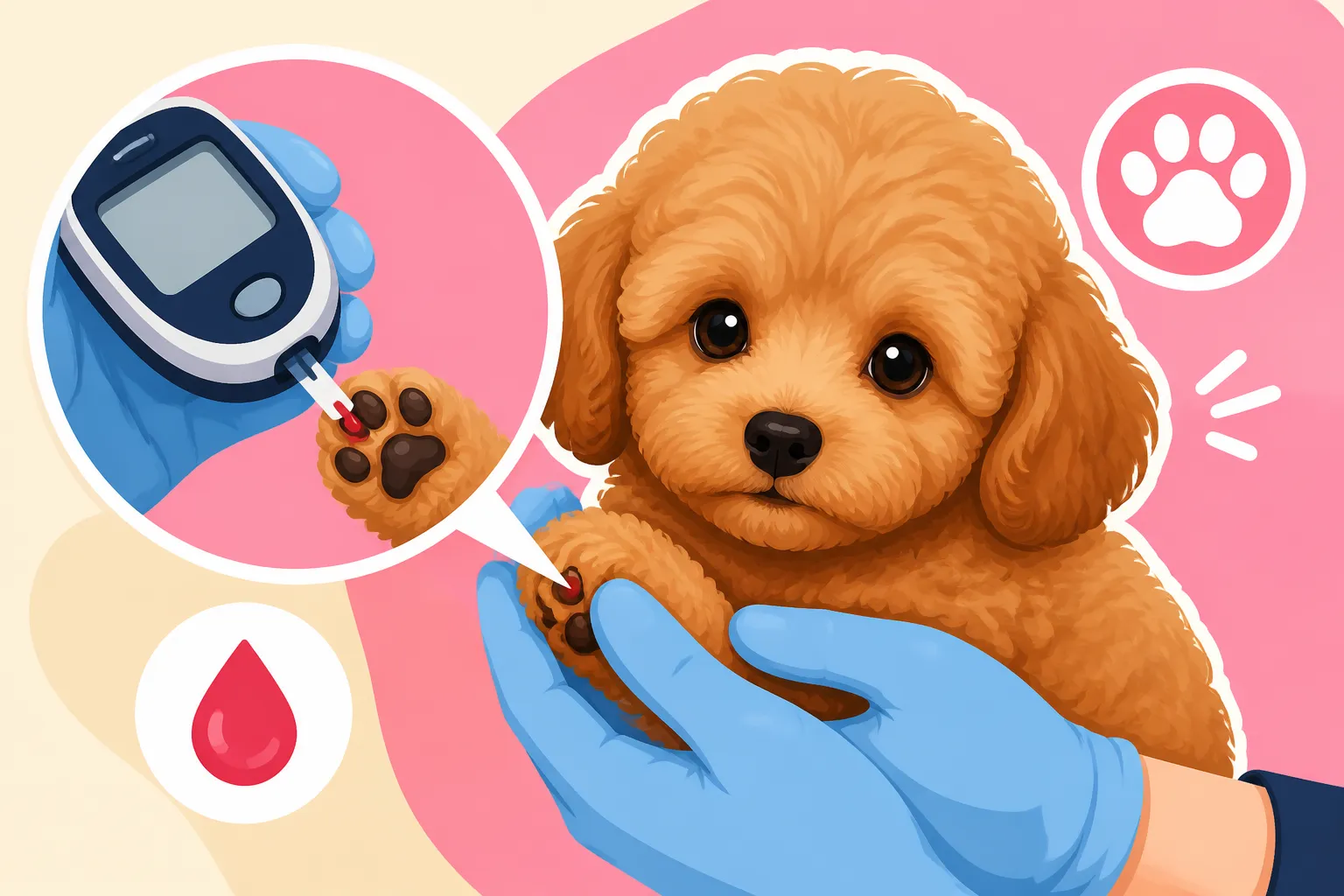
- Warm the Ear (or Paw Pad): The easiest place to get a tiny blood sample on a Toy Poodle puppy is usually the ear flap, specifically along the edge where small veins are visible. Gently rub the ear for a few seconds to warm it up. This encourages blood flow. You can also use a warm, damp cloth, but be sure to dry the area thoroughly afterward. If the ear isn't working, the paw pad can be an alternative, but it can be more sensitive.
- Position Your Puppy: Hold your puppy gently but firmly. You want to prevent sudden movements without causing distress. Many owners find it easiest to cradle them on their lap or have a helper gently hold them. Talk to them in a soothing voice.
- Perform the Prick: Take your lancet and quickly, but gently, prick the edge of the ear flap, avoiding the main vein. The spring-loaded lancets are designed for speed and minimal discomfort. You're aiming for a tiny drop of blood, not a gush. Immediately apply gentle pressure with a clean cotton ball or gauze to the prick site after the sample is taken to stop any bleeding.
- Collect the Blood Sample: As soon as you see a tiny bead of blood form, bring the test strip to it and let the strip "sip" the blood. Most strips have a capillary action that draws in the sample. Make sure the strip gets enough blood to register a reading, but avoid squeezing the ear too hard, as this can dilute the sample with tissue fluid and give an inaccurate reading.
- Read the Meter: Insert the blood-filled test strip into your glucose meter (if you haven't already). The meter will display a reading within a few seconds. Jot down the reading, the time, and any symptoms your puppy was showing. This record can be incredibly valuable for your vet.
Remember, practice makes perfect, and the more calmly you approach it, the calmer your puppy will be. If you’re unsure, ask your vet for a demonstration. They can show you the best spot on your individual puppy and the correct technique.
What Your Readings Mean and When to Act
Getting a blood sugar reading is just the first step; knowing how to interpret it and, crucially, when to take action, is where the real value lies. It's easy to panic when the numbers are outside the "normal" range, but understanding the spectrum of what those numbers mean for a tiny Toy Poodle puppy is key to responding effectively and without undue stress.
Generally, a healthy blood sugar range for a puppy is between 80-120 mg/dL (milligrams per deciliter). However, for a tiny Toy Poodle puppy, especially if they haven't eaten recently or are stressed, readings can fluctuate.
Understanding the Numbers:
| Blood Glucose Reading (mg/dL) | Interpretation | Recommended Action |
|---|---|---|
| 80-120 mg/dL | Normal & Healthy | Continue with regular feeding schedule. No immediate action needed beyond routine care. |
| 60-79 mg/dL | Mildly Low / Watchful Waiting | Your puppy is likely still alert but might be slightly quieter or less energetic. Offer a small, palatable meal (e.g., canned puppy food or a cooked chicken breast piece). Monitor closely for the next 1-2 hours. If no improvement or symptoms worsen, proceed to emergency action. |
| 40-59 mg/dL | Moderately Low / Immediate Action Needed | Your puppy might be lethargic, wobbly, or disoriented. Immediately apply glucose gel or corn syrup (a pea-sized amount) to their gums. Recheck blood sugar in 15-20 minutes. If symptoms persist or worsen, or blood sugar doesn't rise significantly, contact your vet immediately. Follow up with a small, digestible meal once alert. This is when Emergency Sugar for a Crashing Toy Poodle is vital. |
| Below 40 mg/dL | Severely Low / Veterinary Emergency | Your puppy may be collapsed, seizing, or unconscious. Apply a larger amount of glucose gel (a nickel-sized amount) to their gums and rub it in. Rush to your nearest emergency veterinary clinic immediately. This is a critical situation requiring professional intervention to prevent brain damage or worse. Inform them on the way that your Toy Poodle puppy is severely hypoglycemic. |
If your puppy consistently shows Signs of Low Blood Sugar in a Toy Poodle Puppy even with regular meals, or if you find yourself frequently needing to give them glucose gel, it's crucial to consult your veterinarian. There might be an underlying issue that needs to be addressed, or your feeding schedule might need adjustments. Remember, proactive health management, often supported by pet insurance providers like Healthy Paws, can make a huge difference in covering unexpected emergency costs. Having that safety net can reduce a significant amount of financial stress during an already terrifying situation.
Preventative Measures and Long-Term Care for Your Toy Poodle Puppy
Living with the constant worry of hypoglycemia can be exhausting, but the good news is that many preventative measures can significantly reduce the risk of your Toy Poodle puppy experiencing a blood sugar crash. It’s all about creating a consistent, supportive environment that minimizes stress and ensures a steady supply of energy for their fast-paced little bodies. The goal is to move from reactive crisis management to proactive, confident care.
One of the most crucial elements is a strict and frequent feeding schedule. Toy Poodle puppies simply cannot go for long periods without food. In their early months, they often need to eat small, frequent meals – sometimes as often as every 2-4 hours, even overnight for very tiny or vulnerable puppies. This is why understanding How Often a Toy Poodle Puppy Must Eat is so important. Consult with your breeder or vet to establish the right frequency and portion sizes for your specific puppy, as this can vary based on their individual metabolism and activity level. High-quality puppy food, appropriate for their small size and high energy needs, is essential.
Stress reduction is another major factor. Over-excitement, prolonged play sessions without breaks, being too cold, or even a stressful vet visit can all trigger a drop in blood sugar. Ensure your puppy has a warm, draft-free place to sleep. Provide plenty of opportunities for naps. Keep interactions calm and positive, especially in their early days. If you know a potentially stressful event is coming (like a car ride or a trip to the groomer), offer a small, digestible meal beforehand and keep your glucose gel handy.
Beyond food and stress, general good health management contributes greatly. Regular vet check-ups are vital to ensure your puppy is growing properly and has no underlying health issues. Make sure they are up-to-date on vaccinations, as illness can also deplete their energy reserves. Discuss with your vet What a Vet Checks on a Toy Poodle Puppy during these visits. Consider enrolling in pet insurance like Healthy Paws early on. While it won't prevent hypoglycemia, having comprehensive coverage can alleviate the financial burden should an emergency vet visit or long-term management become necessary. It’s a smart way to plan for the unexpected, especially with a breed known for some specific sensitivities.
As your Toy Poodle puppy grows, their risk of hypoglycemia will generally decrease as their body matures and they develop better internal regulation of blood sugar. However, maintaining good feeding habits, managing stress, and staying vigilant are lifelong practices for a healthy Poodle.
Disclaimer
The information provided in this guide is for general informational purposes only and does not constitute veterinary advice. Always consult with a qualified veterinarian for any health concerns or before making any decisions about your pet's medical care. In case of a medical emergency, contact your veterinarian or an emergency veterinary clinic immediately.