Feeling Ribs Under a Thick Poodle Coat
It's a common worry among Poodle owners: how do you really know if your beloved curly-coated companion is at a healthy weight when their abundant fur makes it so hard to tell? That fluffy exterior can be incredibly deceptive, hiding both a lean physique and, unfortunately, extra pounds. This guide will walk you through practical ways to assess your Poodle's body condition, ensuring you can keep them healthy and active, no matter how thick their beautiful coat.
Why Poodle Coats Make Weight Assessment Tricky
One of the most charming, yet challenging, aspects of owning a Poodle is their magnificent coat. Unlike shedding breeds where a quick visual inspection can often tell you a lot about their physique, a Poodle’s dense, curly hair creates an optical illusion that can obscure their true body shape. This can lead to genuine frustration when you’re trying to determine if your Poodle is getting enough food, too much food, or simply needs more exercise.
The Illusion of Volume
Imagine your Poodle fresh from a groom, trimmed short and neat. You can suddenly see every curve and angle of their body, from their tucked waist to the curve of their ribs. Now, picture them a few weeks later, their coat growing out, fluffing up, creating that characteristic voluminous silhouette. This volume, while beautiful, adds a deceptive layer of apparent bulk that can make a perfectly healthy Poodle look heavier than they are, or worse, conceal excess weight that's creeping on slowly. It’s not uncommon for owners to be surprised by how much smaller their Poodle feels or looks once the coat is shaved down, prompting them to realize they might have been overfeeding. This phenomenon often leads to owners asking, "Why a groomed Poodle looks thinner."
Coat Types and Density Differences
Not all Poodle coats are created equal, which further complicates visual assessment. A Poodle with a very thick, dense, cottony coat might appear rounder than a Poodle with a finer, silkier texture, even if both are at the same healthy body condition. Puppy coats, especially during the dreaded "coat change in an adolescent Poodle" phase, can be particularly deceiving, often feeling much denser and more voluminous than the adult coat that eventually comes in. This variation means that you can't rely on a "one size fits all" visual guide, and feeling for their ribs becomes an even more critical skill. You truly need to get your hands on your dog, beneath all that glorious fluff, to know what’s going on.
The "Rib Check" Method for Poodles
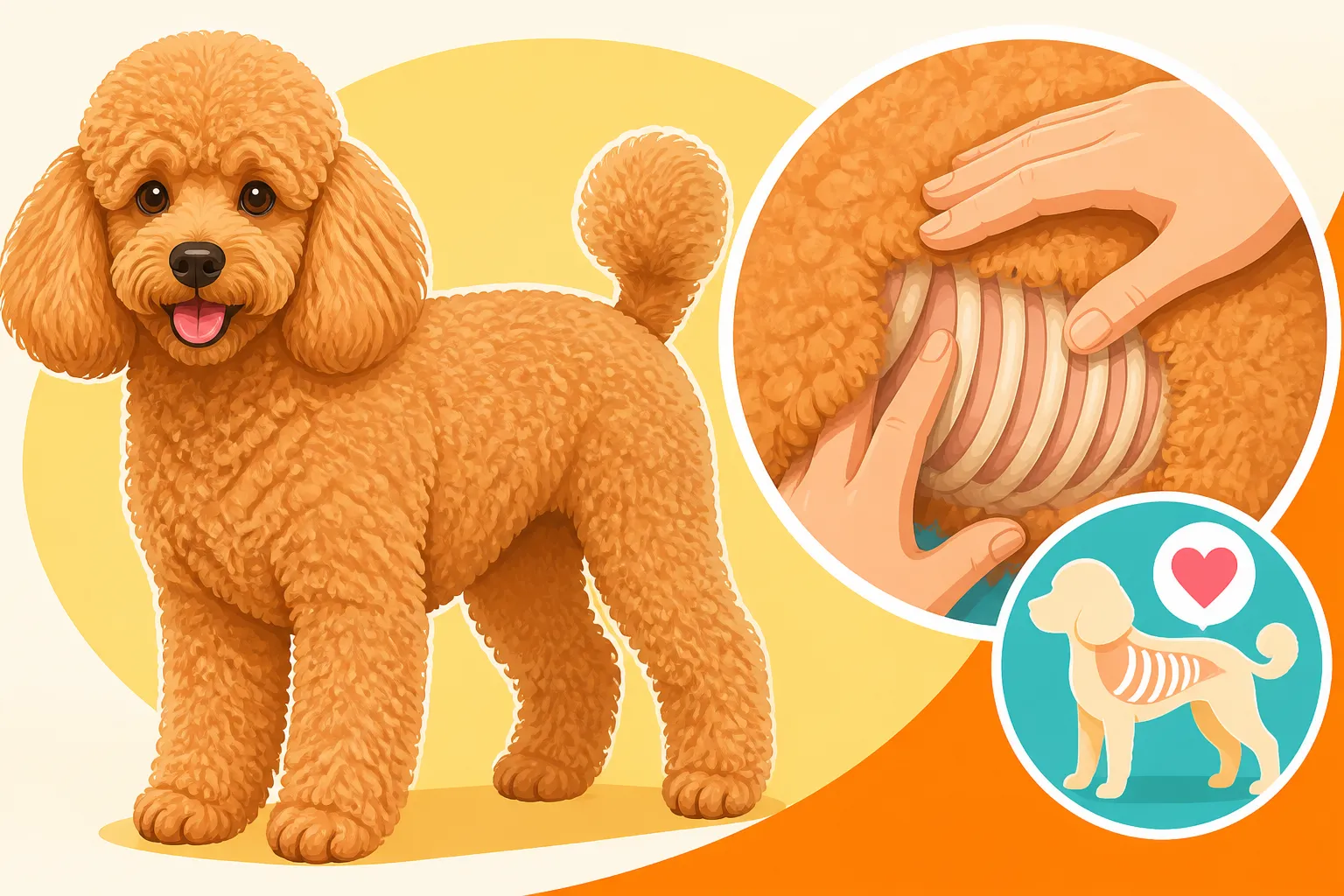
The most reliable way to assess your Poodle's weight, regardless of coat length or density, is through tactile examination – what we often call the "rib check." This isn't just about looking, it's about feeling. It takes a little practice to do it correctly and interpret what your fingers are telling you, but it's an indispensable skill for any Poodle parent.
How to Perform a Proper Palpation
To perform a rib check, you need to feel your Poodle’s ribs with your hands, gently but firmly. Start by placing both hands flat on their chest, just behind their front legs. Your fingers should be spread apart slightly. Now, slide your hands backward, applying light pressure, moving along their sides towards their spine. The goal is to feel the individual ribs beneath the muscle and a thin layer of fat. You should be able to distinguish each rib bone, like feeling the knuckles on the back of your hand when your palm is flat. Don't press so hard that you hurt your Poodle, but apply enough pressure to get past the coat and the superficial layers. This isn't about counting every rib, but about assessing the ease with which you can feel them.
What a Healthy Poodle's Ribs Should Feel Like
When your Poodle is at a healthy weight, you should be able to feel their ribs quite easily with gentle pressure, without actually seeing them through the coat. There should be a slight layer of fat covering them, but no thick padding. If you can feel them, but they feel sharp, prominent, or you can see them easily without any pressure, your Poodle might be underweight. Conversely, if you have to press hard, or you can't feel individual ribs at all because there's too much cushioning, your Poodle is likely overweight. This tactile feedback is far more accurate than any visual assessment, especially if you have a Poodle who "Why a fat Poodle hides under its coat."
Here’s a quick guide to what you should be feeling:
| Body Condition | Ribs Description | General Appearance (if coat allows) | What It Means |
|---|---|---|---|
| Too Thin | Ribs easily visible, feel sharp, no fat covering. | Very angular, prominent hip bones. | Significantly underweight, potential health issues. |
| Ideal | Ribs easily palpable with light pressure, slight fat covering. | Smooth curves, visible waist. | Healthy weight, optimal for longevity. |
| Overweight | Difficult to feel ribs, requires firm pressure, thick fat layer. | Rounder, no discernible waist. | Excess weight, risk of health complications. |
| Obese | Cannot feel ribs at all, heavy fat deposits. | Barrel-shaped, no waist or tuck. | Severely overweight, high health risk. |
Common Mistakes and Misinterpretations
One common mistake is confusing the feeling of muscle with fat. A very athletic Poodle, especially a Standard Poodle, might have well-developed rib cage muscles, which can sometimes be mistaken for extra padding. This is why looking at the overall picture, including the waistline and energy levels, is important. Another misinterpretation is to panic if you can feel the ribs at all. Many owners, used to seeing dogs with more visible padding, worry if they can feel ribs easily. For Poodles, being able to feel the ribs distinctly but not sharply, with a thin layer of tissue over them, is actually the ideal state. Don't be afraid to ask your vet to demonstrate a proper rib check during your next visit; they can provide invaluable, hands-on guidance.
Beyond the Ribs: Other Indicators of Poodle Weight
While the rib check is paramount, it’s not the only tool in your arsenal. Combining palpation with other observations can give you a more complete picture of your Poodle's body condition. These additional indicators are particularly helpful if you’re concerned about Poodle obesity and its consequences.
The Waistline and Tummy Tuck
Even with a fluffy coat, you can sometimes get a sense of your Poodle’s waistline and "tummy tuck." When looking down at your Poodle from above, you should ideally see a slight indentation or hourglass shape between their last rib and their hips. If their body looks straight, like a cylinder, or even bulges out, they are likely carrying too much weight. From the side, a healthy Poodle should have an upward slope from their rib cage to their hind legs, indicating a "tummy tuck." If their belly hangs low or is parallel to the ground, this is another red flag. These visual cues can be subtle beneath a full coat, so you might need to feel along their sides more extensively, gently pushing aside the hair to get a clearer sense of their actual body shape. This is particularly important for discerning "What a Poodle should weigh by variety" as proportions can differ.
Spine and Hip Bones
Just like with the ribs, you should be able to feel your Poodle's spine and hip bones with relatively little pressure. Run your hands down their back, over their spine. You should feel the individual bony protrusions of the vertebrae, but they shouldn't feel sharp or painful. If they are very prominent and have no cushioning, your Poodle is likely too thin. Conversely, if you can barely feel the spine or hip bones, even with firm pressure, it indicates excessive fat covering. For Poodles, whose coats often make these areas appear flat or broad, a tactile assessment is vital. Always consider "Reading pain in a sensitive Poodle" if they flinch or show discomfort during palpation, as underlying issues might be at play.
Behavioral and Energy Level Clues
Your Poodle's behavior and energy levels can also offer significant clues about their weight. Poodles are naturally active and playful dogs, irrespective of their size. If your Poodle, especially a Standard Poodle, who normally loves long walks or playing fetch, seems unusually lethargic, out of breath easily, or struggles with activities they once enjoyed, it could be a sign that they are carrying extra weight. Overweight Poodles might also be less enthusiastic about going for their "daily exercise for a Standard Poodle" or "daily exercise for a Toy Poodle." Conversely, a Poodle who is underweight might also show signs of low energy due to a lack of sufficient calories. Any significant change in your Poodle’s normal activity patterns warrants a closer look at their diet and a visit to the vet.
Maintaining a Healthy Weight for Your Poodle
Keeping your Poodle at a healthy weight is one of the most impactful things you can do for their long-term health and well-being. It helps prevent numerous health issues and ensures they can enjoy an active, fulfilling life.
Feeding Habits and Portion Control
The foundation of weight management starts in the food bowl. It’s incredibly easy to overfeed a Poodle, especially if you're not carefully measuring their meals. The guidelines on dog food bags are just a starting point; every Poodle is an individual with unique metabolic needs. Consider "Portion control for a Poodle" a non-negotiable part of their daily routine. Use a measuring cup for every meal, and resist the urge to "eyeball" it. Treats, while a wonderful training tool, must also be accounted for in their daily caloric intake. Opt for low-calorie options or use small pieces of their regular kibble as rewards. If you have an older Poodle, remember their "calorie needs of a senior Poodle" will likely decrease, requiring adjustments to their food intake to prevent weight gain. Your veterinarian can help you determine the precise amount of food your Poodle needs based on their age, size, activity level, and body condition score.
Exercise Tailored to Poodle Sizes
Exercise is the other crucial piece of the puzzle. Poodles, no matter their size, thrive on physical activity and mental stimulation. A Toy Poodle might get adequate exercise with several short walks and indoor play sessions, while a Standard Poodle will require more rigorous activity like brisk walks, runs, or engaging in dog sports. Ensure your Poodle is getting consistent, appropriate exercise for their size and age. This not only burns calories but also keeps their muscles toned and their mind engaged. Activities like fetch, swimming, or even just lively play in the yard can make a big difference. For those wondering, "How far a Standard Poodle should walk" or "Exercise a Toy Poodle actually needs," the general rule is to aim for at least 30-60 minutes of moderate to vigorous activity daily, broken into multiple sessions. A bored Poodle is often a Poodle prone to weight gain or destructive behaviors, so keep them moving!
Regular Vet Check-ups and Professional Advice
Even with diligent home care, regular veterinary check-ups are indispensable. Your vet can perform a thorough body condition assessment, which includes palpating the ribs, spine, and hips, and can objectively tell you if your Poodle is at an ideal weight. They can also discuss their "Poodle vaccination and preventive schedule" and screen for any underlying health issues that might affect weight, such as thyroid problems or other metabolic conditions. If you're struggling to manage your Poodle's weight, your vet can offer personalized dietary recommendations, suggest appropriate exercise routines, or even refer you to a veterinary nutritionist. Proactive health management, including regular visits, can truly make a difference in your Poodle's lifespan and quality of life. Many pet parents find that having pet insurance, like a comprehensive plan from Healthy Paws, gives them peace of mind to pursue any necessary diagnostic tests or treatments without financial stress. It’s an investment in their long-term health and allows you to always prioritize their well-being. Remember, a healthy weight can even reduce the risk of future conditions that might require substantial care.
Disclaimer
The information provided in this article is for general educational purposes only and is not a substitute for professional veterinary advice. Always consult with a qualified veterinarian for any health concerns or before making any decisions related to your Poodle's care, diet, or exercise regimen.