Legg-Calve-Perthes Signs in a Toy Poodle
It's incredibly worrying when you see your tiny Toy Poodle suddenly favoring a leg, or worse, refusing to put weight on it. Our little companions are so full of zest, and any sign of pain or lameness can send us into a spiral of concern. This guide is here to walk you through the subtle, and sometimes not-so-subtle, signs of Legg-Calve-Perthes Disease (LCPD), a condition that unfortunately can affect our beloved small Poodles. We'll help you understand what to look for, how it differs from other common ailments, and what steps you need to take.
Understanding Legg-Calve-Perthes Disease LCPD in Toy Poodles
Legg-Calve-Perthes Disease, often shortened to LCPD, is one of those scary-sounding conditions that, once you understand it, makes a lot more sense. It's not nearly as common as something like a luxating patella in small dogs, but when it does strike, it's serious and requires attention. Knowing the basics can help you recognize the signs early and get your furry friend the help they need.
What Exactly is LCPD?
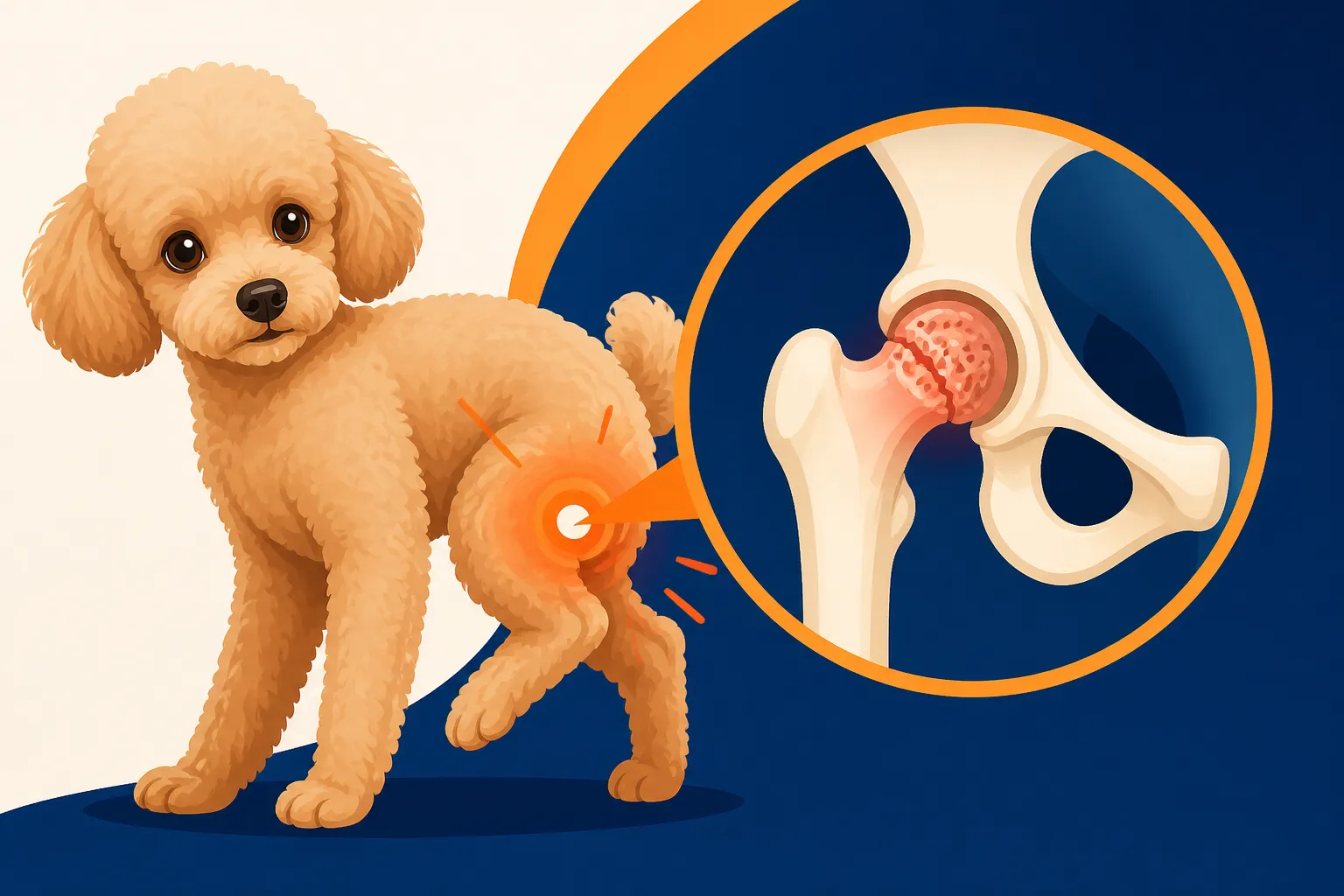
At its heart, LCPD is a degenerative disease affecting the head of the femur – that's the ball part of the ball-and-socket hip joint. Imagine a tiny ball at the top of the thigh bone, perfectly fitting into a cup-shaped socket in the pelvis. In LCPD, the blood supply to this femoral head becomes compromised, leading to the bone tissue dying off. This process is called avascular necrosis. Without proper blood flow, the bone starts to break down, becoming fragile and eventually collapsing. This deterioration causes significant pain and can lead to severe arthritis and lameness if not addressed. It typically affects just one hip, but in some cases, both hips can be involved, making movement incredibly difficult for a small dog.
This isn't an injury caused by trauma, like a fall or a clumsy jump. Instead, it's a spontaneous degeneration of the bone, and while the exact cause isn't fully understood, a strong genetic component is suspected, particularly in certain small breeds.
Why Toy Poodles Are Susceptible
While LCPD can technically affect any breed, it is disproportionately observed in small and toy breeds. Toy Poodles are unfortunately on that list, alongside breeds like West Highland White Terriers, Cairn Terriers, and Miniature Pinschers. The disease usually manifests in puppies or young dogs, typically between 4 to 12 months of age, during their rapid growth phase. This age range is a key indicator to keep in mind when you observe any limping or discomfort in your young Toy Poodle.
The genetic predisposition is a significant factor. If a puppy's parents carried the genes for LCPD, even if they didn't express the disease themselves, the puppy has a higher chance of developing it. This is why reputable breeders for all Poodle sizes, including Toys, usually undertake comprehensive health screenings. While it’s not a standard screening panel for LCPD specifically like some other genetic tests, a good breeder will be transparent about the health history of their lines, and any history of lameness in young dogs in their pedigrees is a red flag. For example, if you're looking at a breeder, asking about conditions like Poodle Hip Dysplasia by Size is a good start, as it shows an understanding of orthopedic health.
Recognizing the Early Signs of LCPD
Catching LCPD early is absolutely crucial for the best outcome. The signs can be subtle at first, often mistaken for a minor sprain or just a puppy being clumsy. But as the disease progresses, the symptoms become more pronounced and distressing for your Poodle. It's a progressive condition, meaning it will get worse over time if left untreated.
The Subtle Limp and Its Progression
The first sign you’ll likely notice is a subtle, intermittent lameness in one of your Toy Poodle's hind legs. It might start as a slight skip or a momentary hesitation to put full weight on a leg. Maybe they'll limp after a long play session, but then seem fine after resting. This "on-again, off-again" nature can be misleading, making you think it's nothing serious. You might see it more after they've been lying down for a while and try to get up, or after a particularly exuberant run.
As the disease progresses and the femoral head continues to degenerate, the limp will become more consistent and severe. Your Poodle might hold the affected leg up completely, refusing to bear any weight on it at all. They might start hopping on three legs, trying to avoid any pressure on the painful hip. You might also notice a gradual shortening of the leg on the affected side, or a reluctance to extend the leg fully. This is a clear indicator that something significant is happening within the hip joint. Keep an eye on how they move, especially during and after activity. Remember, sometimes Why a Poodle Goes Quiet Before It Limps because they are so stoic about pain.
Pain and Behavioral Cues
Beyond the visible limp, your Toy Poodle will also exhibit clear signs of pain. They might yelp or cry out when you try to touch their hip area, or when they attempt to move in certain ways. Grooming can become a painful ordeal, especially if you try to brush around their hindquarters. They might resist being picked up or carried, particularly if you support them in a way that puts pressure on the affected hip.
Observe their overall demeanor. A typically playful and energetic Toy Poodle might become withdrawn, lethargic, and less interested in their usual games or walks. They might choose to lie down more often, trying to find a comfortable position that alleviates the pressure on their hip. Over time, as they avoid using the leg, the muscles in the affected thigh will start to atrophy, meaning they'll become noticeably thinner compared to the healthy leg. This muscle wastage is a very strong indicator of a chronic, painful issue. It's important to be able to tell if your sensitive Poodle is hiding illness, as they are very good at masking discomfort. Look for changes in appetite, restlessness, or increased panting. These can all be subtle indicators of chronic pain.
Differentiating LCPD from Other Toy Poodle Lameness Issues
It's easy to jump to conclusions when your little one is hurting, but a limp in a Toy Poodle isn't always LCPD. There are several other conditions that can cause similar symptoms, and understanding the differences is key for accurate diagnosis and treatment. This is where your vet's expertise truly shines.
Comparing LCPD with Luxating Patella
Perhaps the most common cause of hind-leg lameness in Toy Poodles is a luxating patella. This is often what owners initially suspect, and for good reason, as it's quite prevalent. A luxating patella means the kneecap (patella) slips out of its groove on the thigh bone. This can cause intermittent limping, a 'skip' in their gait, or even holding the leg up for a few steps before putting it back down. The onset of luxating patella can also be in puppyhood, similar to LCPD.
However, there are some key distinctions. With luxating patella, the pain is usually associated with the kneecap specifically. You might feel a popping or grinding sensation when you gently flex and extend the knee, and your vet can often manually manipulate the kneecap out of place during an examination. The lameness from a luxating patella is typically more episodic; the dog will limp, then often shake or extend the leg, and the kneecap may pop back into place, allowing them to walk normally again for a period.
LCPD, on the other hand, involves the hip joint, not the knee. The pain is centered higher up, around the hip, and the lameness tends to become progressively more constant and severe as the disease advances. The characteristic 'skip' of a luxating patella is often different from the more persistent and painful limp of LCPD, where the dog might try to avoid weight-bearing altogether. If your Toy Poodle is diagnosed with a luxating patella, understanding When a Toy Poodle's Kneecap Needs Surgery is also important for their long-term comfort.
Here's a quick comparison to help you distinguish between the two:
| Feature | Legg-Calve-Perthes Disease (LCPD) | Luxating Patella |
|---|---|---|
| Affected Joint | Hip Joint (femoral head) | Knee Joint (patella/kneecap) |
| Primary Age of Onset | 4-12 months (puppy/young adult) | Puppyhood to early adulthood |
| Type of Lameness | Progressive, often constant, severe limping | Intermittent skipping, holding leg up, shaking it out |
| Pain Location | Deep in the hip, groin area | Around the knee joint |
| Muscle Atrophy | Common in affected thigh | Less common, unless severe and chronic |
| Breed Predisposition | Small & Toy Breeds (e.g., Toy Poodles) | Many small breeds (e.g., Toy Poodles, Chihuahuas) |
| Common Observation | Reluctance to move, reduced range of motion | "Skips" a few steps, then normal walking resumes |
Other Causes of Limping in Small Poodles
Beyond luxating patella, several other issues can cause your Toy Poodle to limp. Simple sprains or strains from overexertion during play are very common, especially in active puppies. These usually resolve with rest, but it's always best to have them checked out, especially if the limp persists for more than a day or two. Fractures, though less common in this age group without significant trauma, are also a possibility and would usually present with sudden, severe lameness and intense pain.
Growth plate injuries can occur in young, growing dogs. The growth plates are soft areas near the ends of bones that allow them to lengthen. Trauma to these areas can cause pain and lameness. Less common, but still possible, are certain types of infections or even early signs of neurological issues that might mimic orthopedic pain. Even conditions like a collapsed trachea, which is more about respiratory distress, can sometimes manifest in ways that might make a small dog reluctant to move or engage in activity, though direct lameness would be unlikely. For a comprehensive check, your vet will look at the entire picture, including considering conditions like Toy Poodle Kneecaps and Windpipes.
This is why a thorough veterinary examination is so important. A good vet won't just look at the obvious; they'll perform a full orthopedic and neurological assessment, gently palpating joints, checking reflexes, and observing your Poodle's gait. They're looking for subtle clues that distinguish one condition from another.
What to Do When You Suspect LCPD
Discovering your precious Toy Poodle might have LCPD can be terrifying. It's natural to feel a rush of panic, but the best thing you can do for your dog is to stay calm and act decisively. Early intervention can make a world of difference in managing this condition and ensuring your Poodle's quality of life.
The Importance of Prompt Veterinary Consultation
As soon as you notice any persistent limping, pain, or changes in gait that don't resolve within a day or two, it’s time to call your veterinarian. Do not delay. While it might seem like a minor issue at first, the progressive nature of LCPD means that the longer it goes undiagnosed and untreated, the more damage occurs to the femoral head, and the more complicated and potentially invasive the treatment becomes.
Your vet will perform a complete physical examination, including a thorough orthopedic assessment. They will gently manipulate your Poodle's hips and legs to check for range of motion, pain response, and any abnormal joint laxity. Because LCPD involves bone degeneration, X-rays are usually the definitive diagnostic tool. These radiographs will allow the vet to visualize the hip joint and assess the condition of the femoral head. They'll look for changes in bone density, flattening of the femoral head, and signs of bone collapse or arthritis. Sometimes, specific views are needed to get the best angle, and your vet might want to sedate your Poodle slightly to ensure they are comfortable and still for the imaging. When your vet checks your Toy Poodle puppy, they are looking for a whole host of things, and this condition is one of the more serious they want to rule out.
A quick diagnosis means your vet can discuss treatment options, which generally range from conservative management in very mild, early cases (though this is rare with LCPD) to surgical intervention. Surgery, specifically a Femoral Head Ostectomy (FHO), is often the most effective treatment for LCPD. This procedure involves removing the damaged femoral head, allowing a "false joint" to form where scar tissue replaces the bone. While it sounds drastic, dogs adapt remarkably well, especially small breeds like Toy Poodles, and it can significantly alleviate pain. The cost of such a procedure can be considerable, so if you're exploring pet insurance options, companies like Healthy Paws are often a lifeline for covering unexpected surgical costs.
Preparing for Your Vet Visit
To help your veterinarian make the most accurate and swift diagnosis, come prepared with as much information as possible. Think of yourself as a detective, gathering clues.
Here’s what to note:
- When did the limping start? Be as specific as possible about the date and time.
- Is the limp consistent, or does it come and go? Does it happen after rest, or after activity?
- Which leg is affected? Try to pinpoint it precisely.
- What does the limp look like? Is it a subtle skip, or are they holding the leg up completely?
- Have you noticed any pain? Yelping, whining, reluctance to be touched?
- Any other changes in behavior? Decreased appetite, lethargy, irritability, reluctance to play or go for walks?
- Has there been any recent trauma or injury? Even a small fall you might have dismissed.
- What is your Poodle's age? (Crucial for LCPD as it's age-specific)
- Have there been any changes to their diet or routine?
You can even take a short video of your Toy Poodle walking or trying to move, especially when the lameness is most apparent. Sometimes seeing the subtle signs in motion can provide valuable insight for your vet. Also, be ready to discuss your Poodle's full medical history and any information you have about their parents' health, particularly regarding orthopedic issues. Pet insurance, such as from Healthy Paws, is also something to bring up if you have it, as understanding coverage for diagnostics and treatment will be important. Being prepared allows your vet to efficiently move through the diagnostic process, getting your Poodle the necessary care without delay.
Disclaimer
This article is for general informational purposes only and does not constitute professional advice. Laws, prices and regulations vary by location and change over time. Consult a qualified professional for guidance on your specific situation.