Setting Up a Poodle Grooming Corner at Home
The sheer thought of taking your beautiful Poodle to the groomer every few weeks can be enough to make your wallet weep. Those professional bills add up fast, leaving many Poodle parents wondering if there’s a more budget-friendly and less stressful way to keep their curly companion looking dapper. This guide is here to walk you through exactly how to set up a functional, comfortable, and efficient grooming corner right in your own home, saving you money and strengthening your bond with your Poodle.
Why a Dedicated Poodle Grooming Corner is Essential
Let’s be honest, grooming a Poodle isn't a five-minute affair with a brush and a prayer. Their unique coat demands consistent, methodical attention. Trying to groom your Poodle on the kitchen counter or on the bathroom floor might seem convenient at first, but it quickly becomes uncomfortable for both of you, inefficient, and potentially unsafe. A dedicated space, even a small one, transforms this chore into a manageable routine, much like how a proper workbench makes a DIY project enjoyable instead of frustrating.
The Never-Ending Poodle Coat
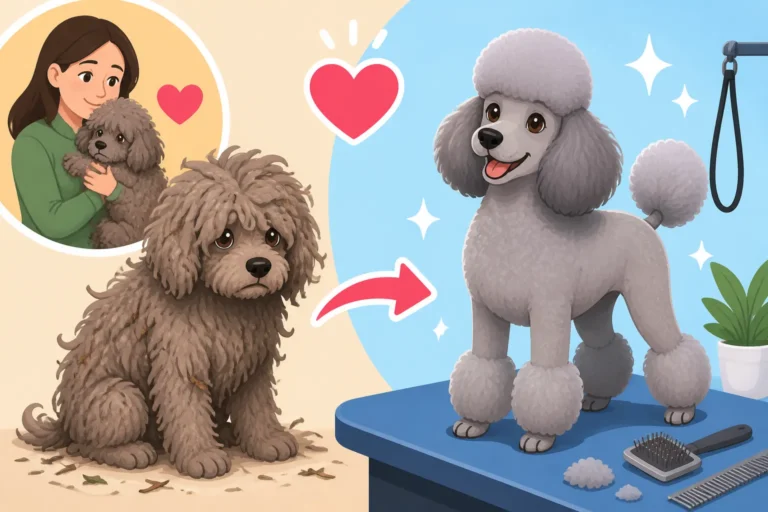
Unlike many breeds that shed their fur, a Poodle's coat continuously grows, much like human hair. This beautiful, dense, and curly hair is hypoallergenic, which is a huge bonus for allergy sufferers, but it comes with a trade-off: it absolutely loves to mat. If left unchecked, these mats can quickly tighten, pulling on the skin and causing significant discomfort or even skin infections. Imagine wearing a sweater that's constantly pulling on your skin in various places – that's what severe matting feels like to a Poodle. Understanding this constant growth cycle is crucial, as it dictates the need for frequent grooming, making a home setup indispensable. You can delve deeper into Why a Poodle Coat Mats Instead of Shedding to understand the mechanics.
Cost Savings Over Time
The cost of professional Poodle grooming can range from $70 to $150 or more per session, depending on your Poodle's size, coat condition, and your location. If your Poodle needs grooming every 4-6 weeks, you're looking at an annual expense easily exceeding $1,000. Setting up a home grooming station requires an initial investment in tools, but these are one-time or infrequent purchases. While a high-quality clipper set might seem expensive upfront, it pays for itself surprisingly quickly, often within just a few grooming sessions. Over the lifespan of your Poodle, these savings can be substantial, allowing you to reallocate those funds towards quality food, vet care, or even fun training classes. For a more detailed breakdown, consider reading about What Grooming Adds to a Poodle's Lifetime Cost.
Comfort and Trust for Your Poodle
Many Poodles, especially sensitive ones, can find trips to the professional groomer stressful. The unfamiliar environment, new smells, other barking dogs, and being handled by strangers can all contribute to anxiety. By grooming your Poodle at home, in a familiar environment, you create a calm and predictable experience. Your Poodle already trusts you, and this trust deepens as you gently work through their coat. This familiarity can make the entire process more pleasant for them, reducing stress-related behaviors and making future grooming sessions much easier. It also provides an excellent opportunity to reinforce positive associations, making grooming feel less like a necessary evil and more like quality time spent together. Learning how to make this a positive experience is key, and you can get some great tips from Teaching a Poodle to Enjoy Grooming.
Essential Tools for Your Home Grooming Kit
Outfitting your home grooming corner might feel like gathering an arsenal, but with the right tools, you'll be well-equipped. Don't skimp on quality here; good tools last longer, perform better, and make the job easier and safer for your Poodle.
High-Quality Clippers and Blades
This is arguably the most significant investment for a Poodle owner. Professional-grade clippers are designed to handle dense, curly Poodle coats without snagging or overheating. Look for clippers with a powerful motor, preferably a 2-speed or 5-speed option, to tackle different coat densities and areas. Brands like Andis, Wahl, and Oster are industry standards for a reason. Corded clippers often offer more consistent power, while cordless models provide freedom of movement, though you’ll need to manage battery life.
When it comes to blades, you'll need a variety. A #10 blade is standard for sanitary areas (face, feet, tail, belly) and for general cleanup. For body clips, common blades include a #4F (leaves about 3/8 inch of hair), #5F (leaves about 1/4 inch), and #7F (leaves about 1/8 inch). The "F" indicates a finish blade, which leaves a smoother cut. Blade combs (also known as guard combs) can be used over a #30 blade to achieve longer cuts if you prefer a fluffier look without having to buy many different expensive finish blades. However, be aware that guard combs can sometimes snag in very thick or matted Poodle hair. Remember to keep multiple blades on hand, as they can get hot quickly during use. A cooling spray is essential for preventing blade burn and discomfort for your Poodle. Oiling your blades before, during, and after use is critical for longevity and performance. Want to know more about blades? Check out Which Blade Length for a Pet Poodle.
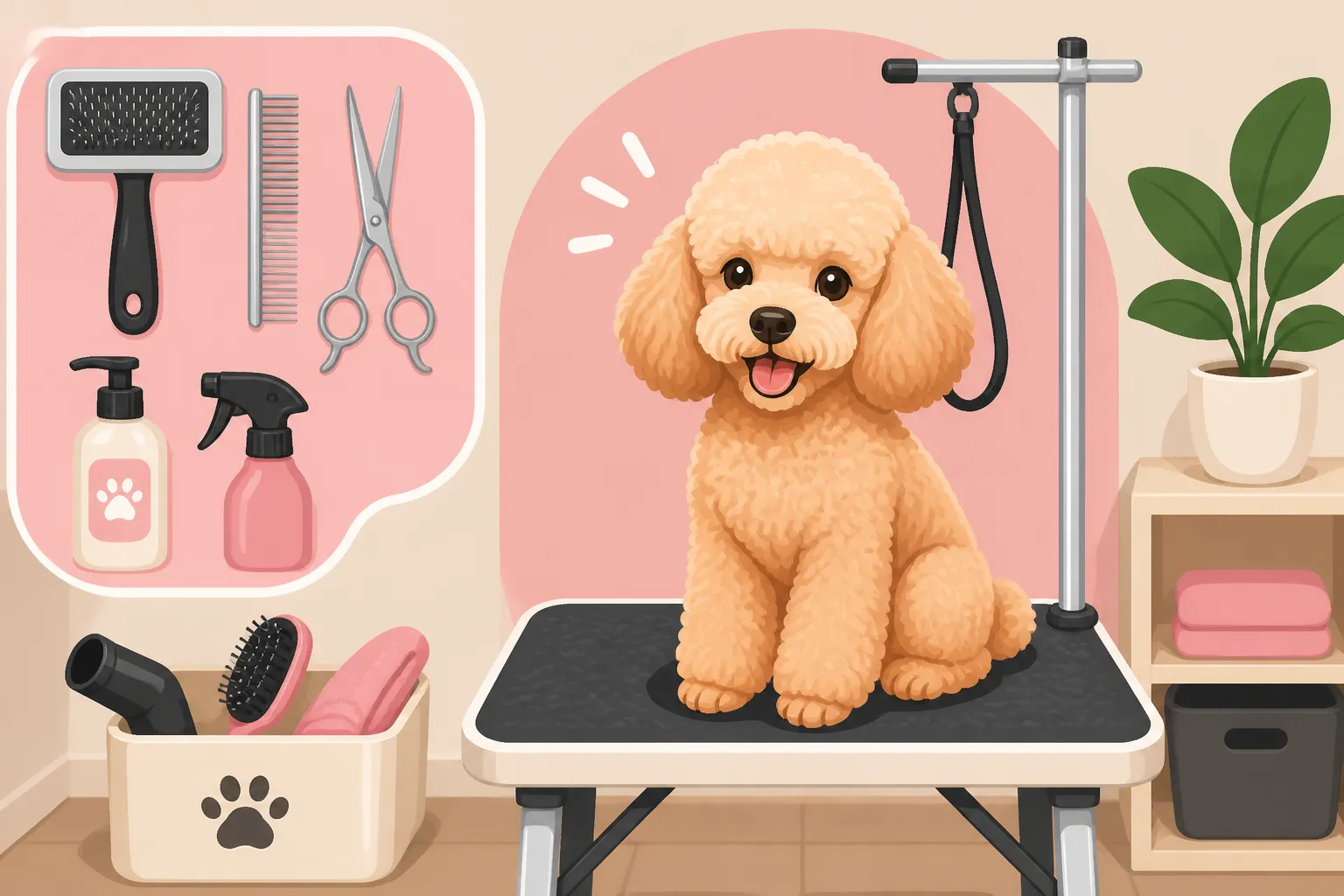
Brushes, Combs, and Dematting Tools
A Poodle's coat requires specific brushing tools to keep it mat-free and healthy.
- Slicker Brush: This is your daily workhorse. A good quality slicker brush with firm but flexible pins is essential for getting down to the skin and working through tangles without pulling too hard. You'll need to learn how to line brush properly to ensure you're reaching all layers of the coat.
- Greyhound Comb (Metal Comb): After slicker brushing, a long-toothed metal comb, often called a Greyhound comb, is crucial. It’s used to check for any missed tangles or mats. If the comb glides through the coat from skin to tip, you've done a good job. If it snags, go back with your slicker brush.
- Dematting Comb/Tool: For those inevitable small mats that form, a dematting comb with sharp, curved blades can help gently slice through them. Use these with extreme caution to avoid cutting your Poodle's skin. Prevention is always better than trying to remove large mats, as severe matting often leads to a full shave-down, as discussed in Why Groomers Shave a Matted Poodle.
- Pin Brush: While less critical for mat prevention than a slicker, a pin brush can be good for general fluffing and finishing.
Shampoos, Conditioners, and Drying Aids
Bathing is an integral part of grooming, and using the right products can make a huge difference in coat health and manageability.
- Shampoo: Choose a dog-specific shampoo that is gentle and pH-balanced. Whitening shampoos can enhance light-colored Poodles, while moisturizing shampoos can benefit dry skin. Avoid human shampoos, as they can irritate a dog's skin.
- Conditioner: A good conditioner is non-negotiable for Poodles. It helps to detangle, moisturize the coat, and reduce static, making subsequent brushing much easier. Look for rinse-out or leave-in conditioners formulated for curly or long coats.
- High-Velocity Dryer: This is a game-changer. A powerful, forced-air dryer quickly and efficiently dries the Poodle coat while simultaneously helping to straighten the curls, making it easier to brush and clip without leaving waves or lines. These dryers expel air at a high velocity without heat, which is safer for your Poodle's skin and helps "blow out" any loose hair. Trying to air-dry a Poodle almost guarantees mats. Online retailers like Chewy offer a wide selection of these dryers.
- Absorbent Towels: Microfiber towels are excellent for quickly wicking away excess water before you start with the high-velocity dryer.
Nail Care and Ear Cleaning Supplies
These are often overlooked but vital aspects of Poodle grooming for their overall health and comfort.
- Nail Clippers or Grinder: Keeping your Poodle's nails trimmed prevents discomfort, splayed feet, and potential injury. Many owners prefer a Dremel-style nail grinder over clippers, as it allows for more control and creates a smoother finish, reducing the risk of cutting the quick. Introduce either tool slowly and with plenty of positive reinforcement. For tips, see Nail Trims Between Poodle Grooms.
- Ear Cleaner and Cotton Balls/Pads: Poodles have drop ears, which can trap moisture and hair, making them prone to ear infections. A veterinary-approved ear cleaning solution is essential. Use cotton balls or pads, never Q-tips, to gently wipe the visible parts of the ear. Your vet can also advise on how to safely pluck hair from the ear canal if necessary, as explained in Plucking and Cleaning Poodle Ears.
- Styptic Powder: Keep this on hand for quick clot formation if you accidentally nick a nail quick during trimming.
Here's a quick summary of your essential home grooming tools:
| Category | Essential Tools | Purpose | Considerations |
|---|---|---|---|
| Clippers & Blades | Professional Clippers | Full body clips, sanitary trims | Corded/Cordless, 2-5 speeds, good brands (Andis, Wahl, Oster) |
| #10 Blade | Face, feet, tail, belly, sanitary | Standard for short, clean areas | |
| #4F, #5F, #7F Blades | Body clips (various lengths) | "F" for finish, leaves smooth cut. Guard combs for longer lengths over a #30 blade | |
| Cooling Spray | Prevents blade overheating | Apply frequently during clipping | |
| Clipper Oil | Lubricates blades, extends life | Oil before, during, and after each use | |
| Brushing & Dematting | Slicker Brush | Removes tangles, mats, dead hair, gets to skin | Essential daily tool, learn line brushing |
| Metal Greyhound Comb | Checks for missed mats, finishes coat | Ensures brush has reached the skin | |
| Dematting Tool (optional) | Safely cuts through small mats | Use with extreme caution; prevention is better | |
| Bathing & Drying | Dog-Specific Shampoo | Cleans coat, maintains skin health | pH-balanced, choose according to coat needs (whitening, moisturizing) |
| Dog-Specific Conditioner | Detangles, moisturizes, reduces static | Makes brushing easier, prevents mats | |
| High-Velocity Dryer | Dries quickly, straightens coat, removes loose hair | Non-negotiable for Poodles, prevents matting from air-drying | |
| Absorbent Towels | Wicks excess water before drying | Microfiber works best | |
| Health & Safety | Nail Clippers/Grinder | Maintains nail length, prevents discomfort | Introduce slowly with positive reinforcement; grinder often preferred |
| Ear Cleaning Solution | Cleans ears, prevents infections | Vet-approved, use with cotton balls | |
| Styptic Powder | Stops bleeding from quicked nails | Essential safety item | |
| Small, Healthy Treats | Positive reinforcement | Low-calorie options like those from Ollie are great for training rewards |
Setting Up Your Grooming Space for Success
Once you have your tools, the next step is creating a dedicated space that makes grooming as seamless as possible. This isn't about building a full salon, but rather optimizing a corner of your home.
Choosing the Right Location
Think practically about where you can set up your grooming corner.
- Good Lighting: This is non-negotiable. You need to clearly see what you're doing, identify any mats, and ensure a precise clip. Natural light near a window is ideal, supplemented by bright, adjustable task lighting.
- Easy Cleanup: Grooming Poodles involves hair – lots of it! Choose an area with hard flooring (tile, linoleum, or sealed concrete) that can be easily swept or vacuumed and wiped down. Carpeting is a nightmare for Poodle hair. If you only have carpeted areas, consider a large, washable mat or tarp to protect the floor.
- Ventilation: A high-velocity dryer can generate some noise and heat, and some shampoos have strong scents. Good airflow, perhaps from an open window or a small fan, will make the space more comfortable for both you and your Poodle.
- Access to Water and Power: Proximity to a sink for bathing or rinsing tools is helpful. You'll definitely need several power outlets for your clippers and dryer, so make sure they are safely positioned and not tripping hazards.
Grooming Table and Restraint Options
A proper grooming table is paramount for safety and efficiency. Trying to groom a Poodle on the floor or a regular table means bending over uncomfortably, and your Poodle can easily move or jump off.
- Grooming Table: Invest in a sturdy, non-slip grooming table. These tables come with adjustable grooming arms that allow you to secure your Poodle safely. The non-slip surface prevents your Poodle from sliding around, which builds confidence and reduces anxiety. For larger Standard Poodles, hydraulic or electric tables are fantastic but costly; a good stationary table with adjustable height legs will often suffice.
- Grooming Loop/Noose: This attaches to the grooming arm and gently secures your Poodle around the neck and/or belly. It prevents them from jumping off the table, moving excessively, or trying to bite. Crucially, never leave your Poodle unsupervised on a grooming table, even with a grooming loop. Accidents can happen in a flash.
Organization and Storage
A cluttered grooming space is an inefficient one. Keep your tools clean, sharp, and organized.
- Tool Caddy/Drawer Unit: A small rolling cart or a dedicated set of drawers is perfect for storing your clippers, blades, combs, brushes, and sprays. Keep them within easy reach but safely stored away from curious paws when not in use.
- Blade Storage: Blades should be stored properly to prevent damage. Blade caddies or cases with individual slots are ideal. Ensure blades are clean, oiled, and dry before storage to prevent rust.
- Product Shelf: Keep your shampoos, conditioners, and ear cleaner on a shelf or in a cabinet that’s easily accessible during bath time but out of your Poodle's reach.
Establishing a Routine and Best Practices
Having the right tools and a dedicated space is only half the battle. The other half is implementing a consistent, positive, and safe grooming routine.
Desensitization and Positive Reinforcement
For many Poodles, especially puppies, grooming can be overwhelming. Introduce each tool and the grooming process gradually.
- Start Small: Begin by simply getting your Poodle used to the grooming table without any actual grooming. Let them stand on it for short periods, giving them praise and treats.
- Introduce Tools Gradually: Let them sniff the clippers (turned off), then turned on (but not touching them). Touch the clippers to their body briefly, followed by a treat. Do this with brushes, nail grinders, and the dryer. The goal is to create positive associations.
- Treats Are Your Best Friend: Use high-value treats to reward calm behavior at every step. Small, healthy options like those from Ollie, or simply boiled chicken, work wonders.
- Short Sessions: Especially in the beginning, keep grooming sessions brief. A quick brush and a few minutes on the table are better than a long, stressful ordeal that leaves both of you exhausted and frustrated. You can read more about Desensitizing a Poodle to Clippers to help with this specific tool.
Safety First: Preventing Accidents
Your Poodle's safety should always be your top priority.
- Never Leave Unattended: As mentioned, a Poodle can jump off a table or get tangled in a grooming loop, leading to severe injury. Always keep your hands on your Poodle or stay within arm's reach.
- Watch for Overheating: Clippers and blades can get hot. Frequently check the blade temperature against your forearm. If it feels hot to you, it's too hot for your Poodle's skin. Use cooling spray, swap to a cool blade, or take a short break.
- Handle With Care: Poodles are generally sensitive dogs. Be gentle but firm. Avoid pulling hair, especially when brushing out mats. Support limbs when clipping paws or trimming nails.
- Know When to Stop: If your Poodle becomes overly stressed, agitated, or shows signs of pain, take a break. Push too hard, and you risk making them hate grooming forever. Sometimes, it's better to do a little bit today and pick up again tomorrow.
Consistency is Key
The Poodle coat waits for no one! Regular grooming is the secret to preventing problems.
- Daily Brushing: Even if it's just 10-15 minutes, daily line brushing with your slicker brush and comb can prevent most mats from forming. This is especially true during coat change periods for puppies.
- Weekly Mini-Grooms: Designate one day a week for a more thorough brush-out, nail trim if needed, and ear check.
- Every 3-6 Weeks for Clips: Depending on the clip you prefer and how quickly your Poodle's hair grows, a full clip will be needed every 3 to 6 weeks. Regular clipping keeps the coat manageable and prevents the buildup of tough mats.
- Preventative Care: Consistent home grooming helps you identify skin issues, lumps, or bumps early on, before they become serious problems requiring costly vet visits. Sometimes these issues, if severe, might even lead to claims on pet insurance from providers like Healthy Paws, so proactive care is invaluable. Understanding How Often a Pet Poodle Needs Brushing is a cornerstone of this consistency.
Setting up a home grooming corner for your Poodle is an investment of time and money, but one that pays dividends in savings, convenience, and a happier, healthier Poodle. With the right tools, a dedicated space, and a consistent, positive approach, you’ll master the art of Poodle grooming in no time.
Disclaimer
This guide offers general information for setting up a home grooming corner for your Poodle. Always consult with your veterinarian for specific health and grooming advice pertaining to your individual dog, especially if they have underlying skin conditions or anxiety issues. The safety and well-being of your Poodle are always the priority.