Which Blade Length for a Pet Poodle
Many Poodle owners often feel a knot in their stomach when it comes to choosing the right blade length for their beloved companion. Whether you’re attempting to groom your Poodle at home or trying to articulate a specific look to a professional groomer, the sheer number of options can be truly overwhelming. It’s frustrating to just want your Poodle to be comfortable and look their best, but to feel lost in a sea of numbers and terminology. This guide is here to clarify the mystery of clipper blade lengths, what each choice means for your Poodle's coat and skin, and how to confidently select the perfect length for your pet's unique needs and your lifestyle.
Understanding Blade Lengths and Numbers
The world of clipper blades and guard combs can feel like a secret language, but once you understand the basics, it becomes much clearer. Getting a handle on these terms is the first crucial step toward making informed grooming decisions for your Poodle.
The Blade Number System: What Do They Mean?
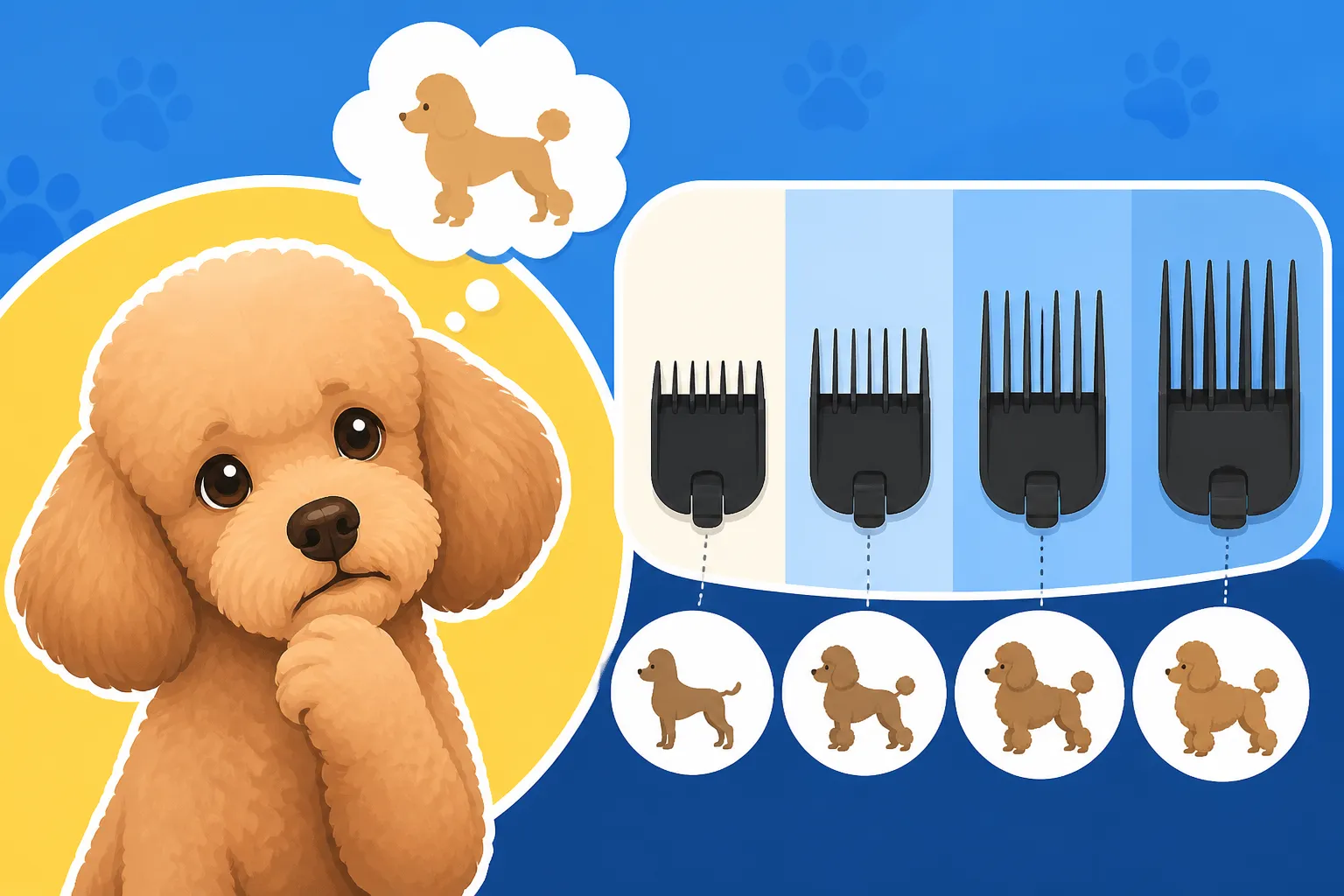
The numbering system for clipper blades is probably the most confusing aspect for newcomers, as it's often counter-intuitive: the higher the blade number, the shorter the amount of hair left on your Poodle. For instance, a #10 blade will leave hair much shorter than a #4F blade. The "F" often stands for "finish" or "full tooth," which means the blade has full teeth that are closely spaced, designed to give a smooth, even cut. This is generally the safest and most common type of blade for an all-over pet clip, as it significantly reduces the risk of accidentally nicking the skin or leaving an uneven texture. Skip-tooth blades, on the other hand, have teeth that are further apart, ideal for quickly removing bulk but requiring more skill and caution, and generally not recommended for beginners doing an all-over trim.
To give you a clearer picture, imagine a #10 blade as leaving about 1/16th of an inch of hair – it’s a very short, clean cut often used for sanitary areas, paw pads, and a very close body clip. If you're looking for a slightly longer, yet still short, finish, a #7F blade leaves roughly 1/8th of an inch. Moving down in numbers, a #5F leaves about 1/4 inch, and a #4F leaves a plush 3/8 inch. When you encounter blade numbers like #30 or #40, these are for extremely short, almost surgical cuts, typically reserved for prepping an area for surgery or specific detail work, and are almost never used for an entire body clip on a pet Poodle. This inverse relationship between blade number and hair length is fundamental, and once it clicks, you'll feel much more confident discussing specific lengths.
Beyond the number, the material of the blade can also impact your grooming experience. Steel blades are common and durable, but they can heat up quickly, potentially causing discomfort for your Poodle or even clipper burn if not managed with cooling sprays or by swapping blades frequently. Ceramic blades, while sometimes a bit more expensive upfront, are excellent because they tend to stay cooler for longer, providing a smoother, more comfortable experience, especially for Poodles with thick coats. Regardless of the material, proper maintenance—cleaning, oiling, and ensuring they are sharp—is absolutely vital for both your Poodle’s comfort and the longevity of your blades. For deeper insights into the equipment itself, you might find Clippers Worth Buying for a Poodle a useful read.
Guard Combs vs. Metal Blades
Once you desire lengths longer than what even a #3F blade can achieve, you're primarily looking at using guard combs, often referred to as snap-on combs. These attachments clip securely over a standard metal blade, most commonly a #10 or #30 blade (always check your comb's instructions for the recommended base blade). The guard comb acts as a barrier, lifting the hair away from the skin and allowing the underlying blade to cut at a much longer length than it would on its own. Guard combs come in a wide array of lengths, typically measured in fractions of an inch or millimeters, ranging from 1/8th of an inch to well over an inch, offering incredible versatility for achieving longer, fluffier styles on your Poodle.
The primary benefit of guard combs for pet Poodle owners is their ability to achieve those sought-after "teddy bear" or longer, flowing clips without needing to purchase numerous expensive full-sized metal blades. They are generally considered safer for novice home groomers, as the guard itself creates a buffer between the sharp blade and your Poodle's skin, reducing the risk of nicks or clipper burn. This makes them a fantastic tool for those still building their confidence with clippers. However, guard combs aren't without their quirks. They can sometimes struggle with very dense or dirty coats, where the hair might get pushed down instead of lifted properly, leading to an uneven or choppy finish. They also require a meticulously prepared coat to work best.
For successful grooming with guard combs, your Poodle's coat must be thoroughly bathed, conditioned, and completely dried and brushed out straight. Any mats, tangles, or even dampness will cause the guard comb to drag, snag, and potentially create an uneven cut or pull painfully on your Poodle's hair. Many professionals and experienced home groomers prefer metal guard combs over plastic ones because they tend to glide more smoothly through the coat, are more durable, and offer a more consistent finish. You can often find a wide selection of these on Amazon or Chewy. Brands like Wahl, Andis, and Oster offer sets that fit their specific clippers, and sometimes universal ones are available. Remember that a foundational step for any successful clipping, especially with guard combs, is a thorough Brushing a Poodle to the Skin beforehand.
Popular Blade Lengths for Pet Poodles
Now that we've covered the mechanics, let's explore what specific blade lengths actually mean for your Poodle's appearance, comfort, and the effort required to maintain their coat.
Longer Clips for Comfort and Protection
When you picture a quintessential fluffy Poodle, you're likely imagining a longer clip. These styles typically involve using guard combs that leave hair anywhere from 1/2 inch (e.g., a #4 guard comb) up to an inch or even longer. This generous length creates a plush, soft, and distinctly Poodle-like appearance that many owners adore. Beyond aesthetics, longer coats offer practical benefits, especially for Poodles in colder climates, as the substantial hair provides excellent natural insulation against chilly temperatures. In warmer months, this length also acts as a protective barrier against the sun's harsh rays, helping to prevent sunburn on sensitive skin, particularly for lighter-colored Poodles.
However, the beauty of a long coat comes with a significant commitment: daily, diligent grooming. That lovely fluff is incredibly prone to matting and tangles, especially in high-friction areas like behind the ears, in the armpits, and under the collar. If you choose a longer clip, you must be prepared to line brush your Poodle every single day, without fail, working through every inch of the coat from the skin outwards. Skipping even a few days can quickly lead to painful, tight mats that are almost impossible to brush out without causing distress to your Poodle, often necessitating a complete shave down by a professional. Many new Poodle owners underestimate the time and effort required for this level of coat care. To get a realistic idea of the time commitment, check out How Long Brushing a Standard Poodle Takes.
Beyond the daily brushing, longer clips also typically require more frequent trips to the professional groomer—usually every 4 to 6 weeks—to maintain the desired shape and prevent the coat from becoming unmanageable. If you're tackling this at home, you'll need not just quality clippers and a good set of metal guard combs, but also a thorough understanding of proper bathing and blow-drying techniques to get the coat perfectly straight before clipping. Any curl or wave left in the coat will result in an uneven, choppy cut. It's a true labor of love, but for those committed, the reward is a stunningly groomed and well-protected Poodle.
Medium Clips for a Balanced Look
Medium clips offer a fantastic compromise between the high maintenance of a long coat and the very short, utilitarian feel of a shave down. These lengths are typically achieved with metal blades such as a #4F (3/8 inch), #5F (1/4 inch), or #7F (1/8 inch), or by using shorter guard combs. This range leaves a noticeable amount of hair, providing a soft, attractive look while significantly reducing the intensive daily brushing demands associated with longer clips. For many busy pet Poodle owners, a medium length is the ideal sweet spot, offering the classic Poodle aesthetic without sacrificing practicality.
A #5F clip, for example, is often referred to as a "sporting clip" or "kennel clip" because it's practical for active dogs without being overly short. It allows for comfortable movement, reduces the likelihood of burrs and debris embedding deep into the coat during outdoor adventures, and makes post-play cleanup much easier. This length is comfortable for Poodles in most climates; it's long enough to offer some insulation and sun protection, but short enough to prevent overheating. With a medium clip, brushing a few times a week is generally sufficient to prevent matting, making it a more manageable option for households with active Poodles or owners with less time for daily grooming. For more details on this popular, practical choice, consider reading The Sporting Poodle Clip for a Busy House.
Professional grooming for a medium clip can usually be spaced out to every 6 to 8 weeks, depending on your Poodle's coat growth rate and your preference for tidiness. If you prefer to groom at home, these blade lengths are often easier to master than longer guard comb clips, as they tend to glide more smoothly through the coat. While proper bathing and drying are still essential for an even finish, the shorter length provides a bit more forgiveness for beginner clippers. This balanced approach ensures your Poodle looks great and stays comfortable with a reasonable amount of effort.
Shorter Clips for Easy Maintenance
For those who prioritize ultimate ease of care, shorter clips are the way to go. These typically involve using a #10 blade (leaving about 1/16 inch of hair), a #7F blade (1/8 inch), or sometimes even shorter blades for specific areas. This category includes the "utility clip" or a full "shave down." The hair is left very short, often feeling like soft velvet to the touch, and the risk of matting is virtually eliminated. If your Poodle has a penchant for rolling in mud, swimming frequently, or if you simply dread the thought of daily brushing, this clip can be a true game-changer, saving you immense time and effort. It's also the most humane option for Poodles whose coats have become severely matted, as it allows groomers to safely remove the painful tangles without causing further distress.
While short clips dramatically reduce brushing requirements, they do introduce other considerations. Your Poodle will have much more exposed skin, necessitating extra protection from the elements. This means a sweater or coat in cold weather, and diligent monitoring for sunburn in hot, sunny environments, especially for Poodles with pink skin or lighter coats. The increased skin exposure can also make your Poodle slightly more vulnerable to insect bites or minor scrapes during play. On a positive note, Poodles suffering from skin allergies, hot spots, or other dermal conditions often benefit greatly from a shorter clip, as it allows topical treatments to be applied directly and keeps the skin cleaner and more breathable, potentially aiding in healing and comfort. More on these practical cuts can be found in The Kennel Clip on a Pet Poodle.
Even with a short clip, regular grooming appointments are typically needed every 4 to 8 weeks to maintain the desired length and keep the coat neat as it grows out. If you're grooming at home, using a #10 blade is relatively straightforward, but extreme caution must be exercised to prevent clipper burn. Always ensure your blades are clean, sharp, cool, and use a light touch, gently stretching the skin taut in delicate areas. While brushing becomes minimal, other essential care like ear cleaning, nail trims, and dental hygiene remain just as important.
Factors to Consider When Choosing a Blade Length
Beyond simple aesthetics, a variety of practical considerations should influence your choice of blade length. Your Poodle's well-being and your lifestyle are key.
Lifestyle and Activity Level
Your Poodle's daily routine is arguably the most crucial factor in determining the ideal blade length. Does your Poodle lead a leisurely indoor life, or are they an active adventurer, prone to romping through woods, swimming in lakes, and exploring every interesting scent they encounter? An active Poodle who regularly swims, plays vigorously with other dogs, or explores brush will inevitably pick up burrs, dirt, and develop tangles much faster than a more sedate companion. For these energetic dogs, a shorter to medium clip (such as a #5F or #7F blade) is almost always more practical and humane. It significantly reduces the chances of painful matting, keeps them cleaner, and simplifies post-adventure cleanup. Trying to meticulously brush out a long, muddy, burr-laden coat is a miserable experience for both owner and dog.
Conversely, if your Poodle is primarily an indoor companion, perhaps an older dog with reduced energy levels, a longer, fluffier clip might be perfectly manageable. Their limited exposure to outdoor elements translates to less debris and fewer opportunities for matting, making it easier to maintain a luxurious coat. It's essential to be honest with yourself about how much time and effort you are genuinely willing to dedicate to daily grooming. It is always kinder to keep an active Poodle in a shorter, easy-care clip than to subject them to painful de-matting sessions because their long coat was not adequately maintained. Your Poodle's comfort and happiness should always take precedence over a specific aesthetic preference.
Additionally, consider how your Poodle interacts with their environment. If they frequently encounter areas with sticky seeds, thorny plants, or allergens, a shorter clip around the legs, belly, and chest can prevent a multitude of grooming headaches. For Poodles who frequent dog parks, a shorter coat also makes it easier to spot and remove any unwelcome passengers like fleas or ticks. Tailoring the clip to their everyday life will undeniably lead to a happier, healthier, and more comfortable Poodle.
Climate and Season
The local climate and the changing seasons should heavily influence your choice of blade length. During hot, humid summers, many Poodle owners opt for a shorter clip to help their dogs stay cool. While a Poodle's coat does offer some natural insulation against heat, an excessively long and dense coat can trap warmth, especially in active dogs. A #7F or #10 blade can promote better air circulation against the skin, assisting your Poodle in regulating their body temperature. However, it's crucial not to go too short (e.g., using #30 or #40 blades for an all-over body clip) as this can expose their skin to severe sunburn, particularly for Poodles with light-colored coats or pink skin. A healthy, shorter coat still provides a degree of natural protection from the sun's harsh UV rays.
Conversely, when the temperatures drop, a slightly longer coat provides invaluable insulation against the cold. A #4F blade or a 1/2-inch guard comb can give your Poodle that extra layer of warmth, making brisk winter walks much more pleasant. Think of it as a built-in protective layer! If your Poodle spends significant time outdoors in cold or wet conditions, this longer length can be a real boon. Of course, a longer winter coat necessitates an increased commitment to your brushing routine to prevent snow, ice, and wetness from causing painful mats, especially in the sensitive armpit and inner leg areas. If you're considering a very short clip for warmth, explore Coats and Sweaters for a Clipped Poodle to provide extra protection.
Seasonal changes also align with specific coat developments in Poodles. Adolescent Poodles experience a "coat change" where their soft puppy coat transitions into the denser adult coat. This period makes them exceptionally prone to matting, regardless of the season. During this challenging time, it's often wise to maintain a shorter coat or dedicate even more time to diligent daily brushing. For an in-depth guide on navigating this crucial period, refer to Getting Through a Poodle's Coat Change.
Coat Condition and Matting
This particular factor is often a difficult but absolutely necessary conversation. If your Poodle’s coat is already severely matted, you essentially have very limited options. It is neither humane nor safe to attempt to brush out extensive matting. Doing so causes immense pain, stress, and can lead to significant skin damage for your Poodle, including bruising, tearing, and hematomas. In these unfortunate situations, a professional groomer will almost always recommend a short shave down as the only responsible and compassionate course of action. This involves using a very short blade (often a #10, #15, or even a #30) to get under the mats and cleanly remove them, thereby protecting the Poodle’s delicate skin from further injury.
The goal of regular grooming should always be prevention. If you find your Poodle frequently developing mats, even with your best brushing efforts, it's a strong indicator that your current blade length is simply too long for your lifestyle or your Poodle's specific coat type. Some Poodles naturally have softer, finer, or denser coats that are inherently more prone to matting. In such cases, consistently opting for a shorter clip (e.g., a #7F or #5F) will prevent future suffering and make the grooming experience much more positive for everyone involved. It’s far better to have a happy, comfortable, mat-free Poodle in a practical short clip than a beautiful but painfully matted Poodle in a long one. For a professional's perspective on this, see Why Groomers Shave a Matted Poodle.
Should you regularly brush your Poodle and still encounter small tangles, a quality detangling spray and a meticulous line brushing technique might resolve the issue. However, if mats are becoming embedded, tight against the skin, and numerous, it is a clear signal that you need to either adjust your grooming schedule to be more frequent, or, more likely, choose a shorter blade length. Remember, proactive prevention is always significantly easier and less stressful than reactive de-matting.
Skin Sensitivity and Health Concerns
A Poodle's skin can be surprisingly sensitive, and any existing health conditions should play a significant role in determining the most appropriate blade length. Poodles are known to be prone to various skin allergies and specific breed-related conditions such as Sebaceous Adenitis, which directly affects the hair follicles and skin health. For Poodles with naturally sensitive skin or active skin issues, going excessively short with a clipper blade can potentially lead to clipper burn or exacerbate existing irritation. In these instances, a slightly longer blade, such as a #7F or #5F, can offer a small but valuable cushion and layer of protection for delicate skin. Always make it a habit to carefully observe your Poodle’s skin after grooming for any signs of redness, irritation, or bumps.
If your Poodle experiences chronic hot spots, allergies that trigger excessive licking, or other persistent skin problems, a shorter clip around the affected areas can be immensely beneficial. This allows for increased air circulation, helps keep the skin clean, and makes it considerably easier to apply any prescribed topical medications effectively. For Poodles grappling with conditions like Sebaceous Adenitis and the Poodle Coat, where the skin's barrier function is already compromised, working closely with both your veterinarian and your professional groomer to pinpoint a blade length that minimizes irritation while facilitating proper skin care routines is absolutely paramount. They may recommend specific, gentle shampoos, conditioners, and certain blade lengths that will not further stress the compromised skin.
Furthermore, older Poodles or those with orthopedic issues like arthritis or hip dysplasia might find standing for extended grooming sessions uncomfortable or painful. A shorter, easier-to-maintain clip directly reduces the total time spent on the grooming table, thereby making the entire experience much less stressful and physically demanding for them. Being able to recognize signs of discomfort is vital; Reading Pain in a Sensitive Poodle can offer helpful guidance. In all cases, your Poodle's comfort, health, and overall well-being should always override any purely aesthetic grooming preference.
Grooming Frequency and Skill Level
Let's be completely honest with ourselves: how often are you truly able to dedicate time to brushing and grooming your Poodle? And if you're undertaking the grooming yourself, what is your current skill level and confidence with clippers? If your schedule offers limited time for daily brushing, or if you are new to the world of home grooming, a shorter blade length will be your absolute best friend. Blades like a #7F or #10 are significantly more forgiving for a beginner than attempting to manage a long, fluffy coat with intricate guard comb work. Shorter clips are quicker to execute, drastically reduce the chances of noticeable uneven patches, and almost entirely eliminate the risk of severe matting.
If your aspiration is to achieve longer, more intricate clips, be prepared for a substantial learning curve and a significant time investment. Successfully using guard combs to achieve a long, even look requires practice, a steady hand, and, most critically, a very meticulously prepared coat. You will need to master the entire process: how to properly bathe, condition, thoroughly dry, and line brush your Poodle until their coat is perfectly straight and tangle-free before you even pick up the clippers. Many successful home groomers wisely start with simpler, shorter clips and gradually progress to longer lengths as their confidence, comfort, and skills steadily improve. There is no shame in starting simple; your Poodle will undoubtedly thank you for a comfortable, stress-free grooming experience. Resources like Learning to Clip a Poodle at Home can get you started, and Whether Grooming a Poodle at Home Saves Money can help you weigh the financial aspects.
For those who rely on professional groomers, it's prudent to consider both your budget and your schedule. Longer, more complex clips generally demand more time and a higher level of skill from the groomer, which almost always translates to higher grooming fees and potentially more frequent appointments. Additionally, groomers immensely appreciate it when your Poodle arrives for their appointment without extensive matting, as de-matting is time-consuming, costly, and can be quite stressful for your dog. Clearly and specifically communicating your desired length using blade numbers or comb lengths, and being realistic about your Poodle’s current coat condition, will undoubtedly help foster a positive and productive relationship with your groomer.
Tips for Home Groomers and Communicating with Professionals
Making the best grooming choices for your Poodle involves not only understanding the technical aspects but also applying practical wisdom and ensuring clear communication.
Testing Blades and Building Confidence
Embarking on the journey of grooming your Poodle at home can be both exhilarating and, at times, a little intimidating. The most valuable piece of advice is: don't feel pressured to achieve perfection on your very first attempt. Always begin with a blade or guard comb that is longer than what you initially envision, especially for the main body coat. Remember, you can always go shorter, but you can't put hair back on once it's clipped! For many first-time home groomers, a #5F blade or a 1/2-inch guard comb makes an excellent starting point. These lengths leave enough hair to avoid going too short, while still being quite manageable to work with.
Practice is truly the key to building confidence. Before committing to an all-over clip, try out different blade lengths on less conspicuous areas of your Poodle, such as the flanks or the underside of the belly, where any slightly uneven patches won't be immediately noticeable. This allows you to get a genuine feel for how the clippers move through your Poodle's unique coat. Absolutely ensure your Poodle is thoroughly bathed, conditioned, and completely dry and brushed out before you even touch them with clippers. A clean, dry, tangle-free coat is non-negotiable for achieving a smooth, even cut and preventing your blades from snagging. Invest in quality clippers and blades, and commit to keeping them meticulously clean and well-oiled. Blade overheating is a common issue; always have a cooling spray readily available or a spare blade to swap out if one starts to get uncomfortably hot. What Poodle Clippers and Blades Cost can help you make wise choices in equipment.
Perhaps the most crucial tip is to maintain a positive and calm experience for your Poodle. Use an abundance of treats, offer plenty of praise, and incorporate frequent short breaks. If you notice your Poodle becoming stressed or agitated, it's best to pause and resume later. Building a positive association with the grooming process is infinitely more important than striving for an immediately perfect clip. Patience and consistency will lead to success, and a happy, comfortable Poodle is always the ultimate goal.
Talking to Your Professional Groomer
Even if you regularly utilize the services of a professional groomer, possessing a solid understanding of blade lengths will significantly enhance your ability to communicate your desires effectively. Avoid generic requests such as "a puppy cut" or "a teddy bear clip" without further clarification, as these terms can unfortunately carry different meanings for different groomers. Instead, strive to use specific blade numbers or guard comb lengths if you know what you want. For example, you might say, "I'd like a #5F blade on the body, with the legs left a bit longer and scissored to approximately an inch." Or, "I prefer a 1/2-inch guard comb all over, along with a clean face and feet."
Visual aids are incredibly powerful; a picture truly is worth a thousand words, especially in the nuanced world of grooming. Bring along photographs of Poodles with the precise length and style you are hoping to achieve. Discuss your Poodle's lifestyle and any specific needs: "She's a very active dog who swims frequently, so ease of maintenance is paramount." Or, "He's an older Poodle with sensitive skin, so we need to be cautious about not going too short." Providing this context empowers your groomer to tailor the clip specifically to your Poodle's individual requirements, ensuring their comfort and well-being. Knowing the financial aspects, such as those discussed in Professional Grooming Costs by Poodle Size, can also help you have a realistic conversation.
Finally, remain open and receptive to your groomer's professional advice and recommendations. They possess extensive experience, seeing numerous Poodles with diverse coat types and conditions daily. They understand coat growth patterns, skin sensitivities, and what is genuinely practical and humane for your particular Poodle's coat condition. If your Poodle arrives for their appointment with significant matting, don't be surprised or offended if the groomer recommends a shorter shave down; their advice will always be rooted in prioritizing your Poodle's comfort and health. A reputable groomer's primary goal is for your Poodle to leave their salon feeling happy and looking their absolute best, and that crucial outcome often begins with a healthy, mat-free foundation.
Disclaimer
This article is for general informational purposes only and does not constitute professional advice. Laws, prices and regulations vary by location and change over time. Consult a qualified professional for guidance on your specific situation.