Getting a Poodle Comfortable With Nail Grinding
Oh, the battle of the Poodle paws! If you're a Poodle owner, chances are you've experienced the sheer drama that can unfold when it's time for nail care. That buzzing, vibrating tool can turn even the most confident Poodle into a quivering mess, and let's not even talk about the dread of accidentally hitting the quick. But don't despair – getting your beloved Poodle comfortable with nail grinding is absolutely achievable with patience, understanding, and the right approach. This guide will walk you through transforming nail grinding from a dreaded chore into a manageable, even calm, part of your routine.
Why Poodles Dread Nail Grinding So Much
It’s easy to feel frustrated when your Poodle pulls their paw away or hides under the sofa at the mere sight of the grinder. But remember, they're not doing it to spite you. There are very real, very sensory reasons why many Poodles develop such a strong aversion to nail grinding. Understanding these can help you approach the situation with more empathy and less exasperation.
The Fear of the Unknown and Past Trauma
Poodles are incredibly intelligent and sensitive dogs, and this sensitivity extends to their physical and auditory experiences. Think about it: a nail grinder is a strange, noisy, vibrating object.
The sound itself can be unsettling – a high-pitched whirring that many dogs interpret as a threat or simply a very unpleasant sensation close to their sensitive ears. Add to that the vibration, which travels up the nail and into the paw, and it’s a lot for a dog to process. For a breed known for its heightened awareness and sometimes reserved nature, these sensory inputs can be overwhelming.
Compounding this is the memory factor. Poodles have excellent memories, especially when it comes to unpleasant experiences. If your Poodle has ever had a nail quicked (cut too short, hitting the sensitive blood vessel and nerve), or even if a previous grooming experience was rushed or rough, that single event can create a lasting trauma. They associate the sight, sound, and smell of the grinder with pain or fear. It's not just "being dramatic"; it's a genuine defensive reaction to avoid a perceived threat. This is why a gentle, patient approach is so vital; you don't want to reinforce a negative association, or worse, create a new one.
The Quick: Every Poodle Owner's Nightmare
For both you and your Poodle, the "quick" is perhaps the biggest source of anxiety. The quick is a soft, fleshy part of the nail that contains blood vessels and nerves. If you cut or grind too far down and hit the quick, it’s not only incredibly painful for your Poodle, but it also bleeds. And boy, can it bleed! The sight of blood, coupled with your Poodle's yelp or sudden withdrawal, can be deeply distressing for both of you.
The challenge is magnified when your Poodle has dark nails, which many Poodles do. Unlike light-colored nails where you can often see the pink quick through the translucent nail, dark nails offer no such visual cue. This makes owners hesitant and prone to over-caution, which can leave nails too long, or to accidental quicking, which then fuels the Poodle's existing fear. This fear becomes a vicious cycle: you're scared to hurt them, they're scared of being hurt, making the whole process fraught with tension. When a Poodle becomes truly fearful, it can even lead to more generalized anxiety around handling, similar to how Why Harsh Handling Breaks a Poodle can impact their overall trust.
Laying the Groundwork: Building Trust and Positive Associations
The key to successful nail grinding with a Poodle isn't brute force or quick fixes; it's about systematically dismantling their fear and replacing it with positive experiences. This takes time, patience, and a consistent strategy, much like any other aspect of Training the Second Smartest Dog Breed.
Creating a Calm and Safe Environment
Before you even think about turning on the grinder, consider the setting. The environment plays a huge role in your Poodle's emotional state. A chaotic, noisy, or unfamiliar space will only heighten their anxiety.
Choose a quiet corner of your home, perhaps somewhere they already feel safe, like their dog bed. Ensure there are no distractions – turn off the TV, silence your phone, and ask other family members to give you space. You want your Poodle's full attention (or as much as you can get!) and for them to feel secure.
It can also be beneficial to tire your Poodle out slightly before a session. A good walk, a game of fetch, or a mental stimulation activity can help them be more relaxed and receptive. A calm dog is a trainable dog. Lay down a non-slip mat or a soft towel to give them a comfortable surface to stand or lie on. This small detail can make a big difference in preventing slips and increasing their comfort during handling.
The Power of High-Value Rewards
If you want to change your Poodle's mind about something they dread, you need to make it incredibly worthwhile for them. This means bringing out the "big guns" in terms of treats. Forget the dry kibble or basic biscuits; you need high-value, irresistible rewards that your Poodle absolutely adores. Think small pieces of cooked chicken, cheese, hot dogs, or a lickable treat like peanut butter (ensure it's xylitol-free!).
The purpose of these treats is crucial: you are pairing a scary experience (the grinder) with an overwhelmingly positive experience (the delicious treat). The goal is to shift their emotional response from fear to anticipation. Every tiny step you make towards introducing the grinder should be immediately followed by one of these amazing rewards. The timing is everything – the treat needs to appear the moment the scary thing happens or disappears, so your Poodle can make the connection. This positive reinforcement principle is central to all good Poodle training.
Introducing the Grinder: Sight, Sound, and Sensation
This is where the real desensitization begins, breaking the grinder down into its individual scary components.
- Sight: Start by simply having the grinder in the room, but not touching it. Let your Poodle see it from a distance. As they look at it calmly, offer a treat. Do this a few times a day for a few days. The goal is for them to see the grinder and think, "Oh, good things happen when that thing is around!"
- Sound (Off): Next, pick up the grinder. Let your Poodle sniff it (while it's off!). Offer a treat. Gently touch the back of the grinder (still off) to their paw, then offer a treat. Repeat this for all paws. This teaches them that the object itself isn't harmful.
- Sound (On, Distant): Now, for the sound. Turn the grinder on, but away from your Poodle. Let them hear the whirring noise. The instant they hear it and remain calm (no flinching, no hiding), immediately offer a high-value treat. Repeat this several times, gradually decreasing the distance between the grinder and your Poodle, always rewarding for calm behavior. You might find that a quieter, battery-operated grinder, perhaps one with good reviews on Amazon, is a fantastic starting point here. The less jarring the sound, the easier it will be for your sensitive Poodle to accept. Continue these sessions for a few minutes each, ending on a positive note.
The Step-by-Step Desensitization Process for Poodles
Once your Poodle is relatively comfortable with the sight and sound of the grinder from a distance, it's time to get a little closer. Remember, this is about tiny, incremental steps. You're building a new foundation of trust, one nail at a time.
Familiarizing with Touch and Paw Handling
Before you can grind nails, your Poodle needs to be perfectly comfortable with you handling their paws. If every paw grab is a struggle, you'll never get to the nails. Make paw handling a daily, positive experience completely separate from nail grinding.
Gently touch their legs, then their paws, then individual toes, and finally, their nails. Each touch should be soft and brief, immediately followed by praise and a treat. Turn it into a game or a relaxing massage. Talk to them in a calm, soothing voice. You can even use this time to lightly massage paw pads and between their toes, which makes it less novel when you later need to expose the nails for grinding. Doing this regularly helps with Getting a Poodle Puppy Used to Being Handled from a young age, but it's never too late to start. This consistent, gentle interaction teaches them that paw handling isn't a prelude to something scary, but simply a normal, pleasant part of their day.
Gradual Introduction to the Grinder's Vibration
This step bridges the gap between hearing the grinder and feeling it.
- Touch (Off): With the grinder off, gently touch the grinding head to one of your Poodle's nails. Just a light touch, then immediately remove and offer a treat. Repeat for all nails. The goal is for them to accept the physical contact without fear.
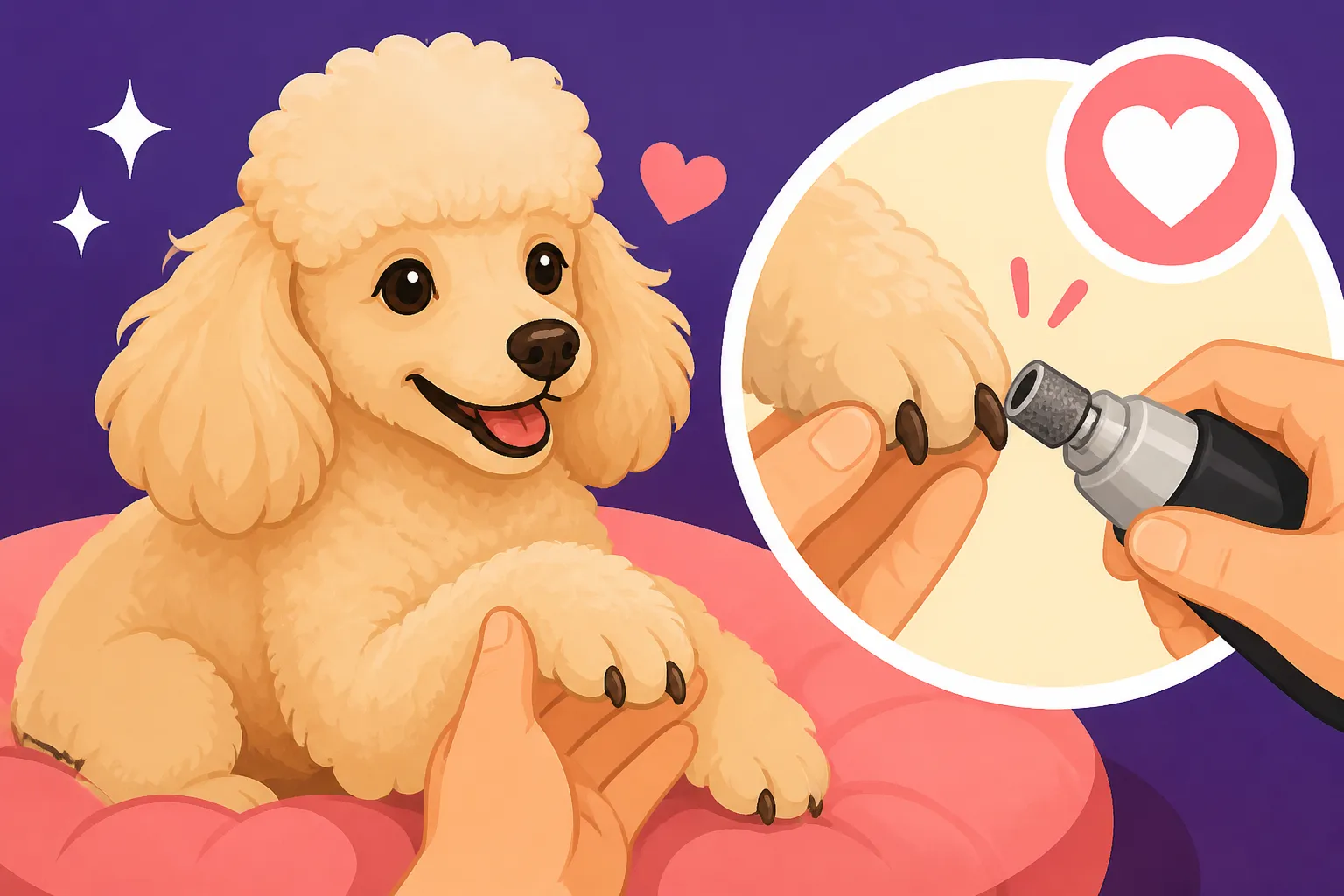
- Touch (On, Brief): Now, turn the grinder on. Briefly, for just a fraction of a second, touch the spinning head to a single nail. The very instant it touches, pull it away and give that amazing, high-value treat. This is the critical step. You want to make the contact so brief that it doesn't cause discomfort, only surprise, which is then immediately followed by a reward.
- Building Duration: Over several sessions, gradually increase the duration of contact. Start with half a second, then a full second, always pulling away and rewarding before they show any signs of distress. It's better to end a session with them wanting more treats than pushing them until they are trying to escape. If you push too hard, you risk creating a setback that will take even longer to overcome, echoing how a sensitive Poodle can completely shut down if you rush them, much like the advice in Rebuilding Trust With a Frightened Poodle.
The "One Nail, One Treat" Method
This is a highly effective technique for fearful dogs, breaking the task down into the smallest possible increments.
- Focus on One Nail: Pick just one nail. Turn the grinder on, briefly touch it to the nail, grind off the tiniest sliver (think dust, not length), then immediately remove the grinder and give a treat.
- Repeat and Move On: Do this once or twice for that same nail, then move to a different nail, or even a different paw. The idea is to make each interaction incredibly short, successful, and heavily rewarded. Don't try to finish all nails in one go. Maybe you do one nail on the left front paw, then one on the right hind, then another on the left hind. Mix it up to keep it unpredictable and less overwhelming.
- Short Sessions: Keep these sessions very short – literally 1-2 minutes max. The moment your Poodle seems relaxed or even just tolerant, end the session on that positive note. This builds a positive anticipation for the next time. Many trainers who advocate for positive reinforcement, such as resources from BAXTER & Bella, emphasize this kind of incremental approach. This method is incredibly powerful for conditioning positive responses and is also fantastic for Training a Poodle to Enjoy Grooming in general.
To help visualize the progression, here's a breakdown:
| Step | Action | Poodle's Reaction to Watch For | Reward Strategy |
|---|---|---|---|
| 1. Initial Visibility | Place the grinder in the room, off, a few feet away. Let your Poodle see it. | Curiosity, indifference, or slight interest. | Verbal praise ("Good boy/girl!"), a small, pleasant treat. |
| 2. Grinder Sound (Distant) | Turn the grinder on, hold it far from your Poodle (e.g., across the room or even in another room). | Looks towards sound calmly, no obvious fear. | Immediate high-value treat, verbal praise. |
| 3. Grinder Sound (Closer) | Gradually reduce the distance of the running grinder to your Poodle over several sessions. Only bring it closer if they remain calm. | Calm curiosity, looks at you expectantly, no flinching. | Immediate high-value treat. |
| 4. Grinder Off & Touch Paw | With the grinder off, touch it briefly to a paw, then a single nail. Repeat for all paws. | Acceptance of touch, no withdrawal. | High-value treat after each touch. |
| 5. Grinder On & Brief Nail Touch | Turn the grinder on. Briefly (a split second) touch the grinding head to one nail. Immediately pull away. | Mild surprise, but quickly recovers, looks for treat. | Immediate, generous high-value treat. |
| 6. The "One Nail, One Treat" Grind | Turn the grinder on. Grind a tiny amount from one nail (just enough to see dust). Immediately stop, remove grinder. | Tolerance, focus on the upcoming reward. | Immediate, generous high-value treat. Repeat this process for one nail a few times, then move to another, keeping sessions short. |
| 7. Building Duration | Gradually increase the grinding time on each nail by fractions of a second. Always stop before signs of discomfort or fear, even if only for a second or two. | Calm acceptance, perhaps still anticipating treat. | Immediate, generous high-value treat after each nail is touched/ground. |
Troubleshooting and Long-Term Success
Even with the best intentions, you might hit a snag. It's okay. Poodles are individuals, and some will need more time and different approaches than others. The goal is progress, not perfection.
When to Take a Step Back
Your Poodle will communicate their discomfort, but sometimes it's subtle. Look for signs like:
- Yawning or lip-licking: These are often stress signals in dogs.
- "Whale eye": When you can see the whites of their eyes.
- Stiffening or tensing their body: They might freeze up.
- Pulling their paw away: An obvious sign of wanting to disengage.
- Reluctance to approach: If they seem hesitant even to come to the "grinding spot."
If you see any of these, it's a clear signal to stop the session immediately. Take a step back to an earlier, easier step where your Poodle was comfortable. Forcing them will only reinforce their fear and make future sessions harder. For a sensitive Poodle, pushing them too far can lead to a complete shutdown, which is detrimental to their trust and training, just as described in Why a Poodle Shuts Down When Scolded. Always end on a good note, even if it means you only managed to offer a treat for letting you hold their paw.
The Role of Professional Guidance
Sometimes, despite your best efforts, you might feel stuck. That's perfectly normal! Don't hesitate to seek professional help.
- Your Veterinarian: They can offer advice on handling, nail anatomy, and sometimes even perform a quick trim while your Poodle is distracted or under mild sedation for another procedure. They can also rule out any underlying pain that might be contributing to the aversion.
- Professional Groomers: Many groomers are skilled at handling anxious dogs. They can often demonstrate techniques or, at the very least, get the nails done when you can't. However, ensure they use gentle, positive methods that won't undo your desensitization work.
- Positive Reinforcement Trainers: A certified professional dog trainer specializing in fear and anxiety can be a godsend. They can assess your Poodle's specific triggers and provide tailored desensitization and counter-conditioning plans. Some online platforms, like BAXTER & Bella, offer virtual training programs that can guide you through these detailed steps from the comfort of your home. They can watch your Poodle's body language and give real-time feedback.
Making it a Consistent, Positive Routine
Consistency is truly the magic ingredient. Aim for very short, positive sessions several times a week, rather than one long, dreaded session every few weeks. Regular grinding is actually easier because it keeps the quick recessed, reducing the risk of accidental quicking.
The more often your Poodle has a good experience, the faster their positive association will build. Make it part of your normal grooming routine, along with Plucking and Cleaning Poodle Ears and brushing their coat.
Celebrate every small victory! Praise your Poodle lavishly for even the slightest cooperation. Over time, you'll find that what was once a battle becomes a routine chore, maybe even one your Poodle tolerates with quiet expectation for those glorious treats. Maintaining good nail health is not just about comfort; it also impacts a Poodle's posture and gait, influencing their overall physical well-being much like how Poodle Dental Disease by Size can affect their eating habits and general health.
Tools and Techniques for Poodle Nail Grinding
Having the right tools and knowing how to use them effectively makes a significant difference in your Poodle's comfort and your success.
Choosing the Right Grinder for Your Poodle
Not all nail grinders are created equal, and for a sensitive Poodle, the choice of tool matters immensely.
- Quietness: This is paramount. Look for grinders advertised as "low noise" or "whisper quiet." Many battery-operated models tend to be quieter than their corded counterparts. The less intrusive the sound, the better for your Poodle's delicate ears.
- Power/Speed Settings: Some grinders offer multiple speed settings. Starting on a lower speed might be less intimidating for your Poodle as they get used to the sensation.
- Grit Size: Grinders come with different abrasive heads. A finer grit might take longer but will be less aggressive and create less heat, which is important for preventing discomfort.
- Safety Features: Some grinders have a cap or guard that limits how much nail can be exposed at once, helping prevent grinding too far.
- Ergonomics: Choose a grinder that feels comfortable in your hand. You need to be able to hold it steadily and precisely.
There are many excellent options available, and a quick search on Amazon for "quiet dog nail grinder" will yield numerous results with customer reviews often highlighting how well they work for anxious or sensitive dogs. Reading these reviews can give you a good idea of which models might be best suited for your Poodle.
Safe Handling and Positioning
Proper technique ensures both effectiveness and safety, much like careful handling when Desensitizing a Poodle to Clippers.
- Hold the Paw Firmly but Gently: Support the entire paw in your hand. Use your thumb to push up slightly on the paw pad of the toe you're working on. This extends the nail and also moves the hair away from the grinding head.
- Angle Matters: When grinding, hold the nail grinder at approximately a 45-degree angle to the bottom of the nail. This allows you to grind down the tip and subtly round the nail. Avoid grinding straight across the top or bottom, as this can be less effective and may cause more vibration.
- Short Bursts: Grind in very short bursts, usually 1-3 seconds, then move off the nail for a second or two. This prevents the nail from overheating, which can be uncomfortable for your Poodle. Overheating can quickly make your Poodle pull away or dislike the process.
- Watch the Quick: Always be mindful of the quick. If your Poodle has dark nails, grind a little, then look at the freshly ground tip. You'll see a white or grayish center, then a darker, more translucent circle appear as you get closer to the quick. Stop when you see that dark circle. It's better to grind less frequently and keep the quick recessed than to risk quicking.
- Secure Your Poodle: Consider using a non-slip mat or even having your Poodle stand on a grooming table (if they're comfortable with it) to provide stability. For smaller Poodles, a lap might work if they're relaxed.
Alternative and Complementary Methods
If, despite all your efforts, nail grinding remains a source of immense stress for your Poodle, or you're just looking for supplemental options, there are other paths to explore.
- Nail Clippers: For some Poodles, clippers are actually less stressful than grinders. The quick snip might be preferable to the continuous vibration and noise. If you use clippers, invest in a good quality pair and ensure they are sharp. Just like with grinding, take only small amounts at a time and have styptic powder on hand in case of a quicking accident.
- Scratchboard Training: This is a fantastic, fear-free way for Poodles to maintain their front nails. You train your Poodle to scratch their front paws on a sandpaper-covered board to earn a treat. It turns nail care into a fun, interactive game where they are in control. It's especially good for dogs who tolerate paw handling but hate the tools. While it won't address hind claws, it can significantly reduce the amount of grinding needed.
- Regular Walks on Hard Surfaces: While not a complete solution, frequent walks on concrete or asphalt can help naturally wear down your Poodle's nails. This is more effective for Standard Poodles than Toy Poodles, but it's a helpful complement to any nail care routine. Remember that even with regular walks, dewclaws (if present) still need manual trimming as they don't touch the ground.
Ultimately, the best method is the one that works for you and your Poodle, keeping them comfortable, safe, and their nails healthy.
Disclaimer
This article is for general informational purposes only and does not constitute professional advice. Laws, prices and regulations vary by location and change over time. Consult a qualified professional for guidance on your specific situation.