Teaching a Poodle to Accept the Dryer
The high-pitched whine and powerful blast of a dog dryer can turn an otherwise calm poodle into a quivering mess, making routine grooming a battleground rather than a bonding experience. Many poodle owners struggle with this, feeling frustrated and helpless as their beloved companion cowers or tries to escape. This comprehensive guide will walk you through proven, patient methods to help your poodle not just tolerate, but genuinely accept the dryer, transforming grooming into a much more relaxed affair for both of you.
Understanding Poodle Dryer Fear: More Than Just a Nuisance
It’s easy to dismiss a poodle’s fear of the dryer as simple fussiness, but for many dogs, it’s a genuine phobia rooted in deep-seated instincts and sensory sensitivities. Poodles, renowned for their intelligence and often sensitive nature, can be particularly susceptible to the startling elements of a grooming dryer. Understanding the "why" behind their fear is the first step toward effective desensitization.
Sensory Overload: Noise and Airflow
Imagine a sound that is shrill, constant, and piercing, combined with a powerful, unfamiliar gust of wind that never seems to stop. This is often what a high-velocity dryer feels like to a poodle. Their ears, naturally dropped and often covered by dense hair, can make the noise even more intense by trapping and amplifying sound. The noise isn't just loud; it's often an unnatural frequency that can be genuinely startling or even painful.
Furthermore, the force of the airflow can be alarming. It’s not just a gentle breeze; it's a directed blast that can feel aggressive, especially around sensitive areas like the face, ears, and genitals. For a dog, this sudden, strong air current can feel like being pushed or attacked. They don't understand it's just air meant to dry their magnificent coat; they only perceive the intense sensation. A poodle's natural inclination might be to escape this perceived threat, leading to frantic struggles, panting, and even nipping.
Past Negative Experiences or Lack of Exposure
Sometimes, a poodle’s fear isn't inherent but learned. A single bad experience can create a lasting negative association. Perhaps a previous groomer was too rough, too fast, or simply didn't understand how to introduce the dryer gently. Maybe as a puppy, they were blasted with a human hairdryer, which, while seemingly innocuous to us, can be overwhelming for a small, sensitive pup. Even if the intent was good, an accidental burn from too-hot air or a sudden, loud noise can imprint fear.
Alternatively, a lack of early, positive exposure can be just as detrimental. Puppies go through critical socialization periods where they learn about the world around them. If a poodle puppy isn't introduced to the sounds and sensations of grooming equipment in a gentle, positive way during these formative weeks, they're more likely to develop anxieties later on. Without that foundation, the first encounter with a powerful dryer can be a shock, laying the groundwork for a lifelong aversion. This is why many experienced breeders and trainers emphasize starting these introductions early and making them overwhelmingly positive. Getting a Poodle Puppy Used to Being Handled is a crucial first step for all future grooming.
Poodle Sensitivity and Instincts
Poodles are not just intelligent; they are often remarkably sensitive creatures. They pick up on our moods, react strongly to changes in their environment, and can be quite particular about physical touch. This sensitivity, combined with their heritage as water retrievers, means they have a strong natural instinct to shake off water. When they are physically restrained and cannot perform this natural action while being bombarded with air, it can lead to heightened anxiety and frustration.
Their instinctual response to anything perceived as a threat is often "flight" (trying to escape) or "freeze" (shutting down and enduring the discomfort). Neither of these responses is ideal for a smooth grooming session. A poodle who "freezes" might appear calm, but internally, they are often terrified, which can be just as damaging to their emotional well-being as a frantic struggle. Recognizing these subtle fear signals – like yawning, lip-licking, whale eye, or tail tucked – is paramount. Reading a Poodle's Body Language can help you understand these subtle cues and intervene before fear escalates.
Essential Tools and Setting Up for Success
Before you even think about turning on a dryer, gathering the right equipment and establishing a calm, positive environment are critical. It’s like setting the stage for a grand performance – you need the right props and a comfortable backdrop. This preparation minimizes stress for your poodle and sets you up for successful desensitization.
Choosing the Right Dryer and Accessories
First and foremost, ditch the human hairdryer. They get too hot, burn out easily, and the noise is often too high-pitched and irritating for a dog's sensitive ears. Invest in a dedicated dog dryer, specifically a force dryer or high-velocity dryer designed for canines. These dryers move a high volume of air at a lower, safer temperature, which is essential for drying thick poodle coats efficiently without causing heat damage. They also typically have adjustable settings for airflow and heat, which is vital for gradual introduction. Brands like K-9 II or B-Air Fido are popular choices among professional groomers, and you can often find suitable, more affordable options on platforms like Amazon. Look for models with noise-reduction features if possible.
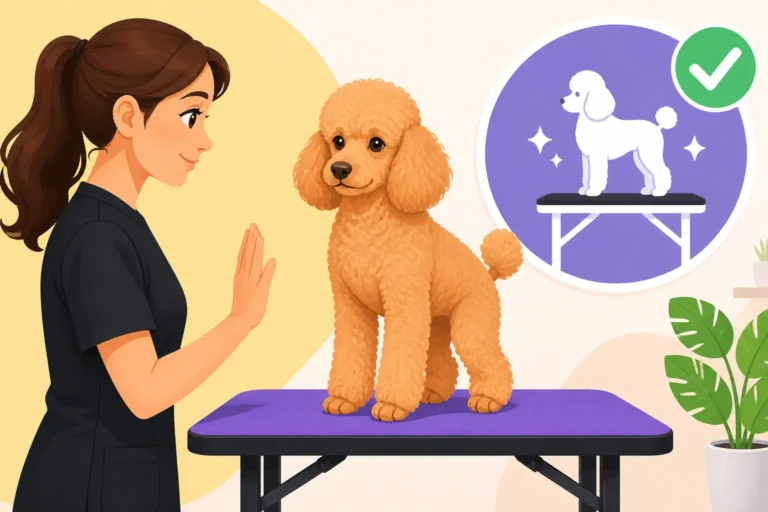
Beyond the dryer itself, consider attachments. A concentrator nozzle focuses the airflow, which is useful for directing air to specific areas without overwhelming your dog, but start with a wider nozzle or even no nozzle at all. You’ll also want a sturdy grooming table with a non-slip surface and a grooming arm with a noose. This provides a safe, elevated workspace that prevents your poodle from jumping off and gives you control, which is especially important as you progress. Don't forget your brushes – a good slicker brush and a metal comb are indispensable for line brushing as you dry. Brushing a Poodle to the Skin is a fundamental technique you'll need to master to ensure thorough drying and prevent mats.
Creating a Calm and Secure Grooming Area
The environment itself plays a huge role in your poodle’s comfort level. Choose a quiet, well-lit space in your home where your poodle already feels relatively secure. This could be a laundry room, bathroom, or even a designated corner of a larger room. Avoid high-traffic areas where other family members or pets might interrupt or startle your poodle.
Ensure the surface is non-slip to prevent falls, which can be terrifying for a dog. A bath mat or a non-slip surface on your grooming table is essential. Having all your tools within reach before you start means you won't have to leave your poodle unattended or fumble around, which can increase their anxiety. Keep the temperature in the room comfortable – not too hot or too cold. Some owners find that playing calming classical music or a white noise machine at a low volume can help mask the dryer's sound slightly and create a more tranquil atmosphere. The goal is to make this space predictable and safe, a place where good things happen, not just scary ones.
High-Value Treats and Distractions
This is perhaps the most critical component of positive reinforcement. High-value treats are those irresistible morsels your poodle only gets for specific, challenging tasks. Think small pieces of cooked chicken, cheese, or specialized training treats they absolutely adore. These aren't their everyday kibble; these are the "jackpot" rewards that make them think, "Wow, this is worth it!" Have a generous supply ready before you begin each session.
Beyond treats, consider other forms of distraction or comfort. A Lickimat smeared with peanut butter or plain yogurt can keep a nervous poodle occupied for several minutes, allowing you to work on an area. A favorite squeaky toy might offer comfort or a quick diversion. For some poodles, a favorite blanket or bed placed on the grooming table can also provide a sense of security. The goal is to create such a positive association with the grooming experience that your poodle starts to anticipate the treats and fun, rather than dread the dryer. This proactive approach, focusing on rewarding calm behavior, is a cornerstone of effective training, mirroring techniques often taught in structured programs like those offered by BAXTER & Bella.
The Desensitization and Counter-Conditioning Process
Now that you're prepared, it's time to actually introduce the dryer. Remember, the key here is gradual exposure (desensitization) paired with positive experiences (counter-conditioning). You're not just getting your poodle used to the dryer; you're actively changing their emotional response from fear to indifference, or even excitement, because it predicts good things. Patience is not just a virtue here; it's a requirement.
Introducing the Dryer Unplugged
This is where you start, and it might seem almost comically simple, but it’s an absolutely crucial first step. Bring the dryer into your poodle's space, but leave it unplugged. Let it sit there. Let them sniff it, investigate it, and realize it’s just another inanimate object in their world. You can place treats on the dryer, or next to it. Let them eat treats while simply being near it. Do this for several days, or even a week, for short, positive sessions. The goal is for them to see the dryer and think, "Oh, that's just the thing where yummy treats appear."
Next, pick up the dryer, hold it, and move it around while continuing to feed treats. Touch your poodle with the unplugged dryer, gently rubbing it against their coat. Associate it with calm, gentle touch and delicious rewards. This is about building a neutral, then positive, association with the physical presence of the dryer itself, well before any noise or air is involved. These sessions should be very short, perhaps only 2-5 minutes, ending before your poodle shows any signs of stress. Always end on a good note. If your poodle is particularly wary, you might start by simply having the dryer visible in the room and rewarding them for looking at it calmly.
Acclimatizing to the Sound (Low Settings)
Once your poodle is comfortable with the dryer's physical presence, it's time to introduce the sound. Plug it in, but don't turn it on yet near your poodle. Instead, go to another room, turn the dryer on its lowest, quietest setting, and then come back into the room where your poodle is. The distance is key here. The sound should be barely audible to them, if at all, at first. As soon as the dryer is on, start feeding those high-value treats. Play some calming music to help mask the sound further if needed.
Over several sessions, gradually decrease the distance between the dryer and your poodle. Keep the volume on its lowest setting. If you're using a grooming table, place the dryer on the floor nearby, pointed away from your poodle, and let it run while you feed treats and praise them. The moment your poodle shows any sign of discomfort (ears back, lip licking, looking away, trying to move), increase the distance or turn the dryer off immediately. You want to stay below their threshold of fear. The moment they react calmly, even if it's just for a second, mark that behavior with a verbal cue like "Good!" and reward them generously. This technique is often taught in comprehensive puppy training courses, like those offered by BAXTER & Bella, emphasizing positive reinforcement from the very beginning.
Introducing the Airflow (from a Distance)
Once your poodle is tolerating the sound at its lowest setting, you can start introducing the airflow. This is where many poodles hit a roadblock, as the sensation of forced air can be more alarming than the sound alone. Again, start with the dryer on the lowest setting, pointed away from your poodle, at a significant distance. Let it run while you lavish them with treats.
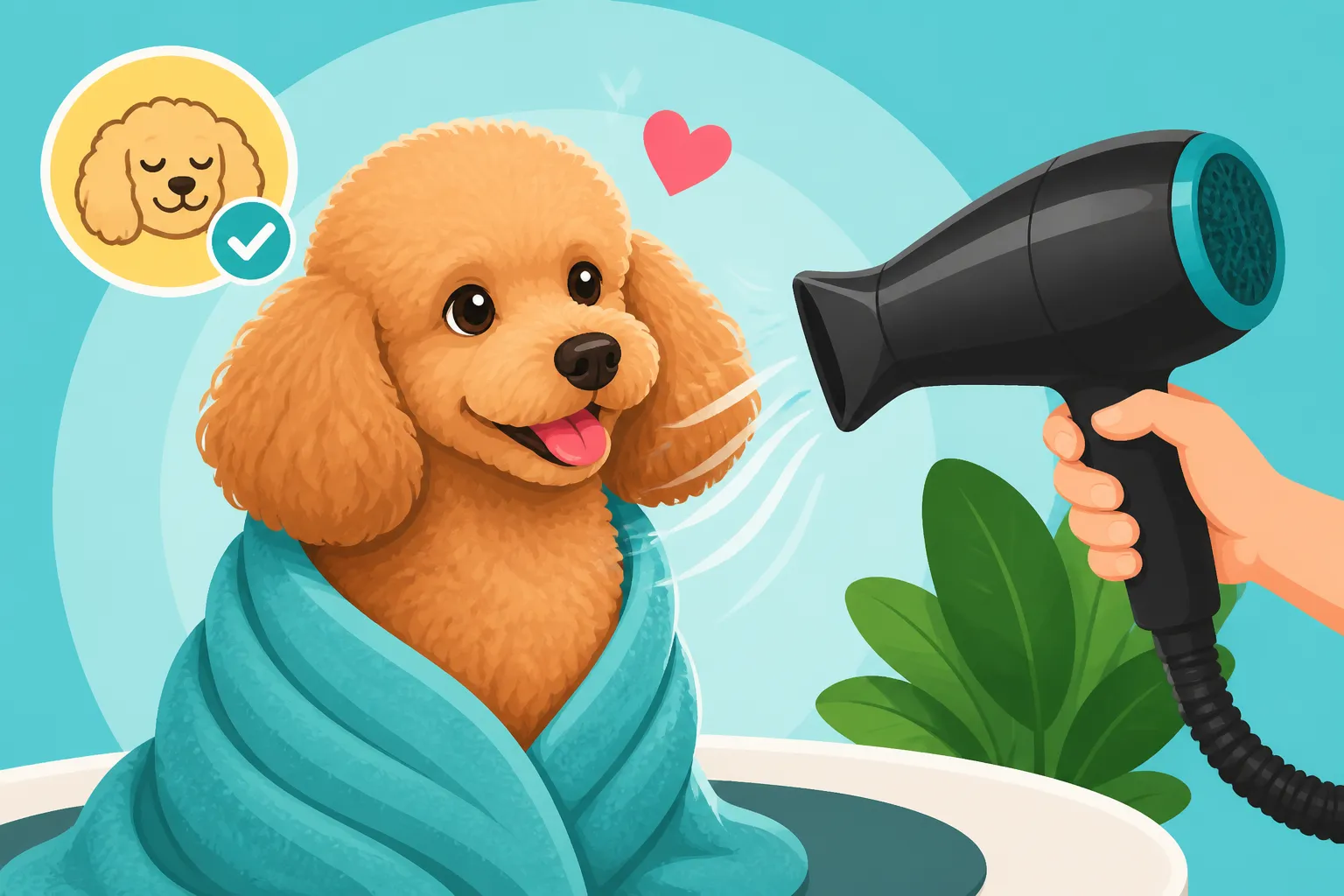
Then, very, very slowly, turn the dryer so the airflow is aimed in their general direction but still far away and not directly on them. It should feel like a very light, diffuse breeze, not a direct blast. As the air brushes them, immediately feed treats and praise. The goal is to pair the sensation of air with something wonderful. Short bursts are best: turn it on for 2-3 seconds, treat, turn it off. Repeat this many times. Over days and weeks, you can gradually decrease the distance and slowly increase the duration of the airflow. Always watch your poodle's body language; if they stiffen, flinch, or try to move away, you’ve gone too fast. Go back a step and try again. Remember, patience is your superpower here. Rushing this stage can undo all your hard work. Why a Poodle Fears the High Velocity Dryer delves deeper into these specific sensory issues.
Gradual Steps to Full Dryer Acceptance
Once your poodle is comfortable with the sound and the distant, gentle airflow, you’re ready to take the next deliberate steps toward full dryer acceptance. This involves more direct exposure, but always controlled, short, and positive.
Short Bursts of Drying with Rewards
Now, bring the dryer closer, still on the lowest setting, and aim it at a less sensitive part of your poodle's body, like their back or hindquarters. The key here is very short bursts. Turn the dryer on for just 1-2 seconds, aim it, then turn it off and immediately reward your poodle with a high-value treat and enthusiastic praise. The duration should be so brief that they barely have time to react negatively. Repeat this many, many times in a session, always ending before they show any signs of stress.
Gradually, over numerous sessions, you can increase the duration of the bursts by a second or two. Instead of two seconds, try three or four. If your poodle tolerates this, great! Reward them. If they seem uncomfortable, go back to shorter bursts. This teaches them that the dryer isn't a continuous, inescapable assault, but rather something that comes and goes, always followed by a reward. Think of it like a game where the "on" button means "treat time." This method works incredibly well for teaching a range of behaviors, as poodles are quick learners who respond to positive reinforcement. Why Poodles Learn a Cue in Five Repetitions highlights their capacity for learning when motivated correctly.
Increasing Duration and Proximity
As your poodle becomes more confident with short bursts, you can start to gradually increase the overall duration of the drying sessions and bring the dryer closer to different parts of their body. Continue with the lowest setting. Work on one body part at a time – perhaps their back for a few minutes, then their side, always maintaining the "on, off, treat" rhythm. As they tolerate longer durations, you can try moving the dryer more smoothly across an area.
When working near the face or ears, be extra cautious. Use your hand to shield their ears and eyes from the direct blast of air. For very sensitive areas, you might even consider a different method initially, like towel drying or air drying, until they are fully comfortable with the dryer everywhere else. If your poodle is on a grooming table, make sure they are safely secured with a grooming noose so they cannot jump down and injure themselves. Ensure the noose is snug but not tight, allowing comfortable movement but preventing escape. Remember, the goal is to keep the experience positive. If you feel yourself getting frustrated, take a break. Your poodle will pick up on your tension.
The "Dryer Game" and Positive Play
To really solidify a positive association, turn the drying process into a fun game. For example, after a successful drying session, even a short one, engage in a brief, energetic play session with their favorite toy. This helps your poodle associate the dryer with the subsequent joy of playtime. Or, during a drying session, intersperse the drying with playful commands they know, like "sit" or "paw," and reward them for executing those commands calmly while the dryer is running. This teaches them that they can still think and engage even with the dryer on.
Another "dryer game" might involve hide-and-seek. Turn the dryer on in another room, hide a treat, and then bring your poodle in to find it while the dryer is softly running. The more you integrate the dryer into positive, engaging activities, the less it will be seen as a threat. Think about how you train for other aspects of grooming; Training a Poodle to Enjoy Grooming emphasizes these kinds of positive associations for overall acceptance.
Overcoming Challenges and Maintaining Progress
Even with the most meticulous approach, you might encounter setbacks. Poodles are individuals, and some will progress faster than others. The key is to be adaptable, consistent, and patient, remembering that every step forward, no matter how small, is a victory.
Recognizing and Responding to Fear Signals
Understanding your poodle’s communication is paramount. They might not bark or snarl to indicate discomfort with the dryer; often, their signals are much more subtle. Look for:
- Lip-licking or yawning when not tired: These are stress signals.
- "Whale eye": Where the whites of their eyes are visible, indicating anxiety.
- Ears flattened or pinned back: A clear sign of fear or discomfort.
- Tail tucked: A classic sign of insecurity.
- Panting when not hot: Can indicate stress.
- Stiff body posture or leaning away: They’re trying to create distance.
- Freezing in place: This isn't calm; it's a dog trying to disappear.
- Attempting to escape: Jumping off the table, struggling, pulling on the noose.
If you see any of these signs, you've gone too far, too fast. Immediately stop the dryer, move it away, and allow your poodle to decompress. Re-engage with calming praise and treats. The next session, go back to an easier step where they were comfortable. It’s better to take two steps back and one step forward than to push them past their comfort zone and reinforce their fear. Remember, Why Harsh Handling Breaks a Poodle applies not just to discipline, but to pushing them through fear as well.
Consistency and Patience are Key
You will not solve dryer fear in one session, or even ten. This is a long-term project that requires consistent, daily practice, even if it's just for a few minutes. Short, frequent sessions are far more effective than long, infrequent ones. Aim for 2-3 sessions a day, each lasting no more than 5-10 minutes, especially in the beginning.
Consistency also means everyone in the household needs to be on the same page. If one person is gentle and another is forceful, your poodle will become confused and progress will stall. Ensure any professional groomers you use are aware of your poodle’s fear and your desensitization efforts, and that they will follow similar gentle protocols.
Patience is the human ingredient that makes this all possible. There will be days when your poodle seems to regress, or when they suddenly react negatively to something they tolerated yesterday. Don't get discouraged, and certainly don't get angry. Your poodle isn't trying to be difficult; they are genuinely afraid. Your calm demeanor and persistent positive reinforcement are what will ultimately guide them through their fear.
Professional Help and Advanced Techniques
If you’ve been diligently working on desensitization and counter-conditioning for weeks or months, and your poodle’s fear remains severe, it might be time to seek professional help. A certified professional dog trainer or a veterinary behaviorist can offer tailored guidance and introduce advanced techniques. They can help identify specific triggers you might be missing and suggest environmental modifications or even medication in severe cases of anxiety.
For instance, some veterinary behaviorists might recommend anti-anxiety medication or supplements to help reduce your poodle's overall stress levels, making them more receptive to training. This isn't a "magic pill" but a tool to lower their anxiety threshold enough for the training to be effective. A professional might also introduce concepts like "cooperative care," where the dog actively participates in their grooming by offering specific behaviors (like chin rests or holding still) in exchange for treats, rather than being passively subjected to it. For poodles, who thrive on mental engagement, this can be incredibly empowering and effective. If you're considering professional assistance, seeking a trainer who prioritizes positive reinforcement and gentle methods is critical. Finding a Trainer a Poodle Will Not Shut Down For offers advice on selecting the right expert.
Maintaining a Positive Grooming Routine Beyond the Dryer
Once your poodle has made significant strides in accepting the dryer, the work isn't entirely over. The goal is to ensure that this positive association is maintained throughout their life, making all aspects of grooming a pleasant, stress-free experience. This ongoing effort reinforces their trust in you and keeps them comfortable with their essential care.
Consistent Positive Reinforcement During Every Groom
Even after your poodle seems completely at ease with the dryer, never stop using positive reinforcement. Every single grooming session, whether it's a full bath and dry or just a quick touch-up, should involve treats, praise, and a calm, reassuring demeanor. You want to solidify the idea that grooming equals good things, every time. This means always having high-value treats on hand, speaking in a soothing voice, and ending sessions on a positive note, even if it's just a short burst of play afterward.
Think of it as maintaining a positive bank account. Each positive interaction is a deposit, while a negative one is a withdrawal. You always want to have a high balance of positive experiences to draw upon. This consistency prevents backsliding and ensures that if a challenging moment arises (perhaps a new sound or a different type of brush), your poodle has a strong foundation of trust and positive expectation to fall back on. This continuous reinforcement extends beyond the dryer to nail trims, ear cleaning, and general handling, making the entire grooming process much smoother. Teaching a Poodle to Stand for the Groomer is an excellent example of how foundational positive training impacts all aspects of grooming.
Integrating the Dryer into Regular Routine, Not Just Bath Time
Don't limit dryer exposure to only after a full bath. Occasionally, bring out the dryer for a quick "mini-session" on a completely dry poodle. Run it on a low setting for a few seconds, treat lavishly, and then put it away. This helps decouple the dryer from the potentially stressful (for some dogs) bath process itself. It makes the dryer just another everyday object that sometimes comes out for a fun, treat-filled moment, rather than something exclusively associated with being wet and needing to dry.
You can also use the dryer as a short burst of warm air during colder months, followed by treats, to create a cozy association. This keeps the positive conditioning fresh and ensures your poodle doesn't develop a new fear if there's a long gap between baths. The more normalized and routine the dryer becomes, the less likely your poodle is to develop new anxieties about it. This is a practice that can be integrated into the comprehensive grooming schedule discussed in Bathing Frequency for a Poodle.
Ensuring Other Grooming Aspects Are Also Positive
A poodle's coat requires extensive care beyond just drying. If your poodle is still fearful of brushing, nail trims, or having their face touched, then even a perfectly dry poodle might still dread grooming. Work on these aspects simultaneously with the dryer training, always using the same principles of desensitization and counter-conditioning. A poodle who is relaxed during brushing will be more relaxed during drying, and vice-versa.
For example, if your poodle hates having their paws touched, practice gently touching their paws for a second and immediately rewarding them, building up duration over time. If they dislike nail trims, introduce the clippers gradually and reward for calm presence, as described in Getting a Poodle Comfortable With Nail Grinding. All these elements contribute to an overall positive grooming experience. A poodle who feels safe and trusts you during all aspects of their physical care will be a much happier, healthier companion. This holistic approach to grooming care is crucial for the well-being of a poodle, whose unique coat demands consistent, gentle attention.
TABLE: Progressive Dryer Acceptance Training Schedule
Here’s a sample progressive schedule for desensitizing your poodle to the dryer. Remember to adapt it to your individual poodle's pace, always prioritizing their comfort and positive responses. Each "session" should be short (2-10 minutes) and end on a positive note.
| Stage | Activity | Goal | Treats & Environment |
|---|---|---|---|
| Phase 1: Neutralization (Days 1-7) | 1a. Visual Introduction: Place the unplugged dryer in the room. Allow sniffing. Reward calm presence. | Poodle sees dryer as a neutral object. | High-value treats for looking at/being near dryer. Quiet, calm space. |
| 1b. Physical Interaction: Gently handle the unplugged dryer near your poodle. Touch them with it (off). Reward calm. | Poodle accepts the dryer's physical presence and touch. | Treats for relaxed touch. Continue gentle praise. | |
| Phase 2: Sound Acclimatization (Days 8-21) | 2a. Distant Sound: Dryer on lowest setting in another room. Poodle hears faint sound, gets treats. Gradually decrease distance over sessions. | Poodle associates faint dryer sound with positive rewards. | Constant high-value treats while dryer is on. Calm voice. |
| 2b. Closer Sound: Dryer on lowest setting, in the same room, pointed away. Poodle on grooming table or floor. Reward calm presence. | Poodle tolerates low dryer sound nearby without fear. | Treats for calm. Shield ears/eyes if needed. | |
| Phase 3: Airflow Introduction (Days 22-42) | 3a. Diffuse Airflow: Dryer on lowest setting, pointed away from poodle, then slowly angled so diffuse air brushes their side from a distance. Very short bursts (1-2 seconds). | Poodle accepts gentle, diffuse airflow as positive. | Treats immediately as air touches them. End quickly if any stress. |
| 3b. Direct, Short Bursts: Dryer on lowest setting, aimed at less sensitive area (e.g., back/hindquarters) for 1-3 seconds. Turn off, treat generously. Repeat frequently. | Poodle learns short bursts of direct air are followed by rewards. | Jackpot treats. Verbal praise. | |
| Phase 4: Increasing Duration & Coverage (Days 43+) | 4a. Longer Bursts: Gradually increase duration of directed airflow (e.g., 5-10 seconds) on a body section before turning off and treating. | Poodle tolerates longer continuous airflow. | Sustained treats during longer bursts. Engage in "dryer game" after. |
| 4b. Full Body Coverage: Systematically work on different body parts (back, sides, legs, chest), slowly progressing to more sensitive areas (tail, head – shielding ears/eyes). Still on lowest setting initially. | Poodle accepts airflow across entire body. | Continual positive reinforcement. Consider a Lickimat for sensitive areas. | |
| 4c. Increasing Settings (Optional): Once fully comfortable at lowest setting, very gradually increase airflow speed and/or heat slightly, if necessary for dense coats. Always observe for stress. | Poodle tolerates higher dryer settings for efficient drying, maintaining comfort. | Only proceed if no stress. Revert to lower settings if any signs of discomfort. |
Remember to take breaks, keep sessions positive, and celebrate every small victory!
Disclaimer
This article is for general informational purposes only and does not constitute professional advice. Laws, prices and regulations vary by location and change over time. Consult a qualified professional for guidance on your specific situation.