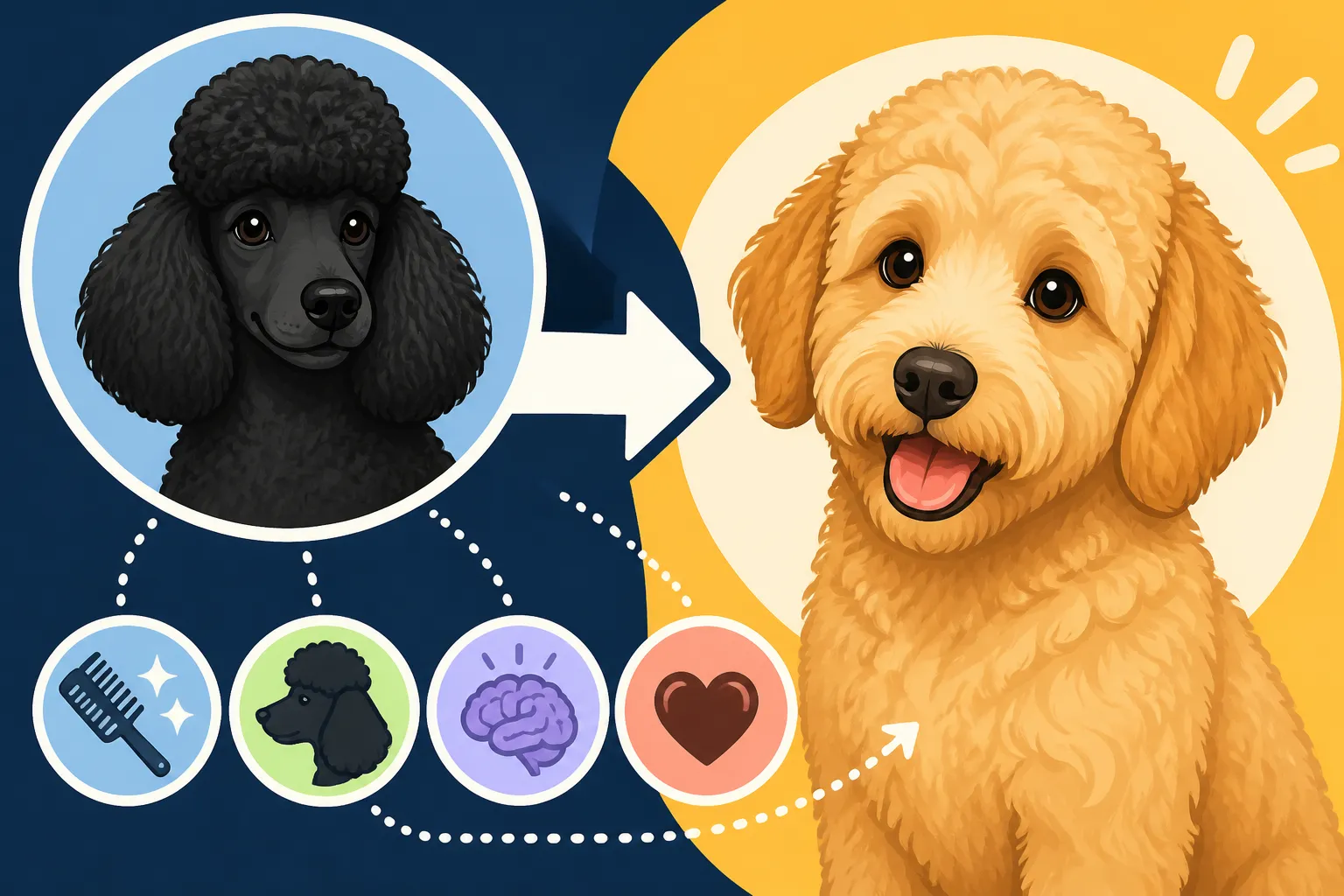
What a Goldendoodle Takes From the Poodle
If you've welcomed a Goldendoodle into your life, you've likely fallen for their charming personality and that famously adorable, often low-shedding coat. But sometimes, you might find yourself wondering why they're so ridiculously smart, or why their hair feels so different from other dogs. This guide will peel back the layers and reveal the distinct Poodle traits that truly shine through in your beloved Goldendoodle, helping you understand and appreciate the unique blend that makes them such wonderful companions.
The Goldendoodle's Poodle Coat: A Blessing and a Commitment
One of the most defining characteristics that Goldendoodles inherit from their Poodle parent is their unique coat. Unlike the Golden Retriever's shedding double coat, the Poodle contributes a single layer of hair that grows continuously and often sheds minimally. This is a huge draw for many prospective owners, especially those with allergies, and it’s why the Poodle is often chosen as a parent for doodle crosses. However, this blessing comes with its own set of responsibilities.
The Low-Shedding Reality and Matting Risk
The idea of a "non-shedding" dog is incredibly appealing, and Poodles do shed far less than most breeds. They have hair, not fur, and their shed hair tends to get caught in the surrounding curls rather than falling out onto your furniture. This trait is typically passed on to Goldendoodles to varying degrees, depending on their generation (F1, F1B, etc.). An F1 Goldendoodle (50% Poodle, 50% Golden Retriever) might still have some shedding, while an F1B (75% Poodle) is more likely to be truly low-shedding. This Poodle characteristic means less vacuuming, less hair on your clothes, and potentially a more comfortable home for allergy sufferers. You might even find yourself looking for specialty brushes on sites like Chewy that are designed for curly, non-shedding coats.
However, where does all that "shed" hair go if it doesn't fall out? It stays in the coat, and if not brushed regularly and thoroughly, it will tangle and mat. Mats aren't just unsightly; they can be incredibly painful for your dog, pulling on the skin and creating hot spots for skin infections. This is precisely why Poodle owners are so diligent about grooming. A Goldendoodle needs this same dedication. You'll need to learn how to properly Brushing a Poodle to the Skin to ensure you're getting through the entire coat, not just skimming the surface. Without proper brushing, that beautiful wavy or curly coat can quickly become a dense, painful mess.
Grooming Requirements and Styling Options
Because the Poodle coat grows continuously, professional grooming is not optional for a Goldendoodle. Whether your Goldendoodle has loose waves or tight curls, that hair will keep growing, much like human hair. This means regular trips to the groomer every 6-8 weeks are essential to keep their coat healthy, clean, and mat-free. This regular professional care is one of the significant ongoing costs of owning a Goldendoodle that directly stems from their Poodle heritage. You might choose a short, practical "kennel clip" or "sporting clip" for easier maintenance, or something longer if you're committed to daily brushing.
Learning to do some grooming at home can certainly help extend the time between professional visits. Many Goldendoodle owners learn to trim faces, feet, and sanitary areas themselves. You'll need specialized tools like slicker brushes, steel combs, and possibly clippers. Stocking up on these essentials from a pet supply retailer like Chewy can make a big difference. Even with home grooming, it's rare to completely replace a professional groomer, as getting a perfectly even cut and ensuring thorough de-matting can be quite challenging, especially for larger Goldendoodles. The Sporting and Kennel Poodle Clips are popular choices for active pets because they keep the coat manageable while still looking smart.
Unpacking the Poodle's Mind: Intelligence and Personality in Goldendoodles
Beyond their distinctive coats, Poodles contribute a significant amount of their renowned intelligence and unique temperament to the Goldendoodle equation. This isn't just about being "smart" in a general sense; it’s about a specific kind of cognitive ability and emotional sensitivity that deeply shapes the Goldendoodle's character.
High Intelligence and Trainability
Poodles consistently rank among the most intelligent dog breeds, often second only to the Border Collie in Coren's canine intelligence rankings. This incredible brainpower is a huge part of what makes Poodles so versatile, excelling in everything from obedience to complex tricks and even service work. When a Goldendoodle inherits this Poodle intelligence, you get a dog that is typically quick to learn, eager to please, and highly trainable. They often pick up new cues in just a few repetitions, which can be a joy for owners who love training. If you're wondering Why Poodles Learn a Cue in Five Repetitions, it's truly a testament to their sharp minds.
However, this high intelligence can be a double-edged sword. A smart dog needs a job. If a Goldendoodle with a strong Poodle brain isn't given enough mental stimulation, they can become bored, and a bored dog can become a destructive dog. This might manifest as chewing, excessive barking, or even inventing their own, less desirable, games. Keeping their minds occupied with puzzle toys (which you can find readily available on Chewy), regular training sessions, and interactive play is crucial. Without it, you might find your Goldendoodle is too clever for their own good, occasionally making you wonder Why a Poodle Invents Its Own Shortcuts around your commands.
The Poodle's Sensitivity and Affectionate Nature
Poodles are known for being quite sensitive and intuitive, often forming deep bonds with their families. They are not typically suited for harsh training methods and respond best to positive reinforcement and gentle guidance. This sensitivity often carries over into Goldendoodles, making them incredibly empathetic and attuned to their owners' emotions. They thrive on companionship and can be quite "Velcro dogs," wanting to be wherever you are. This affectionate trait is one of the many reasons Goldendoodles make such wonderful family pets.
However, this strong desire for connection can also lead to issues like Separation Anxiety in a Velcro Poodle if not properly managed from a young age. Goldendoodles benefit immensely from early socialization, exposure to different environments, and gentle, consistent training. They are typically good with children and other pets, thanks to their generally sweet and tolerant nature, but their sensitivity means they need a calm, loving household where they feel secure. Their alertness, another Poodle trait, means they might be prone to Poodle Barking and Alertness at new sounds or visitors, acting as enthusiastic, if sometimes noisy, guardians of the home.
Poodle Health: Genetic Influences on Goldendoodle Wellbeing
Understanding the Poodle's health legacy is vital for any Goldendoodle owner. While mixed breeds like Goldendoodles often benefit from increased genetic diversity, they are still susceptible to many of the conditions found in their parent breeds. Reputable breeders will screen their Poodle parents for common genetic conditions, reducing the risk of passing these on to Goldendoodle puppies.
Shared Genetic Conditions
Both Poodles and Golden Retrievers are prone to certain health issues, and some of the more serious ones that a Poodle can pass on include hip and elbow dysplasia, eye conditions like Progressive Retinal Atrophy (PRA), and certain heart conditions. Poodles, especially Standard Poodles, are also known for Addison's Disease, an autoimmune disorder that can be life-threatening if not diagnosed and managed. While not as prevalent in Goldendoodles as in purebred Poodles, the genetic predisposition is still there. This is why it's so important for prospective owners to ask about the health testing done on the Poodle parent. What a Poodle Breeder Must Test For will give you a good idea of the extensive health screening that should be performed.
| Health Concern | Poodle Susceptibility | Golden Retriever Susceptibility | Goldendoodle (Poodle Influence) |
|---|---|---|---|
| Hip Dysplasia | Moderate | High | Moderate to High |
| Elbow Dysplasia | Moderate | High | Moderate to High |
| Progressive Retinal Atrophy (PRA) | High | Moderate | Moderate to High |
| Addison's Disease | High | Low | Moderate |
| Bloat (GDV) | High | Moderate | Moderate |
| Sebaceous Adenitis | High | Low | Moderate |
| Thyroid Disease | Moderate | High | Moderate |
Bloat and Other Concerns
Standard Poodles, with their deep chests, are at a higher risk for Gastric Dilatation-Volvulus (GDV), commonly known as bloat. This life-threatening condition can also affect larger Goldendoodles. Understanding the symptoms and knowing when to seek emergency veterinary care is critical. The Poodle's body structure contributes directly to this risk in their Goldendoodle offspring. Furthermore, skin conditions like Sebaceous Adenitis, which can cause significant skin and coat issues in Poodles, can also appear in Goldendoodles. This emphasizes the importance of good genetics and responsible breeding practices, ensuring that both parent breeds are as healthy as possible. Discussions about Poodle Health Splits by Size also highlight how genetic predispositions can vary, so the specific size of the Poodle parent (Standard, Miniature, or Toy) might influence which conditions are more relevant.
Beyond Looks: Poodle Energy and Exercise Needs for Goldendoodles
While Goldendoodles often get their zest for life from the Golden Retriever side, the Poodle, especially the Standard Poodle, also brings significant energy and a need for regular, stimulating exercise. These aren't just couch potatoes; they are active, intelligent dogs who thrive on activity.
The Active Poodle Spirit
Poodles were originally bred as water retrievers, a role that demanded strength, stamina, and intelligence. This active heritage means that Poodles are far from delicate lapdogs; they are athletic and enjoy a good romp. This active spirit is frequently passed down to Goldendoodles, meaning they generally require a good amount of daily exercise to stay happy and well-behaved. Simply a quick stroll around the block might not be enough to satisfy a Goldendoodle's physical and mental needs, especially if they lean more towards their Standard Poodle lineage.
Daily exercise for a Goldendoodle might involve long walks, runs, games of fetch, or even swimming. They often excel in dog sports like agility, obedience, and rally, which tap into both their physical prowess and their Poodle-inherited intelligence. Providing outlets for their energy is key to preventing boredom-related destructive behaviors. Think about enriching activities like Daily Exercise for a Standard Poodle and how that applies to your Goldendoodle. Without sufficient exercise, a Goldendoodle may become restless, vocal, or even destructive.
Mental Stimulation is Just as Important
While physical exercise is crucial, the Poodle's sharp mind means that mental stimulation is equally important for a Goldendoodle. Just as a Poodle needs its brain challenged, so too does a Goldendoodle. This can involve puzzle toys, interactive games, learning new tricks, or even scent work. Engaging their minds can tire them out as effectively as a long walk and helps reinforce their good behavior. Many owners find that a combination of physical activity and mental challenges creates a truly balanced and contented Goldendoodle. Finding unique toys or training tools from a variety of sources, including Chewy, can help keep things fresh and engaging for your clever companion.
Conclusion
The Goldendoodle is a truly wonderful canine companion, and much of their charm, intelligence, and unique physical attributes can be traced back to their Poodle heritage. From that delightful, low-shedding coat to their quick minds and affectionate natures, understanding the Poodle's influence enriches your appreciation for your Goldendoodle. It also prepares you for the specific grooming, training, and health considerations that come with this popular designer breed. Embracing these Poodle-derived traits means you're well-equipped to provide the best possible care for your furry family member.
Disclaimer
This article is for general informational purposes only and does not constitute professional advice. Laws, prices and regulations vary by location and change over time. Consult a qualified professional for guidance on your specific situation.