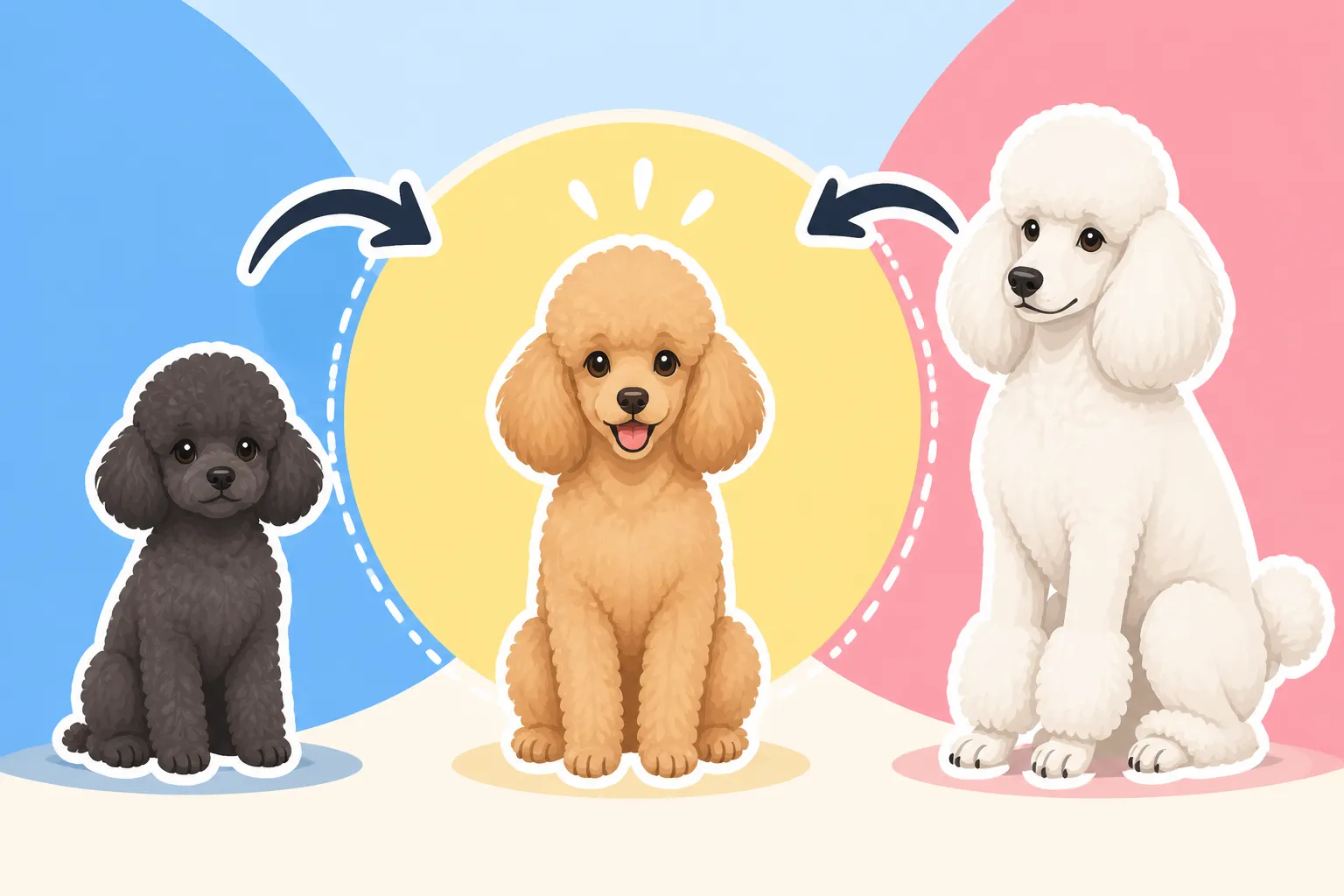
What a Poodle Between the Sizes Is Called
It's completely understandable to feel a little lost when you're looking into Poodle sizes, especially when you start seeing terms that aren't quite "Standard," "Miniature," or "Toy." Many aspiring Poodle parents, and even seasoned ones, find themselves scratching their heads, wondering if they've stumbled upon a secret fourth size or if it's all just clever marketing. This guide is here to clear up that confusion, explaining the official classifications, the "in-between" terms you might encounter, and what all of this really means for finding a healthy, happy Poodle.
The Official Poodle Sizes and Why They Matter
When we talk about Poodles, there are three primary sizes officially recognized by major kennel clubs in North America, like the American Kennel Club (AKC), and internationally, such as the Fédération Cynologique Internationale (FCI). These distinctions aren't just arbitrary; they're deeply rooted in the breed's history, function, and even impact specific health considerations. Knowing these official categories is the bedrock of understanding Poodle sizes, and it's essential for anyone looking for a well-bred companion.
These official categories serve as a blueprint for breeders, guiding them in their efforts to maintain the breed standard, which includes everything from temperament to physical conformation. While a few inches here or there might not seem like a big deal to a pet owner, for a responsible breeder, adhering to these size parameters helps ensure the consistency and health of their lines. Deviating too far, especially towards extreme smallness, can sometimes lead to unforeseen health challenges that impact a Poodle's quality of life.
Standard Poodles: The Original Retriever
The Standard Poodle is the largest of the three recognized varieties, usually standing over 15 inches tall at the shoulder. Historically, these magnificent dogs were bred as water retrievers, hence their athletic build, intelligence, and a coat perfectly suited for water work. They are truly the ancestors of all Poodles, embodying the breed's original purpose and robust nature.
Their substantial size means they are powerful dogs with significant energy levels that need to be met. A Standard Poodle thriving in a family home will often enjoy long walks, playtime, and mental stimulation to keep their clever minds engaged. They're often seen as elegant and dignified, but beneath that sophisticated exterior is a playful and highly intelligent companion who loves to be part of family activities. You can learn more about how their size influences their health in Why Poodle Health Splits by Size.
Miniature Poodles: The Perfect Companion Size
Miniature Poodles typically fall between 10 and 15 inches in height at the shoulder. They were developed by selectively breeding smaller Standard Poodles, making them a more manageable size for urban living and as companion animals, while still retaining the intelligence and charm of their larger cousins. They offer a wonderful balance of being small enough for many living situations but sturdy enough to be active family members.
Miniatures often share the same zest for life and intelligence as Standards, just in a more compact package. They are fantastic for families who want an active dog but might not have the space or lifestyle for a full-sized Standard. Despite their smaller stature, they still possess a strong personality and require consistent training and socialization to truly shine. Many people looking at Miniature Poodle Puppy Prices are drawn to this versatile size.
Toy Poodles: Lapdogs with a Hunting Heart
The smallest of the recognized Poodle sizes, Toy Poodles stand under 10 inches at the shoulder. They were developed for even smaller living spaces and as fashionable lapdogs, especially popular among European aristocracy. Despite their diminutive size, they retain the sharp wit and athletic capability of their larger relatives, often surprising people with their energy and playful spirit.
While they fit perfectly on a lap or in a small apartment, Toy Poodles are not fragile ornaments. They are lively and intelligent dogs who benefit from mental engagement and regular, albeit shorter, walks. Owners must be mindful of their delicate bone structure; issues like Toy Poodle Kneecaps and Windpipes can be more prevalent in extremely small dogs. Ensuring their health and safety, especially around larger pets or boisterous children, is paramount.
The "In-Between" Poodles: Unofficial Categories and Their Origins
Now, let's dive into the fascinating world of those Poodle sizes that don't quite fit the official mold. If you've ever found yourself asking, "What a Poodle between the sizes is called?", you're likely thinking about terms like "Moyen" or "Klein" Poodle, and perhaps even the more controversial "Teacup" or "Tiny Toy" labels. It’s important to understand that while some of these terms are recognized by certain international organizations, they are largely unofficial in North America and often come with a mixed bag of intentions behind their use.
These "in-between" sizes emerge for various reasons. Sometimes it's a deliberate breeding effort to create a dog that fills a perceived gap in the size spectrum, offering a happy medium between a Miniature and a Standard. Other times, unfortunately, these labels are marketing ploys designed to make puppies seem more unique or desirable, sometimes at the expense of health and responsible breeding practices.
| Poodle Size Category | Official Recognition (AKC/CKC) | Official Recognition (FCI – Europe) | Approximate Height at Shoulder | Common Health Considerations |
|---|---|---|---|---|
| Standard | Yes | Yes | Over 15 inches | Bloat, Addison's Disease |
| Moyen/Klein | No | Yes | 15-20 inches (approx.) | Varies; generally robust |
| Miniature | Yes | Yes | 10 to 15 inches | Patellar Luxation, PRA |
| Toy | Yes | Yes | Under 10 inches | Patellar Luxation, Hypoglycemia |
| Teacup/Tiny Toy | No | No | Significantly under 10 inches | High risk of health issues |
Understanding the Moyen Poodle (Klein Poodle)
The term "Moyen Poodle," or "Klein Poodle" (German for "medium" and "small," respectively), refers to a Poodle size that falls between the Miniature and the Standard. In many European countries, the FCI actually recognizes this size as the "Klein Poodle," generally defined as standing between 15 to 20 inches (roughly 38-50 cm) at the shoulder. This means it's a legitimate, recognized size in many parts of the world, just not by the AKC or Canadian Kennel Club (CKC) where only three categories exist.
For many Poodle enthusiasts, the Moyen offers the perfect compromise. They're larger and often more robust than a Miniature, making them less prone to some of the issues associated with extreme smallness, but they're not quite as large or as demanding of space as a Standard. They often maintain a lovely temperament, combining the lively spirit of the smaller Poodles with some of the calmer demeanor of the larger Standards. If you're looking for What You Pay for a Well-Bred Standard Poodle, you might find Moyen breeders charging similarly to Standards, especially if they are importing lines from Europe.
Many breeders in North America who offer Moyen Poodles are often working with European lines or deliberately breeding for this size to meet a demand from owners who appreciate the in-between stature. While you won't be able to register a Moyen as such with the AKC, reputable breeders will register them as either a large Miniature or a small Standard, depending on their exact height, ensuring they still have a pedigree and come from health-tested lines. When sourcing food for a Moyen, you might consider larger kibble sizes available on platforms like Chewy that cater to their more substantial jaws compared to a Toy Poodle.
The Unofficial "Teacup" and "Tiny Toy" Labels
Now, let's address the terms that raise more red flags: "Teacup" and "Tiny Toy" Poodles. These are not officially recognized sizes by any major kennel club, anywhere in the world. Instead, they are marketing terms used by some breeders to describe Poodles that are significantly smaller than even the smallest Toy Poodles, often weighing only a few pounds when fully grown. While the idea of a truly tiny Poodle might sound appealing to some, these extreme sizes often come with serious health risks and ethical concerns.
Breeding for such extreme smallness can lead to a host of health problems. These tiny dogs are prone to issues like fragile bones, hydrocephalus (water on the brain), liver shunts, and severe Blood Sugar Crashes in a Toy Poodle because their bodies simply aren't built to sustain such a small form. Their tiny mouths are also highly susceptible to severe dental disease, often requiring costly extractions much earlier in life. Toy Poodle Puppy Prices for these "teacup" sizes can be exorbitant, but the higher price rarely reflects better health or breeding practices; often, it's the opposite.
When you see these terms, proceed with extreme caution. A responsible breeder will prioritize the health and temperament of their dogs above all else and will adhere to established breed standards. They would never intentionally breed for sizes that put the animal at such a high risk for lifelong health complications. If you're considering a truly tiny Poodle, it's vital to research the breeder thoroughly, ask about the parents' health, and understand the potential veterinary challenges you might face. Even products found on Chewy for "small breeds" might not be appropriate for a dog that is literally "teacup" sized.
Why Official Recognition Matters for Poodle Health and Breeding
The reason major kennel clubs establish and uphold breed standards, including specific size categories, is primarily for the health and integrity of the breed. These standards guide responsible breeders in their efforts to produce Poodles that are not only beautiful and true to type but also robust and healthy. When a Poodle falls cleanly within an established size, it means generations of selective breeding have aimed for a specific conformation that is generally healthy and functional.
Diverging from these standards, especially towards extremes in size, can introduce or exacerbate genetic health problems. For instance, breeding for an excessively large Standard Poodle might increase the risk of conditions like Bloat and the Deep Standard Poodle Chest or hip dysplasia, while breeding for an unnaturally tiny Toy Poodle can lead to a myriad of issues unique to extremely small dogs, as we've discussed. The standards are there to safeguard the Poodle's well-being.
Health Considerations by Official Poodle Size
Each of the three recognized Poodle sizes has its own set of health considerations, and these are often well-documented and managed by reputable breeders through health testing. For instance, Standard Poodles are more prone to Addison's Disease and Gastric Dilatation-Volvulus (bloat), conditions less common in the smaller varieties. Conversely, Miniature and Toy Poodles face higher risks of conditions like patellar luxation (slipping kneecaps) and Legg-Calve-Perthes disease, which are rarely seen in Standards. This split in common ailments by size is why it's so important for breeders to understand and breed within their specific size categories.
When a Poodle is "between sizes," but still within the general healthy spectrum (like a Moyen), their overall health profile might blend characteristics of both Miniature and Standard. However, with "Teacup" Poodles, the health risks are almost universally amplified, regardless of what diseases are typical for their parentage. This is why official recognition and adherence to size standards are crucial – they help breeders and owners anticipate and mitigate potential health challenges. A good breeder will freely share information about Genetic Panels for the Three Poodle Sizes they perform.
The Role of Responsible Breeders
A responsible breeder is the cornerstone of Poodle health and well-being. They understand the importance of genetic diversity, health testing, and adhering to breed standards, including size. They don't breed for "rare" or "novelty" sizes, especially if those sizes come with inherent health risks. Instead, they focus on producing Poodles with sound temperament and good health, who will be wonderful companions for their families.
When you're searching for a Poodle, whether you're interested in a Standard, Miniature, Toy, or even a Moyen from a European line, look for a breeder who is transparent about their dogs' lineage, health testing results, and the typical adult size of their puppies. They should be eager to answer your questions and allow you to meet the puppy's parents. Avoid any breeder who focuses heavily on marketing terms like "Teacup" or "Micro" and promises sizes that fall outside the healthy, established norms, as this is often a sign of irresponsible breeding practices that prioritize profit over the welfare of the dogs. Always ask What a Poodle Breeder Must Test For.
Navigating the Poodle World: What to Ask and Where to Look
Finding the right Poodle for your family is an exciting journey, but it can also feel overwhelming with all the different sizes and terminology. Whether you're specifically looking for one of the officially recognized sizes or you're curious about a Moyen, the key is to approach your search with diligence and prioritize the health and well-being of the dog above all else. Don't let confusing labels distract you from the core principles of responsible pet ownership.
Remember, a Poodle, regardless of its exact size, is a highly intelligent and sensitive companion. Their mental and physical needs are significant, and understanding these aspects will serve you far better than fixating on a specific, potentially unofficial, size. A Poodle's brain needs just as much exercise as its body, and they are quick to pick up new cues and behaviors – sometimes even inventing their own! Why Poodles Learn a Cue in Five Repetitions is a testament to their intelligence.
Asking the Right Questions About Size and Lineage
When you connect with a potential breeder, be prepared with a list of questions, especially regarding size. Ask about the height and weight of both parent dogs. If the breeder is offering "Moyen" Poodles, ask if their lines are imported from Europe where the size is recognized, or how they are breeding for that particular size. A transparent breeder will be happy to explain their breeding program and how they adhere to healthy practices, even if they are aiming for a size that isn't officially recognized in your region.
Crucially, inquire about any health testing done on the parents and grandparents. This should include genetic screening for conditions prevalent in Poodles, as well as OFA (Orthopedic Foundation for Animals) certifications for hips and elbows, especially for larger Poodles, and patellas for smaller ones. Don't be shy about asking to see documentation; a responsible breeder will have it readily available. If they claim to breed "Teacup" Poodles, press them on the specific health risks associated with such tiny sizes and what measures they take to mitigate them (and be wary if they dismiss these concerns).
Finding a Poodle That Fits Your Life (Regardless of Label)
Ultimately, the most important thing is to find a Poodle that is a good fit for your lifestyle and family, focusing on health and temperament rather than a specific, often misleading, size label. Consider the space you have, the amount of time you can dedicate to grooming (all Poodles need regular grooming, regardless of size!), training, and exercise. A Standard Poodle will have different exercise requirements than a Toy Poodle, but both need consistent mental and physical stimulation.
If you're finding it hard to navigate the breeder world, consider looking into Poodle rescue organizations. They often have Poodles of all sizes, including those "in-between" individuals, who need loving homes. A rescue Poodle comes with the added benefit of being vet-checked and often temperament-assessed, providing you with a clearer picture of the dog you're bringing into your home. Regardless of where your Poodle comes from, remember that consistent training, proper nutrition (easily sourced from places like Chewy, offering various formulations for different sizes), and plenty of love will ensure they thrive.
Disclaimer
This article is for general informational purposes only and does not constitute professional advice. Laws, prices and regulations vary by location and change over time. Consult a qualified professional for guidance on your specific situation.