Whether a Poodle Chases the Resident Cat
The dream of a peaceful, multi-pet household often bumps up against reality, especially when you introduce a spirited Poodle to a resident feline. Many Poodle owners worry about their dog's natural instincts clashing with a cat's independent nature, leading to stressful chases, hissed warnings, and an overall anxious environment for everyone. This comprehensive guide will walk you through understanding Poodle behavior, implementing effective introduction strategies, and managing those chase instincts to foster a harmonious home where Poodles and cats can not just coexist, but truly thrive.
Understanding Poodle Instincts and Cat Dynamics
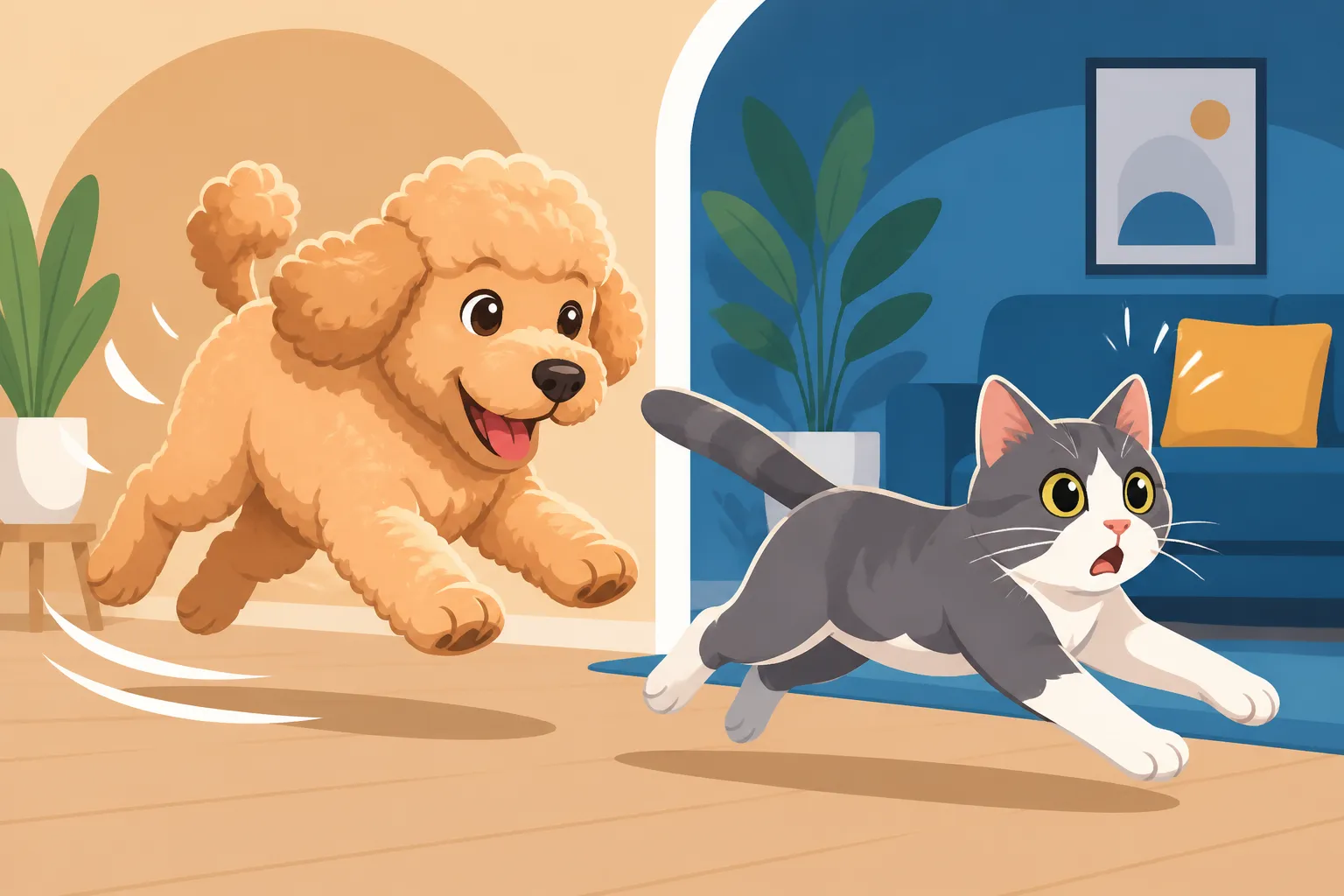
It's completely normal to wonder if your Poodle will chase your cat. Poodles, regardless of their size, were originally bred as working retrievers, particularly for waterfowling. This means they possess a natural prey drive—the instinct to spot, stalk, chase, and retrieve. While your Poodle might not see your housecat as a duck, the sudden, darting movement of a cat can trigger that ingrained instinct, making a chase irresistible for many.
The Poodle's Predatory Drive
The Poodle's history as a duck hunter means they have an innate drive to pursue moving objects. This isn't aggression; it's a hardwired behavioral sequence. A cat darting across the room or even slowly strolling can activate this sequence in a Poodle. What starts as a playful pounce can quickly escalate if the cat feels threatened and runs, fueling the Poodle's chase. It's crucial to understand that for many Poodles, especially younger, more energetic ones, this isn't malicious but a natural response to movement. They aren't trying to hurt the cat, but the cat certainly doesn't know that.
Smaller Poodle varieties, like Toys and Miniatures, often have equally strong, if not more intense, prey drives compared to their Standard counterparts, simply because they might have been bred for generations with less emphasis on working roles and more on companionship, sometimes leading to less directed training of these natural instincts. A Toy Poodle's small size might make you think they're less of a threat, but their speed and agility can still terrorize a cat. Meanwhile, a Standard Poodle's sheer size can be intimidating even if their intentions are benign. This is why understanding The Poodle's Retrieving Instinct is so important.
Reading Cat Body Language and Poodle Cues
The key to preventing problems often lies in observing both animals. A cat's body language will tell you if it's stressed, fearful, or playful. Puffed tails, flattened ears, hissing, growling, or darting for cover are clear signs of distress. A cat that's swiping or trying to defend itself might seem aggressive, but it's usually a reaction to feeling cornered or threatened. Pay close attention to how your cat reacts to your Poodle's presence and movements.
On the Poodle side, look for signs of arousal: rigid body, fixed stare, tail high and stiff, sniffing intensely, or a low, rumbling growl. These are precursors to a chase. Conversely, a loose body, wagging tail, play bows, or soft nudges can indicate a desire to play, but this playful intent might still be overwhelming or frightening for a cat. Learning Reading a Poodle's Body Language can give you invaluable insight into their intentions and emotional state, allowing you to intervene before things escalate.
Introducing a Poodle to a Resident Cat
A thoughtful and gradual introduction is the bedrock of a peaceful multi-pet home. Rushing this process almost guarantees a bumpy road, if not outright conflict. Patience, controlled environments, and positive associations are your best tools.
Scent Swapping and Controlled Encounters
Before they even lay eyes on each other, let them get used to each other's scent. This is a crucial first step. Pet your cat with a towel and then let your Poodle sniff it, praising them for calm investigation. Do the same with your Poodle and offer the towel to your cat. You can also swap bedding or blankets. The goal is for them to associate the new scent with positive feelings, rather than a threat.
Once they're comfortable with each other's scent, move to controlled visual encounters. Use a baby gate, a tall pet gate you can find on Amazon, or even a crate for the Poodle, creating a barrier that allows them to see each other without direct interaction. Start with short periods, ensuring both animals are calm. Distract them with treats or toys during these times. If the Poodle fixates, calmly redirect them. The idea is to create a neutral, positive experience. This step is similar to how you would manage A Poodle Puppy Meeting the Resident Dog.
| Introduction Stage | Goal | Key Actions | Red Flag Behaviors |
|---|---|---|---|
| Scent Exchange | Familiarization, positive association | Swap bedding, rub towels on pets, reward calm curiosity | Hissing, growling, aggression towards scented items |
| Parallel Play (Barrier) | Visual comfort, ignoring each other | Poodle on leash, cat free behind gate; treat both for calm behavior, redirect | Staring, stalking, lunging, constant vocalization |
| Supervised Interaction | Brief, positive, controlled interaction | Poodle on leash, cat free; short periods, abundant treats for calm behavior | Any chasing, swatting, freezing, or aggression |
| Unsupervised Access | Peaceful coexistence, trust building | Only when consistent calm behavior is observed; monitor with cameras if unsure | Any of the above, even minor incidents |
Positive Reinforcement and Safe Zones
Always reward calm, appropriate behavior from both your Poodle and your cat. If your Poodle looks at your cat calmly and then looks back at you, mark that moment with a treat and praise. If your cat tolerates your Poodle's presence without reacting, give them a treat too. This helps them build positive associations with each other. For comprehensive guidance on training, online programs like BAXTER & Bella offer excellent resources that emphasize positive reinforcement, which is perfect for sensitive Poodles.
Crucially, ensure your cat has multiple escape routes and safe, elevated spaces where the Poodle cannot reach them. Cat trees, shelves, or even a spare room with a cat flap are invaluable. These safe zones allow the cat to retreat and feel secure, preventing them from feeling trapped or cornered, which often triggers defensive aggression or desperate flight. A cat that knows it can escape is less likely to panic and run, which, in turn, reduces the Poodle's temptation to chase.
Managing Predatory Chase Instincts
Even with the best introductions, a Poodle's ingrained chase instinct can surface. The key is consistent management and training to redirect this energy and teach them alternative, acceptable behaviors.
Training "Leave It" and Reliable Recall
Two commands are absolutely indispensable for a multi-pet household: "Leave It" and a rock-solid recall. "Leave It" teaches your Poodle to disengage from something tempting. Practice this extensively with high-value treats and distractions before introducing the cat into the equation. Start with leaving a treat, then a toy, then another dog, and eventually, if necessary, the cat. When your Poodle glances at the cat and then looks to you, that's your cue to praise and reward with a treat. This teaches them that ignoring the cat (or any tempting distraction) results in something better.
A reliable recall, meaning your Poodle comes instantly when called, is your safety net. If a chase starts, or your Poodle is fixating, a strong recall can stop the behavior in its tracks. Practice recall often, in various environments, always making it a fun and rewarding experience. Use happy, upbeat tones and generous treats. Remember, Poodles are incredibly intelligent, sometimes ranking as The Poodle's Place in Dog Intelligence, so they'll pick up these cues quickly if you're consistent. Programs like BAXTER & Bella can provide structured guidance on developing these essential commands.
Environmental Management and Redirection
Environmental management is your first line of defense. Never leave your Poodle and cat unsupervised until you are absolutely certain they can safely and calmly coexist. Even then, continuous monitoring is wise. Use baby gates to separate them when you can't actively supervise. Ensure your cat's food and litter boxes are in areas inaccessible to the Poodle, perhaps behind a cat-sized gate or on a high surface.
Redirecting your Poodle's energy is vital. If you see your Poodle starting to fixate on the cat, immediately interrupt the behavior with a cheerful "Let's play!" and engage them with an appropriate toy, like a flirt pole or a puzzle toy you can find on Amazon. High-energy Poodles, especially Standards, need a lot of physical and mental stimulation. An under-exercised Poodle is more likely to create their own "fun," which often involves chasing the cat. Provide plenty of appropriate outlets for their energy, such as daily walks, fetch, or scent games. Why a Clever Poodle Gets Bored highlights the need for mental engagement to prevent unwanted behaviors.
Creating a Harmonious Multi-Pet Household
Achieving harmony isn't a one-time event; it's an ongoing process of consistent training, management, and understanding each animal's needs.
Consistent Training and Mental Stimulation
Poodles thrive on routine and mental challenges. Consistent training sessions, even short ones daily, reinforce good behavior and provide mental stimulation. Teach your Poodle tricks, engage in puzzle toys, or explore dog sports like agility or obedience. A tired Poodle, both physically and mentally, is a good Poodle – one less likely to be looking for trouble with the cat.
Mental stimulation is just as important as physical exercise. Consider Scent Games That Stretch a Poodle's Mind or teaching them to identify specific toys. This gives their intelligent brains a job to do, preventing boredom that can lead to undesirable behaviors like chasing the cat. Remember, Poodles are often lauded as Training the Second Smartest Dog Breed, meaning they need that mental workout to be truly content.
Dedicated Spaces and Quality Time
Even in the most harmonious multi-pet homes, both the Poodle and the cat need their own dedicated spaces where they can retreat and feel safe. This might be a crate for the Poodle, a dog bed in a quiet corner, or a cat tree and high shelves for the cat. These personal zones help reduce stress and prevent competition for resources or attention.
Equally important is ensuring each pet receives individual quality time with you. This dedicated one-on-one time reinforces your bond with each animal and assures them they are loved and valued members of the family, reducing potential jealousy or attention-seeking behaviors that might manifest as bothering the other pet. A Poodle needs your attention, and a cat needs its quiet moments. Respecting these needs fosters overall peace.
When to Seek Professional Help
If, despite your best efforts, the chasing persists, or if you observe any signs of actual aggression (not just playful chasing, but biting, swatting with claws, or prolonged terror in either animal), it's time to call in a professional. A certified professional dog trainer or a veterinary behaviorist can assess your specific situation, identify triggers, and provide tailored strategies. They can offer an objective viewpoint and specialized techniques to resolve deep-seated issues that might be beyond what a pet owner can handle alone. Early intervention is always better than waiting for a serious incident.
This journey might take weeks or even months, but with patience, consistency, and a deep understanding of your Poodle and your cat, a peaceful, shared home is absolutely within reach.
Disclaimer
This article is for general informational purposes only and does not constitute professional advice. Laws, prices and regulations vary by location and change over time. Consult a qualified professional for guidance on your specific situation.