How a Poodle Solves a Problem
One of the most surprising and sometimes frustrating aspects of living with a Poodle is just how incredibly intelligent they are. Many new Poodle owners find themselves constantly amazed, and occasionally outsmarted, by their clever companions. This guide will dive deep into how Poodles approach problem-solving, what that looks like in daily life, and how you can channel their sharp minds for positive outcomes while gently curbing less desirable "solutions."
The Poodle Brain: A Natural Problem Solver
Poodles aren't just pretty faces with fancy haircuts; they possess a formidable intellect that sets them apart. This isn't anecdotal; scientific studies, like those famously conducted by Stanley Coren, consistently rank them among the most intelligent dog breeds. It's truly fascinating to observe their minds at work, constantly processing, strategizing, and looking for patterns.
The Poodle's Natural Problem-Solving Instincts
Poodles were originally bred as water retrievers, a job that demanded not just physical prowess but also significant mental acuity. Imagine a Poodle working alongside a hunter, needing to remember where a bird fell in tall reeds or navigate complex terrain to bring back game. This lineage has gifted them with an inherent drive to observe, analyze, and figure things out. They don't just react; they think. They can often anticipate what you're going to do before you do it, or quickly connect a cause with an effect. This is why Why Poodles Learn a Cue in Five Repetitions – their brains are wired for rapid assimilation and application of information.
This natural curiosity often leads them to explore their environment with a methodical approach. They aren't content with just sniffing; they'll try to manipulate objects, push boundaries, and test limits. Whether it's a new toy or a closed door, a Poodle will often try multiple approaches until they find one that works. This innate drive to understand and master their surroundings is a hallmark of their breed.
How Their High IQ Translates to Everyday Situations
In daily life, this high IQ translates into a dog that is incredibly perceptive and adaptable. They pick up on routines almost instantly, learning what sounds mean a walk is coming, or when the refrigerator opening might mean a treat. They learn words and phrases with astounding speed, often far beyond simple commands. You might find your Poodle understands conversations you didn't even realize they were paying attention to!
This intelligence also means they excel at tasks that require sequential thinking or memory. They can learn complex tricks, master multi-step obedience routines, and even understand intricate scent work. Many Poodle owners describe their dogs as having a genuine "lightbulb moment" when they grasp a new concept. However, this same sharp mind can also lead to boredom if not adequately stimulated, which is why Why a Bright Poodle Gets Bored is a common challenge for owners.
Everyday Poodle Ingenuity: What It Looks Like
So, what does a Poodle solving a problem actually look like around the house? It's often both impressive and a little bit sneaky. They use their keen observation skills and dexterous paws to overcome obstacles that would baffle many other breeds.
Figuring Out Escape Routes and Object Retrieval
One of the most classic examples of Poodle problem-solving is their ability to figure out how to open doors, gates, or even complex latches. If there's a way out, a Poodle will find it. I've known Poodles who could unlatch crates, push open swinging doors, or even manipulate lever-style handles. They watch how you do it, then try to replicate the action themselves, often with surprisingly quick success.
Beyond escapes, their retrieving instinct is not just about bringing back a thrown ball; it extends to finding and bringing you specific items. I once had a client whose Toy Poodle, Pip, would retrieve his owner's reading glasses from the bedside table every morning. Pip would stand on his hind legs, nudge the glasses with his nose until they fell, then gently pick them up and bring them to his owner. This wasn't trained beyond initial encouragement; Pip simply understood the sequence and performed it. This ability to fetch specific objects demonstrates an understanding of names and purpose, making them incredibly helpful companions.
Communicating Needs Beyond Simple Barks
A truly intelligent Poodle doesn't just bark indiscriminately to get what they want. While they certainly can be vocal, they often develop more sophisticated ways of communicating their needs. Instead of just crying at the door to go out, a Poodle might bring you their leash, or even tap your leg and then look pointedly at the door. They learn to use gestures, vocalizations, and even subtle body language to convey surprisingly complex messages.
For example, a Poodle might bring their empty food bowl and drop it at your feet, then look at you expectantly, perhaps even nudging your hand towards the pantry. This isn't just a learned behavior; it’s a series of observed connections and a strategic approach to getting their hunger addressed. They've learned that presenting the bowl is a more effective "solution" than simply barking, demonstrating a genuine understanding of cause and effect in their interaction with you. Reading a Poodle's Body Language can help you understand these nuanced communications.
| Problem-Solving Scenario | Poodle's "Solution" | Owner's Reaction |
|---|---|---|
| Door is closed, Poodle wants out | Jumps on handle, pushes door with nose/paw, whines | Surprise, then admiration (and securing the door) |
| Toy stuck under furniture | Uses nose or paw to wedge it out, nudges it with head, tries different angles | Amusement, occasional assistance |
| Wants attention/play | Brings toy, nudges hand, places head on lap, uses soft "woofs" | Engagement, praise, play |
| Owner is busy, ignores initial cues | Escalates communication (louder whine, more persistent nudges), sometimes finds a forbidden item to get attention | Annoyance, then realizing the Poodle's intent |
| Needs to go potty | Stands by door, rings bell (if trained), looks pointedly at owner/door, sometimes gives a soft bark | Prompt action |
| Hunger/Thirst | Brings empty bowl, waits by water dish, looks at owner with expectation | Refills bowl/water |
Encouraging Positive Problem-Solving in Your Poodle
Given their innate intelligence, it's really important to provide constructive outlets for your Poodle's problem-solving abilities. Without healthy challenges, that clever brain can easily turn to less desirable, self-entertaining activities. Think of it as giving them a job, because a Poodle truly thrives when their mind is engaged.
Setting Up Engaging Puzzles and Challenges
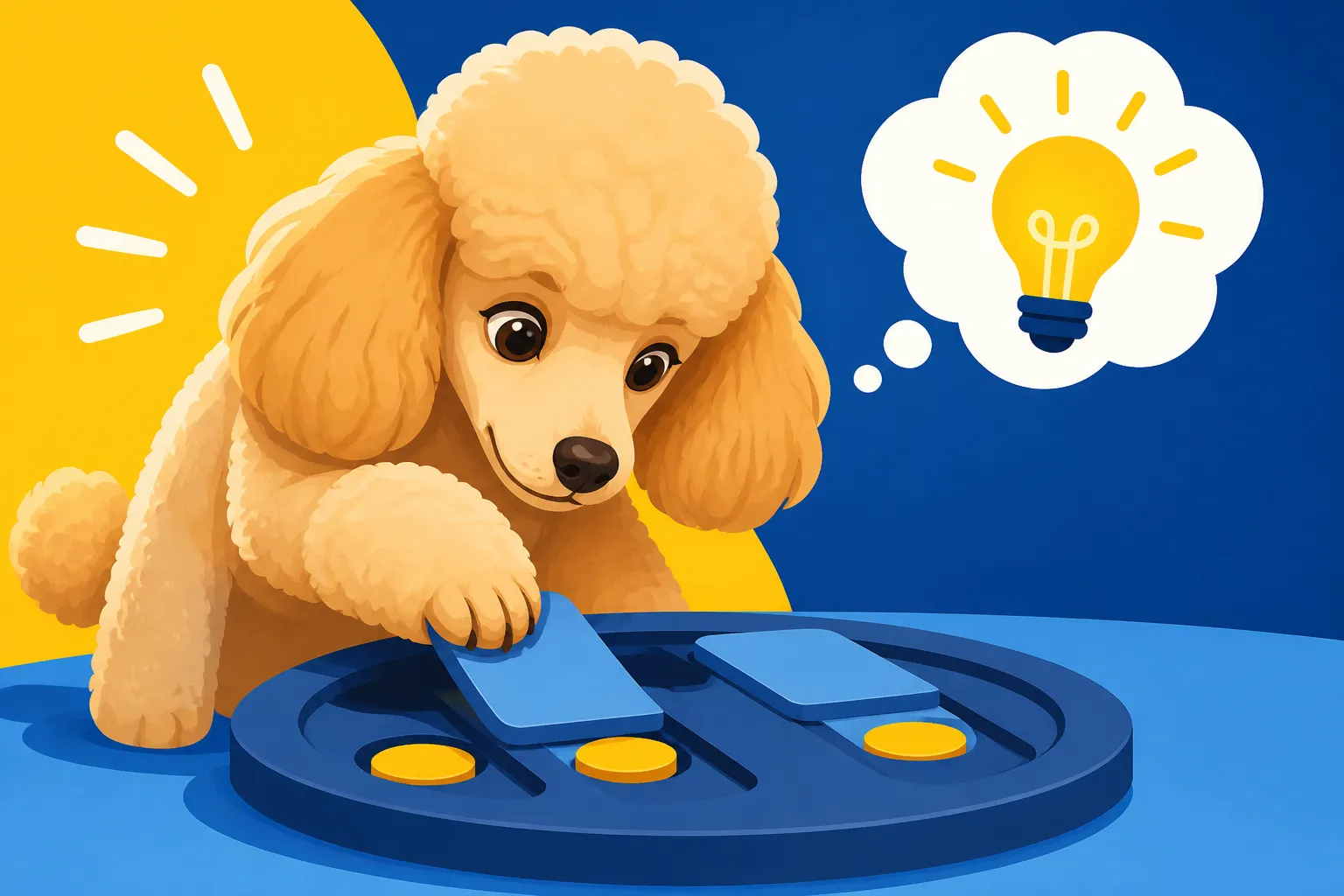
One of the best ways to foster positive problem-solving is through interactive puzzle toys. These can range from simple treat-dispensing balls to multi-step puzzles that require your Poodle to lift, slide, or push components to get to a reward. Start with easier puzzles and gradually introduce more complex ones as your Poodle masters them. Brands like Outward Hound, often available on Chewy, offer a fantastic range of difficulty levels. Watching them concentrate, try different methods, and finally succeed in getting the treat is incredibly rewarding for both of you.
Beyond manufactured toys, you can create your own challenges. Hide-and-seek with toys or treats is a favorite, encouraging them to use their nose and brain to locate items. You can also teach them to put their toys away in a basket, or to fetch specific items by name. These activities not only provide mental stimulation but also strengthen your bond and improve their listening skills. Scent Games That Stretch a Poodle's Mind are particularly good for this, tapping into their natural canine abilities.
Positive Reinforcement for Independent Thought
When your Poodle tries to figure something out—even if it's not quite what you intended—it's important to reinforce the effort and the thought process. If they are trying to open a new puzzle toy, don't just solve it for them immediately. Let them struggle a little, then praise their attempts. When they finally succeed, make a big deal about it! This encourages them to keep trying and to use their brain rather than just giving up.
Using positive reinforcement means rewarding the desired outcome, but also sometimes rewarding the thinking behind it. If your Poodle tries a novel way to get your attention that isn't barking, like gently nudging your hand or bringing a specific item, reward that subtle communication. This teaches them that their intelligent efforts to communicate or solve a problem are valued, fostering a Poodle who feels confident in their own cleverness, rather than one who feels shut down or misunderstood. Clicker Timing With a Fast-Learning Poodle can be particularly effective here, allowing you to mark the exact moment of their successful thought.
The Flip Side: When Problem-Solving Becomes a "Problem" for Owners
While a Poodle's intelligence is often a source of delight, it can definitely lead to some challenging behaviors if not managed properly. Their problem-solving skills don't discriminate between what we consider "good" and "bad" solutions – they just find a way to achieve their goal.
The Sneaky Poodle and Counter-Surfing
One common frustration for Poodle owners is the art of counter-surfing. A Poodle, especially a Standard Poodle, quickly learns that delicious things sometimes appear on countertops. They'll observe you placing items there, and then, when your back is turned, they'll strategize how to reach them. This might involve standing on their hind legs, pushing a chair closer, or even leaping onto a low counter from a running start. They aren't just impulsively grabbing; they're calculating the best approach to get to that tempting snack. Why a Poodle Steals From the Counter is less about disobedience and more about their cleverness.
I remember a client's Miniature Poodle who would wait patiently until everyone left the kitchen, then methodically push a dining chair over to the counter, jump up, and help himself to whatever was within reach. It wasn't about being "bad"; it was about efficiently solving the problem of "how do I get that yummy thing?" This ingenuity can lead to real problems, not just with stolen food but with access to things that are dangerous for them. Maintaining What a Poodle Should Weigh by Variety becomes a challenge when they're regularly pilfering extra snacks.
Boredom-Induced Destructive "Solutions"
An under-stimulated Poodle is a Poodle looking for a job, and if you don't provide one, they'll create their own. This often manifests as destructive behavior, but from the Poodle's perspective, they're simply "solving" their boredom. Chewing on furniture, digging at carpets, or systematically dismantling household items are all ways a Poodle might try to occupy their intelligent mind. They're exploring, experimenting with textures, and trying to figure out how things work.
For example, a Poodle left alone for too long might decide that the couch cushions are an interesting puzzle. How do they come apart? What's inside? This isn't spite; it's a creative (albeit unwelcome) outlet for their intellectual energy. What a Poodle Does When Its Brain Is Idle can be a shocking revelation for new owners who underestimated their dog's need for mental engagement. They truly need more than just physical exercise; their minds need a workout too.
Living Smart with a Smart Poodle: Management Strategies
Managing a Poodle's immense intelligence isn't about curbing it; it's about directing it. You want to embrace their cleverness and channel it into behaviors that are safe, healthy, and enriching for everyone involved.
Consistent Training and Clear Boundaries
Because Poodles learn so quickly, consistency in training is paramount. They will pick up on loopholes, inconsistencies, and any perceived weaknesses in your rules faster than you can say "sit." If you sometimes let them on the sofa and sometimes don't, they'll endlessly test the boundaries. Establishing clear rules and enforcing them consistently from day one is crucial. Everyone in the household needs to be on the same page.
For example, if "off the counter" is the rule, make sure nothing is ever left within reach, and immediately redirect them if they even look like they're attempting to jump. Their ability to learn shortcuts is powerful, and Why a Poodle Invents Its Own Shortcuts means you need to be one step ahead. A strong "leave it" command is your best friend. This firm but fair approach helps your Poodle understand the rules of the house, giving their clever brain the structure it needs to thrive without chaos.
Providing Ample Mental Stimulation
Beyond formal training, daily mental stimulation is non-negotiable for a Poodle. This isn't just about walks; it's about engaging their minds. Incorporate puzzle toys into their feeding routine by placing their meals in slow feeders or treat-dispensing toys from Chewy. Instead of just putting down a bowl, make them work a little for their Feeding a Poodle by Size meal.
Regular short training sessions throughout the day, even just 5-10 minutes, can do wonders. Teach them new tricks – Poodles adore learning and performing! Trick Training a Poodle is a fantastic way to engage their intelligence and build a stronger bond. Consider dog sports like agility, obedience, or rally, which provide both physical and mental challenges. Even simple games like "find the treat" hidden around the house can be incredibly stimulating. Remember, a tired Poodle, mentally and physically, is a happy Poodle, and much less likely to invent their own destructive "solutions" to boredom.
Disclaimer
This article is for general informational purposes only and does not constitute professional advice. Laws, prices and regulations vary by location and change over time. Consult a qualified professional for guidance on your specific situation.